
All Britons Benefited From Colonialism — Regardless Of Class
It was not just the lords and ladies of the empire to benefit from Colonialism; even those far from power got some benefit
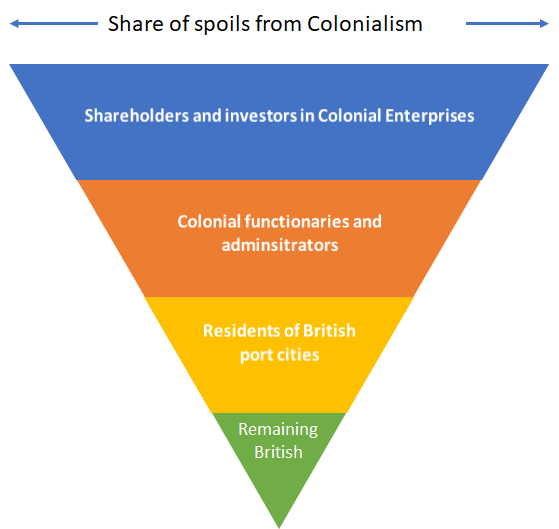
“My grandfather was a poor farmer in Scotland. He didn’t benefit one jot from the British Empire” shouted the angry man I was chatting to at the pub. “Only those filthy rich merchants and lords did” he continued.
It’s a common statement I’ve heard over the years from those claiming descent from more humble social classes of Britain, but it is not accurate.
Everybody in British society benefited — from Colonialism; it is just that some did more than others.
Those who benefited can be divided into four groups in order of their share:
- Shareholders and investors of ventures in the colonies
- Colonial administrators working in the Colonies
- Residents of the great British port cities and manufacturing towns
- Other denizens of the UK outside of these places
Shareholders and investors
The greatest beneficiaries of colonialism are those businessmen who were were the shareholders or investors of ventures in the colonies. Rewards were typically in the form of profits and dividends.
An example would be those British investors who helped finance the establishment of the railway network in India. Investors effectively got a 200% return on their initial investment — risk-free, as it was government guaranteed. The return was paid for by taxes on Indians.
Further — the steel itself used to build the railways was British steel — thereby being a market for the products of those steel making industrialists.
Colonial administrators
Those involved directly in the Colonial enterprise included various administrators, soldiers, other personnel stationed in these places, and those who served on ships carting products from the colonies to Britain and back again.
They had the opportunity to build their careers and benefited in the form of jobs and wages. It was particularly useful for all those second, third and fourth sons of the gentry who would not have inherited anything from their fathers thanks to primogeniture.
Further, the maintenance of these global trade networks required a navy. Joining the British navy was a great avenue through which social mobility was available for those from the lower rungs of society.
Residents of the great port cities and manufacturing towns
Residents and workers of the UK’s great manufacturing towns (such as Manchester) where raw materials from the colonies (such as cotton) were turned into a finished product (like textiles) benefited significantly too.
Benefits came in the form of jobs and wages for those employed directly in the manufacturing industry, or in the form of customers for other people in these towns who provided goods and services to these manufacturing factory workers like bakers, tailors, shopkeepers, butchers, and the like — as well as farmers who sold their produce to these folks.
Other denizens of the UK
Those who were not directly involved in Colonialism also benefited somewhat. This includes people who lived far from these manufacturing towns, and were often relatively impoverished themselves.
The rationale is as follows:
- Colonialism fueled the Industrial Revolution in the UK in particular, and the rest of Europe more generally.
- This saw economic growth, infrastructure established, community-services offered, and improved human development indicators (life expectancy, etc) in the UK — across the spectrum.
- By having access to these things, the quality of life improved for all denizens of the UK to some extent.
- Further — these quality of life benefits were further subsidised due to the fact that the colonies paid significant taxes and provided manpower for Britain, thereby reducing the burden on everyone in the UK — including rural farmers.
That is not to say that these poorer folks in the UK had it easy. Far from it. But, it was better to be a poor farmer in the UK than a poor farmer in say…India— because the societal infrastructure around them was quite different.
Everyone in 18th and 19th century British Society benefited from Colonialism to some extent — even if they were not directly involved in Colonialist ventures themselves.
To paraphrase the American comedian Dave Chappelle:
“They was in on the heist. They just didn’t like their cut”
You may also like:


