Why Learning about Death Will Ultimately Make You Immortal
How smart people approach the idea of death
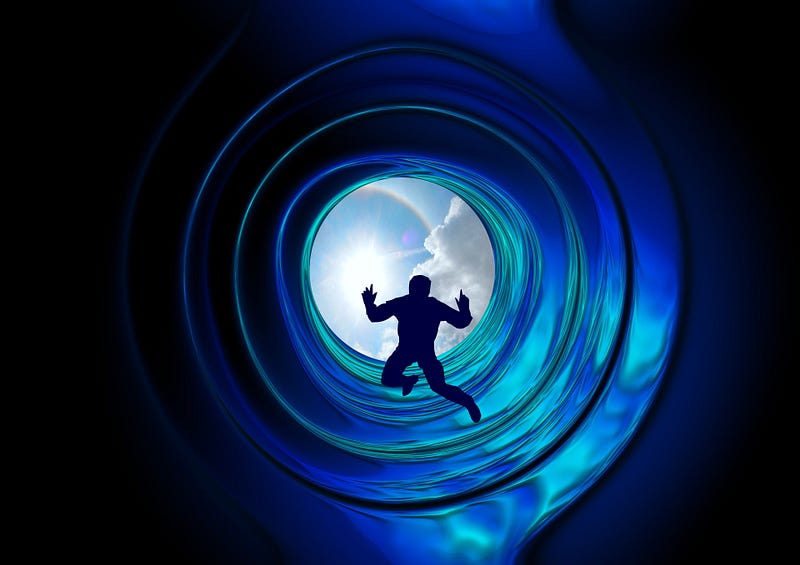
“Please help me. I can’t swim,” the boy in the swimming pool shouted. His friends, including the one who had pushed him into the pool, left him there. They were busy talking about the movies. Sadly, the boy died. He was fourteen.
Nobody in my home wanted me to know about this accident. It happened in my brother’s school. I was four. My parents did not wish to confuse me or answer my questions about death. They did not want me to learn about death at that age.
But I, somehow, heard the story. The boys snuck into the building when no one was at the school. A tragedy followed.
It is my first memory of someone dying.
Three years later, my grandmother died. My parents answered all my questions. The dead people went to heaven and lived with God forever. They enjoyed their afterlife with angels and other good people. Death was simple back then.
When I was twenty-one, one of my classmates committed suicide. The meaning of death changed — it became unsettled. Then my first cousin died due to a brain tumor. My one-year-old niece died. Then my father died. I sobbed for days.
I was more sensitive than most people around me. I started noticing and feeling all the death in the world. I read about terrorist attacks, wars, tsunamis, earthquakes, poverty, hunger, and disease. All of it made me depressed.
At the height of my depression, I did not wish to turn the light on in my room. Life seemed heavy. But by reading psychology books — and a little help from professionals — I finally came out of depression after a year.
I needed to figure out a way to stop feeling the death and destruction in the world. I had to think of a way to overcome my anxiety. Wilhelm Stekel said every fear is fear of death.
‘If I can find a way to conquer the fear of death, I’d become fearless. Maybe even brave,’ I told myself.
When I decided to learn more about death, I looked towards science. I learned about senescence, the shortening of telomeres as cells divide, and age-related diseases that eventually kill us all.
Ignoring the popular ideas of heaven and hell, I wanted to know what science could teach me about death.
I am naturally rebellious. I cannot dwell on an idea forever. Death brings sadness became a boring idea. Death destroying everything seemed nihilistic to me. Death had to mean something more than a disappearing act.
“You should look for what is, and not what you think should be.” ~ Albert Einstein
One way to look at death is to think it is outside the realm of the living. An alive person never experiences death — as death is the cessation of neural inputs and their processing in the brain. But then there is this whole discussion about near-death-experiences — backed by the DOPS — Division of Perceptual Studies — at the University of Virginia, School of Medicine.
Here are some examples from a study on near-death experiences:
“Colors were beyond any I had ever seen.”
“Everything seemed so much more colorful and brighter than normal.”
“My vision was greatly increased. I was able to see things as close or as far as I needed. There was no strain involved it was almost like auto zooming a camera.”
“I had 360 degree vision, I could see above, below, on my right, on my left, behind, I could see everywhere at the same time!”
The DOPS has collected thousands of case histories of children who remember past lives. Dalai Lama believes in reincarnation. He is Budha reincarnated.
Science tells that death is not the end of consciousness. It is a step towards another life.
All great spiritual traditions use the same idea to handle the fear of death. If the body dies, the consciousness lives on.
I decided to choose this approach to fight my fear of death. But my mind was never satisfied. I found myself researching the idea whenever I had time.
But is the immortality of humans a possibility?
Billionaires want to live.
Silicon Valley entrepreneurs are investing billions of dollars to make themselves immortal.
The billionaires want to live forever. Sergey Brin of Google hopes to cure death. Brin’s company Calico has invested billions into a partnership with AbbVie. Larry Ellison of Oracle says accepting death is “incomprehensible.” Peter Thiel of PayPal wants to live for 120 years. Russian tycoon Dmitry Itskov is aiming for 10,000 years.
There is a strong desire to understand aging and death. With enough resources at their disposal, these scientists are developing techniques to live healthier and longer lives.
Why did these smart people decide to invest billions into these companies? Think for a minute.
Is Aging inevitable
Aging is like a disease. We have to find a cure for it. ‘Ageing can, indeed, be targeted and reversed at the basic cellular-biological level,’ says a lead researcher from Tel Aviv University.
Some animals don’t die. For example, the immortal jellyfish or Turritopsis dohrnii and hydra.
Lobsters produce an enzyme — called Telomerase — that allows them to repair their DNA, and shortening of telomeres does not occur. Lobsters keep growing in size and die of causes not related to aging.
Human babies also produce this enzyme. But it becomes depleted and degraded as we age.
Meet Henrietta Lacks
In 1951, a 31-year-old black woman, Henrietta Lacks, died of cervical cancer at John Hopkins Hospital. They sent a sample of her cancer cells to Dr. George Gey.
Usually, the cancer cells died outside the human body. But Henrietta Lacks’ cells were unlike anything. Lacks’ cells doubled in number after a day.
Her cells were immortal. Researchers know them as “HeLa” cells. They are used to study the effects of drugs, toxins, hormones, and viruses on the growth of cancer cells. These cells played a critical role in the development of the polio vaccine.
These cells may help researchers understand the way to be immortal one day.
I want to live till I am 100 years old. But more than that, I want to be immortal.
At this time, our kids are the only technology to be immortal.
Some researchers want humans to be digitally immortal. By uploading a brain into the cloud, consciousness can remain intact for an indefinite time. Later, the consciousness can be downloaded into a cloned body.
Whatever the future holds, this journey of understanding and conquering death begins by first rejecting the popular meaning of death.
Final thoughts
Every night I assume I am dying when I go to sleep. Every morning I think I have a new life today. I should do my best today. I should not waste this new day, this new life.
Whatever I learned about death, it was actually about life. When you think about dying, it puts things into perspective.
I don’t recommend postponing the fun and joy of life for an afterlife. Live your life as if it is finite and you are a mortal. But don’t forget the other side of the argument.
When my father died, I felt the disconnection in real-time. I felt a connection that I cannot describe. I may perish tomorrow, but I want to live my life thinking that I may be immortal.
Every moment you are alive is a moment you can spend trying to be immortal — physically, mentally, or spiritually.
If you accept death as final — the end of your life and consciousness — you may become depressed.
Opposites cancel each other out; until they don’t.
The hope of immortality can cancel out the fear of death; until it doesn’t.
You can read my curated stories here.


