
How the Brilliant Individuals Reenter into their Zone of Excellence
Aren’t the brilliant only mediocre most of the time
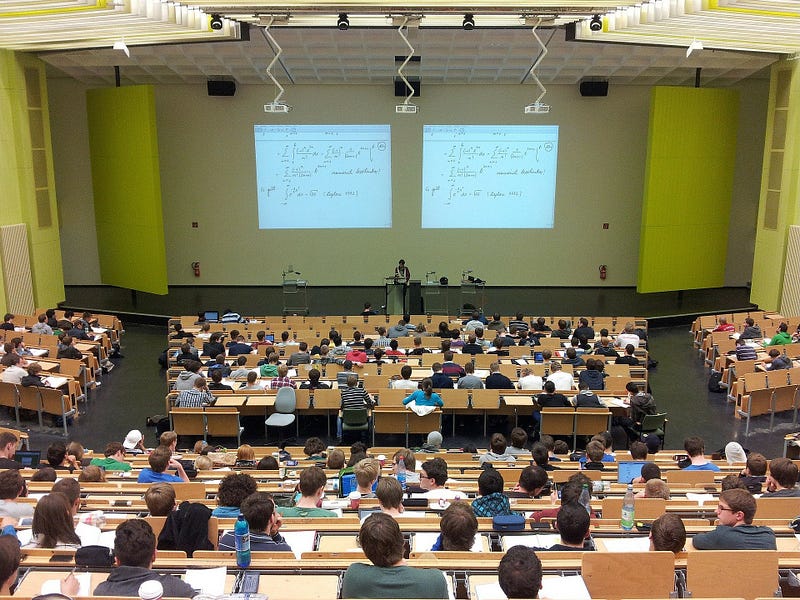
“When will we complete the assignment?” My friend Derek reminded me again and again.
Now, tomorrow was the deadline. I was waiting to reenter into my zone of excellence to finish our assignment. It was 4:00 pm, and I didn’t have a clue. Whatever I was waiting for, it was not coming to me.
“Don’t you worry. I’ll complete the assignment on time,” I lied. We were in the computer lab of the university. Derek had an expression of disbelief on his face, though he didn’t say anything.
Why did I act in such a conceited way? Was I trying to show off that I was special, more competent somehow?
“Just give me ten minutes,” I walked towards the lawn and squatted on the grass. I closed my eyes and started breathing. Was I lying? Or was I hoping not to lose faith in myself?
We, humans, are clunky biological machines. Especially me. My faith, the hope that I can do it, has always made my life difficult. Why couldn’t I work like normal people? My faith — an illogical thinking pattern — was my only superpower.
Faith is often the opposite of logic. Derek had no faith — but he had seen me in action. He wanted us to work daily on the assignment instead of leaving everything to the last day. And he was right. I knew that much.
He was standing in the corridor and looking at me nervously and impatiently. He chose me as a partner. I could present reasonably well, and I could answer the questions tactfully. The professors often admired my work.
He was stuck with me now. I was hoping to find my way back into my zone. I was just a nobody, a mediocre. I did not know if I could finish this assignment in the next few hours or not.
Years ago, I had finished a thirty-page assignment in four hours. But this was a new day. Could I do it today?
I have a brain defect. I discovered it when I was twelve. I can’t reread a book. I can’t rewatch a tv-series or a movie. It turns out that I am not the only one with this defect. The entire human species has it. It is called the attention bias to novelty.
We love to explore new things. New videos, lectures, stories, and novels are more interesting than applying your knowledge. I had spent the entire month reading more exciting books.
How could I forget the formula to reenter my zone of excellence? Wasn’t I the brilliant student?
Our assignment was related to business process management. We had to improve the performance of a hypothetical airline by improving its process flow.
After breathing, and all the other theatrics, I came back to the lab and luckily found a similar process flow of an actual airline. The universe was helping us, it seemed. Derek was happy that we had something to follow now. We only had to create charts, graphs, and a process flow that was sufficiently different from the original airline, and we could discuss the details to improve it.
But we had to write everything as well; we had to describe the roles and responsibilities of different process managers. It was a lot of work. He started typing on another computer while I worked on the graphs and charts part. We discussed some of the points, but otherwise, we kept working on our own.
Click, tick, tick. When I looked at the clock, it was 8:00 pm. Everybody else was gone. We were the only two people in the computer lab. It was getting dark.
We hadn’t eaten anything since that morning. I was a bit hungry, but I didn’t wish to eat anything.
I came up with some new ideas. Derek liked them. But when he pasted a snippet of text from a government site, the formatting of the Microsoft Word document went haywire. Margins changed, font size became small at some places and huge at others. It was a nightmare.
Derek told me, and I examined the formatting. It seemed impossible. After an hour, I found he had copied some
We had to submit a hard copy of the assignment with binding and a colored title page — by 9:00 am. When I reached my residence, it was 12:30 am. As I closed the door of my Honda Prosmatec, I remembered I had to prepare a presentation as well.
I told myself that I could do it. It was not impossible. I inhaled and exhaled for ten minutes and started working.
I finished creating the PowerPoint slides at around 2:30 am. I felt confident as I understood the entire process. I had some other ideas too that I jotted down on a piece of paper.
I woke up at 6:30 am. Derek had a colored print for the title, and our ring-bound hard copy was ready. We had emailed the assignment last night. Derek told me that the professor wanted a USB — with a soft copy of the work on it — as well.
At 9:00 am, we submitted the assignment. We were out of breath as we ran to the classroom. Laughing and giggling in the corridors.
“And why are you two so out of breath?” the professor asked. The whole class laughed. We sat down, and I waited for my turn to present the thing.
My presentation skills saved me that day. I had missed an important graph in one of my slides, but I used the whiteboard to explain the effects of our proposed improvements.
The Q&A session was nasty as usual. I tried to answer every question, but some of the questions were hard.
After two weeks, we were standing in front of a notice board. The professor had given us an A+ for our assignment and presentation.
“I knew you could do it,” Derek said. I think he was telling the truth. But he had to go through all the drama with me.
“This time, I thought I couldn’t,” I said, smiling. I knew I had a tough time preparing the assignment and the presentation. I thought I’d fail to finish it on time or earn a good grade.
For everybody else in the class, it was no big deal. I always managed to get good grades somehow. They seemed to know that.
Final Thoughts
At best, the most brilliant people rely on tiny sparks of brilliance. Moments when they do something which others don’t — not because they are brilliant but because they stick around.
Every one of us has a state of mind. It is what creates and recreates us daily. If I lose a state of mind, the reentry can be challenging.
Here is the formula:
- Don’t leave your work — ever.
- Don’t give up on yourself.
- Have faith that you’ll come up with something.
- Don’t run away.
- Come back and try to do it.
Our mediocrity leads us to tiny sparks of brilliance that we can use to build a roaring fire.
You can read my curated stories here.


