avatarYuko Tamura

Free AI web copilot to create summaries, insights and extended knowledge, download it at here

2640

Abstract

d="fa83">This can lead to instances of misunderstanding. You may imagine fresh chili peppers if you find peperoncino on a menu at an Italian restaurant in Japan, but almost without question, a plate of mouth-watering pasta will be served.</p> <figure id="4f54"> <div> <div> <img class="ratio" src="http://placehold.it/16x9"> <iframe class="" src="https://cdn.embedly.com/widgets/media.html?type=text%2Fhtml&amp;key=a19fcc184b9711e1b4764040d3dc5c07&amp;schema=twitter&amp;url=https%3A//twitter.com/ore825/status/1338765896777490432&amp;image=https%3A//i.embed.ly/1/image%3Furl%3Dhttps%253A%252F%252Fabs.twimg.com%252Ferrors%252Flogo46x38.png%26key%3Da19fcc184b9711e1b4764040d3dc5c07" allowfullscreen="" frameborder="0" height="281" width="500"> </div> </div> </figure></iframe></div></div></figure><h1 id="bc51">3 Reasons Why Japan Loves Abbreviations</h1><p id="5083">It’ll take forever to explain all the backgrounds of abbreviations, but here are some reasons why Japanese people abbreviate words all the time.</p><h2 id="9cf3">Convenience</h2><p id="b85f">This is the most common rationale. 近畿日本鉄道 (<i>kinki nippon tetsudō</i>, Kinki Nippon Railway) is too lengthy to refer to it by its full name. That’s why we usually opt to use a shortened version, 近鉄 (<i>kintetsu</i>).</p><h2 id="f293">Insider language</h2><p id="37d1">As you may be aware, Japanese people are adept at selecting words to accurately convey their emotions and maintain politeness in public.</p><p id="6a73">Just as most people change how they refer to themselves—“watashi,” “kochira,” and “tōhō” depending on the situation—there are multiple layers in social interactions.</p><p id="0d7d">Children may use slang to speak about their parents behind their backs, while shop employees must be impeccably polite in front of customers. These circumstances necessitate the use of code language.</p><p id="5489">For instance, before WWII, the Japanese Navy used ‘MMK’ among elite members instead of saying “もててもてて困る (I’m overwhelmed by my popularity)”[1]. They used MMK as a covert way of boasting about being the focus of attention. The Japanese Navy apparently had a glamorous social life given the fact that they also referred to geishas as “S” an abbreviation for “singer.”</p><h2 id="55cd">Haiku, Twitter, and messaging apps</h2><p id="f250">Traditional Japanese poetry haiku needs strict control to describe anything in 17 phonetic units, and it should adhere to 5–7–5 rhythm, meaning every word should be at least less than 7 phonetics in Japanese.</p><p id="ab42">So

Options

me argue that this rule is deeply ingrained in our psyche[2]. To write haiku, it is necessary to include a noun and (interjectional) particle within 5 or 7 phonetic units, such as <a href="https://readmedium.com/all-you-need-to-know-to-start-writing-haiku-today-9d05484d6ea9">夏草や (<i>na/tsu/ku/sa/ya</i>).</a> This certainly explains why many abbreviations are 4-letter, specifically, 4-beat words.</p><p id="d68a">Furthermore, this may also explain <a href="https://readmedium.com/here-is-why-japanese-people-are-addicted-to-twitter-e74ec7ac863e">why Japan is the second-largest Twitter cluster</a>. We see the charm in wordplay and abbreviations, and it’s simply easy to tap a small keyboard on a phone for communication with friends and family.</p><p id="0da7">As a language lover, I frequently experiment with the Japanese language. My husband and I often jumble the letters of a word, especially when we want to talk secretly within earshot of our child. At the end of the day, abbreviations make Japanese people’s lives easier in this polite country.</p><h2 id="1519">Sources:</h2><p id="3c05">[1] おけまる、それま、卍…なぜ若者言葉は意味不明? <a href="https://www.yomiuri.co.jp/fukayomi/20170831-OYT8T50041/4/">読売新聞</a> [2] なぜ日本人はなんでもかんでも略したがるのですか? <a href="https://jp.quora.com/naze-nihonjin-ha-nandemo-kan-demo-ryaku-shita-ga-ru-no-desu-ka">Quora</a></p><p id="f1c8"><i>If you enjoyed this article, discover other works of the author at <a href="https://medium.com/japonica-publication">Japonica</a>.</i></p><div id="fc95" class="link-block"> <a href="https://readmedium.com/top-picks-for-japanese-manga-fans-my-recommendations-for-2023-33a9243a04e8"> <div> <div> <h2>Top Picks for Japanese Manga Fans: My Recommendations for 2023</h2> <div><h3>Find your new favorite shōjo manga series that give you ‘kyun’ moments</h3></div> <div><p>medium.com</p></div> </div> <div> <div style="background-image: url(https://miro.readmedium.com/v2/resize:fit:320/1*jTMK7nU-ALmzbDsgID-y_g.jpeg)"></div> </div> </div> </a> </div><p id="a8f0"><a href="https://medium.com/@yutranslates"><i>Follow Yuko</i></a> <i>for more stories about cross-cultural topics, travel, business, parenting, and equality. You can also subscribe from the <a href="https://medium.com/@yutranslates/membership">referral link, </a>which Medium uses a portion from followers for author support without any additional cost. Mediumの購読は<a href="https://medium.com/@yutranslates/membership">こちら</a>からどうぞ。</i></p></article></body>

LANGUAGE

Why Japanese People Love to Abbreviate Everything

The byproduct of tradition and cultural habits
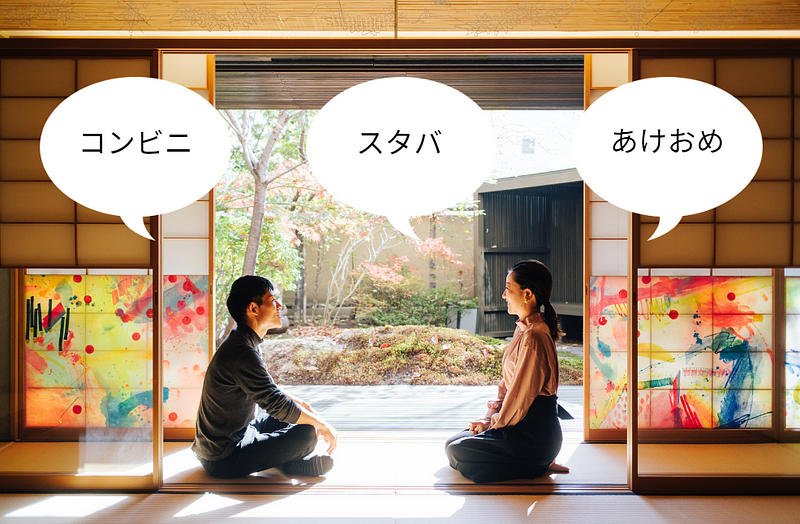
Image created by Author on Canva.

I recently published an article about rikejo,’ which means rikei-joshi women specializing in science and engineering. When one of the readers asked why Japanese people like abbreviations so much, I realized our language is full of shortened words.

Acronyms are prevalent in other languages as well; Gen-Zers are universally known for their proficiency in generating abbreviations.

However, people in Japan tend to use fewer acronyms and place a greater emphasis on the phonetics of words. This flexibility in forming new words is particularly distinctive to the Japanese language.

Funny Abbreviation Examples

Thanks to the widespread fondness for abbreviations coupled with the influence of regional dialects, there are some words that have yet to reach a consensus.

One of the most controversial words is McDonald’s. Just like McD’s and Golden Arches in English, people in Eastern Japan—including me—call it マック (makku) but in Osaka and neighboring areas, it’s マクド (makudo).

That being said, the majority of abbreviated words are widely recognized across the country, at least among the younger generations.

  • あけおめ (akeome): 明けましておめでとうございます (akemashite omedetou gozaimasu, Happy New Year)
  • コンビニ (konbini): Convenience store
  • スタバ (sutaba): Starbucks
  • イケメン (ikemen): いけてるメンズ (iketeru menzu, good-looking/attractive guy)
  • スマホ (sumaho): Smartphone (Somehow we call it sumaho, not sumafo!)
  • ステマ (sutema): Stealth Marketing
  • チューハイ (chūhai): 焼酎ハイボール (shochu highball—Japanese spirit mixed with soda)
  • ペペロンチーノ (peperonchīno): Aglio, olio e peperoncino (spaghetti aglio e olio)
  • ソフトクリーム (sofuto kurīmu): Soft-serve ice cream

Japanese people are generally aware of the full forms of abbreviations such as akeome, konbini, and sutaba. However, we often lack familiarity with the original terms of certain abbreviations, such as aglio, olio e peperoncino, and soft-serve ice cream.

This can lead to instances of misunderstanding. You may imagine fresh chili peppers if you find peperoncino on a menu at an Italian restaurant in Japan, but almost without question, a plate of mouth-watering pasta will be served.

3 Reasons Why Japan Loves Abbreviations

It’ll take forever to explain all the backgrounds of abbreviations, but here are some reasons why Japanese people abbreviate words all the time.

Convenience

This is the most common rationale. 近畿日本鉄道 (kinki nippon tetsudō, Kinki Nippon Railway) is too lengthy to refer to it by its full name. That’s why we usually opt to use a shortened version, 近鉄 (kintetsu).

Insider language

As you may be aware, Japanese people are adept at selecting words to accurately convey their emotions and maintain politeness in public.

Just as most people change how they refer to themselves—“watashi,” “kochira,” and “tōhō” depending on the situation—there are multiple layers in social interactions.

Children may use slang to speak about their parents behind their backs, while shop employees must be impeccably polite in front of customers. These circumstances necessitate the use of code language.

For instance, before WWII, the Japanese Navy used ‘MMK’ among elite members instead of saying “もててもてて困る (I’m overwhelmed by my popularity)”[1]. They used MMK as a covert way of boasting about being the focus of attention. The Japanese Navy apparently had a glamorous social life given the fact that they also referred to geishas as “S” an abbreviation for “singer.”

Haiku, Twitter, and messaging apps

Traditional Japanese poetry haiku needs strict control to describe anything in 17 phonetic units, and it should adhere to 5–7–5 rhythm, meaning every word should be at least less than 7 phonetics in Japanese.

Some argue that this rule is deeply ingrained in our psyche[2]. To write haiku, it is necessary to include a noun and (interjectional) particle within 5 or 7 phonetic units, such as 夏草や (na/tsu/ku/sa/ya). This certainly explains why many abbreviations are 4-letter, specifically, 4-beat words.

Furthermore, this may also explain why Japan is the second-largest Twitter cluster. We see the charm in wordplay and abbreviations, and it’s simply easy to tap a small keyboard on a phone for communication with friends and family.

As a language lover, I frequently experiment with the Japanese language. My husband and I often jumble the letters of a word, especially when we want to talk secretly within earshot of our child. At the end of the day, abbreviations make Japanese people’s lives easier in this polite country.

Sources:

[1] おけまる、それま、卍…なぜ若者言葉は意味不明? 読売新聞 [2] なぜ日本人はなんでもかんでも略したがるのですか? Quora

If you enjoyed this article, discover other works of the author at Japonica.

Follow Yuko for more stories about cross-cultural topics, travel, business, parenting, and equality. You can also subscribe from the referral link, which Medium uses a portion from followers for author support without any additional cost. Mediumの購読はこちらからどうぞ。

Language
Japan
Social Media
Travel
Culture
Recommended from ReadMedium