
SOCIAL MEDIA
Here Is Why Japanese People Are Addicted to Twitter
Everything about crazy rich Twitterland
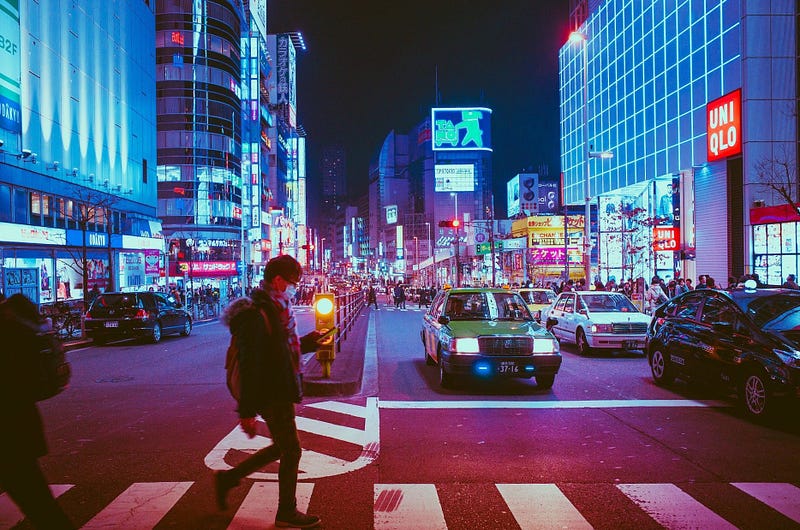
Japanese people LOVE Twitter. We’re the second-largest cluster with 58.95 million accounts, which is next to America’s 76.9 million.
The reason for our dedication to this social media is often discussed—of course, on Twitter—and it comes from the following reasons.
Five Reasons Why Japan Loves Twitter
- The Japanese language is high-context, and 140 characters can tell much richer information than in other languages—for instance, English.
- Having the word count limit is similar to the concept of haiku and tanka, which are short forms of poetry, so many Japanese people see the charm in Twitter.
- Since the massive earthquakes in Japan such as the Great East Japan Earthquake, Twitter has been serving as a news source of natural disasters.
- Japanese people are punctual. Trains’ delay is also shared on Twitter as a popular topic, even if the delay is not so serious.
- Some offer cash on Twitter—Japanese billionaire Yusaku Maezawa gave away 100 million yen ($7.5k) to 1,000 people in 2020, and his tweet marked 3 million retweets. And he has made this donation multiple times.
These are the bright notes of the Japanese Twitter culture, though I’ve never retweeted the billionaire’s generous offer because I’m still where we go silent on money issues.
How Unique Is Japan’s Twitter culture?
Generally speaking, anonymity helps privacy protection for people who want to raise their voices against authoritarian controls.
However, when it comes to Japanese users, people apparently appreciate anonymity because it liberates them from the oppressive peer pressure that dominates the country; one must always be polite and respect others, especially older people.
These grounds explain why 75.1% of the Twitter accounts in Japan are anonymous. Only 19.4% use their real names, and that’s the opposite leaning compared to the U.S. and other countries.
The Japanese government conducted this research in 2014, way before Maezawa started his donation, and there is a chance it is even more extreme today.
Extremely Strong Sense of Community
Japanese people often call the platform ‘ツイッタランド (tsuitta-rand, Twitter-land—the community and the space of Twitter)’ given its strangely diverse characteristics of users.
I recently witnessed my followers complain about a newly released English study app, which they accused of being bogus compared to existing ones. Their persistent negative feedback soon succeeded in shutting down the provider’s Twitter account and the application itself on the App Store, and my friends appeared to be satisfied with their achievement.
The throwdown over the mock copy of English learning apps made me wonder why no one gets fired up over the many copies of other American products—for instance, the various Japanese knockoffs of Wordle.
Although I appreciate the great teamwork of Japanese people, the hive mind takes on a sinister quality when it comes to cyberbullying and blow-ups, and many of these are intentionally caused by anonymous accounts.
I muted one of those accounts for my easygoing Twitter life and wished for their peace of mind whatever causes them to do that is silenced.
I usually check Twitter only a few times a day, but still, I’ve muted many words and accounts over the course of years. In my case, most of the muted words are offensive terms and some names of English qualification exams. (My Twitter friends are mainly English teachers and learners, and they tweet about their study progress and results of TOEIC too often, which has nothing to do with me.)
Will Elon Musk Change the Culture?
Nowadays, Japanese users swing from exhilaration to sorrow every time Elon Musk tweets.
Many are worried about losing their unidentified accounts in the future, and I feel sorry for them as I’ve seen tweets saying “this is the only place I can express my true feelings” so many times.
I don’t know their real names, but they’re devoted mothers, victims of harassment, and underrepresented people who need the extra layer of protection to speak up, at least on the internet.
It is undeniable any minor changes to privacy settings will have a significant impact on Japanese users.
So far, my favorite Japanese account is an illustrator who periodically shares adorable drawings of cats. Now it’s just my close friends and the kitties to fill my timeline until the forthcoming impact of Elon Musk, though I’m not sure how serious he is about the Twitter deal.
If you enjoyed this article, discover other works of the author at Japonica.
Follow Yuko for more stories about cross-cultural topics, travel, business, parenting, and equality. You can also subscribe from the referral link, which Medium uses a portion from followers for author support without any additional cost. Mediumの購読は、こちらのリンクからどうぞ。


