
Why Isn’t Every Man a Feminist?
What part of fairness is too radical for you?
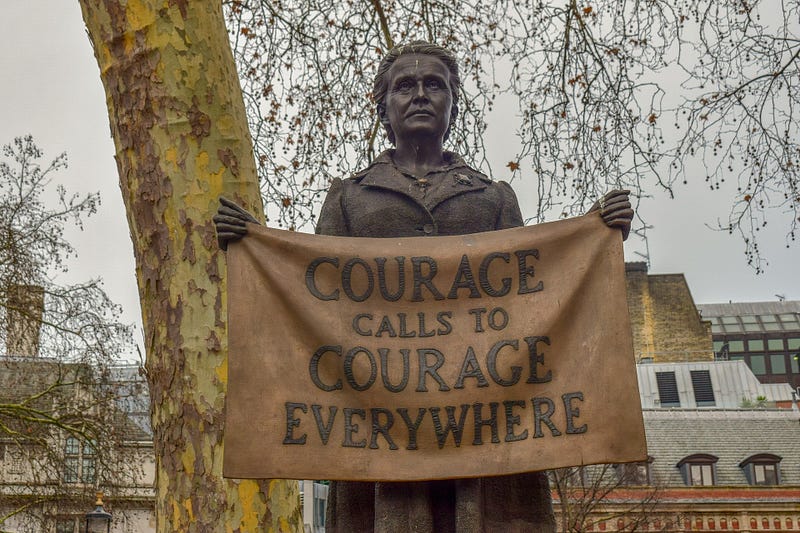
First, let’s clarify what we’re talking about: Feminism, stripped of all the modern rhetorical bells and whistles, is the belief that women are fully human beings and entitled to the same freedoms, opportunities, protections, and respect as men. Not more, not less. The same.
It’s about personal autonomy and self-determination, choosing your own path in life. Feminists believe we all should have that right, men as well as women.
The competing view—let’s call it the traditionalist position — is that women are inferior to men and that their proper place, therefore, is in the home providing men with comfort and offspring. Throughout much of human history, this view has been enshrined in legal codes that treated women as men’s property with no rights whatsoever.
I’ve been a feminist for over 50 years.
To my teenage mind, what was then called women’s liberation seemed too obvious to be a matter for debate. My female friends and classmates were as smart and as hard-working as the male ones. Why shouldn’t they have just as many options for their future education and careers? I also realized it wasn’t only women who were needing liberation from our antiquated gender roles.
Throughout my adult life, I’ve seen that liberation happening. Women doing jobs that only men had done before, from soldiers to surgeons, architects to archeologists. Vice versa, too. Male nurses. Female astronauts. Male executive assistants. Female sports reporters. Even Barbie donned a hard hat, grabbed a lunchbox, and stopped whining, “Math is hard!” to anyone who pulled her string. Best of all, the novelty eventually faded —few people are surprised now by a working person’s gender.
Some people grumbled, naturally. You can’t have change without resistance. But much of the complaints centered on one occupation: housewife. They accused feminists of shaming women for choosing what was once regarded as a noble calling. And maybe that was happening in places, but it seemed to me most mothers worked a second job — in addition to their unpaid work at home — because the family needed their income. What’s more, of those who did opt to stay at home, many ended up discovering, much to their dismay, that lack of work experience made the job search difficult when they got traded in for younger models and were suddenly expected to support themselves.
But we were seeing progress, and not just in workplace options. Banks, for example, stopped requiring men to cosign women’s credit applications and began allowing married women to open checking accounts in their own names. I saw those and many other changes in my lifetime, and just because they were so clearly both humane and rational, I assumed — naïvely — that most men approved of them.
Many did, especially in my highly-educated social circles. But fewer in the wider world, where progress got bogged down well short of true equality. Yes, there were more female faces in Congress and a handful of successful women breaking through glass ceilings in the business world. But even in the countries that passed laws requiring equal pay for equal work, including the US, exceptions and discrimination ruled. Because men ruled. Because men still rule, nearly everywhere.
Feminism is about equality and fairness. It isn’t fair that male authors get preferential treatment from publishers. It isn’t fair that male teachers are promoted into principal positions over better qualified female ones. It isn’t fair that male patients’ complaints — including pain — are taken more seriously by physicians than those of girls and women.
And it is beyond unfair that female children are denied access to education, that female genital mutilation is still practiced, that girls and young women are enslaved and trafficked, that dowry killing and “honor” killings persist, that female fetuses are selectively aborted . . .
Speaking to my fellow guys, the ones who say they’ll never be a feminist:
I’m struggling to understand. Are you actually comfortable with all of this? Do you want so badly to keep women “in their place” that you would turn a blind eye to the violence done against them every day?
Do you honestly believe that men are more intelligent than women? That woman cannot learn the skills required for jobs traditionally done by men? That women’s brains aren’t “wired” to master finance, business, or STEM disciplines? That women lack the mental competence to make decisions on their own?
Some of you, I know, believe a woman’s highest calling is to marry a man, bear his children, and keep house for him. Do you, therefore, believe that every woman should be forced into that role, even those who don’t want to be mothers or housewives? Even those whose gifts would make them brilliant scientists, physicians, athletes, or musicians? Would you be contented in a world where every male was forced to be a soldier, regardless of his talents or his dreams?
Or might there be another reason why you don’t believe in women’s rights of self-determination? Are you afraid of women in the workforce because they might be better qualified than you are for jobs you want? Are you hoping for a promotion but afraid the boss may notice that the woman down the hall is outperforming you? Are you worried that you may at some point have to take direction from a female supervisor?
Many men these days complain that feminists have ruined dating. I confess I can’t imagine how that’s possible. (I personally believe the opposite.) But if what you’re looking for is someone empty-headed but attractive, who will laugh at all your jokes, never challenge your opinions, and repay in physical affection all the money you have spent on her, I suppose that kind of woman may be getting hard to find.
When a woman knows her worth, her standards change. She starts expecting intelligent conversation from her dates — and respectful treatment. She stops believing any man is better than no man.
Do they still need us?
I think that last point may be where so many men lose their enthusiasm for female empowerment. A woman capable of self-support and self-direction, unlike those fair and tender ladies of the past, is not forced to settle for whatever man she can drag to the altar.
When Gloria Steinem wore her famous tee-shirt that proclaimed, “A woman needs a man like a fish needs a bicycle,” many men saw their worst nightmare coming true. An independent woman, one who doesn’t need a man for anything. If that became a trend, could men be sure of finding mates, or even dates?
The hue and cry began in nanoseconds: “Lesbians!” The answer from the Women’s Liberation Movement leadership was, in effect, “Some are, some aren’t. So what?” But that myth simply will not die, because so many men cannot imagine how a heterosexual woman could survive without a man.
Insecure people feel like they need to be needed. (Cue Stevie Wonder: “For once in my life, I have someone who needs me.”) But the security of being needed is illusory. When we grow up emotionally, we learn to distrust dependency-based love. Adult relationships require no less than 2.0 adults. Only people standing on their own can truly stand together.
Insecure men still promote the narrative that feminists are lesbians, rather than accept the notion of a self-sufficient woman with a healthy sex drive who wants an equally self-sufficient male partner. Wanting to be wanted is not at all like needing to be needed.
“Man-haters”
What I hear most often from my anti-feminist male colleagues is that feminists are women who hate men. And to be fair, I know some female feminists who do. But mainstream feminism is a big tent, where one will find not only shrill and strident activists, but also happily partnered heterosexual women, single women who enjoy male company, and lots of men — especially educated ones.
Women who hate men — and not all of them are feminists — are often ones who have been victims of domestic violence, harassment at work, sexual assault and exploitation, discrimination from government officials, and misogynistic attitudes in church. Hating and mistrusting all men may not be the healthiest response, but I can’t say it isn’t understandable.
There are also women who are angry at all men for all the ways that women are unfairly treated in the world, just as there are men who blame all women for the fact that they can’t get a date. But the issues aren’t the same. I’ve written here about the incels, a pathetic group in many ways and occasionally dangerous. Their misogyny is based on a delusional system that distracts from (and unfortunately prolongs) their arrested social and emotional development.
And I share women’s anger at those men who will not admit that women still face discrimination in many forms, oppression in many places, and the constant threat of violence both from strangers and from loved ones. And that those conditions are not limited to third-world and Islamic nations. Just like “color-blind” White people who would like to think racism ended when Obama was elected, far too many men are equally naïve about the level of equality between the sexes.
But female anger is primarily directed, not at men as individuals, but at the cultural traditions, norms, and institutions that preserve male power over women. The incomparable Elle Beau ❇︎ has explained the distinction better than I ever could:
Another thing we feminists all hate is double standards. The unwritten rules that shame men when they cry, castigate women when they get assertive, congratulate male promiscuity, don’t take female leaders seriously, and rationalize egregious male behavior, saying, “Well, you know, boys will be boys.”
The Challenge
Many men want to believe that feminists are shrill and ugly harpies who hate men because they can’t find boyfriends — female incels. Or that feminism is anti-chivalry or anti-family. Or that the original movement’s goals have all been realized, and those who now describe themselves as feminists are simply hypersensitive to minor or imagined slights.
But if you are a man who cares about women and wants to see your daughters, sisters, and other female loved ones thrive, you need to challenge those false narratives. Because, in case you hadn’t noticed, men are still in charge of nearly everything. Government. Religion. Business. Finance. Labor unions. Healthcare. Education. Media.
Discrimination — in hiring, salaries, and promotions — is still more the rule than the exception in a lot of industries. Conservative political and religious leaders still resist advancing women’s opportunities, protecting them from domestic violence, and allowing them to make their own reproductive decisions. The former president’s fratboy rhetoric unleashed a whole new wave of in-your-face misogyny, just as the #MeToo movement was revealing how many men — not just the rich and famous — had been assaulting women with impunity for decades. And women still can’t walk past a construction site without enduring catcalls and lewd propositions.
In other words, we’ve got a long, long way to go before our culture offers women equal opportunity, equal pay, equal respect, or meaningful protection from men who can’t be bothered to control their urges. It’s time to ask yourself if this is the kind of world you want for all the women in your life.
If it isn’t, you might be a feminist.
More from Edward Robson, PhD, MFA:
If you would like to become a Medium member to receive unlimited access to mine and thousands of other writers’ stories, just click the link below. If you join from this link, you will be helping to support my writing. Thanks!
Thanks to Elle Beau for editing assistance.