
Why Your Indian “Auntie “ May Not Actually Be Your Auntie
Indians are not always related to their “aunties” “sisters” or “brothers-in-law”
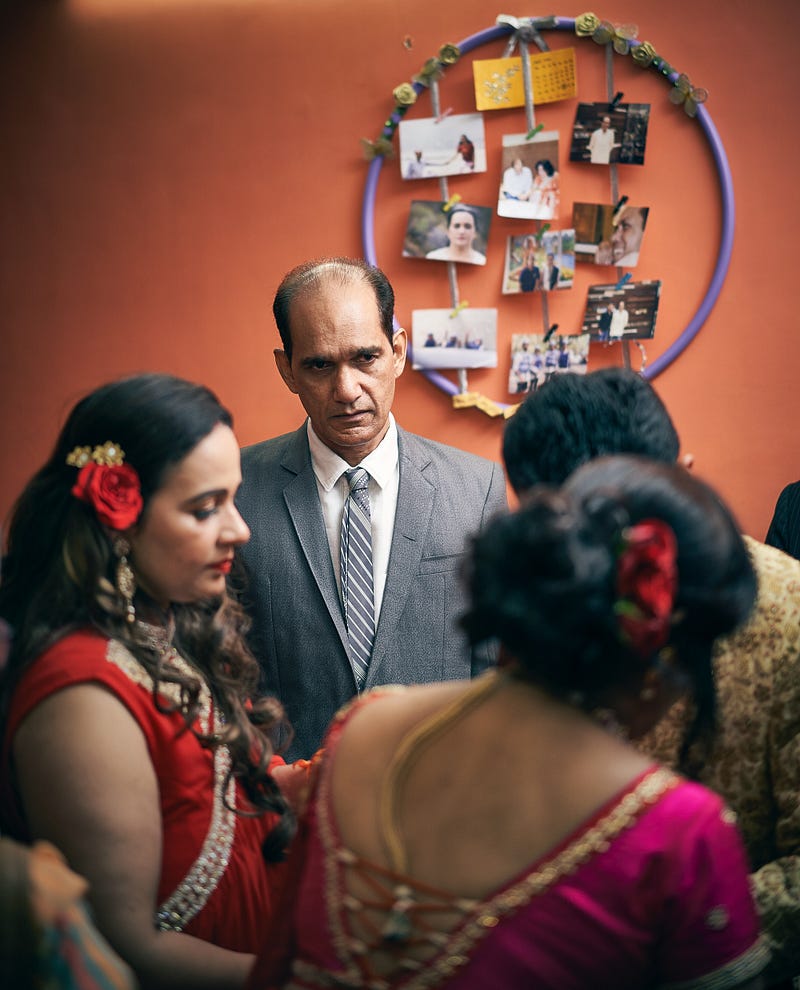
In India, it is the custom to address people a generation older than oneself as “uncle” or “aunty.” It is seen as ill-mannered and disrespectful to call your elders by their first names.
It is also common — especially among pre-millennials — to address unrelated members of the opposite sex as “brother” or “sister.” Or more formally as “brother-in-law” or “sister-in -law.” (This doesn’t apply if you are romantically involved with the person.)
The “brother” or “sister” could be a neighbor, acquaintance, or even a stranger. It is considered inappropriate to use the person’s first name without being invited to do so.
Younger siblings or cousins often address the older ones with “elder brother” or “elder sister” tagged on after their names. It signifies respect and affection.
My younger daughter refers to her sister by name. But she always addresses her as “Didi,” meaning elder sister.
Things are changing now. These forms of address are more prevalent in rural areas and small towns. Urban India — in this and other respects — looks to the West.
“Ellen” and Coming to America…
Two years after moving to America, I signed up for computer classes at a community college in Chicago. One of my classmates was Ellen — frail, eighty, and a voracious learner.
I found it hard to address her as “Ellen.” Still, I had lived long enough in the U.S. to know you didn’t call a woman “Aunty” — unless she was, in fact, your aunt.
So, I compromised by always using Ellen’s name when speaking to her. As in: “How are you doing, Ellen?” instead of just: “Hi! How are you doing?”
The first form of address sounded more courteous and less offhand to my ears.
And then there was Mike…
Sometimes, the shoe lands on the other foot.
When my younger daughter, N, lived in Houston (where we live), she spent every Diwali — the Hindu festival of lights — with us. Many of her friends were Indian students pursuing graduate or post-graduate degrees at universities in and around Houston.
Every year, I invited these young people to a Diwali dinner at our place. And, because they were Indian, they called me “Aunty” and hubby “Uncle.”
One year N brought a friend, Mike — who was not Indian.
“Hello, Gauri,” Mike said when N introduced us.
N looked uncomfortable. “Mike… umm… could you call my mom ‘Aunty?’”
I widened my eyes at my daughter.
I told Mike he could address me by my first name.
But Mike smiled and said, “Hello, Aunty.”
N is still good friends with Mike. When they meet, he asks about “Uncle” and “Aunty.”
Code-switching…
Code-switching is defined as: “The process of shifting from one linguistic code (a language or dialect) to another, depending on the social context or conversational setting.”
“Code-switching also involves switching between dialects, styles of speech, gestures, body language, and vocal registers.” (Quoted from Uma Gunturi’s excellent article on code-switching.)
Most people modify their vocabulary and body language depending on who they are speaking to. Almost all immigrants do this.
My daughter runs her own business and meets with people across diverse backgrounds.
When N speaks English with Indians, her language and pronunciation are distinctly Indian. With non-Indians, she switches to an American vocabulary and accent.
Like most immigrants, I too have grown accustomed to code-switching. I address non-Indian friends or acquaintances by their first or last names — regardless of age.
But when I interact with Indians, I vary my mode of address according to the person’s age.
If they are an entire generation older than I am, then it’s “aunty” or “uncle.”
Half a generation senior merits an “elder sister” or “elder brother.”
Even here, the terminology can vary according to the region of India to which they belong. And the regional language they speak. An “elder sister” from North India might be “didi.” From a southern state, she would be “akka.”
(Some Indian-Americans prefer to go with their first or last names in keeping with American culture.)
But oh “Ji” there’s just one more thing…
Hubby works in the I.T. industry. About two-thirds of the Indian consultants on his team reside in India, and the rest in the U.S.
When he’s on a call (and on speakerphone), I know right away when he’s talking to Indians living in India. His younger co-workers usually tag an honorific to his name — “Ji.” (Spoken as “jee.”)
So, if hubby’s name were “Neel,” he would be “Neel-ji.”
Ji is a gender-neutral suffix. It is a mark of deference and respect, similar to the Japanese “san.”
Summing up…
“What’s in a name?” quoth the Bard.
I would argue there’s lots in a name. It tells you about the person’s likely country of origin or residence, their ethnicity, or the generation they belong to.
There are more clues embedded in the forms of address attached to the names. They reveal the individual’s social status, degree of intimacy or family relationship to the speaker, age, sex, or occupation.
And “Uncle” and “Aunty” is really about some of those things.
Thank you, Lucy Dan 蛋小姐 (she/her/她), for tagging me in your November 12 Prompt: How has your culture shaped your expectations on what’s “right” or “wrong” in relationships?
I don’t know that my response is precisely on point. But I was inspired to write about my own experience of straddling two cultures after reading Lucy’s colorfully titled piece.
Thank you for reading. If you liked this story, you might like these as well:
Thank you Lucy Dan 蛋小姐 (she/her/她) for publishing my story.


