
Why I’m not Raising My Daughter to be a Lady
How to overcome gender stereotypes and reinforce gender equality at home

Recently, we had a little girl over at our house to play with my eight-year-old daughter. I smelled something suspicious, and my daughter said someone must have passed gas.
The little girl responded, “Well, it certainly wasn’t me. I’m a lady. I would only go toot in the corner.”
It took me back. Not because she would be courteous and limit her bodily functions away from others — I thought that part was considerate — it was because she felt she had to do so because she was a “lady.”
She was all of five years old and felt that her gender meant she had to behave a certain way.
What does being a lady even mean? What would these defining characteristics be? My mind instantly went to the antiquated stereotypes of women being seen and not heard. Of women being passive and nurturing, rather than being aggressive and dominant.
Mind you, the little girl’s mother is none of those stereotypes, so I don’t know where she’s learning them. Even now, these stereotypes influence how women are perceived in the workplace and contribute to the inequality in pay and job opportunities between men and women.
Gender stereotypes still affect women at work
A Forbes article by Andie Kramer, cited below, noted that “[m]ost workplaces are dominated by men and operate in accordance with masculine norms, values, and expectations.” Women are often perceived as “communal,” being nurturing, loving, and kind. Men are considered to be “agentic,” and act with control.
Due to these gender biases, “an overwhelming majority of people associate ‘men’ with leader-related roles such as boss, CEO, and director” while associating “‘women’ with aide-related roles such as assistant, attendant, and secretary.”
These conceptions translate into why men are promoted to leaders and women, even those without children, are not promoted. It’s why aggressive women are labeled “bitchy” and “unlikeable,” and aggressive men are elected President.
So no, I don’t want my daughter to be lady-like, or think that I have different expectations for her because she’s a female.
- I don’t want her to give more than she gets.
- I don’t want her to always apologize first.
- I want her to be bold. I want her to stand her ground.
- I want her to not care what others think.
Because that’s exactly how men are and that’s how they have managed to rule the world these last centuries! Or at least that’s how men are perceived to be, and thus reap the financial benefits.
In my push for her to be bold, I’m also self-conscious when she’s kind. When I pick her up from school, she offers me and her brothers the Goldfish crackers she saved for us from her lunch. Sometimes she’ll make their lunches so they don’t have to. She leaves notes all over the house telling me she loves me.
Even though her kindness tugs at my heart, I want to tell my daughter to resist these stereotypes, to eat all her Goldfish without remorse, to not ever smile for anyone other than yourself, to not be sweet, and to be as salty as she wants and to shift the dialogue.
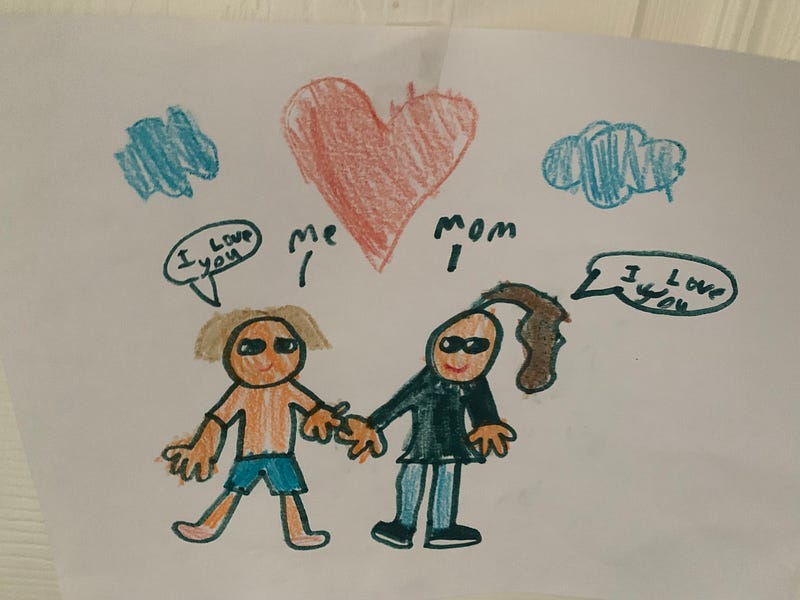
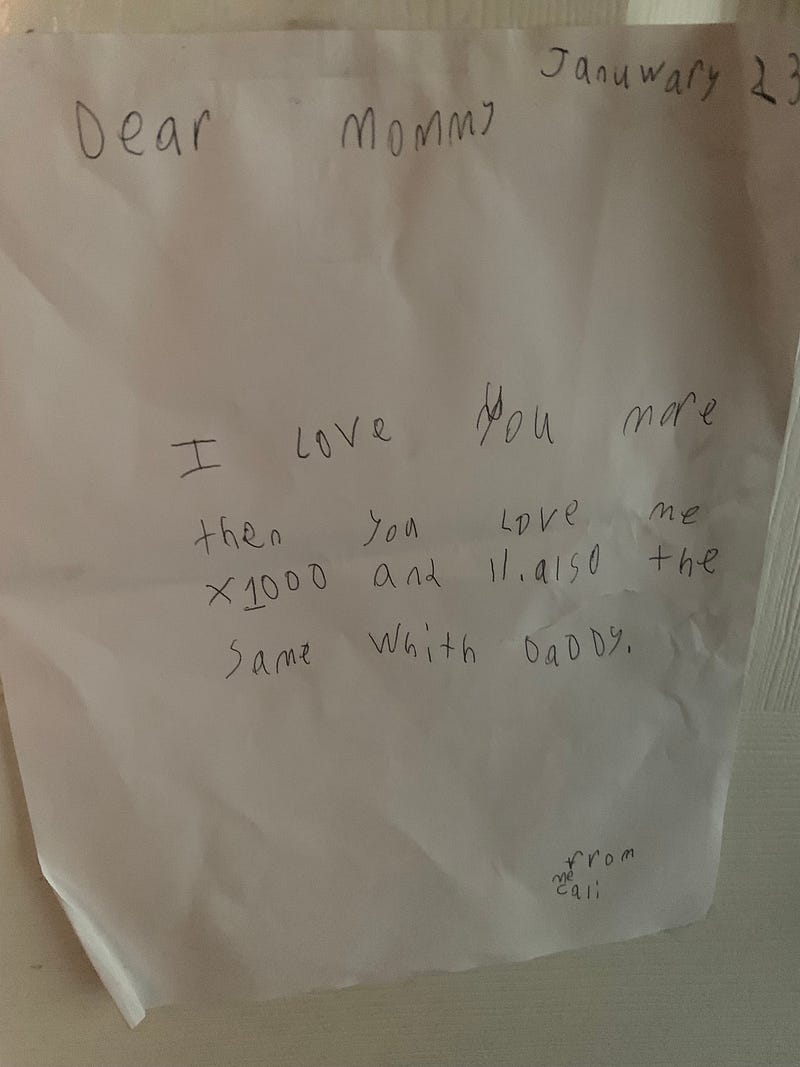
But I realize the answer to this problem is not to extract my daughter’s nurturing and loving side. The unraveling of the gender roles doesn’t lie in changing her at all.
Instead, my husband and I should focus on instilling values of kindness, confidence, honesty in all our children, including our two sons, and to remove the stereotypes surrounding masculine/feminine traits.
We have to shift the narrative from saying that women and men are equally capable to actually believing and modeling that women and men are equal in the workplace and at home.
This is especially true in states like Florida whose child custody laws default to 50/50. If you are a stay-at-home parent and primary caretaker of the children, under the new laws, child custody will default to 50/50.
Since child support is allocated partly by child custody, many former primary care-taking parents (which are more often women) will now get minimal child support. Alimony laws have also been revised. It is now rarely given because it is presumed you should support yourself even if you have been taking care of your family for years, or taken away if you enter into any relationship viewed as “supportive.”
The law does not recognize how much taking off even a few years to raise children can affect a person’s income earning potential. I recently assisted a friend with her divorce. The judge encouraged the parties to settle, advising it was a “50/50” case down the board — house and children to be split.
The Judge did not care that my friend had been the primary caretaker, that she helped put her spouse through school, and made 1/3 his income. Minimal child support and no alimony were awarded despite it being a 17 year marriage.
Working in the family law space has made me a huge advocate to let stay-at-home parents know how little the law will protect them. They have to protect themselves. If the law is presuming both parents can equally change diapers and do bottle feedings, then both parents should be doing those things.
Gender stereotypes are also harmful to men
In her book, Nurturing Boys to Be Better Men: Gender Equality Starts at Home, Dr. Shelly Vaziri Flais, pediatrician and mom to four, presents tips to help raise better men, by pushing back cultural stereotypes and toxic masculinity as you nurture your sons.
She notes that even women who work more than men tend to handle more of the mental and physical load of taking care of a home and family. It is because stereotypes act like it is not “manly” to change a diaper or feed a baby.
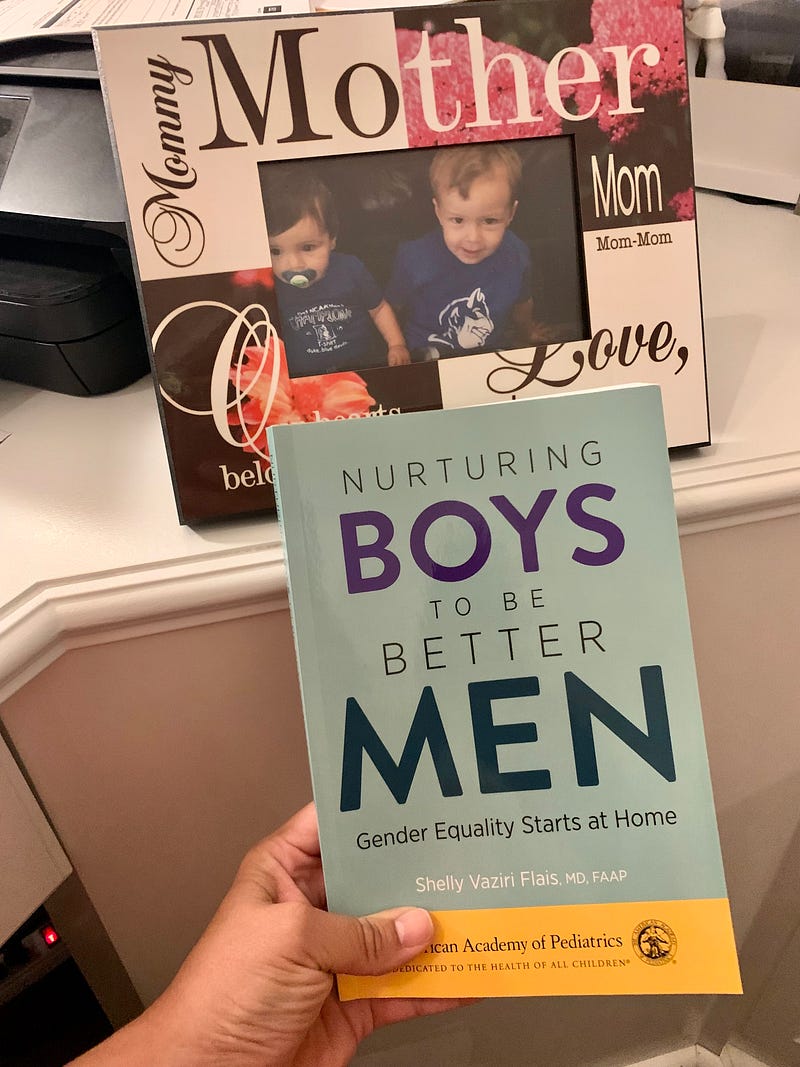
To combat this, we have to change how we talk about fathers and mothers. Dads aren’t child care “helpers” or the only ones capable of providing. Both parents are capable of being equal partners.
Dr. Vaziri Flais suggests talking about how work in the home and with the kids will be distributed while you are pregnant, and making sure to include your sons, not just your daughters, in household chores.
I particularly liked the discussion on normalizing sharing feelings with your sons. She notes there is a direct line between emotionally troubled boys and societal violence. I never want my boys to feel like their gender means they can’t express their feelings.
My boys will know it’s okay to cry.
All of my children also are in charge of various chores. They wash and fold their own laundry. They clean the bathroom, scrub the toilet, make their lunches. They take out the trash and walk the dog. They all help cook.
Everyone does the same. No one is treated differently. (Although I don’t let any of them mow the lawn because I’m scared they’ll run each other over.)
Recently, I asked my children what it meant to be a mommy, they said to be kind, caring, and forgiving. (I sweated bullets waiting for their response. I had stayed home so long. What had I taught them?)
When I asked what it meant to be a daddy, they said the exactly the same thing!
Even though for years I was a stay-at-home parent, we have always modeled equality, and my kids noticed. The minute my husband was done working, he helped with the kids and with dinner. I do not laud or commend him for taking them to soccer or making their lunches because it is his responsibility just like it is mine.
My husband does not view taking care of his children as babysitting, but rather fulfilling his parental role. I have several friends whose husbands are the primary caregiver, but feel stigmatized. My sons love taking care of my nieces, and have no doubt they will be excellent parents if they choose that path.

We have to normalize men being caretakers just like we have to normalize women being breadwinners.
I believe each family should do works best for them, but be mindful what example they are showing their children. I also generally take care of the issues in our home, changing light bulbs, snaking toilets, taking the cars for oil changes and filling their tanks with gas.
If a burglar broke into our home, I would tuck my husband in a closet with the kids and go investigate. My husband folds the laundry and does the dishes. We are an inclusive unit.
Now that my children are older, I’ve re-entered the workforce as an attorney and as a writer.
When I made a comment to my son about returning to work, he said “you have always worked taking care of us.”
It was incredibly validating to know my children value what I do equally with my husband. They know we both take care of them. They know we both do the household chores. They know we both provide for them.
Stereotypes are learned behaviors, meaning we can unlearn them.
My children view a mother and a father as equals. One day they will be the people working in the companies or raising children, and their views will influence how they perceive others.
They will move the ball one step further to eliminating outdated gender norms and assuring that all people, regardless of gender, toot in the corner. Because let’s be honest, that is something I will strive to teach all my children for the betterment of all of us.
Thank you for reading. If you like this essay, follow my Medium account and Instagram at @Julie Calidonio.


