
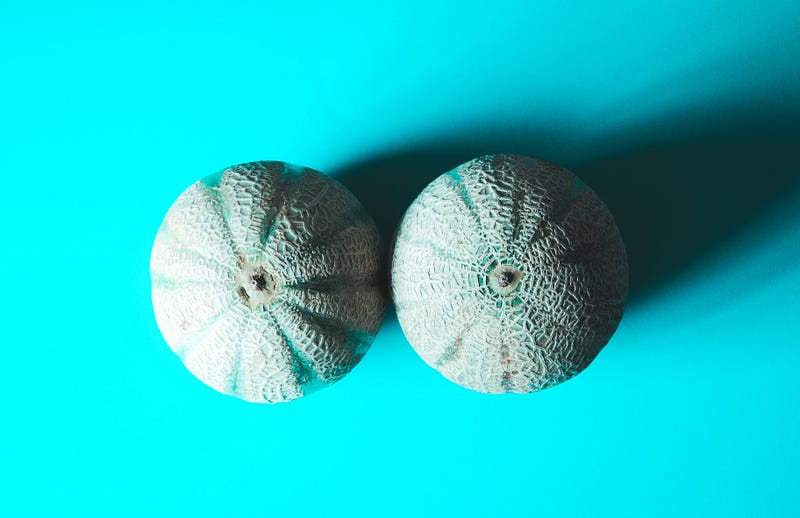
Can We Talk About My Tatas?
Are You there, God? It’s me, Julie Cali.
Dear God,
Remember when I was an oily-faced chubby pre-teen, praying to you, asking if my breasts would finally grow?
Adult me is ashamed that young me even wasted your time with such frivolities. Sorry about that. But You made me, so in my mind, it made sense that You could accelerate the development process at your whim. Besides, I prayed for other things, too, like world peace. I tried very hard to be only a partially self-absorbed pre-teen. After praying, I’d pass out the minute my head hit the pillow, eager to wake up each day to see if You’d answered my prayers and if they’d finally come.
Then, one day, they did.
They weren’t quite as firm or plump as I had seen on TV. Baywatch’s Pamela Anderson set unrealistic expectations in my young teen mind. But they were mine nonetheless. I thanked You for listening to my prayers knowing that in the totality of all You do, this one prayer seemed inconsequential, and yet somehow You found the time to answer it.
They were a great pair too!
Seeing me through good times and bad. In my twenties, they perked up in my Victoria Secret’s push-up bra on special occasions. They relaxed in my sports bra when I took an occasional jog. (Okay, in my youth, I rarely moved, let alone jogged. I should know better that euphemism has no place in a letter to God.) I dusted the tops with bronzer to make them sparkle when we went out for late nights in New York City.
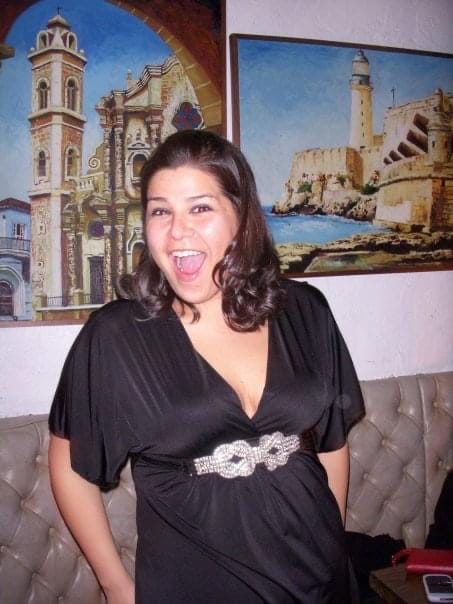
I reminded my breasts all the time just because you aren’t the biggest, doesn’t mean you shouldn’t shine the brightest. My immature sense of self was wound with how they felt and how they looked.
When they felt special, I felt special.
When they felt flat, I felt flat.
When they felt criticized, I felt criticized.
I blame Baywatch again for this. And a society that emphasizes breasts as sexual items and teaches that femininity and value correlate with cup size. A lesson that, even now, I struggle to unlearn.
In my thirties, my attention to my tatas faltered a bit as I set up my home and started my family, but they never complained. When my children came, and my breasts finally grew bigger, they also became more uncomfortable. You might have heard me cursing a bit when they filled with milk and turned to rocks.
You might not be aware — but breastfeeding isn’t for the weak.
My nipples cracked. They oozed. Ducts clogged. They unclogged. I cried. I laughed. Nurses and others flooded the room at all hours squeezing my breasts and pushing them into my newborn babies’ mouths to get them to latch.
Sometimes they did. Sometimes they didn’t.
I cursed my son’s tongue tie, a condition that restricted his tongue from nursing properly, but then apologized, knowing I should never take Your name in vain. I decided that breast was probably not best if it meant losing your mind. A man must have come up with that slogan.
I traded my push-up bras for nursing bras.
What had been my once-prized possession, my symbol of womanhood now became an apparatus to feed my children.
Who knew breasts were functional and served a purpose besides being decorative? (Well, maybe you knew.) Something that had been private, viewed naked only by my husband in my bedroom with the lights off, suddenly became public, being whipped out at all hours of the day and places.
When I woke to feed my second son, who ate every two hours for a year, I threw breast pads soaked with my leaking milk at my husband’s head. It seemed unfair, God, that he didn’t get to share in the pleasure of such a joyous experience.
Despite the hardships, the last time I nursed my last child, I cried. She was a year and a half old, and when she turned her face away from my left breast, tears rolled down my cheeks. An era of my life closed, and I wasn’t sure if I was ready.
Then I looked at the bright side. I could belly sleep and not leak milk.
Weaning meant my breasts were finally mine again!
Yes, now they looked deflated and droopy, but they had worked hard, and I wanted them to feel appreciated. I valued them for standing by me, through hormonal shifts, teething, and mastitis.
I was back to dressing them up with pearls when I went out and sprinkling the tops with bronzer on special occasions. I didn’t do this for other people. I did this for me and for them.
I was proud of us. We had climbed to the top of adulthood and were still standing, well with a properly structured bra. Otherwise, we sagged.
But they didn’t have long to rest before having to deal with being prodded and pushed again, this time not to help nourish my children but to be flattened and x-rayed for signs of cancer.
Last month, during a routine exam, I felt a lump.
Confused, I asked my husband to confirm what I found. Although he’d had no problems feeling my breasts when they were young and perky, he scoffed at the notion. I guess touching breasts for pleasure is not the same as touching them for medical reasons.
I forced him to do it anyway. Why else did I marry him other than to assist in self-breast exams? He confirmed what I felt.
It was the Tuesday before Christmas, and I had nothing else going on that week besides the hundreds of things I had to do. Shopping, buying, wrapping, cooking, baking cookies, Christmas recitals, soccer games. A day to mourn the fifth-year anniversary of my father’s death. You know, nothing important.
But there it was, a lump. And intense pain in my left breast, along with leaking breast milk. I wanted to ignore it, to pretend it wasn’t there. But I knew better.
I’m not that eight-year-old wanting my breasts to come so I can be an adult. I am an adult, and I know breasts are not all sunshine and rainbows.
They can be deadly.
My friend Jenn passed in October from stage-four metastatic breast cancer. My other friend had been diagnosed in her thirties and was in remission.
At forty-three, I already had three mammograms. I learned how to perform monthly self-exams, as all women should. During these exams, my fingers nervously fumbled over the curves of my tatas terrified at what lurked below.
The same breasts that had been propped up in my twenties and that feed my children in my thirties now seemed foreign and frightening.
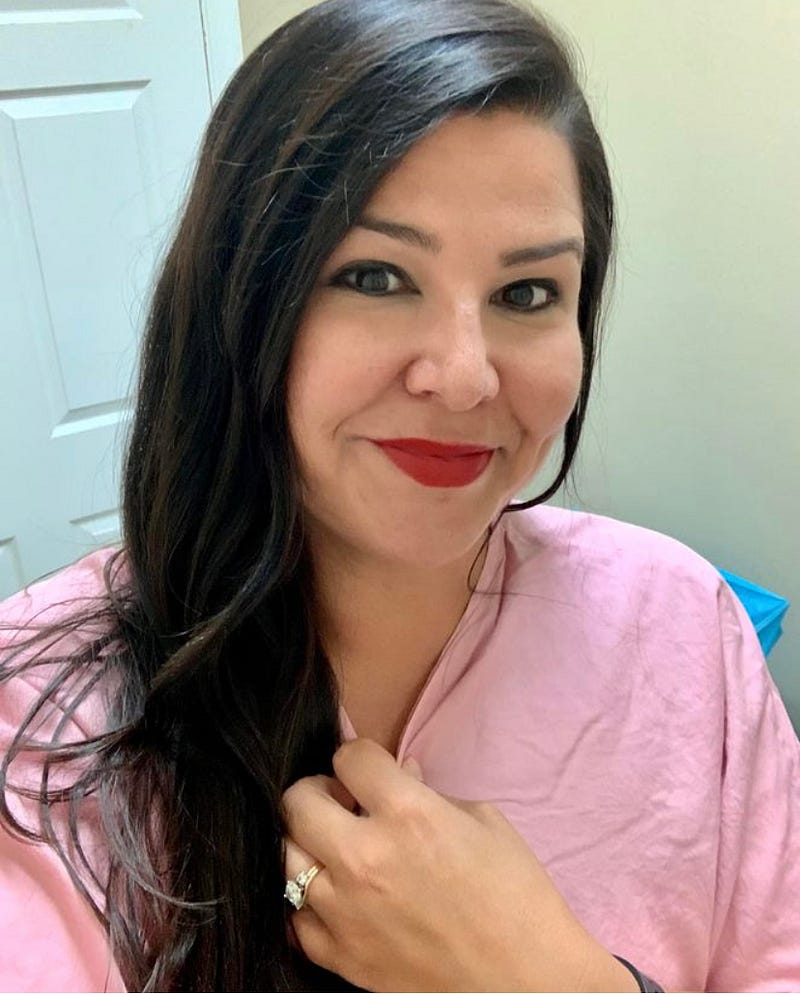
And now I had a lump.
I called my OB-GYN, who sent me for an immediate mammogram and sonogram. Once again, my tatas were squeezed into pancakes. I held my breath when the technician told me to, figuratively and literally. Did You hear my silent prayers as I thought of all those we had lost to this horrible and cruel disease?
But in the end, my lump was benign. My doctor called it fibrocystic changes. Although it swelled to the size of a baseball, and I thought it would explode, it’s not cancer. I’m very grateful.
Although it doesn’t seem fair that other people’s lumps are malignant. I don’t understand how these decisions get made, but Your job sounds horrible. We are losing so many.
So many people I know have been affected by breast cancer.
Now my daughter wants to know when she’s getting her boobs.
She pushed back her shoulders when asking. At first, I didn’t know what to say. If I had to do it all over again, would I want them knowing the risks they carry?
Using all the knowledge I’d acquired, I tried to explain to her that the desire you have when young to get breasts to feel grown up and the euphoria of actually getting them will contrast sharply with the responsibility of actually living with them.
She looked confused.
Honestly, God, I’m confused too. How can your breasts go from being ornate to functional to toxic so quickly?
How do I tell her that even though they are hers, and attached to her body, others will feel a sense of ownership over them? They will comment on their size and shape.
How do I tell her that if she nurses, her breasts will become engorged, and her nipples will feel like they are poked with pins?
How do I tell her that sometimes she will love them and other times she will fear them?
She’s so tiny.
But I need her to know that no one owns her future breasts.
And if she chooses to show them off or cover them up, if she wants them bigger or smaller, if she wants them to nurse her babies or not, that’s for her to decide.
That no matter what — she will have to protect them.
Every month, she will have to do self-exams. And get a mammogram every year once she hits the golden age. Errands, parenting, and job responsibilities can never be an excuse to not have time to check your tatas!
It still seems so much for her effervescent shoulders to have to carry. To her, breasts are just something her Barbie dolls have to help hold up their clothes, but she wants them all the same, just like I did.
So, for now, can we agree that if my daughter starts praying to You and asking for breasts, you can disregard that part of her prayer, and focus on the part where she prays for world peace?
In return, I will encourage her to pursue science so she can end breast cancer once and for all.
In the meantime, please protect as many tatas as you can, and I send prayers for all those we have lost and who have been affected by this disease. Tell Jenn I miss her posts, and I will try to keep spreading her message of prevention. And that I will plant sunflowers in my garden.
All the best and thanks for listening,
Julie Cali
Thank you for reading. If you like this essay, follow my Medium account and Instagram at @julie.calidonio.


