
Fluffy and Proud: Breaking Free From Societal Norms of Body Image
Why you shouldn’t let your body size define you.
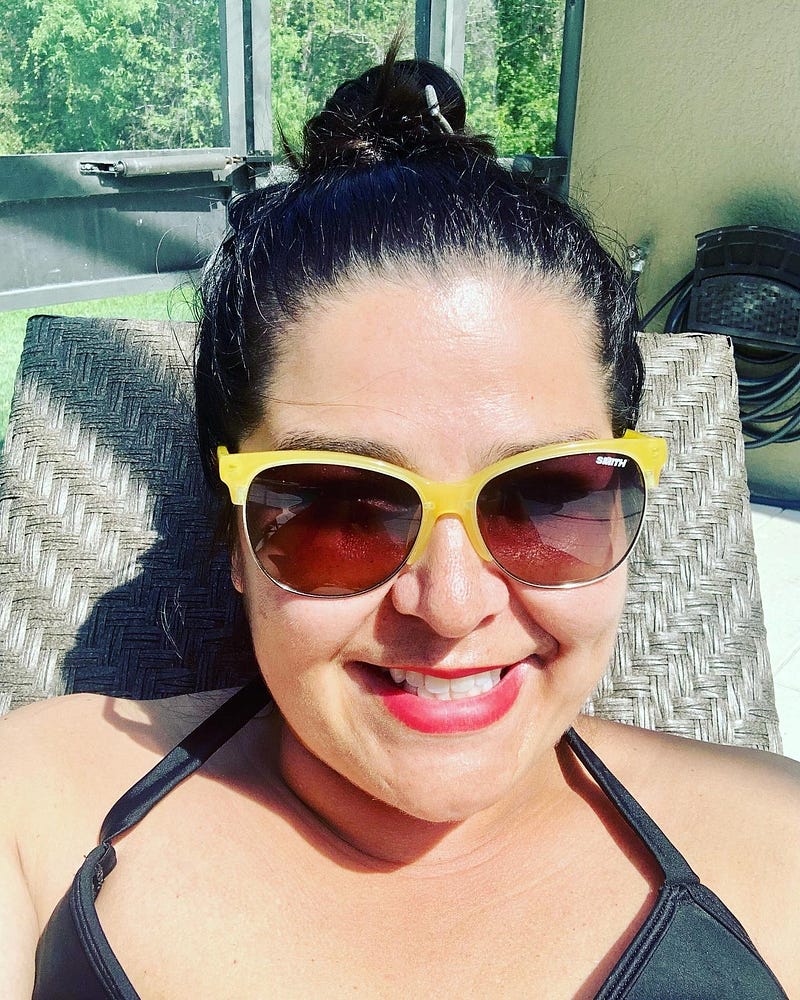
While sunning ourselves by the pool, my eight-year-old daughter snuggled against me. The blue water sparkled in front of us. Her hair tickled my chin, but I said nothing, immersed in this moment with my darling girl. She’s growing up, though, and for the first time wore a tankini instead of a one-piece bathing suit.
“Do you like bathing suits that show your belly or one-piece bathing suits?” she asked. “I like being able to see my tummy. Don’t you like seeing your tummy?” She pulled her bathing suit top up a bit to reveal her belly button.
I did not reciprocate. My tankini comes to my knees for a reason.
“I’ve never worn a bathing suit that shows my tummy. No one needs to see my belly,” I joked, while bopping her on the nose. I don’t mind that I’m overweight, but generally, I still don’t show off my curves.
She pulled back, generally confused, and said, “Oh, why wouldn’t anyone want to see your belly?”
I had no adequate answer.
I couldn’t explain to her that I had been plus-size since I was born at nine pounds.
I couldn’t explain that society deems being fluffy offensive.
I couldn’t explain that childbirth had stretched my skin, making it unseemly.
I couldn’t explain any of that to her freckled face because my daughter doesn’t think that being overweight makes me any less desirable.
Even when she told me I reminded her of her stuffed cow, she said it was because we were both cute as a button. She doesn’t think there is anything wrong with me being “fat.”
When my son was in kindergarten, one of his classmates told him that I was fat. He was baffled by the description and asked me if that was a nice or a mean thing and whether it was right. I didn’t know how to respond.
I never use the word fat to describe myself.
I use fluffy euphemistically. Objectively, I am more round than other people. I can accept that. And the definition of fat is to carry excess flesh, which I can’t deny.
But our society equates being “fat” with being lazy, unkept, ungroomed, and somehow less than your worth. Although I’ve technically been fat my whole life, and I wouldn’t define myself as any of those things.
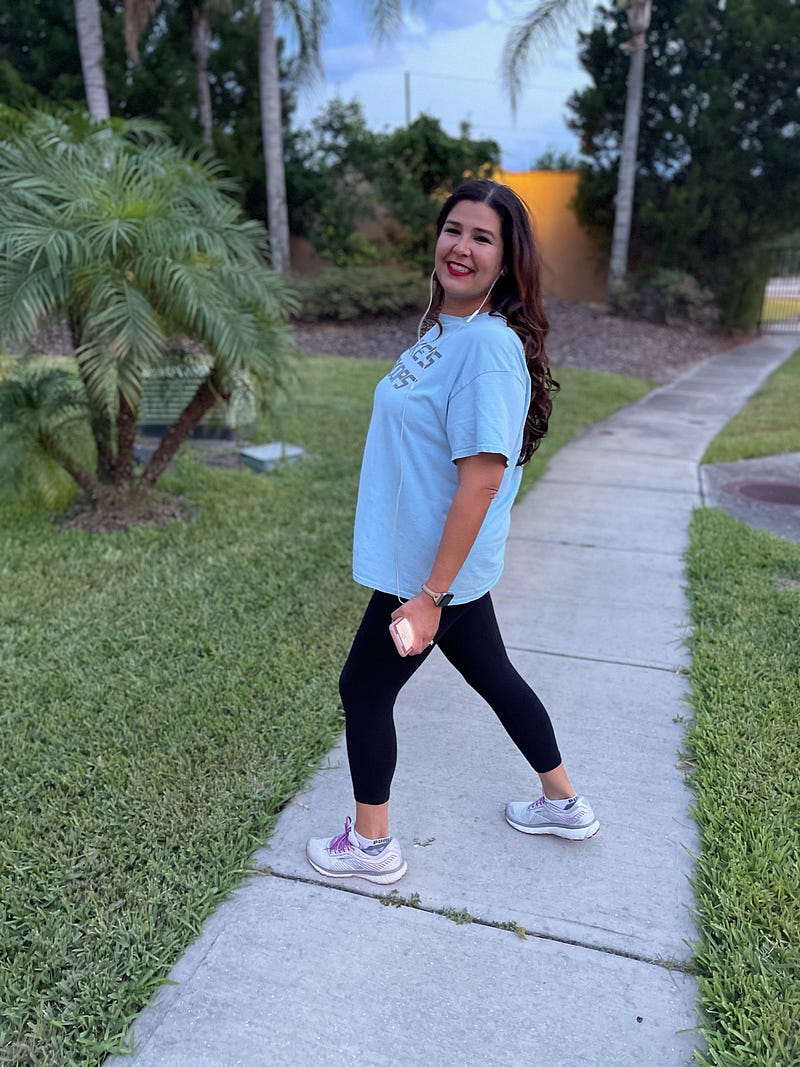
A few extra pounds does not mean I live an unhealthy lifestyle.
To keep fit, I’ve walked on average five miles a day for the last four years. My A1C, cholesterol, and blood pressure are perfect. I try to have good habits and exercise so my children will also have these good habits.
My doctor reviewed my blood work last year and said clearly, at some point, you’ve been thin. Nope. I’ve been like this my whole life. I’m also middle-aged, and my belly fat seems committed to accompanying me on my perimenopause journey.
In answering my son, I explained to him that people generally referred to people as being fat in a negative way, and asked his opinion on the issue.
With his almond eyes, he said, “I think you are perfect.”
I remember even now how his words made my heart swell.
Even though I don’t generally wear a two-piece, I don’t fixate on my weight as a measure of my value. I never have. I am a fluffy person who thinks I’m amazing and wonderful, and I don’t want my children to think it’s part of my value, either. Reading a book and flipping through its pages will be more meaningful than judging it by its cover.
It’s something we should all remember.
A person’s weight doesn’t measure their value as a person.
Weight should never be used as a measure of how someone is doing, equating it with success or failure.
I asked a friend the other day how a mutual friend was doing.
She responded, “Well, she gained weight, so not good.”
I ran into another friend at the supermarket and asked about her mother.
She responded with, “Good! She’s lost a few pounds.”
In both situations, I nodded and walked away confused. I don’t want to know how much they weigh. I want to know how they are doing, emotionally and mentally. Their weight should be irrelevant.
My sense of self-acceptance stems from being raised by people who valued me for who I was.
My grandmother told me I had a smile that lit up the world, and that was all I ever needed to feel confident and secure.
My sister always tells a story of how, as a child, she felt out of place in her tutu among the sea of slender ballerinas when she was round.
After one class, when my sister was particularly self-conscious, my grandmother pulled her close and said, “Boy, some of those girls couldn’t get one leg off the ground, but you soared and were amazing.”
My sister remembers laughing to herself because it was her who couldn’t get one leg off the ground. But our sense of confidence developed because the people around us didn’t define us by our weight.
The same can be said for my husband of twenty-plus years. He has never once referred to me as anything but spectacular. Nine months pregnant. Forty pounds overweight. Sixty pounds overweight. It never mattered. He always tells me I’m beautiful. (Now if I cut my long brown hair, he might divorce me, but as per my weight, that has never been an issue.) Being surrounded by people who built me up gave me a sense of identity that doesn’t revolve around how many rolls I have.
I’ve never been in a relationship with someone who puts me down, and that’s probably why I don’t put myself down, either.
At times, I have lost weight to keep myself healthy, but I have and always will be plus-size, and that is okay with me. It’s tempting to jump on the celebrity bandwagon of taking the new weight loss medicine to have that ideal figure — but ultimately, I’m comfortable as I am. Much like Amy Schumer in “I Feel Pretty,” I genuinely think I’m the most amazing thing that’s happened to the world since someone thought to put cream in a Twinkie.
You can be plus-size and happy with yourself.
It’s important to model this measure of self-acceptance for my children. Negative body image begins so young now. If you tear yourself down, your children will tear themselves down.
When my ten-year-old was on the scale at the doctor’s office last year, the nurse said, “Wow, you are over 100 pounds. You are getting so big.” And I saw him twitch.
It made me incredibly sad to see him be self-conscious so young. He knows his older brother weighs less than him. But I reminded my son that he’s an athlete and is very tall for his age and that there are a lot of different pieces to him. It doesn't mean anything bad just because he weighs a few pounds more than his brother.
I want my children to feel valued for who they are, not what they look like. I also want them to value other people independent of their waistline.
More than anything, talking to my children, I realize, as with most things, these stereotypes of being “fat” are learned. My children don’t see anything wrong with me because I don’t see anything wrong with me, but as they grow and learn, they are picking up from their environment harmful body image stereotypes.
I need to be confident so they mirror my sense of self-confidence.
So, maybe my daughter is right. Maybe I should go for the swimsuit that shows my belly. Saying I’m fluffy and proud and actually being fluffy and proud are two separate things.
Maybe, for once, I will let the world see me for who I really am: a woman who’s happy in her own skin. Someone warn the neighbors, Julie Cali’s belly is about to be displayed! It’s not going to be just toes anymore.

Thank you for reading. If you like this essay, follow me on Medium and Instagram @julie.calidonio.


