Why do we need Sprint Planning?
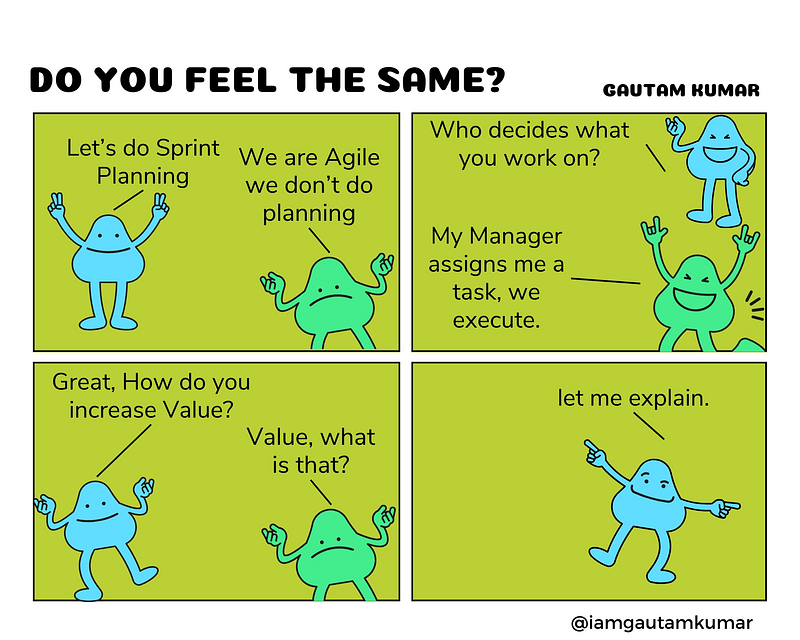
Why do we need Sprint Planning?
Sprint Planning is an opportunity for the Scrum team to come together and discuss the next phase of work.
Sprint Planning initiates the Sprint itself; the outcome of the planning session is the work to be performed for the Sprint by the Developer’s. This resulting plan is created by the collaborative work of the entire Scrum Team and not by Manager’s.
Before the Planning session.
The Product Owner ensures that attendees are prepared to discuss the most important Product Backlog items and how they map to the Product Goal. The Scrum Team may also invite other people to attend Sprint Planning to provide advice. (Scrum Guide Page 8)
Who plans the work?
The Developers plan the work necessary to create an Increment that meets the Definition of Done. This is often done by decomposing Product Backlog items into smaller work items of one day or less. (Scrum Guide Page 8)
The Sprint Backlog is a plan by and for the Developers. It is a highly visible, real-time picture of the work that the Developers plan to accomplish during the Sprint in order to achieve the Sprint Goal. (Scrum Guide Page 11)
Did you know:
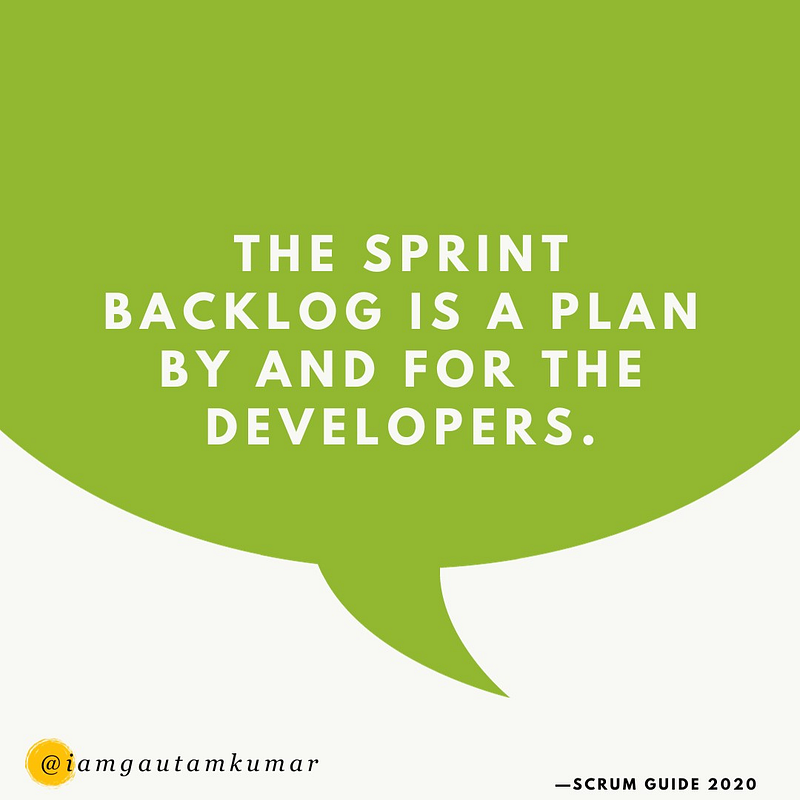
The Sprint Backlog is a plan by and for the Developers.
Who decide how big or small the work is?
The Developers who will be doing the work are responsible for the sizing. This is often done by decomposing Product Backlog items into smaller work items of one day or less. (Scrum Guide Page 8)
Did you know:
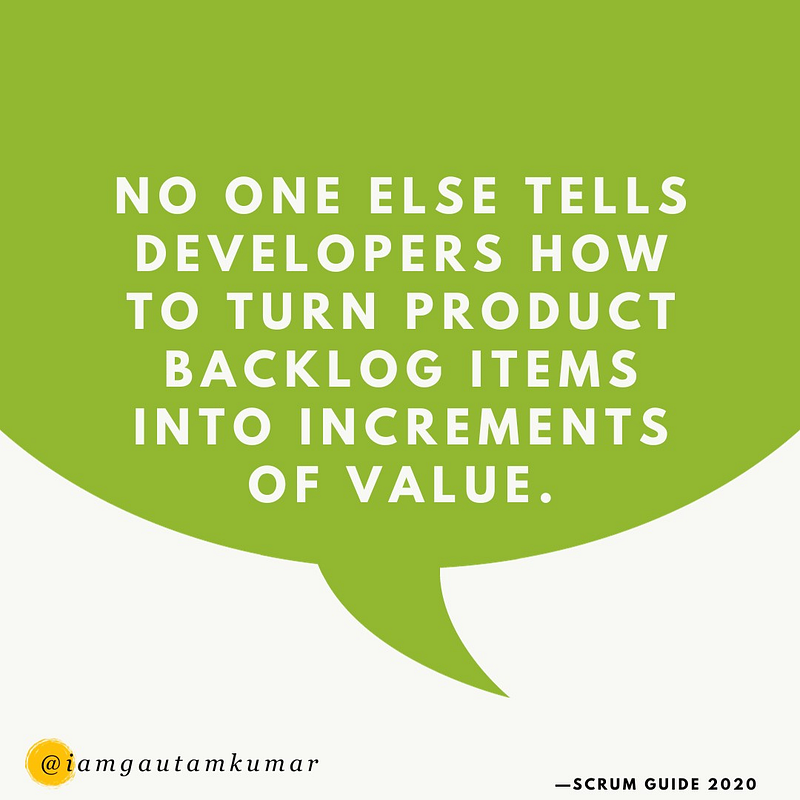
No one else tells Developers how to turn Product Backlog items into Increments of value.
How do you know your work is valuable?
The Product Owner proposes how the product could increase its value and utility in the current Sprint. The whole Scrum Team then collaborates to define a Sprint Goal that communicates why the Sprint is valuable to stakeholders. The Sprint Goal must be finalized prior to the end of Sprint Planning. (Scrum Guide Page 8)
What are the 3 things Developers should know before Planning?
· Their past performance
· Their upcoming capacity, and
· Their Definition of Done
How do you adjust the planned work?
The purpose of the Daily Scrum is to inspect progress toward the Sprint Goal and adapt the Sprint Backlog as necessary, adjusting the upcoming planned work. (Scrum Guide Page 9)
The Daily Scrum is not the only time Developers are allowed to adjust their plan. They often meet throughout the day for more detailed discussions about adapting or re-planning the rest of the Sprint’s work. (Scrum Guide Page 9)
Did you know:
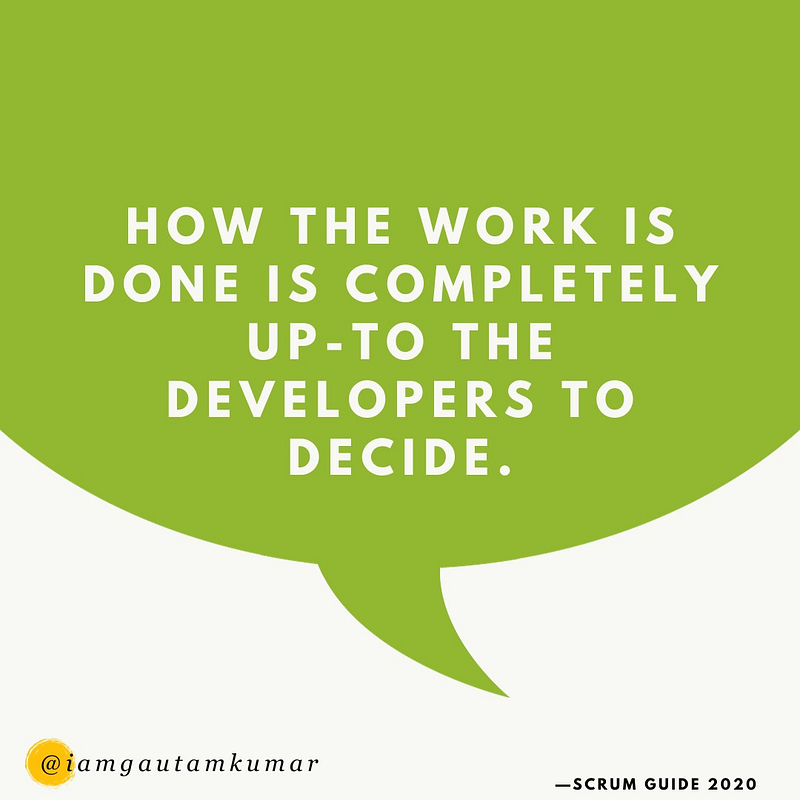
How the work is done is completely up-to the Developers to decide.
But, The Developers are required to conform to the Definition of Done.
Last but not the least, Sprint Planning is timeboxed Event. Usually, maximum of 8 hours for a one-month Sprint.
Hope this helped to gain some insight about Sprint Planning, Let me know your thoughts and what you liked or didn’t like in this article.
This is a part of Decoding Scrum Guide 2020 series.
Article 2 — How does Scrum help to achieve continual improvement?
Article 3 — How to make Scrum Successful?
Article 4 — Why everyone despise scrum theory?
Article 5 — Daily Stand-ups are waste of time.
Article 6 — Let’s get rid of Scrum Master.
Article 7 — Who are Product Owners and what do they do?
Article 8 — Who are Developers? What are their Accountabilities?
Article 9 — The notorious Scrum Team.
Article 10 — Why do we need Sprint Planning?
Article 11 — Is your Scrum Team failing in its commitment.


