
Are Psychological Issues the Reason That the Coyote Can’t Catch That Darned Road Runner?
Warner Brothers calls for a psychological consult for Wiley Coyote due to concern over seeming obsession with Roadrunner combined with lack of success and growing mood disturbance.
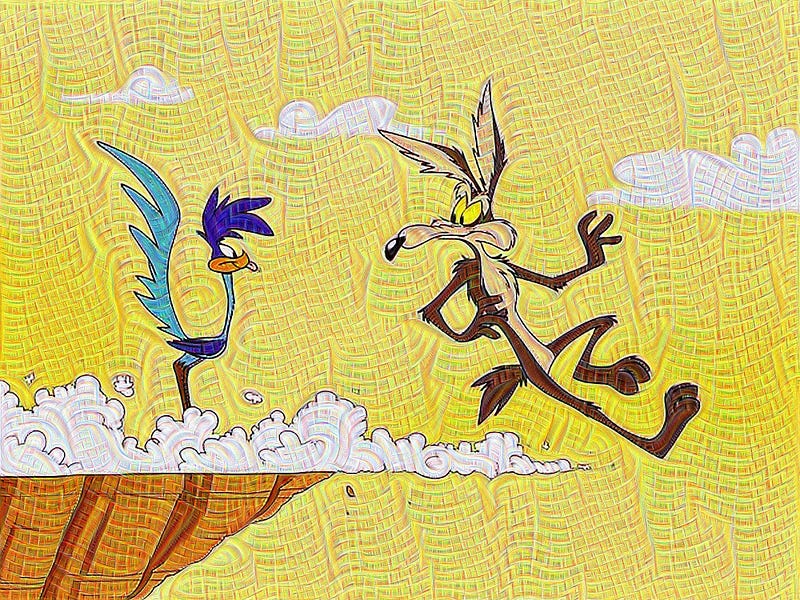
Informal Summary of Findings
I have been retained by Warner Brothers to determine whether their star, Wile E. Coyote is simply a normal coyote, albeit a rather unsuccessful one, or if perhaps there are other distinguishing psychological traits that might be putting him at risk.
Of particular concern, is the coyote’s seemingly obsessive focus on eating not just roadrunners in general but a very particular Roadrunner.
Interview with a Warner Brothers Representative — Background Information
The following information was obtained from a Warner Brother’s representative:
“It’s not that crazy that Wiley wants to eat the Roadrunner. Coyotes and Roadrunners normally live in the same habitat and coyotes will eat Roadrunners when they are hungry and come across them. But there are many other things that they are just as likely or more likely to eat. Even though they have those huge carnivorous teeth for prey, they are just as apt to raid crops and gardens as chicken coops. They will of course eat other animals as well, including other birds, rodents and insects.
Roadrunners are fast, run up to 20 miles an hour. But coyotes are faster, running at speeds up to 45 miles an hour. Though roadrunners can fly they seem to forget this until it’s almost too late preferring to sprint, and springing into the air only at the last second to try to avoid a predator. With a coyote, in addition to their speed, they can leap at the birds and are usually successful at catching them one way or the other.
That’s another reason we are concerned. No matter how many times he tries, and you understand, it’s been going on for years now, or what kinds of extra help or tricks he uses, he can’t seem to catch the bird. Heck, if it weren’t for him, the Acme Corporation would have gone out of business ages ago.
Not that this part is a bad thing for us, you understand. The Roadrunner is as big of a celebrity as the Wiley. We’ve tried to pair them up with other partners for cartoon features so there wasn’t such animosity but it just didn’t work. Largely because Wiley just won’t give up trying to eat the Roadrunner and that bird just won’t stop baiting him.
We tried playing hardball, and financed studies examining what all the violence in their cartoons was doing to kids. We had hoped the parents would weigh in and protest, ask for them to become less scary.
But boy were we wrong on that. The kids and parents both love the rivalry and when we tried to explore other options that didn’t involve them trying to kill each other, the kids all but rioted and the parents let them.
But then there are several facts they don’t know or understand. For one, these cartoons aren’t just fun and games. That was the idea at the beginning, but before we could even introduce the two, Wiley took off after the Roadrunner and they’ve been at it ever since. They think it’s just acting but actually it’s more like reality t.v. at its finest.
And if Wiley was to catch the bird? He’d eat him, plain and simple. And regardless of the fact we warned the parents, there would still be countless lawsuits for child trauma. We’d lose our shirts! And we can’t even get out of the contracts, stop shooting new cartoons. The only clause that would let us do that says we can nullify the contracts for behavior unbecoming.
But the behavior isn’t unbecoming! Coyotes are predators that chase and eat other animals including birds. Birds don’t want to get eaten and thus do whatever they can to run away. Even the addition of the Acme tricks and traps doesn’t change anything. It’s just a more advanced way for Wiley to try to catch the Roadrunner and having it turned back on him is just another way the Roadrunner is preventing himself from getting eaten.
But we can’t have him really bring down the Roadrunner and there is also the risk that one of these days the Roadrunner’s machinations are going to lead to the death of Wiley. We don’t want either of them to get killed. They are very much a part of our family.
Then there’s the problem with Wiley’s eating habits. Although the public can’t find out about this, Wiley is also more than a little finicky about his food. He won’t go after anything but that Roadrunner, ever. We’ve tried to retrain him, kept the Roadrunner away until he was so hungry he had to look for something else to eat but nothing helped.
Finally, we had no choice but to leave food out for him for fear he’d waste away. We leave him fruits and vegetables like watermelons, pears and strawberries, Brussel sprouts and corn on the cob. But this is just not the way it should be! Don’t get me wrong, I know he’s a star and stars are catered to. But it’s not just that he’s spoiled. He’s gotten thinner and thinner over the years, and now seems to think about nothing else but getting the Roadrunner.
On the other side of things, the Roadrunner teases him, plays tricks, and is smart enough to figure out what he has up his sleeve. He’s not a nice bird, that Roadrunner. Whatever nasty idea the coyote is planning, the Roadrunner is always one step ahead and turns the tables so that it’s always Wiley that gets hurt. And the Roadrunner somehow always comes out of it looking like the victim and Wiley comes across as a bully.
It’s become a matter of pride now for Wiley. He’s become a bit of a laughing stock, and he seems resentful most of the time and downright angry the rest. I’m afraid we’re heading for a powder keg.”
Evaluation, Conclusions, Recommendations
Multiple attempts were made to meet with Wile E. Coyote but he refused to stop chasing his prey long enough to sit down with me for even a few minutes. Appeals were made to the Roadrunner to take himself out of the equation by going into hiding in the hopes that if he couldn’t be found, the coyote wouldn’t have anything to chase. However, the Roadrunner also refused.
Given these circumstances, information could only be collected from secondary sources and watching their feature cartoons which depicted the way Wile E. Coyote and the Roadrunner interact. This was not an ideal set of circumstances and it must be acknowledged that the conclusions reached were not based on any firsthand knowledge of the subject. Even the cartoons were problematic in that they were cross sections of behavior and the participants knew they were being filmed which could have altered their behavior.
Because of these factors, any diagnoses provided must be interpreted cautiously. That being said, there are several diagnoses which should be considered and ruled out.
Rule Out Diagnoses
- R/O Obsessive Compulsive Disorder (OCD)
Wiley’s fixation with the Roadrunner goes beyond the normal predator’s pursuit of prey. Normally, when there is plenty of food sources available as is the case in the canyon where Wiley lives if a predator tries unsuccessfully to chase down prey, they will seek out another food source that is easier to catch.
They will not continue trying to catch something that keeps managing to avoid getting caught. With Wiley, however, it seems like catching this particular Roadrunner has become an obsession. Although there is no first hand indication that he is having Roadrunner related obsessions pushing a compulsion to catch the bird, his behavior seems frenzied, as if driven by something.
- R/O Anorexia Nervosa
- R/O Eating Disorder Not Otherwise Specified
It is clear from the footage of Wiley when he began with Warner brothers compared to now, that he has lost a significant amount of his body weight. When first hired, the report from his physical lists his weight as 38 lbs, which would be a normal weight for a good sized male coyote. By superimposing images of him as he appears now over the way he appeared then, it has been estimated that his current weight is anywhere from 11–13 lbs.
This corresponds to a CBMI (Coyote Body Mass Index) of 3.5 to 4.0. With a normal cutoff for a healthy weight being 8.0, this suggests that the Coyote is dangerously underweight. It is not currently clear as to what is behind this weight loss, though from reports of the staff, he never stops racing around setting up traps or chasing the Roadrunner, stopping only briefly to eat if food is put directly in his path.
Conclusions and Possible Course of Action
Although no firsthand information could be obtained from Wile E. Coyote, it has become clear that there is ample cause for concern. His single mindedness over catching the Roadrunner at all costs, even when putting himself at risk suggests a degree of risk taking that beyond normal levels and has proven dangerous.
The degree to which he is underweight combined with late nights planning and working on setting up traps, constant frenetic energy used to chase the roadrunner for hours a day and the need to heal from injuries sustained when his intended traps backfire, put him at risk for potentially life threatening illness or injury.
Secondary Patient
While the Roadrunner was not the intended patient for the evaluation, it cannot be ignored that he also seems to be displaying behavior that is consistent with danger of harm to self or others. He seems to at times try to put himself in harm’s way in order to play a trick on Wiley or turn the coyote’s traps back on him.
While he may not be intending to harm himself, something that cannot be determined without firsthand knowledge, while lying in wait to see the outcome of his tricks or acting as bait to get Wiley to fall into the reversed trap, it is possible that his actions will backfire and he will be the one to get hurt or killed.
Additionally, Although it would be considered part of a coyote’s nature to hunt down birds to eat them, the opposite could not be said. Therefore, the Roadrunners attempts to harm Wiley as opposed to just staying out of his way, would, in my opinion, fall under threat of harm to others.
Recommendations
At this time, It is my recommendation that Wile E. Coyote and the Roadrunner both should be considered a danger to themselves or others, and in line with legal regulations, they should be committed to a mental institution for a complete evaluation of the circumstances of these behaviors and concerns. At that time, the attending psychiatrist will be able to recommend a further course of action to treat whatever problems are determined to exist.
It is my belief that both animals should be committed as soon as possible, to prevent further risk of injury or death to one or both, to Serenity Heights Mental Hospital for Animals where they should be kept on different wings. It is my hope that once they have completed a program with both individual and group therapy, they might be candidates for the Wing and Paws for Peace Program which aims at creating healthy, safe relationships between birds and mammals.
Please don’t hesitate to contact me should you have further questions. Thank you for the consult.
Sincerely,
Dr. Kojoto Wadada

If you enjoyed reading this article, you might also enjoy these:
You can find links to my other work on Medium and follow me here. Thanks for reading and for supporting Mental Gecko!


