Who Will You Vote For In 2020?
No! Don’t tell me! But here are some things to think about.
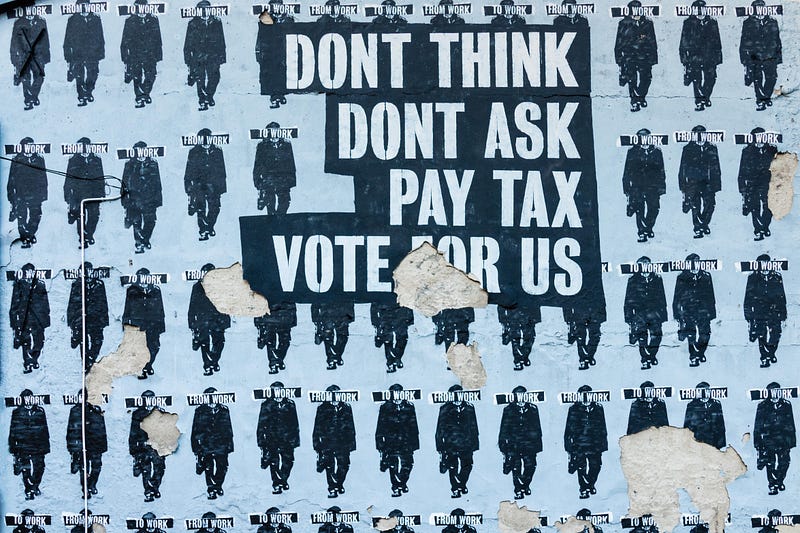
The 2020 election year is upon us.
How do I know?
Even though 2019 is not yet over and the election is almost a year away, people are stepping into the political ring and declaring their decision to run for office. People are already choosing their favorite candidate, and hopeful candidates in the democratic party have already taken television time in debate.
Many things irritate me about election time. In fact, it has gotten so bad that I just don’t listen to people discussing the candidates, I don’t listen to the news about the candidates and the coming election, and I don’t waste my time listening to the debates.
Why?
Let’s first look at the statistics. “Who’s Running for President in 2020?” (updated November 7, 2019), an article in The New York Times, lists 30 candidates for president, and nine of those have already dropped out. The article goes on to identify who “might run,” who is “unlikely to run,” and who is “not running.”
That means that nearly one-third of the hopeful candidates, people I could have invested my valuable time in, have dropped out a year before the election.
How many more of these potential candidates will drop out before I can even vote in any preliminaries? How many more people will decide that they want their shot at running for president?
Add to the revolving door of who is a potential candidate those people who decide to run without any party ties, to run as an independent.
I didn’t listen to those initial debates in June. It’s just to early to invest my time in what they are saying.
Instead . . .
Instead of listening to what the large number of political hopefuls are declaring, I need to look at the issues and evaluate MY OWN STANCE on each issue: health care, education, environmental issues, immigration and boarder security, gun control, technology and security related to technology, privacy policies, labor issues, welfare, foreign policy, our country’s defense, and the list goes on.
How can I, or anyone, begin to listen to the candidates debate the issues they think are important without knowing my position on the issue?
I don’t trust many of the potential candidates at this time because, as their desire to be elected grows, some will twist their stance on certain issues to match what they feel their followers want.
I don’t trust the news because it tends to extract words and phrases that they feel will make a specific candidate look good or bad, depending on the news’ affiliation.
Nope. I’d rather wait until the pack weeds itself out due to lack of money, lack of motive, lack of support, or even realizing that the whole game isn’t worth their time before I really look at the candidates.
WHAT DO I LOOK FOR WHEN I “READ” ABOUT THE CANDIDATES

First, instead of being swayed by what people post about social media, the researcher in me goes into overdrive. I have to go check to see if the post is valid. Spoiler alert: Most of what people post on social media is either fake, taken out of context, or has missing/added words or letters. Even a missing “not” or added “s” can change the information.
Next, I look at what the candidates say about the other people running for office. There are several things that turn me off or are dead give-aways that the candidate doesn’t deserve my attention.
In today’s society, bullying has become an important issue. It is a trigger for violence and suicide. It is a trigger for low self-esteem and a feeling of defeat. So, when a candidate calls other candidates names or exhibits violent tendencies (Even a severe pounding of a fist on a podium is rarely necessary), I steer clear.
I research the candidate’s life and things that they have done in the past.
And then . . .
I review the persuasive techniques. When I taught Oral Communications and Public Speaking, I taught a unit on persuasion.

Concept One
One of the most important techniques of influence I taught my students was that in persuading people you should play up your good points and play down your bad points, BUT you should play up your opponents or oppositions bad points and play down their good points.
Concept Two
Another is the bandwagon technique that I see so many people falling for: the “you need to do something (like vote for a specific candidate) because everybody will be doing it.”
It always reminds me of a lesson my mother drilled into my head: If _X_ jumped off a bridge, would you?” Mom would take it a step further with my grandmother when she needed to go/be somewhere because everyone would be there. “Name three,” she began to ask my grandmother. It stopped her dead in her tracks.
AND THEN, I CRINGE AT THESE CONVERSATIONS

“I’m voting for ___.”
“Why?”
“Because I think a woman/African-American/Hispanic-American/___ should be president.”
“What is their position on ___ issue?”
“I don’t know. I just think we need a woman/African-American/Hispanic-American/___ in office.”
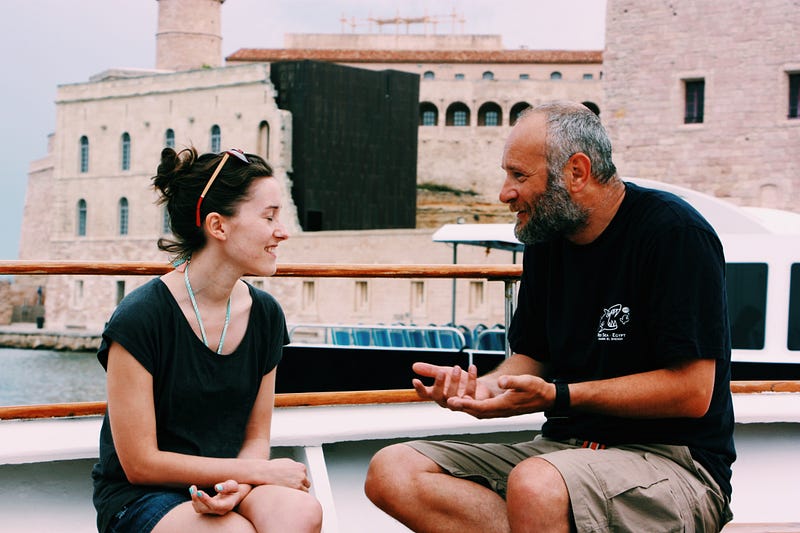
“I’m voting for ___.”
“Why?”
“Because I know the name.”
“Do you know their position on ___ issue?”
“Nope. I just know the name.”
So, let me ask you some questions.
Are you going to be persuaded by the masses to vote for somebody because you recognize their name?
Are you going to be persuaded by the masses to vote for somebody because of the person’s gender, race, or just because everyone else is voting for them?
Could I ask you to . . .
*determine where you stand on the issues the candidates are placing foremost on their platform.
*check and research the information that is shared on YOUR social media.
*search for and listen to complete interviews and speeches instead of just believing what the television stations share with you.
*hold the candidates to the same level of civility you expect from friends, family, and co-workers. If we want to rid the world of bullying behaviors, our politicians, political figures, and judges should guard their behaviors regarding bullying.
*vote informed . . . vote because you truly believe that the person you want elected is the right person because you have made up your own mind and not let others make up your mind for you.
Rebecca (Becky) spent 34 years in a teaching career, but when she retired in 2014, she picked up her pen and pursued her passion to write. As a high school English teacher, Becky held the philosophy that she wouldn’t give any writing assignment that she personally wouldn’t or couldn’t do. That philosophy strengthened and broadened her own writing.
In addition to publishing her writing on various platforms, Becky also blogs at Life is for Living, a blog to encourage, motivate, and help others live the best life possible. As an extension of Life is for Living, she also publishes a weekly newsletter, Let’s Chat. (Check it out HERE.) Life is for Living also has a social media presence with the group Coffee on my Porch. (Check it out HERE.)
After teaching writing for 34 years, Becky began Ink & Keyboard, a blog for writers at all levels. She supplements what she writes on the blog with a subscription newsletter, The Writer’s Notebook (Check it out HERE.) and the social media group Ink & Keyboard (Check it out HERE.)
Thanks for reading.
If you enjoyed what you just read, feel free to share.
I don’t usually write about politics so these are a couple of articles on teaching: