
Sometimes It’s What You Don’t Say
The MOST Important Phrase I Learned to Omit as a Public Speaker

You, a writer, are all of a sudden approached to speak to a group of people. Maybe it is a group of writers, or maybe it is a group of people who are interested in your topic. After all, you are an authority on the topic. Right?
You plan the speech. You practice in front of a mirror, first with a script and then without. You’ve got this.
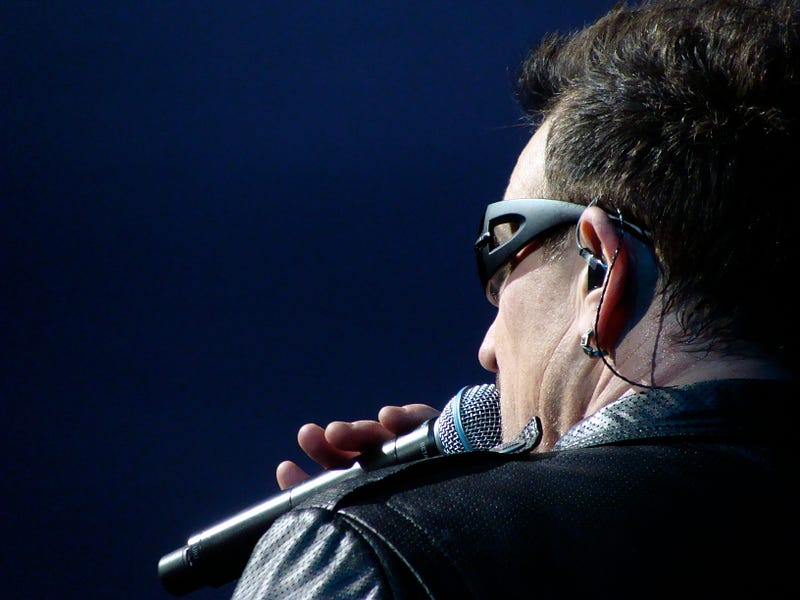
Then, the day comes. You are introduced. You stand in front of the crowd — a microphone pinned to your clothes. You inhale, thank the host, and begin.
The first part of your speech goes well. People laugh in the appropriate places and you remember to pause when the crowd applauds a key point.
Then, you relax a bit. You realize that many of the people in the room are familiar with your topic. That’s it. That’s your downfall.
AND
That horrible, ugly phrase comes issuing out of your mouth without warning. You know it exists. You hate it when you have heard other speakers use it.
BUT
NOW YOU HAVE SAID IT.
You said, “You know…”
That’s the ugly phrase. It clouds the message a public speaker tries to get across. It clouds everyday speech in society.
Why are those two words offensive to many people in an audience?
If you truly know what the speaker is talking about, the phrase “You know…” might be just an annoyance.
BUT
If the topic is something new to you, you might feel embarrassed or put down because you don’t posses the knowledge the speaker believes you have. (At least that was my college professor’s explanation.)
How can you get over the “You know…” habit?
When I changed my college major from science to communication, I found myself in a public speaking class with a professor who was determined to eradicate the use of “You know…”
As we prepared our first speech as homework, class time was spent learning the finer aspects of the delivery of a speech: volume, eye contact, inflection, body language.
“Then,” Richard Bagg, the professor said one day, “there are the silence fillers. You don’t need them. The audience needs time for the mind to process what you just said. You’re grade will reflect the number of times you use silence fillers such as ‘um,’ ‘and a,’ and ‘ah.’ But remember the MOST OFFENSIVE silence filler to me is the use of ‘You know…’”
This was the late 1970’s and we were college students. How many times had we uttered those offensive two words? And if they plagued our everyday speech, would we be able to speak to the class for seven minutes without uttering them?
“Now,” he continued, “if you do use that phrase, I will expect each and every one of you sitting here as the audience to stand up and say to the speaker, ‘No, we don’t know.’ You may then sit down and the speaker my continue.”
Of course, every class has at least one scape goat. Cindy’s name (I don’t remember if that was her name, but hey, I want to give her a name.) was drawn. She gathered her note cards and walked to the small stage.
Cindy was a music major with a communication minor. In fact, almost a third of us in the class had a music theory course together that semester right before speech. Cindy’s topic? The piano and how it works.
If you are going to give your first speech, you might as well talk on something you know well.
MAYBE.
Cindy’s introduction went well, but when she approached the piano, she uttered the ugly phrase.

Cindy gasped. No one in the audience moved until Richard Bagg stood up. “Ok, everyone. Stand up.”
We slowly stood.
“All together — No, we don’t know.”
Cindy took a deep breath as we all sat down. Composed, she started again.
“You know…”
Up we stood. “No, we don’t know.” Down we sat.
Cindy took a deep breath. “You know…”
After five “You know” starts, Cindy left the room and we as an audience sat there stunned.

When class resumed after the weekend, Cindy walked into the room and up to the front to attempt the delivery of her speech again. This time, it was void of ALL silence fillers. When she finished, she gave the professor a look of confidence that said, “You caught me off guard last week. It will NEVER happen again.”

When I began teaching high school public speaking and communications, I would tell my class this story.
Ridding yourself and your speech of silence fillers is tough, but once you are aware of the ones you use, you can begin to omit them and come across as a more polished and professional speaker.
Here’s my challenge to you: Listen to yourself speak daily. Figure out what silence fillers you actually use and work to begin omitting them.
Let me know how it goes.
Rebecca (Becky) spent 34 years in a teaching career, but when she retired in 2014, she picked up her pen and pursued her passion to write. As a high school English teacher, Becky held the philosophy that she wouldn’t give any writing assignment that she personally wouldn’t or couldn’t do. That philosophy strengthened and broadened her own writing.
In addition to publishing her writing on various platforms, Becky also blogs at Life is for Living, a blog to encourage, motivate, and help others live the best life possible. As an extension of Life is for Living, she also publishes a weekly newsletter, Let’s Chat. (Check it out HERE.) Life is for Living also has a social media presence with the group Coffee on my Porch. (Check it out HERE.)
After teaching writing for 34 years, Becky began Ink & Keyboard, a blog for writers at all levels. She supplements what she writes on the blog with a subscription newsletter, The Writer’s Notebook (Check it out HERE.) and the social media group Ink & Keyboard (Check it out HERE.)