
Dead Fish Don’t Belong in the Classroom
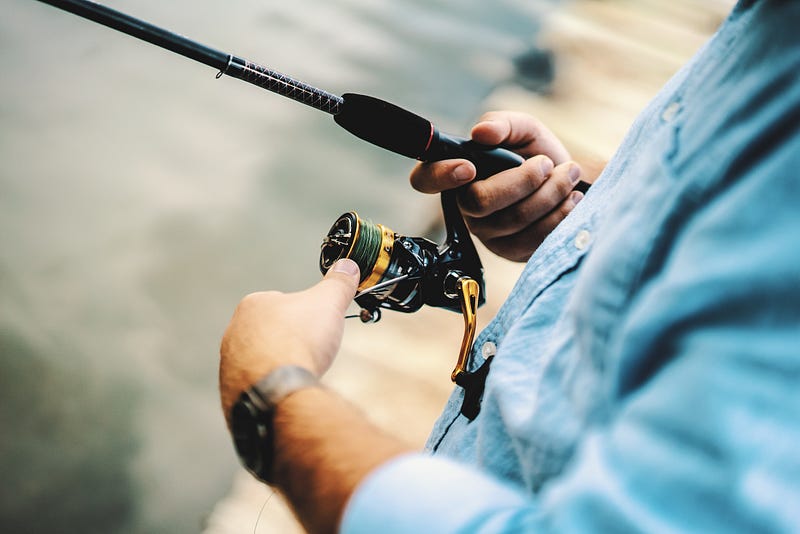
There’s a saying that goes something like this: “Give a man a fish and he will eat for a day. Teach a man to fish and he can feed himself for life.”
Today, I would like to add to that: Show an adolescent a parody with a dead fish and he may bring it to school.

On those warm spring days, the smell of dead fish lingered, nauseatingly, in my junior high school classroom.
Was the cafeteria serving fish that day? NOPE! My classroom wasn’t even near the cafeteria. Nor were we close enough to Lake Michigan to have the smell of fish come into my classroom on the warm breezes.
My Education Major
It was 1978 in the suburbs of Chicago. The college I attended divided the year into trimesters (think a full semester of work in a third of the school year) and expected the education majors to complete two separate student teaching experiences, one for a half day and one for a full day.
Since I had declared communications as my “focus” (think minor with education as the major), my half day experience was with junior high school public speaking and theater classes.
My classroom occupied a small space on second floor behind the audience space of the theater (think of the space behind the control room of a movie theater). A single row of windows allowed for the sun to transform the space into an oven.
The Student Teaching Experience

My supervising teacher could best be described as an eclectic woman who lived in a world that combined the hippie-flower-child generation of the 1960’s and the free-thinker-few-rules generation of the 1970’s. She seemed eternally grateful the day I started to turn her classes over to a student teacher so she could be elsewhere. After a couple of sweltering days in her classroom, I understood why.
She took a day to explain her classes, her routine, and her expectations. ONE DAY!
The Demonstration Speech Experience
I entered the picture at the beginning of the demonstration speech unit: show your audience how to do something.
Teaching seventh and eighth grade students can be a challenge (and usually is), but it becomes more challenging when few guidelines have been placed on student speeches, especially relating to the topic of the speech.
Students were allowed to choose a topic that interested them, prepare a 5 minute presentation, and come to class within a window of dates ready to present their speech. No signing up or being assigned to speak on a specific day. It worked. I’ve never been sure how, but it worked.
In addition, they could arrive at school a bit early and store things along the wall in the classroom instead of trying to cram their props into the locker.
Let me take you back a few years . . .
“Live from New York, it’s Saturday Night.”
Did you just hear the announcer’s voice (George Carlin) introduce “The Not Ready for Prime Time Players?”
October 11, 1975: The first episode of Saturday Night Live aired as NBC’s Saturday Night, and as a high school senior, I became part of the cult that watched the show religiously.
In fact, many times Saturday date night found my boyfriend and I snuggled in the basement in front of the black and white television by 11:00 pm for an hour of comedy sketches and parodies. Although I had a curfew of midnight, my boyfriend could leave when the networks signed off.
For those of you have only experienced 24 hour television, the television networks used to “sign off” at midnight. The credits for the last show would scroll, the National Anthem was played, and a series of colorful stripes appeared on the screen. Until the next morning, there was dead air space. (Click here to watch one station’s sign-off)
Why On Earth Did I Just Tell You That . . .
Because it was Saturday Night Live (renamed in 1977) that gave rise to the dead fish in my student teaching classroom.
As a student teacher, I had to adapt to the rules and guidelines that had been set by the supervising, classroom teacher.
Each day, we met briefly before school began and she gave me a rundown of what should be accomplished according to the lesson plans. I followed hers at the start, but then we transitioned into mine. The beginning of the day warning bell would sound and she disappeared. Her “supervision” amounted to walking through the classroom every so often.
The first day I ran the classroom, I attempted to cover the expectations for the speech. As I started to talk about topic expectations, one seemingly obnoxious student blurted out, “We don’t have to declare our topic.”
“Ok, then.” I continued with how a demonstration should be presented and handed out a speech evaluation sheet. “Speeches begin on Monday.” That left them Friday (a day off), Saturday, and Sunday to get the speech together.
I spent the weekend stressing about what to do if none of the students came prepared to deliver a speech. Remember, the classroom teacher didn’t require the students to schedule the day they wanted to make their presentation.
Monday morning, however, more than enough students came ready make a presentation. Standard, acceptable in my mind, speech topics: how to make an origami bird, how to putt, how to play tic-tac-toe.
Tuesday followed Monday with more of the same.
Wednesday things turned a bit raunchy. During the first speech I started to notice the smell. By the time the first dismissal bell rang, the odor had increased in strength, but no one had given an offensive smelling speech.
The second hour class entered and complained about the smell, but none of us could figure it out.
Hour two was a repeat of hour one.
James
Third hour. James (fictitious name) picked up the bags he had dropped off in one of the never locked classroom closets earlier that day and walked to the front of the room. The smell increased, AND followed him to the front of the room.
Out of one bag, he pulled a blender (think glass container, noisy, and large) and set it in the center of the table.
Out of the other bag he pulled a small bundle wrapped in white butcher paper and set it on the table closer to him but behind the blender.
He picked up his speaker cards and paused for the attention of the audience. When the class finally turned their focus to him, he began his Dan Aykroyd impression.
I knew what was about to happen. BUT it didn’t happen exactly the way Dan Aykroyd had presented the “Bass-o-matic.” If it had, of course, it couldn’t have been a demonstration speech, but a theater class sketch or impression. (Dear James was both a speech class member and a theater class member.)
He began:
I like to fish, but I don’t always like to scale and fillet it, and I don’t always like to have it fried.
But, the “Bass-o-matic” that is advertised on Saturday Night gives me a quicker way to enjoy fish. I’d like to show you today how the “Bass-o-matic” works.
He proceeded to unwrap the white package and held up a fish.
Now, this is not a bass. It is a trout. But I’m using a trout to show that the “Bass-o-matic” will work with any fish you like.
He took the fish by the tail and with the other hand lifted the lid off the “Bass-o-matic” (his mother’s blender).
You drop the fish into the “Bass-o-matic head first. Then, you put the lid back on, and finally you hit the button with the highest number.
As he spoke, he completed each step, including hitting the button.
As the “Bass-o-matic” whirred into action, the fish started to spin around. Little by little the tail of the fish was pulled to the bottom of the “Bass-o-matic” container.
Several of the girls looked back to me in horror and a couple even covered their mouths and rushed out of the room.
NOTE: If you have ever used a blender, you know that in order for something to be pureed in a blender, you MUST use added liquid.
And there you have it. A fish “shake.”
If you have never seen Dan Aykroyd’s “Bass-o-matic” infomercial, you can check it out HERE. Notice that Aykroyd’s blender container is about half full of water.
He picked up the butcher paper and started to throw it in my classroom trash.
“NOOOOOOOO!” I made him take it and the bags AND the pureed fish to the janitor to dispose of.
And Then —
“Next speaker.” How does one follow that? And why, since fish boy had left the room with his fish, did my room still reek?
The next speaker grabbed his bag out of the same closet and walked to the front of the classroom. From his bag he pulled a cutting board, a fillet knife (remember it was 1978), and a white butcher paper wrapped package.
I looked at the clock. Ten minutes left of class.
Kevin begins.
If you like to fish, like I do, you need to learn how to fillet a fish. And today, I am here to show you how to do just that.
The couple of girls who hadn’t bolted for the last speech were on their way out the door.
Who could blame them? If I could have walked, I would have.
I was just grateful when the speech was over that I would be able to go back to my dorm room, shower, and do laundry.
As the bell rang, my supervising teacher entered the room. “Ugh! What is that smell?”
I explained to her the last class’s speeches and then I added, “I think you need to require them to declare a topic.”
Rebecca (Becky) spent 34 years in a teaching career, but when she retired in 2014, she picked up her pen and pursued her passion to write. As a high school English teacher, Becky held the philosophy that she wouldn’t give any writing assignment that she personally wouldn’t or couldn’t do. That philosophy strengthened and broadened her own writing.
In addition to publishing her writing on various platforms, Becky also blogs at Life is for Living, a blog to encourage, motivate, and help others live the best life possible. As an extension of Life is for Living, she also publishes a weekly newsletter, Let’s Chat. (Check it out HERE.) Life is for Living also has a social media presence with the group Coffee on my Porch. (Check it out HERE.)
After teaching writing for 34 years, Becky began Ink & Keyboard, a blog for writers at all levels. She supplements what she writes on the blog with a subscription newsletter, The Writer’s Notebook (Check it out HERE.) and the social media group Ink & Keyboard (Check it out HERE.)
Thanks for reading.
If you enjoyed what you just read, feel free to share.
If you enjoyed this story, you might enjoy these stories about life:


