
Which Crypto Wallet Is the Best?
Hardware, software, or paper wallet? Hot wallet or cold wallet? How to make the right choice?
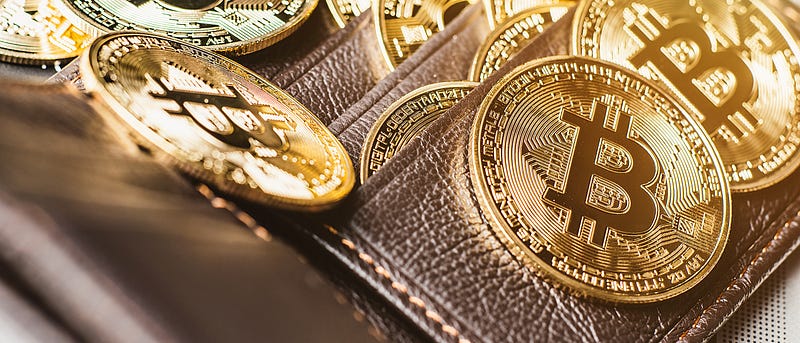
Before we start to describe and distinguish the different kinds of crypto wallets, it is essential to know what a cryptocurrency coin is. Cryptocurrencies don’t have a physical form. They are digital bits (0 and 1) and they live in the ledger (database) of each blockchain. So, when we say that we store the Bitcoins or other cryptos in a wallet, it is not the case that these coins are actually stored in a wallet. All crypto-coins exists on the blockchain.
So what is happening?
Because of the way cryptocurrencies are constructed, they consist of a pair of keys. One public key and one private key. We can say that the public key represents the coin and the private key that is bond to it give us control over that coin. So when we say that we store some crypto coins in a wallet, we actually safe these two pairs of keys.
It is important to remember that the public key is on the blockchain (ledger), and the one who has the private key is the owner, thus he can spend or transfer this coin. Private keys aren’t stored in the blockchain. It is your responsibility to keep private keys in a safe place so that YOU and ONLY YOU have access to them.
You can imagine the public key that represents the coin as the unique serial number that is printed in every single banknote.
Finally, addresses are the last element that we need to have so that we can transfer the coins. Imagine these addresses as your personal bank account. If somebody will send you money, he needs your account number (SWIFT).
I don’t want to overwhelm you but we must be aware that different cryptocurrencies are built upon different blockchains and have different encryption and they use different protocols. That is one of the reasons that many different wallets exist.
Take for example MyEtherWallet. It is a crypto wallet where you can store Ethereum and ERC-20 tokens, but you can’t store Bitcoins. To store Bitcoins you need another kind of wallet like Bitcoin core. The reason is that Bitcoin and Ethereum are cryptocurrencies on different blockchains with different protocols.
Basically, crypto wallets are programs that interact with the blockchain allowing you to transfer the coins you own.
You should hold :
- cryptocurrencies consist of a public and a private key
- public-key represent the coin and is stored on the blockchain and is visible to everybody.
- the private key is the one that makes you the owner of the coin.
- addresses are similar to your bank account(SWIFT).
- different cryptocurrencies, need different wallets to store them. (They are multi-coins wallets where you can store coins from different blockchains)
With that in mind, we are ready to go further and look at the different types of wallets. They are three main types: Hardware, software, and paper wallets.
HARDWARE WALLETS
Hardware wallets are USB dongles where you can store the private keys of your coins. They are secure because they are not connected to the Internet. They come with extra protection asking you to insert code before you can access your coins.
Hardware wallets need to be initialized before the first use. To do that you need to download a specific program so that they can connect to your computer. When you set up the wallet, it is crucial that you write down the recovery phrase, a set of random words. The more words the more secure the encryption is. Having the recovery phrase you can restore your wallet with all the private keys in case you lost it(the wallet).
Also Read: Best Bitcoin Hardware Wallets
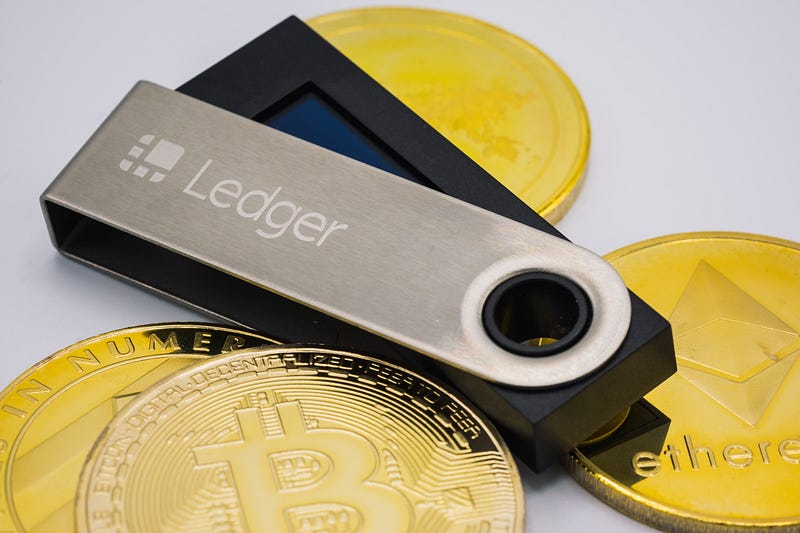
The most known hardware wallets are from companies Ledger and Trezor. But like the cryptocurrency industry goes mainstream new companies are manufacturing wallets.
SOFTWARE WALLETS
Software wallets are either programs that you can download on your computer either programs that are hosted on a web page. They give you protection with a password. Again they have a recovery phrase so that you can rebuild your wallet with all the funds in it.
The wallets that you download on your computer for a specific cryptocurrency work as a node. They need a lot of space on your hardware because they download the entire blockchain with all the transactions that are valid and recorded on the ledger. They give you full control of your funds.
Each time you open these wallets they need to synchronize with the blockchain to be updated. Meaning that they must download all the transactions that occurred while your wallet(program) was closed. If you have last opened your wallet before months, this procedure can take time. Furthermore, let say you have transferred some coins from an exchange to your wallet right now. To see these coins, the wallet must finish the synchronization first.
The wallets that are hosted on websites don’t need to get synchronized. You have immediate access to your coins.
My favorite software wallets are the following:
- Litecoin Core is only for Litecoin storage and works as a node too. It is software and you must download it.
- MyEtherWallet is a free client-side interface helping you interact with the Ethereum blockchain. With simple words, you can store and manage Ethereum and all ERC-20 tokens ( ERC-20 tokens are built above Ethereum blockchain). No need to download.
- Atomic Wallet is a downloadable wallet. It supports all the top blockchains, meaning that you can store over 500 tokens and cryptocurrencies including Bitcoin, Litecoin, Ethereum, NEO, Stellar, EOS, and XRP.
Paper Wallets
Paper wallets are wallets that are printed on paper. Like we already told, cryptocurrencies “exist” on the blockchain, they do not exist materially. Only the public and private key are printed on the paper. They are printed both as QR code and as an alphanumeric string. They are considered the most secure way to store cryptos. First, because they are offline and second because compared to hardware wallets, they can’t fail. (broke or electronic failure)
However, a lot of people argue saying that they are not at all safe, claiming that it is easy to lose the paper or damage it with some liquid, water, or coffee for example.
My opinion is that you can cover them with plastic foliage and keep them safe in your coffer or even better between the pages of your favorite book.
Last but not least, have in mind that they are not easy to use. If you like to trade often, paper wallets should not be your choice. Likewise, if you transfer money to another address, it is better to transfer all your founds, otherwise, you can lose the rest of your coins because a new address is generated after the transfer.
-How do I create a paper wallet?
You find a wallet-generator like https://walletgenerator.net/. You download the HTML or the program from GitHub, you put your computer offline so that no hacker can intervene and you create your wallet. After printing the generated wallet on the paper you can set back your computer online.
Another categorization of crypto wallets
We saw that wallets can be one of three types: Hardware, Software, and Paper. Furthermore, we can distinguish them in Hot and Cold wallets.
- Hot wallets are the wallets that are connected to the Internet and are considered not so secure as the cold wallets.
- Cold wallets are the wallets that are NOT connected to the Internet and are considered more secure.
It must be now clear to you that hardware and paper wallets belong to the Cold wallets. Software wallets can be either hot, either cold. Take for example Litecoin Core wallet. The time you don’t run the program it considers to be a cold wallet, but when you run it and are connected to the Internet it is a Hot wallet.
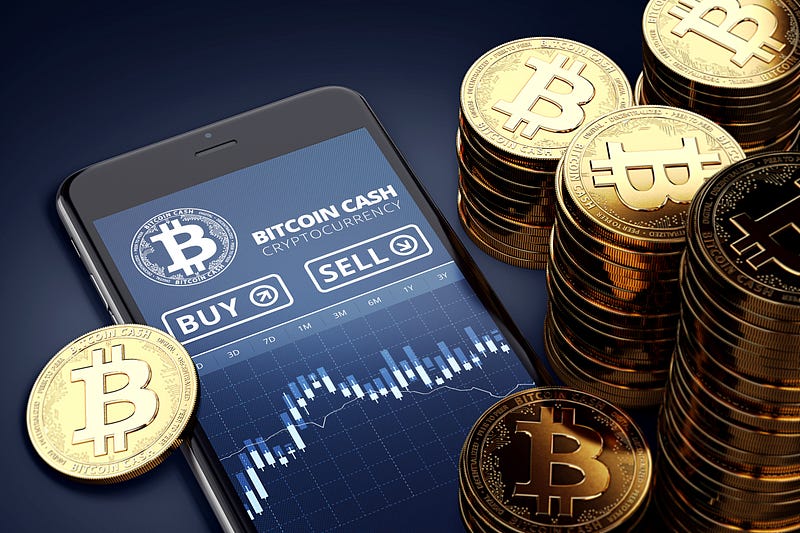
Furthermore, software wallets can be categorized into three types:
- Desktop wallets, the program is installed on your computer.
- Mobile wallets, you install them in your Android or iOS device.
- Web wallets are hosted on web pages and exchanges.
-Are you overwhelmed? Take a breath, we are almost finished.
Some more information
-What about the wallets in my exchange account? Are they safe?
First of all, remember that they are hot wallets and that you don’t have the private keys. It is known that a lot of exchanges have been hacked and millions of value have been stolen.
When you have your coins in an exchange they are two security issues. First, somebody can hack your codes to have access to your account and if he successfully does it, he can transfer your coins to his address. Exchanges have learned from past mistakes and have put an extra layer of security, 2FA.
2FA means two-factor authentication and it is a 6 digit code that changes any 30 seconds. You need to install a program on your smartphone that generates these codes. Then you bind it with each exchange and it provides you the codes for each of these exchanges. The most popular is Google Authenticator.
The second issue is that hackers most of the times are attacking the exchange and trying to get access to all the accounts, not only yours. They don’t need your codes, they want to have access to the database of the exchange and make the dirty work.
Again, many exchanges have created a mechanism to protect the funds they have. They transfer the assets in cold storage and only when a user makes a transaction, they transfer these assets to hot storage, so that the transaction can be executed.
So the answer is that your coins stored in an exchange are not as safe as if you had them in your own cold storage wallet, but many exchanges have made an excellent work considering security.
TIPS
- If you are a day trader you must find a good secure exchange, to have your coins available all the time.
- If you are a long time investor think to use a cold storage wallet.
- Many wallets have evolved to provide you more services. They provide you tools to swap currencies, buy crypto directly with a credit card, interact with contracts, trade them on exchanges, and stack your coins to get profit.
- You can find wallets were you can store all kinds of cryptocurrencies. Fewer wallets mean fewer keys and backups.
- They are wallets that can be installed as an extension on the web browser.
- Some software wallets give you the ability to generate new addresses. You can use them for many reasons including better anonymity and better management.
- You can see your balance without having to access your wallet with all the security issues that are involved. That is done by explorers that look at the blockchain for transactions associated with a single address. For the Ethereum network, an explorer is Ethplorer where you can input your address and see all the relative information.
Get Best Software Deals Directly In Your Inbox

CONCLUSION
It can be frustrating to make your decision on which wallet you should use. Before choosing, it is important to have a good overview of what kind of wallets are out in the market. I hope that you have a clear picture now. Then you must consider what kind of investment you like to make. That will be your starting point.
Remember that Cold wallets are best for long time investment and Hot storage wallets are best if you make transactions regularly.
The majority of software wallets are free as well as paper wallets while Hardware wallets cost from 60$ to hundreds of dollars. You own the private keys, you own the coins. So keep them in a safe place no matter what.
I write about a lot of things including cryptocurrencies. If you like to hear news from me, stay in touch.


