
Mining Litecoin (LTC)
My personal experience in Litecoin mining.
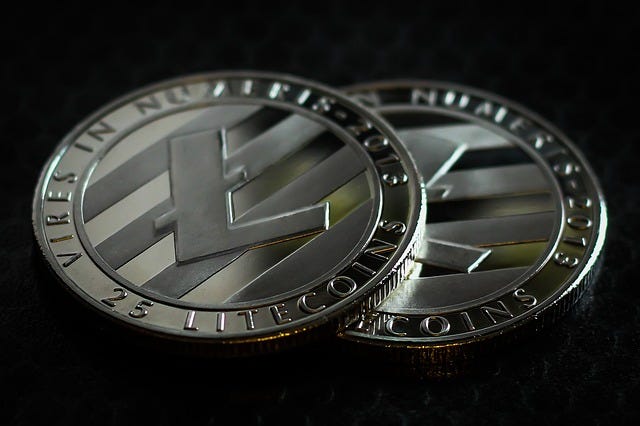
I was informed about the ability to make a stable income, mining some cryptocurrencies, at the beginning of 2017. A good friend of mine was mining Litecoin and Dogecoin. He was using graphic cards (GPU) and application-specific integrated circuit (ASIC) miner, to mine.
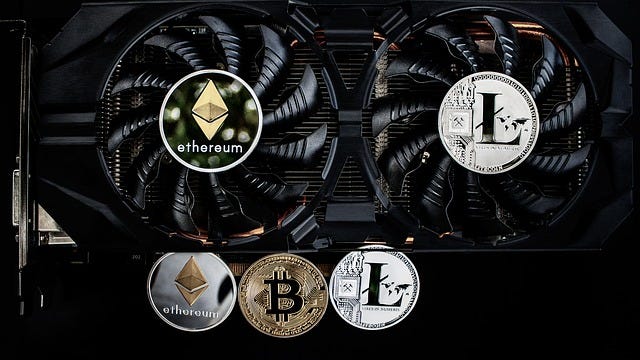
I was fascinated by the idea, that I could use my knowledge and my computer hardware, to make a living. I could be involved in developing the infrastructure for new emerging technology. A technology that could and will change the way things happens.
The bad thing is that the math didn’t come out. The electricity bill’s compared with the actual value of the mined coins, were higher. A negative income is not what I was thinking for.
-What is the cost of mining?
Briefly, you could say:
- Cost of the hardware
- Pool fee
- Electricity Bill’s
If you already have the hardware (one-time investment), then you can mine alone or connect to a pool. Mining alone, on most blockchain’s, is not profitable. It could take years to find one valid encryption for the next block and get paid.
So the most common way to mine is using a pool. In the pool, your mining equipment is connected with other users. The computational power of a pool has a lot more changes to find valid encryption, in far more less time(from minutes to hours).
The reward for finding the next block of a blockchain gets shared with the active miners, according to the corresponding power they contribute. You have to pay a fee to the pool. In most cases, it is 1% — 3% of the coins you have mined. So, this is a regular cost.
The most significant financial expense, is your electricity bill. The mining equipment consumes huge amounts of energy.
One day, I noticed an article, describing the new ASIC miners, from Bitmain. It was Antminer L3+, an ASIC miner with 504 Mh/s computational power and a consumption of 800 Watt/hour.
It was mind-blowing! Such a miner was coming from the Future! Until now, you could find miners with a spec like Gridseed Miner at 5.2–6 Mh/S consuming 100 W/h of electricity. If you are from the first owners of such a machine, you could make some serious money!
Meanwhile, it is the end of October 2017 and Litecoin has gained 10 times its value since the beginning of the Year. The price of Litecoin rises from 4 to 50 EUR.
This machine will belong to me. I must buy it now. I did it. I bought it! Suddenly, it will be shipped accordingly with the order of payment. Total time, including shipping from China to Europe, approximately two months.
The ASIC miner was on the grid, connected to a pool, mining Litecoin at the very end of December. After my homework, I decided to use the Coinotron pool. The services, the use and the size of the pool were ideal.
The first month I mined 2 LTC and over the three and a half months I was mining, I mined a total of 4,6 LTC. The total hash power of the network, increased rapidly within two months, making it less profitable to mine.
After this period, most of the new ASIC miners was delivered to the owners. So the one big advantage the earlier owner has is gone. Everybody has now the new powerful miners, contributing more computational power to the network, making it more difficult to find the next block.
You see, there is a chain of events that determines the outcome of your investment.
Having a machine, plugged in the electricity grid, 24/7 consuming 800 W/h, make a total of 576 Kwh/month. In my country, the cost per KWh is 0.3 EUR. The electricity bill was 172 EUR per month.
The price of Litecoin, after rising to the top (€ 340.39), started to decline. In March 2018 I could not support the operation of the miner.
I paid 1300 EUR for the ASIC L3+ miner, plus the other 200 EUR the customs, plus 600 EUR the electricity bills. A total of 2100 EUR goes to the investment and I got 4.6 LTC’s.
With today’s price, which is 48.22 EUR, I have a lost of :
2100-(48.22 x 4.6) = 1878.188 EUR
If I could travel back in time and sold them for 340 EUR per coin, I still would have a loss of 536 EUR. But I can’t.
I still have them in my personal wallet and I HOLD. I have the conviction that the price of Litecoin will skyrocket again.
Ones in 2020 and ones in 2021 for sure.
In 2020 it will marginally overpass the all-time highest price. In 2021 it will really skyrocket. The primary reason will be the rise of Bitcoin’s price.
I agree with Sylvain Saurel in his study: Bitcoin Price Has Recorded Its Best Start Since 2012, But Its Strongest Increase Is Expected In 2021. I believe you should give it a read!
- Eventually, is mining profitable?
A really difficult question to answer! It depends on where you are living and what is the cost of electricity. Do you have enough money to support it? Are you willing to wait and hold your hard-earned coins until the price goes up? Do you have faith in the project?
In the end, it is up to you, to make the decision!
Joy the ride!


