What is The Difference Between Rugby League and Rugby Union? - NZ Pocket Guide</h2>
<div><h3>Learn about the difference between rugby league and rugby union in New Zealand with this complete rugby guide.</h3></div>
<div><p>nzpocketguide.com</p></div>
</div>
<div>
<div style="background-image: url(https://miro.readmedium.com/v2/resize:fit:320/0*sdiXt_bVAzQUOAg1)"></div>
</div>
</div>
</a>
</div><p id="8eca">What cemented the “Kiwi” as a nickname for all New Zealanders was actually a <i>fourth </i>kind of kiwi: Kiwi-brand <i>boot polish</i>, which was invented in 1906 by an Australian who named it in honor of his New Zealander wife. The polish was revolutionary because it not only made boots shine, it helped make them waterproof as well. During the First World War, Kiwi became the boot polish of choice for American and British soldiers fighting in Europe. Because of the popularity of the <i>polish</i>, soldiers began calling their New Zealand comrades in the trenches “Kiwis.”</p><div id="ecda" class="link-block">
<a href="https://www.nzherald.co.nz/nz/end-of-the-shine-in-the-uk-for-shoe-polish-brand-that-made-kiwi-world-famous/QAEVHEJT7FDC7P5XI2ERXGQEMI/#:~:text=Started%20in%20a%20two%2Droomed,according%20to%20Te%20Ara%20Encyclopedia.">
<div>
<div>
<h2>Shine comes off popular shoe polish brand that made 'Kiwi' world famous</h2>
<div><h3>WFH culture and popularity of trainers over office shoes blamed for demise.</h3></div>
<div><p>www.nzherald.co.nz</p></div>
</div>
<div>
<div style="background-image: url(https://miro.readmedium.com/v2/resize:fit:320/0*6UqVDzCkCntk7KSG)"></div>
</div>
</div>
</a>
</div><p id="47d1">One hundred years later, the label not only sticks but has become heartily embraced by New Zealanders. As the <a href="https://www.nzstory.govt.nz/stories/kiwi-bird/#:~:text=The%20nickname%20%27Kiwi%27%20sits%20perfectly,and%20just%20a%20bit%20quirky">New Zealand Government website </a>proudly explains it:</p><p id="bc30"><i>The nickname ‘Kiwi’ sits perfectly with New Zealanders’ national psyche. Just like the bird, New Zealanders are resolute, adaptable and just a bit quirky. As a symbol, the Kiwi bird transcends age, gender, race, and creed, and New Zealanders embraced it.</i></p><p id="81fe">Sadly, the kiwi bird’s numbers are in decline — falling about 2% a year — due to introduced predators like stoats and possums, as well as cats and dogs. There’s now a rigorous predator-control program in many parts of the country, as well as various efforts to take kiwi eggs from the wild, rear the chicks and then release them when the birds are big enough to fend for themselves. This takes their survival rate from about 5% to 65%.</p><figure id="fba5"><img src="https://cdn-images-1.readmedium.com/v2/resize:fit:800/1*Q2VWIs2_JDF_cv_VhjoZvA.jpeg"><figcaption>Five “Brands” of Kiwi. NZ has five separate kiwi species. My photo from the Te Papa museum in Wellington.</figcaption></figure><p id="305a">Okay, but what about the kiwi fruit?</p><p id="74be">If you are of a certain age, you might remember that long ago, the kiwi fruit was called the “Chinese gooseberry.” Indeed, these luscious, sweet-and-sour green globules are native to China. Apparently, one can still find them growing in the wild. But, a hundred years ago they were not much cultivated. They were called <i>mihoutao, </i>meaning<i> </i>“macaque fruit.” A macaque is a kind of monkey that apparently likes to eat kiwis. No wonder the Chinese didn’t fancy <i>monkey fruit.</i></p><p id="5399">New Zealand has a perfect climate for growing Chinese gooseberries. After early imports at the beginning of the 20th century, by the 1940s they were being grown commercially all across the North Island. The strange fruit became popular with US/UK servicemen stationed in New Zealand during WWII, which led to a post-war export market that quickly expanded, making it the most identifiable New Zealand agricultural product in the world.</p><p id="6c00">But then, with the start of the Cold War, associating anything with Communist China — even <i>Chinese</i> gooseberries became a marketing nightmare. At first, exporters tried rebranding the fruit as the “melonette.” That proved a dud. Then in 1959, Jack Turner, who ran one of New Zealand’s leading fruit export companies, came up with the name <i>kiwifruit.</i></p><p id="820a">According to the <i>NZ Kiwifruit Journal 2021</i>, “acceptance of the new name in export markets was greatly assisted by the efforts of the Kiwifruit Export Promotion Committee which over ten years from 1970 onwards and spent hundreds of millions of dollars in advertising.” By 1970 all kiwifruit exports out of New Zealand had adopted this name.</p><p id="b175">If you want <i>all</i> the fascinating details, you can read about it here:</p><div id="07f9" class="link-block">
<a href="https://www.sbs.com.au/food/the-cook-up-with-adam-liaw/article/how-did-the-chinese-kiwifruit-end-up-with-a-maori-name/uho5zagxe#">
<div>
<div>
Options
<h2>How did the Chinese kiwifruit end up with a Māori name?</h2>
<div><h3>Though the lauded 'kiwi queen' Frieda Caplan didn't in fact name the fruit, she played an integral part in making it…</h3></div>
<div><p>www.sbs.com.au</p></div>
</div>
<div>
<div style="background-image: url(https://miro.readmedium.com/v2/resize:fit:320/0*xECpNXVcNabMdXgF)"></div>
</div>
</div>
</a>
</div><div id="0a5d" class="link-block">
<a href="https://time.com/4662293/kiwifruit-chinese-gooseberry-new-zealand-history-fruit/">
<div>
<div>
<h2>How the Chinese Gooseberry Became the Kiwifruit</h2>
<div><h3>The true story of how New Zealand growers hijacked the Chinese gooseberry and made it their own is a mix of marketing…</h3></div>
<div><p>time.com</p></div>
</div>
<div>
<div style="background-image: url(https://miro.readmedium.com/v2/resize:fit:320/0*Pz3sUhmQKe4l-Zui)"></div>
</div>
</div>
</a>
</div><p id="60be">Today, kiwifruit is a billion-dollar export industry for New Zealand. But that success has brought lower-cost competitors into the market, from South America, Southeast Asia, and even China, which ironically has become the largest grower of kiwi fruit in the world in the 21st century. It turns out affluent modern Chinese really liked the exotic New Zealand fruit, so local companies started growing them on the cheap. But the Chinese no longer call them <i>mihoutao. </i>They call them <i>qi yi guo. Guo </i>means fruit and <i>qi yi is </i>a phonetic approximation of the original Māori word for the original New Zealand bird, <i>kiwi.</i></p><figure id="7180"><img src="https://cdn-images-1.readmedium.com/v2/resize:fit:800/1*mt2bic_1L21P3HU99awGKA.jpeg"><figcaption>Kiwifruit come in two colors/flavors: green and gold. The gold ones taste sweeter.</figcaption></figure><p id="6272">These days, if you want to be sure you are buying authentic kiwi fruit from a real Kiwi person that was grown in the land of the flightless kiwi, you have to look for the brand-name <a href="https://www.zespri.com/en-US/blogdetail/where-are-kiwifruit-grown#:~:text=While%20Zespri%20is%20based%20in,grown%20primarily%20in%20New%20Zealand."><i>Zespri</i></a>. And <i>that</i> important final fact comes to you you courtesy of my Kiwi friend and fellow Globetrotter’s contributor, <a href="undefined">Barb Dalton</a>. Just as I was finished writing this article, I came across <i>her</i> version of the 3-kiwi story, which I’m delighted to share with you here:</p><div id="ed3f" class="link-block">
<a href="https://readmedium.com/the-kiwi-is-not-just-a-fruit-5976375d31d8">
<div>
<div>
<h2>The Kiwi is Not Just a Fruit</h2>
<div><h3>Facts and funnies about the bird and the people of New Zealand</h3></div>
<div><p>medium.com</p></div>
</div>
<div>
<div style="background-image: url(https://miro.readmedium.com/v2/resize:fit:320/0*4goRttt59-A3d37c)"></div>
</div>
</div>
</a>
</div><p id="607a">You can also read more about my adventures with kiwi (the bird) here:</p><div id="cd3b" class="link-block">
<a href="https://readmedium.com/why-we-travel-with-endangered-birds-in-our-car-9194b47483ba">
<div>
<div>
<h2>Why We Travel with Endangered Birds in Our Car</h2>
<div><h3>It started with the kiwi</h3></div>
<div><p>medium.com</p></div>
</div>
<div>
<div style="background-image: url(https://miro.readmedium.com/v2/resize:fit:320/1*[email protected])"></div>
</div>
</div>
</a>
</div><p id="1fbc">And whenever your travels take you to Paris, be sure to drop by The <a href="https://blacksheepsocietyparis.com">Black Sheep Society,</a> and say “hi” to Duncan, my favorite Kiwi in all of France:</p><div id="3c9d" class="link-block">
<a href="https://blacksheepsocietyparis.com/">
<div>
<div>
<h2>BLACK SHEEP SOCIETY</h2>
<div><h3>cocktails - craft beer - homemade savoury pies - 3 big screens for your favourite sports - weekly pub quiz - dart board…</h3></div>
<div><p>blacksheepsocietyparis.com</p></div>
</div>
<div>
<div style="background-image: url(https://miro.readmedium.com/v2/resize:fit:320/0*xZ46Ivuaawf2umj6)"></div>
</div>
</div>
</a>
</div><p id="1cfd">***</p><p id="3519">Please check out my new book, <a href="https://www.collectiveinkbooks.com/changemakers-books/our-books/mature-flaneur-slow-travel-europe"><i>Mature Flâneur: Slow Travels Through Portugal, France, Italy, and Noway</i></a><i>:</i></p><figure id="7ec1"><img src="https://cdn-images-1.readmedium.com/v2/resize:fit:800/1*qnQaCRU14qIZByflkaLfbA.jpeg"><figcaption></figcaption></figure></article></body>
Which Came First? The Kiwi, the Kiwi, or the Kiwi?
The riddle of the homonymous bird, fruit and people of New Zealand
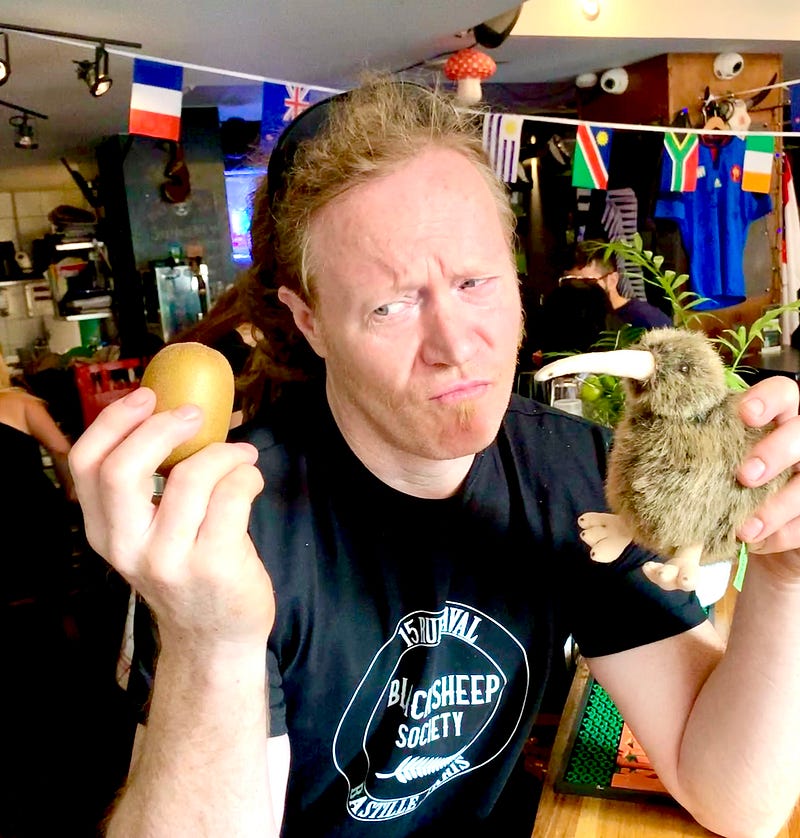
A kiwi, a kiwi, and a Kiwi walk into a bar…In this case, the New-Zealand themed Black Sheep Society in Paris co-owned by my friend Duncan. Yes, he’s a Kiwi. All photos by Tim Ward
Which kiwi came first? The fruit (egg-shaped, fuzzy, brown on the outside and green on the inside), the bird (flightless, brown and feisty) or the people? (friendly, well-traveled, and available in many colors).
The answer will surprise you, so please take a guess before the big reveal!
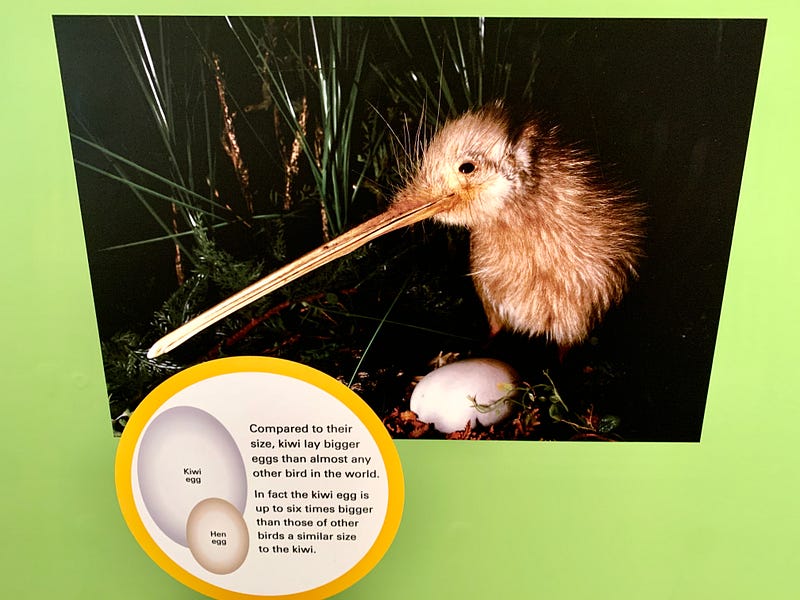
My photo from the Te Papa Museum in Wellington.
That’s right, good guess! The bird came first! But the story of how the other two got the same name as New Zealand’s unique avian species is anything but predictable.
The proto-kiwi first arrived in New Zealand perhaps as long as 50 million years ago, long before homo sapiens were even a twinkle in a proto-primate’s eye. But how did a flightless bird make it to these islands in the remote South Pacific? New Zealand broke away from the supercontinent Gondwana about 60 million years ago, and at that time volcanic eruptions killed off most animal life on Zealandia (only one species of lizard survived).
The most recent evolutionary evidence is that proto-kiwis could actually fly. But, after arriving in a land with no predators, they gradually lost that ability. They evolved into ground foragers, feasting on the bugs that live on the forest floor. They also developed some unusual features: feathers that are more like hair than fur, whiskers to help them find their way in the dark of night, and robust, thick legs with very un-bird-like, dense bones. For this reason, the are sometimes jokingly referred to as “honorary mammals.”
The Māori — the first human settlers to NZ — called this most peculiar bird kiwi because that’s what its cry sounded like to them (kee wee, kee wee). So in a sense, you could say the kiwi named itself. If you listen to the voice file, attached, you’ll hear the male first, which sounds to me like eeee-eeeee. Then the female chimes in; her call sounds to me like an ax murderer on a rampage, so be warned!
Since these utterly unique creatures only evolved in New Zealand, it’s understandable that they would come to represent the country, just as the bald eagle represents the USA, the beaver represents Canada, and the rooster represents Portugal. The first actual evidence of this representation goes back to New Zealand army battalions from the 1860s and 1870s when they incorporated images of kiwi into their insignia. Then in the first years of the 20th century, the New Zealand Rugby League team became informally referred to in local sports pages as “the Kiwis.” The team officially adopted “New Zealand Kiwis” as its name in 1935.
What about the famous New Zealand team the “All Blacks”? Ah — that’s New Zealand’s Rugby Union Team. Totally different than Rugby League. Different rules, different teams. Yes, it’s very confusing. This will clear it up for you:
What cemented the “Kiwi” as a nickname for all New Zealanders was actually a fourth kind of kiwi: Kiwi-brand boot polish, which was invented in 1906 by an Australian who named it in honor of his New Zealander wife. The polish was revolutionary because it not only made boots shine, it helped make them waterproof as well. During the First World War, Kiwi became the boot polish of choice for American and British soldiers fighting in Europe. Because of the popularity of the polish, soldiers began calling their New Zealand comrades in the trenches “Kiwis.”
One hundred years later, the label not only sticks but has become heartily embraced by New Zealanders. As the New Zealand Government website proudly explains it:
The nickname ‘Kiwi’ sits perfectly with New Zealanders’ national psyche. Just like the bird, New Zealanders are resolute, adaptable and just a bit quirky. As a symbol, the Kiwi bird transcends age, gender, race, and creed, and New Zealanders embraced it.
Sadly, the kiwi bird’s numbers are in decline — falling about 2% a year — due to introduced predators like stoats and possums, as well as cats and dogs. There’s now a rigorous predator-control program in many parts of the country, as well as various efforts to take kiwi eggs from the wild, rear the chicks and then release them when the birds are big enough to fend for themselves. This takes their survival rate from about 5% to 65%.
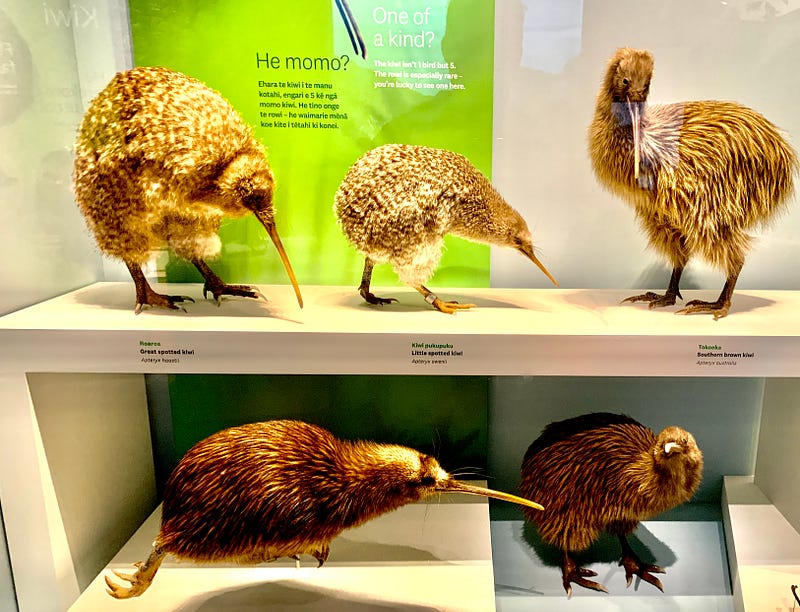
Five “Brands” of Kiwi. NZ has five separate kiwi species. My photo from the Te Papa museum in Wellington.
Okay, but what about the kiwi fruit?
If you are of a certain age, you might remember that long ago, the kiwi fruit was called the “Chinese gooseberry.” Indeed, these luscious, sweet-and-sour green globules are native to China. Apparently, one can still find them growing in the wild. But, a hundred years ago they were not much cultivated. They were called mihoutao, meaning“macaque fruit.” A macaque is a kind of monkey that apparently likes to eat kiwis. No wonder the Chinese didn’t fancy monkey fruit.
New Zealand has a perfect climate for growing Chinese gooseberries. After early imports at the beginning of the 20th century, by the 1940s they were being grown commercially all across the North Island. The strange fruit became popular with US/UK servicemen stationed in New Zealand during WWII, which led to a post-war export market that quickly expanded, making it the most identifiable New Zealand agricultural product in the world.
But then, with the start of the Cold War, associating anything with Communist China — even Chinese gooseberries became a marketing nightmare. At first, exporters tried rebranding the fruit as the “melonette.” That proved a dud. Then in 1959, Jack Turner, who ran one of New Zealand’s leading fruit export companies, came up with the name kiwifruit.
According to the NZ Kiwifruit Journal 2021, “acceptance of the new name in export markets was greatly assisted by the efforts of the Kiwifruit Export Promotion Committee which over ten years from 1970 onwards and spent hundreds of millions of dollars in advertising.” By 1970 all kiwifruit exports out of New Zealand had adopted this name.
If you want all the fascinating details, you can read about it here:
Today, kiwifruit is a billion-dollar export industry for New Zealand. But that success has brought lower-cost competitors into the market, from South America, Southeast Asia, and even China, which ironically has become the largest grower of kiwi fruit in the world in the 21st century. It turns out affluent modern Chinese really liked the exotic New Zealand fruit, so local companies started growing them on the cheap. But the Chinese no longer call them mihoutao. They call them qi yi guo. Guo means fruit and qi yi is a phonetic approximation of the original Māori word for the original New Zealand bird, kiwi.
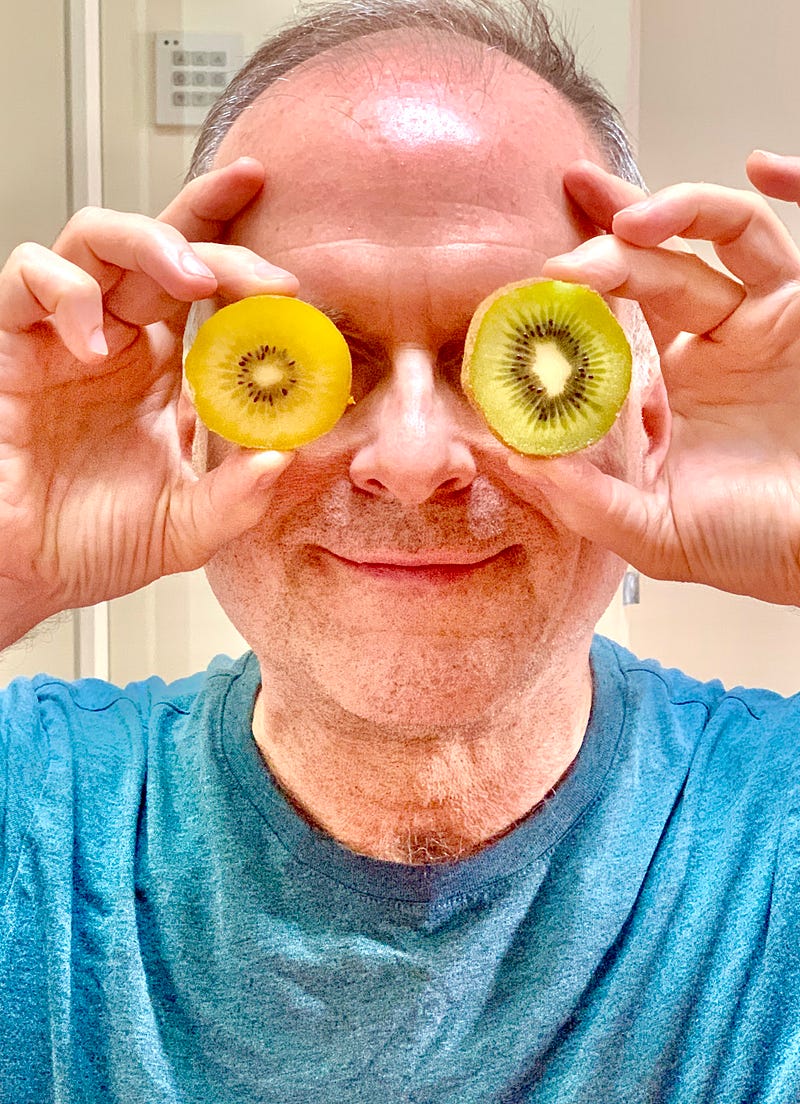
Kiwifruit come in two colors/flavors: green and gold. The gold ones taste sweeter.
These days, if you want to be sure you are buying authentic kiwi fruit from a real Kiwi person that was grown in the land of the flightless kiwi, you have to look for the brand-name Zespri. And that important final fact comes to you you courtesy of my Kiwi friend and fellow Globetrotter’s contributor, Barb Dalton. Just as I was finished writing this article, I came across her version of the 3-kiwi story, which I’m delighted to share with you here: