avatarBrad Yonaka

Free AI web copilot to create summaries, insights and extended knowledge, download it at here

3475

Abstract

eryone else, caught in a place where time had been forcibly slowed down. I delighted at entering a roadside store and seeing not a single recognizable Western product brand, but saddened by how no one could talk about politics out of fear.</p><p id="b74b">I learned a lot and did not regret going.</p><p id="788d">My family trip to Saudi Arabia elicited a strongly mixed reaction among people I knew and those I met traveling in the months preceding. In this case, the question <i>why would you go there?</i> was partially due to the habitually draconian policies enacted by the kingdom’s leadership. But people also questioned what there was to see anyway. In other words, glaringly few positives to balance out the negatives.</p><p id="0d9d">I went because any country off the beaten path is bound to be interesting and because the government was letting ordinary tourists in for the first time. It was begging to be explored.</p><p id="da24">Unlike Myanmar, there was no sneaky system of cash gifts to the governing body, and no one I met had any problem speaking their mind (both Saudis and foreign ‘guest workers’). Our most pressing obligation as visitors was to dress conservatively, especially my wife. I know that some women would refuse to go based on that alone. But we were prepared for it, and my wife was fine playing along. Ultimately, this dress code was more relaxed than we were led to believe.</p><figure id="8b08"><img src="https://cdn-images-1.readmedium.com/v2/resize:fit:800/1*zdHNB0sRtXOWse1BFBycbQ.jpeg"><figcaption>A father-daughter bonding moment while crossing a flooded road near Tabah, Saudi Arabia. Screengrab of video. Photo credit: Brad Yonaka</figcaption></figure><p id="fafd">We did see and hear things we didn’t like, but also many beautiful things, and I found people to be relaxed, curious about what we were doing there, and easy to talk to. I learned a lot in three weeks. Again, I strain to find regrets about going, despite the specters of repressed women’s rights, second-class treatment of foreign workers (an abuse shared with Qatar and the United Arab Emirates), and the horrific state-sponsored assassination of dissident Saudi journalist Jamal Khashoggi.</p><p id="b4ac"><i>For a snapshot of what we did in Saudi Arabia, please read <a href="https://readmedium.com/an-unbeliever-in-a-holy-city-2a60b511780d">An Unbeliever in a Holy City</a>.</i></p><p id="65b0">I don’t hear travelers talk about avoiding Türkiye for what the Ottomans did to the Armenian population just over a century ago or the current issues with the Kurds. I never avoided it either, preferring to see those parts of Türkiye for myself, where the evidence of what happened is observable.</p><p id="793a">Same with India, considering its rough treatment of ethnic groups in the northeast provinces like Assam. Or Morocco and their repression of independence seekers in the Spanish Sahara. Or China, for a litany of issues.</p><p id="e842">You can always learn a wealth of things by going somewhere new. Especially somewhere controversial. Unless you are overly impressionable (think of the character Tom Tuttle in the 1985 film <i>Volunteers</i>), you’ll exit with a better and more balanced understanding than when you went in. The evil despotic leader making a few bucks off your visit is not as important.</p><p id="9475">My only genuine concern is the threat I may impose on the citizens I interact with in those countries. I worried about it in Myanmar

Options

, where government spies were imagined to be everywhere; I walked on eggshells in Iran (even though many people I talked to there were eager to spill some grievance or another), and if I were to go back to Russia now, it would be the most pressing issue of all, given Putin’s newly minted penalties for trash talking the war in Ukraine.</p><p id="f368">So, to answer the question I pose in this article: If my presence is likely to threaten a citizen of that country with jail or worse, then I shouldn’t go.</p><p id="e0c3">Otherwise, I am a better person by having the experience. And maybe I’ve encouraged the people I meet in those countries to feel more connected with the rest of the world.</p><p id="9d6e">For an article on the moral quandaries and risks of traveling in certain countries from a very different perspective, I enjoyed reading this one by <a href="undefined">TRAVEL STORIES BY GABE</a>:</p><div id="c142" class="link-block"> <a href="https://readmedium.com/are-some-countries-really-too-dangerous-for-tourists-to-visit-9fb6ed82e613"> <div> <div> <h2>Are Some Countries Really Too Dangerous For Tourists To Visit?</h2> <div><h3>Find out if you’re safe to visit some countries</h3></div> <div><p>medium.com</p></div> </div> <div> <div style="background-image: url(https://miro.readmedium.com/v2/resize:fit:320/1*ALQSs67QWlfllALdJ1PBYg.jpeg)"></div> </div> </div> </a> </div><p id="e73a">For a deep dive into the traveler’s dilemma concerning Myanmar, read this densely packed article by <a href="undefined">Natasha Dandavati</a>:</p><div id="9e36" class="link-block"> <a href="https://aninjusticemag.com/colonial-legacies-authoritarian-oppression-and-genocide-rangoon-tea-house-and-the-travelers-cd1dfcaa9e0a"> <div> <div> <h2>Colonial Legacies, Authoritarian Oppression, and Genocide: Rangoon Tea House and the Traveler’s…</h2> <div><h3>(Note: I’ve used “Rangoon” and “Burma” in reference to Myanmar’s colonial period under British rule, and “Yangon” and…</h3></div> <div><p>aninjusticemag.com@</p></div> </div> <div> <div style="background-image: url(https://miro.readmedium.com/v2/resize:fit:320/1*H605tkRDmNfMQZ6hFCMVHA.jpeg)"></div> </div> </div> </a> </div><p id="d8ce"><a href="undefined">Oksana Kukurudza's Sunflowers Rarely Break</a> delves into a similar analysis of the issues I present here, in:</p><div id="1d91" class="link-block"> <a href="https://readmedium.com/the-ethics-of-travel-in-a-police-state-89b6642706e4"> <div> <div> <h2>The Ethics of Travel in a Police State</h2> <div><h3>Should I have traveled through Tibet and Myanmar or boycotted these places?</h3></div> <div><p>medium.com</p></div> </div> <div> <div style="background-image: url(https://miro.readmedium.com/v2/resize:fit:320/1*[email protected])"></div> </div> </div> </a> </div><p id="402e"><i>Please check my profile for other travel-related articles at <a href="https://readmedium.com/887930b8d626">Brad Yonaka</a>.</i></p></article></body>

Where Shouldn’t You Go?

The traveler’s dilemma
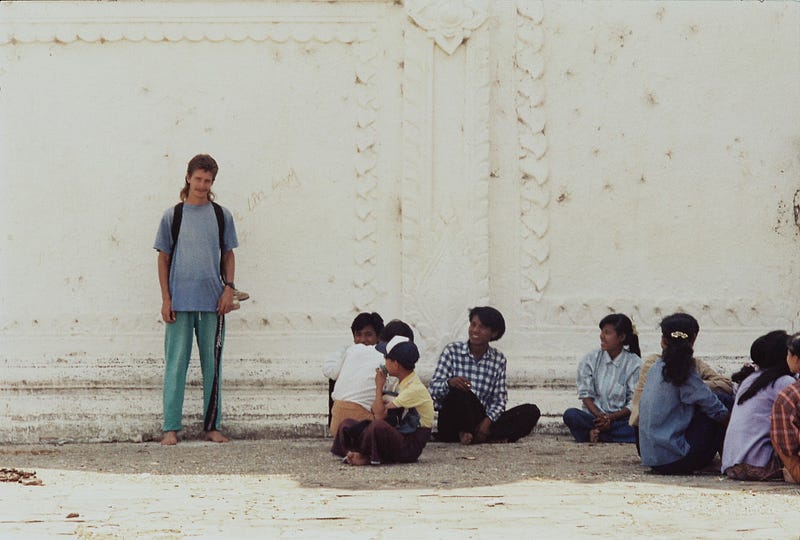
The author, looking entirely out of place in Mingun, Myanmar. Photo credit: Brad Yonaka

I am sitting with a British woman at a small backpacker lodge by the Mekong River. Its slow water glides silently by, the dark forests of Laos on the opposite bank. Enjoying the cool evening air, I feel at peace in this tiny riverside Thai town.

The subject of Africa comes up. I mention that I traveled there and lived in South Africa for a few years.

“How could you do that?” She says, shocked.

I think, oh no, we are going to have one of THESE conversations.

“I had a job there.”

“OK, but why did you go? How could you support apartheid?”

Well. First, South Africa abandoned apartheid halfway through my residence, and second, I didn’t go because I liked their governmental system. I went because it was a job, a free airline ticket to a place halfway around the world, and an opportunity to see and learn things I had never been exposed to. That I witnessed a historical political transformation during my time, there was an unexpected bonus.

But her stance was at the core of the traveler’s dilemma: Should a traveler boycott visiting or working in a country denying human rights or committing some major atrocity that it still denies or justifies? Or is it better to go anyway and demystify the place and people?

The controversy of South Africa is a moot point now. Since this conversation so long ago, Mandela was elected president, and the Truth and the Reconciliation Commission did what it could to put past grievances behind. And they got a new flag that looks much cooler than the old one.

But there are other nations today that remain problematic. If you want to be picky, many countries make the list in some way or another.

While planning a trip to Myanmar in the mid-1990s, I tried sourcing other travelers who might have been there and hence had helpful information. This was in the days before the internet was useable for such knowledge. The people I talked to fell into two camps: Those who had been or wanted to go, and those who recoiled at the thought of going due to the infamy of the ruling military government.

This gave me some pause because I knew there was a mandatory currency exchange at airport customs for all foreigners at the official rate, which was significantly under the black market rate. In other words, it was a cash gift to an oppressive regime. And accommodation for foreigners was restricted to a limited list of hotels that took payment only in US dollars. I didn’t believe for a moment that these hotels would be keeping this money.
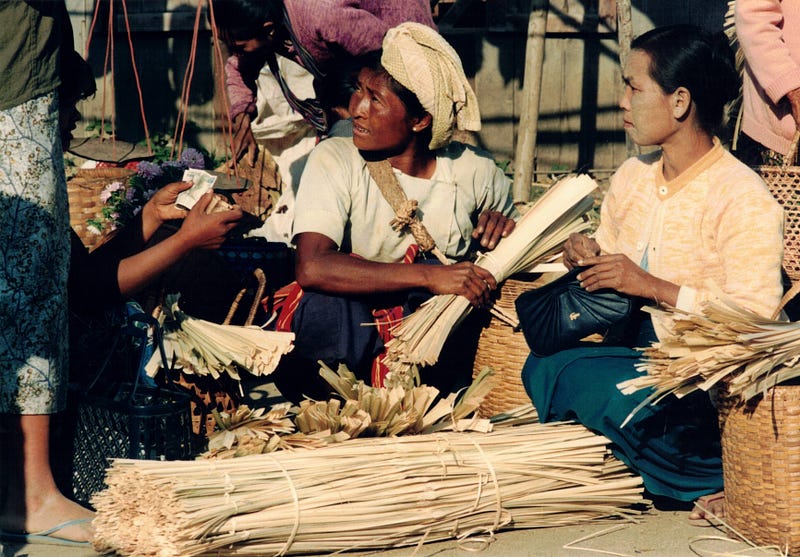
Street market in Inle, Myanmar. Photo credit: Brad Yonaka

These negatives did not entirely cancel out the positives in my final decision. I paid what I had to and pried open the lid of one of the world’s most insular nations. I met honestly friendly individuals with hopes and dreams like everyone else, caught in a place where time had been forcibly slowed down. I delighted at entering a roadside store and seeing not a single recognizable Western product brand, but saddened by how no one could talk about politics out of fear.

I learned a lot and did not regret going.

My family trip to Saudi Arabia elicited a strongly mixed reaction among people I knew and those I met traveling in the months preceding. In this case, the question why would you go there? was partially due to the habitually draconian policies enacted by the kingdom’s leadership. But people also questioned what there was to see anyway. In other words, glaringly few positives to balance out the negatives.

I went because any country off the beaten path is bound to be interesting and because the government was letting ordinary tourists in for the first time. It was begging to be explored.

Unlike Myanmar, there was no sneaky system of cash gifts to the governing body, and no one I met had any problem speaking their mind (both Saudis and foreign ‘guest workers’). Our most pressing obligation as visitors was to dress conservatively, especially my wife. I know that some women would refuse to go based on that alone. But we were prepared for it, and my wife was fine playing along. Ultimately, this dress code was more relaxed than we were led to believe.
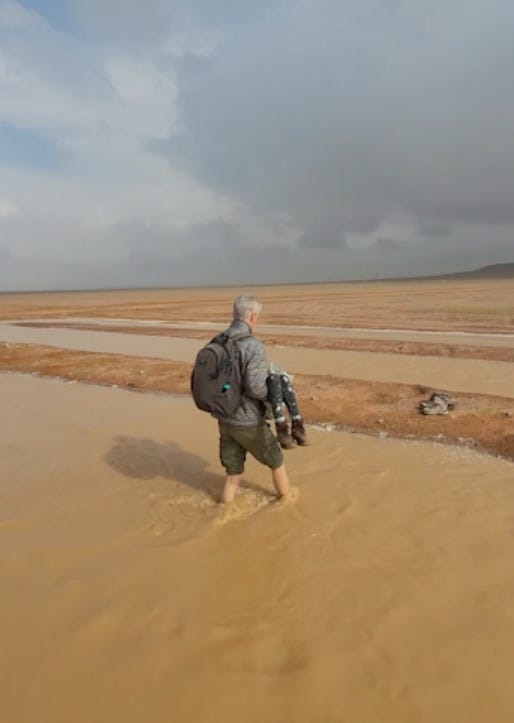
A father-daughter bonding moment while crossing a flooded road near Tabah, Saudi Arabia. Screengrab of video. Photo credit: Brad Yonaka

We did see and hear things we didn’t like, but also many beautiful things, and I found people to be relaxed, curious about what we were doing there, and easy to talk to. I learned a lot in three weeks. Again, I strain to find regrets about going, despite the specters of repressed women’s rights, second-class treatment of foreign workers (an abuse shared with Qatar and the United Arab Emirates), and the horrific state-sponsored assassination of dissident Saudi journalist Jamal Khashoggi.

For a snapshot of what we did in Saudi Arabia, please read An Unbeliever in a Holy City.

I don’t hear travelers talk about avoiding Türkiye for what the Ottomans did to the Armenian population just over a century ago or the current issues with the Kurds. I never avoided it either, preferring to see those parts of Türkiye for myself, where the evidence of what happened is observable.

Same with India, considering its rough treatment of ethnic groups in the northeast provinces like Assam. Or Morocco and their repression of independence seekers in the Spanish Sahara. Or China, for a litany of issues.

You can always learn a wealth of things by going somewhere new. Especially somewhere controversial. Unless you are overly impressionable (think of the character Tom Tuttle in the 1985 film Volunteers), you’ll exit with a better and more balanced understanding than when you went in. The evil despotic leader making a few bucks off your visit is not as important.

My only genuine concern is the threat I may impose on the citizens I interact with in those countries. I worried about it in Myanmar, where government spies were imagined to be everywhere; I walked on eggshells in Iran (even though many people I talked to there were eager to spill some grievance or another), and if I were to go back to Russia now, it would be the most pressing issue of all, given Putin’s newly minted penalties for trash talking the war in Ukraine.

So, to answer the question I pose in this article: If my presence is likely to threaten a citizen of that country with jail or worse, then I shouldn’t go.

Otherwise, I am a better person by having the experience. And maybe I’ve encouraged the people I meet in those countries to feel more connected with the rest of the world.

For an article on the moral quandaries and risks of traveling in certain countries from a very different perspective, I enjoyed reading this one by TRAVEL STORIES BY GABE:

For a deep dive into the traveler’s dilemma concerning Myanmar, read this densely packed article by Natasha Dandavati:

Oksana Kukurudza's Sunflowers Rarely Break delves into a similar analysis of the issues I present here, in:

Please check my profile for other travel-related articles at Brad Yonaka.

Traveling
Politics
Human Rights
Ethics
Myanmar
Recommended from ReadMedium