
OCTOBER MONTHLY CHALLENGE
Where Fog is More Common Than Sunshine
A place where a foggy view doesn’t occur due to a late-night party…
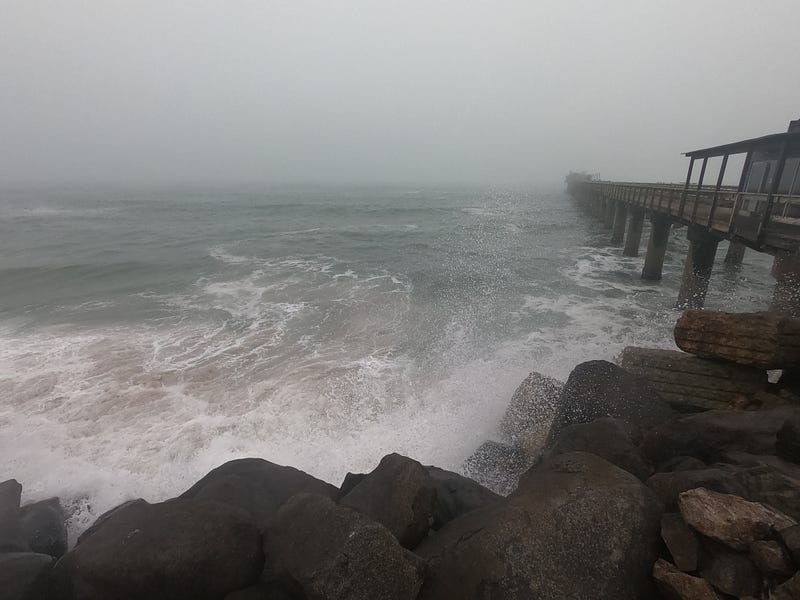
I mean yes, there is fog and there is Swakop fog. That’s a totally different level of fog. It’s when you meet the tourists in the morning and they tell you it’s raining. In the desert. And you respond, a bit annoyed (by the weather, not them).
“No, it’s not, it’s just very, very thick fog”.
The fog that occurs all along the skeleton coast in Namibia moves up to 100 kilometers inland from the coast and is a common weather phenomenon in areas where a desert meets a cold ocean.
“When warm air hits cooler objects, fog is generated by the condensation of vaporized water. Another way for fog to form in deserts occur when a desert is close to an ocean which has a cold current. When air is heated over desert land and blows towards the cool water in the ocean it condenses and fog is formed.” — Wikipedia
The cold Benguela current coming from Antarctica runs straight up the coast of Namibia and supplies the land with cold westerly winds that hit the hot desert air.
The coastal regions of Namibia do experience thick fog on more than 180 days a year due to this phenomenon. The city of Swakopmund is said to have fog on over 300 days a year.
The fog doesn’t stay all day long. As soon as the sun heats up the air just enough to burn off the fog, you’ll get sunny skies in the city which usually happens around 10 am and remains until 2 or 4 pm when the fog moves back in.
Also, there are some days when the fog doesn’t clear at all and a handful of days when no fog occurs on the coast which is mainly the case when the wind is shifting blowing straight from the desert and not the ocean anymore.
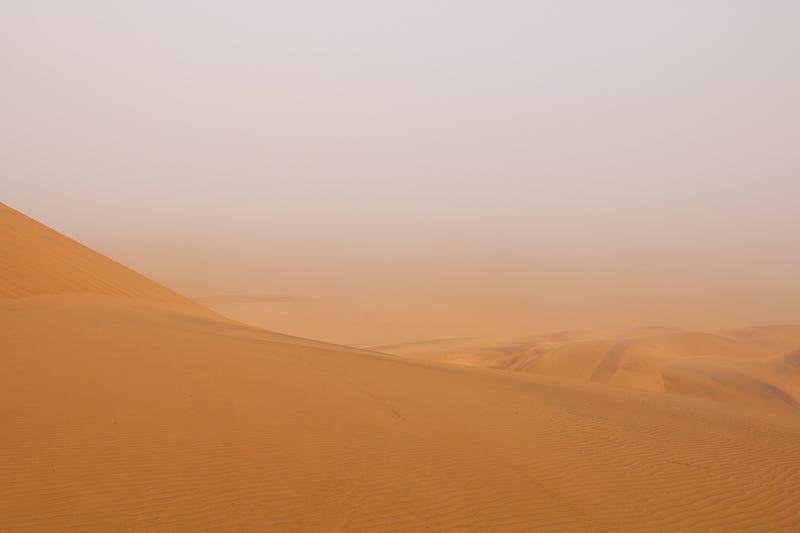
While the Namib is said to be the second driest desert in the world judged by the amount of rainfall it receives every year, if you do count the water it receives through the fog it becomes the wettest desert on earth.
Many plants and species have adapted to this form of water and can thrive in an otherwise harsh environment.
“In the Namib, fog constitutes the most-predictable form of free water. At least 48 Namib animal species consume free water from fog, or are likely to do so, employing both liquid and vapor phase. Fog also sustains plants that form the base for metabolic water production and wets the diet to provide pre-formed water. So fog provides or underpins all the water intake of Namib fauna.” — Esajournals
Some animals actively “hunt” the fog, one of them being called the “fog-basking beetle” we’d often get to watch on the dunes.
In my time living in Namibia, I used to work as a sandboarding instructor walking up sand dunes every day teaching tourists how to board on the sand.
I was exposed to the weather of the Namib desert all day long almost 365 days a year. I did learn my fair share about desert storms, foggy days, and animal species living in the sand.
This said Namib beetle we’d often see in the morning climbing the dune we worked on. A 70-meter tall sand dune. The beetle would fight its way all the way to the top, then place himself upside down so that the fog could condensate on his back, and through lines carved on the shell the water would run straight into his mouth.
A smart one, right?
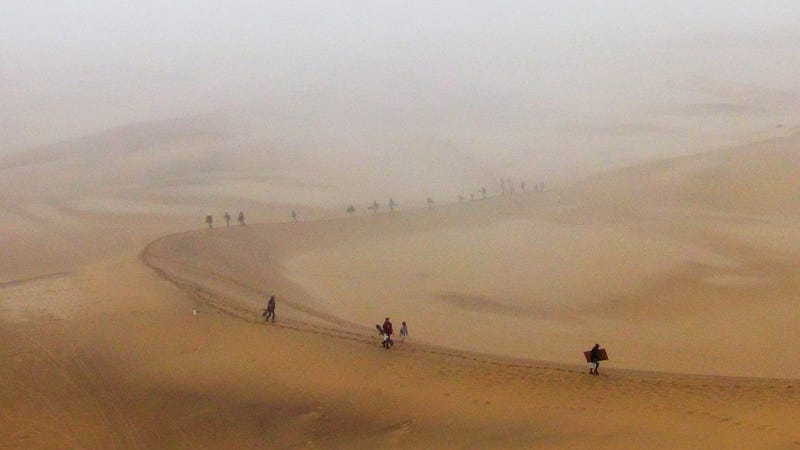
While most tourists would always talk about clouds and cloudy days in town, the locals knew that clouds are a rarity in the Namib desert and along the coastline.
It’s fog, not clouds.
The fog usually hangs at around 1000 feet but when it’s very thick it comes down to the ground and will force you to slow down on the streets because you can’t see the car in front of you.
We’d call it drizzling. The moment the fog is so thick you can actually feel the moisture in the air.
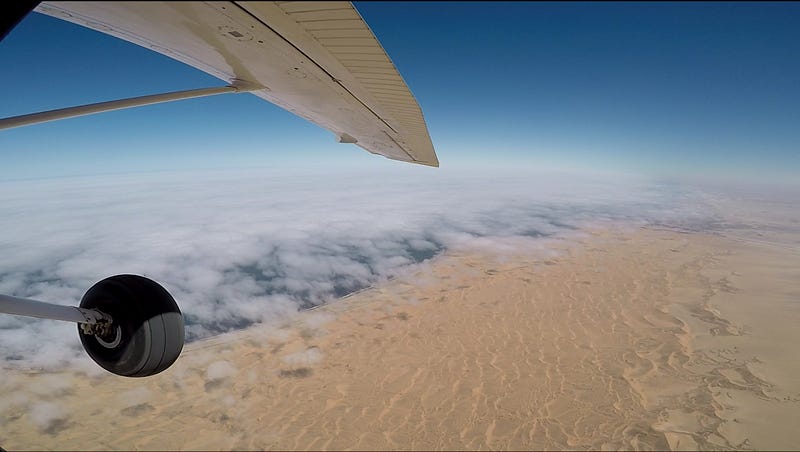
Looking at the image below taken out of an airplane, you can see the moment of the fog moving out again. As the air warms up over the desert, the fog burns off and slowly backs off toward the ocean.
Some days the fog will even burn off above the water. Some days it will just hover there. Right on the coast. Just to let you know it’s right there and it can move back in any second.
Yip, that’s me. Wearing a scarf, gloves, and a thick hoodie. In Africa. In the desert.
Because of the fog.
The fog obviously creates not only humid air but cools it too and in the Namibian winter (~May until September) temperatures can drop (during daytime) on the coast as low as 7 degrees Celsius.
This might not appear very low to you but in a country with no heating systems and poorly insulated houses, you’ll have 15 degrees Celsius inside the house if it’s 12 outside. Just saying.

While I surely had to get used to the foggy weather in the beginning, I slowly learned to read the sun, the fog, and the wind. I learned a lot about how the weather functions and to always dress in layers. In Swakopmund, you can experience temperatures from 7 up to 30 degrees Celsius within a day.
I lived together with an American lady who also happened to be my boss. She owned a dog (Zak) who didn’t just teach me how to get rid of my fear of dogs but also became my regular companion on countless walks along the beach.
The fog was Zak’s favorite weather. As an Irish Terrier with thick fur, he was (is) not made for heat but lived up to a new level of energy on foggy days. Often we'd be the only ones out and about and he’d be running far ahead of me.
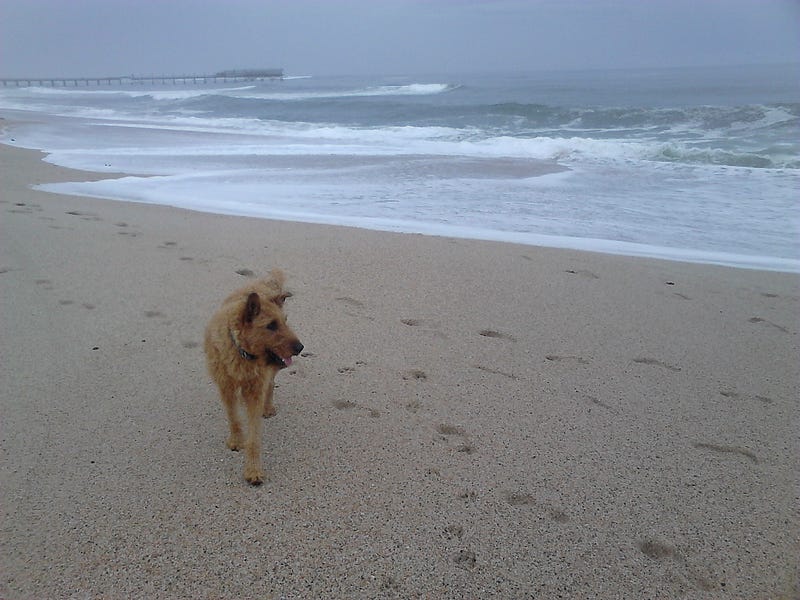
Foggy days can surely influence your mood. If you let it happen.
It can get very dark and gloomy. Almost like an eerie gloom.
Waiting for sunshine is sometimes a hopeless case.
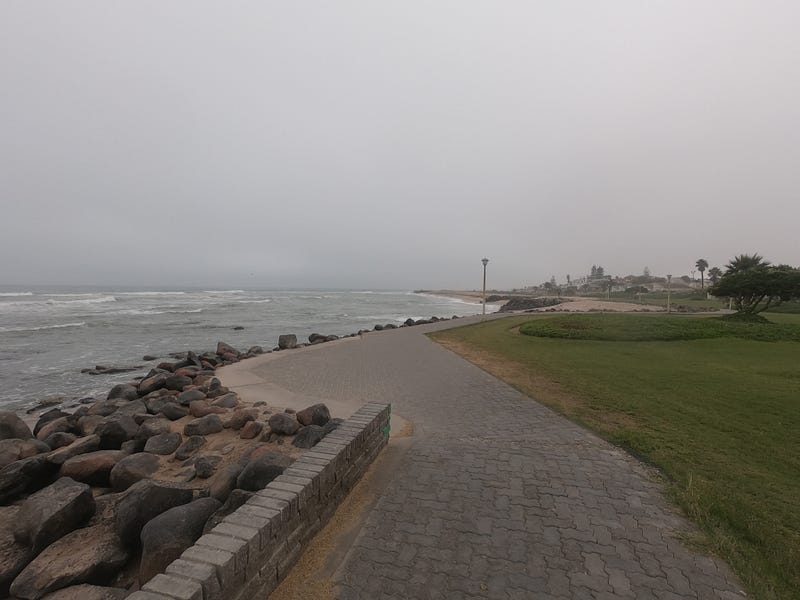
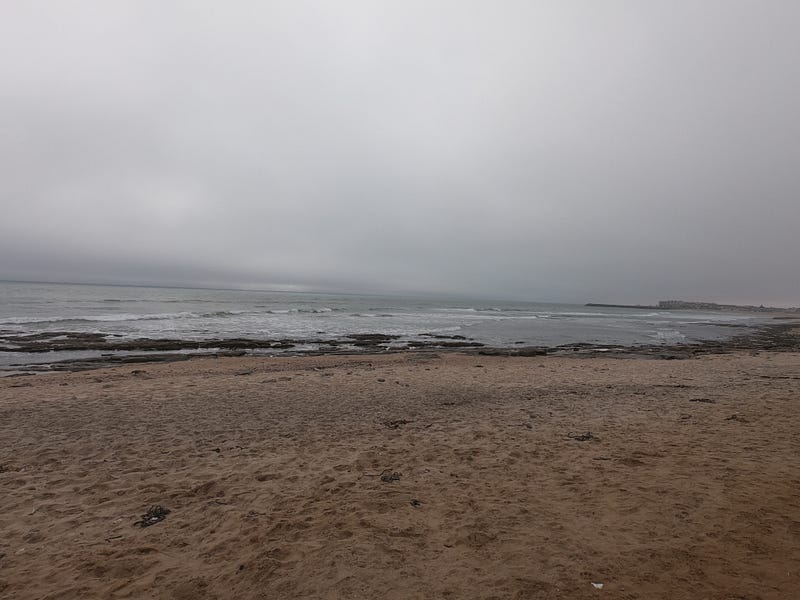
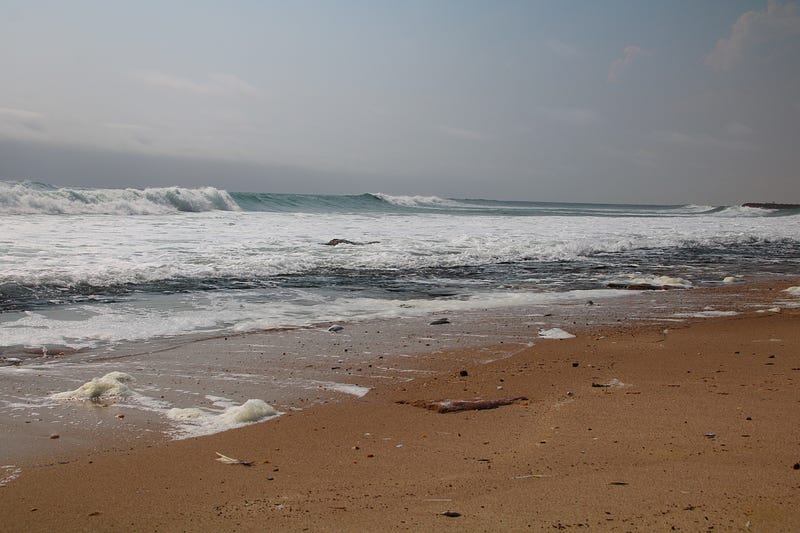
But the sun does come out in this place as well. Usually between 10 am and 2 pm. Sometimes for longer, sometimes shorter. But then, then the fog rolls back in. With a force, you won’t believe it.
Within the blink of an eye the blue sky is gone.
No more sunshine. All the blue vanishes and the cold, damp and chilly air is back.
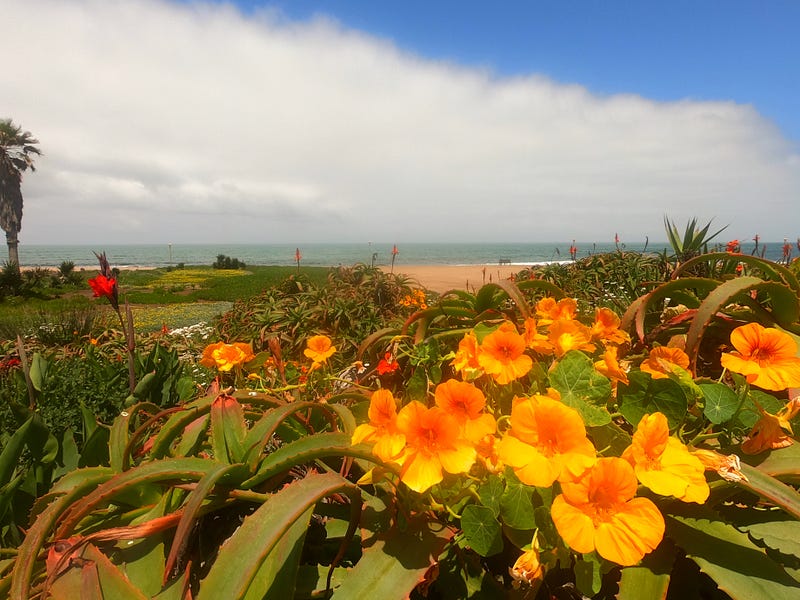
Sometimes, very seldom though the fog stays away until sunset or just before. That’s the only time you’ll get to see the sun setting over the ocean even though the beach is facing west.
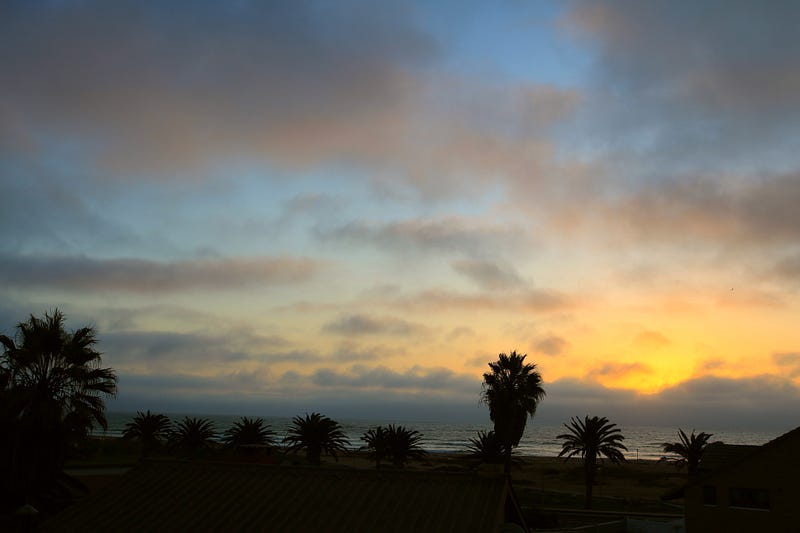
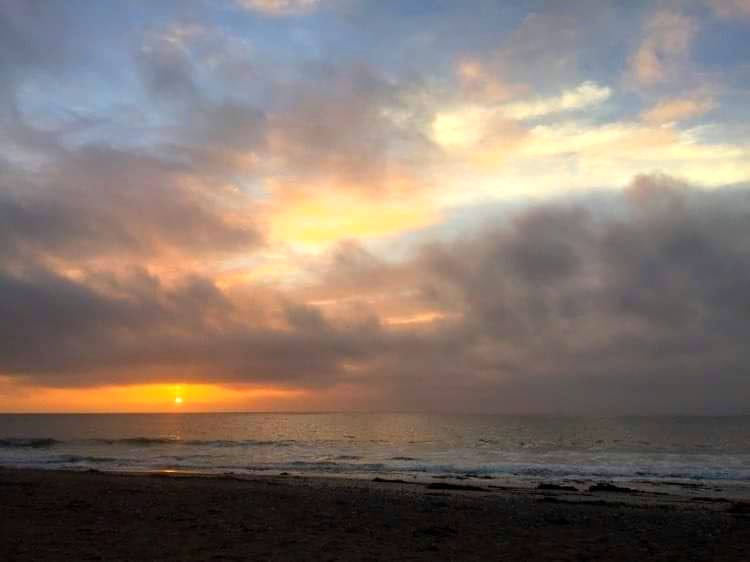
And this is what makes this place oftentimes gloomy. Almost spooky.
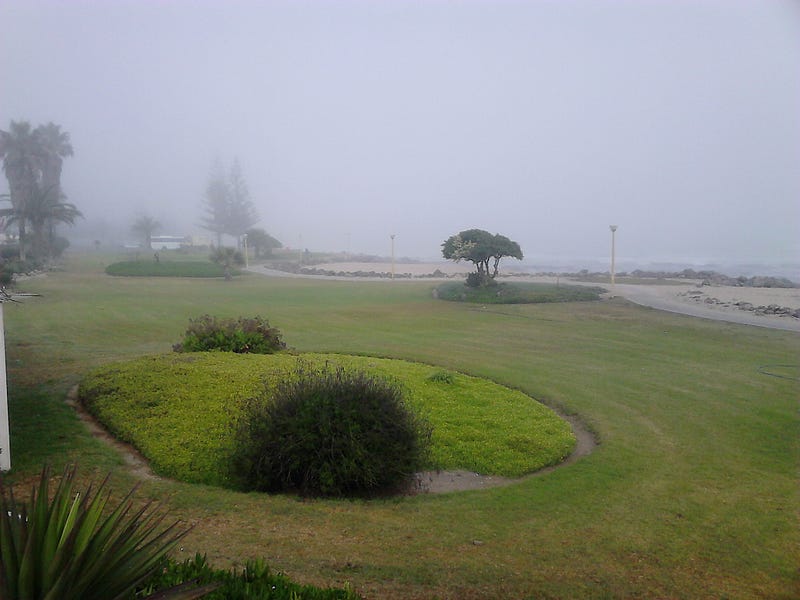
It’s been my home for several years. Now, it’s just another place I long to get back to.
I miss that fogginess. I miss those dark and gloomy days I dreaded while living there. I miss the beach walks with Zak. And I miss walking up sand dunes.
This is a writing prompt response to Globetrotters' monthly challenge “Let’s get spooked”.
More spooky submissions written by our awesome writers:
Sara Burdick with “A Haunted Cemetery in Bogotá, Myths, and Legends Make History More Exciting”
Osan Fernando with “Hong Kong: August 1992 and 2022”
Serhii Onkov with “Fanal. Mysterious Forest Not From This World”
Read more about the beautiful but foggy place of Swakopmund:
Join my email list here if you would like to read more travel essays or sign up for the Medium membership to receive unlimited access to my and other writers’ stories out here (I will receive a commission fee in return).


