
WRITING PROMPT RESPONSE
When Life Gets Foggy
Location number one for misty days: Swakopmund, Namibia
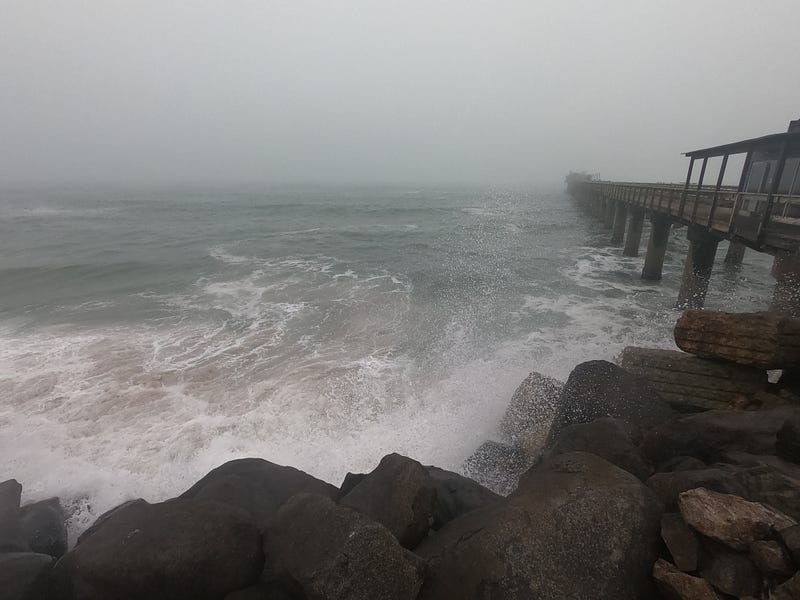
There are moments in life when we’re all happy and bright, just like the blue skies on a sunny day. But life isn’t just about sunshine and happiness. Life is more. Life is tears and sadness. Life can be slow and make you hide in your thoughts. Life can make you depressed. And so is the weather.
In an effort of trying to stay strong in a world filled with depressing and devastating events, my way forward for not drowning among it all is to look on the bright side.
First of all, I don’t watch the news, listen to the radio, or read the newspaper. They all just share accidents and tragic events. There’s too much bad happening in the world for one person to handle. It will only make me depressed, that is for sure.
That’s why I rather focus on my direct environment and surrounding. Maybe there’s someone I can help or something I can fix (clean up the local beach or at least the spot I was hanging out at).
Well, and then there is nature. Everyone knows how healing nature can be. And while nature, through weather swings, can make you depressed as well, it’s all a choice.
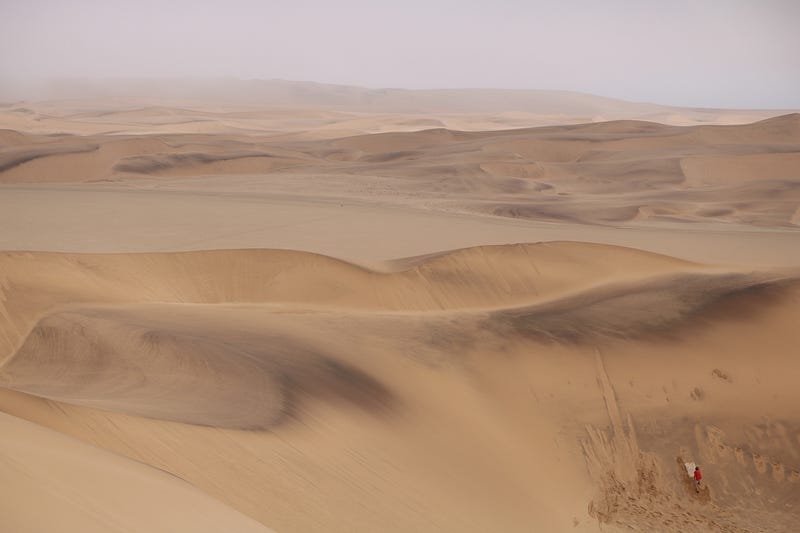
If you choose to be negative because it’s raining outside or because it’s foggy, well, that’s your choice. Currently, it is raining all over my second home, Namibia, and all the citizens are excited because rivers are flowing and the desert is a green piece of Eden. Yes, it is for sure your choice of how to react in different situations out in nature.
It can be cold and misty. That can make you miserable. But if you dress according to the weather, there’s no reason not to embrace it all. There’s no such thing as bad weather, only bad clothing. This is what the Scandinavians love to say and I couldn’t agree more.

My first encounter with fog
I guess that is not true. I've encountered fog growing up in Germany. That is a fact. But it was just another weather feature. I couldn't see far. It was probably cold as well. But so what, that is daily life in Germany.
Only when I moved to Namibia, when I started to call the city between the dunes and the ocean my home, only then I understood the real meaning of fog.
Due to the hot air over the desert and the cold air above the cool Atlantic ocean, fog builds up almost daily along Namibia’s coast. And this fog is the reason why it is called the Skeleton Coast. Sometimes the fog is so thick you can’t even see your own hand in front of your eyes. So how should sailors see rocks and an approaching coastline? Simply impossible.
Talking about foggy days, well, that is life in Swakopmund. Never in my life have I experienced as much fog as in my days living on the coast of Namibia. But I’ve also learned how quickly fog can form and disappear again. Thanks to the African sun.
The winter days (yes, there is such thing as winter in Africa) were often characterized by fog. Only a few hours over lunchtime, we got to see the sun. If at all. Sometimes, the fog would stay all day and cover the town of Swakopmund in a misty world.
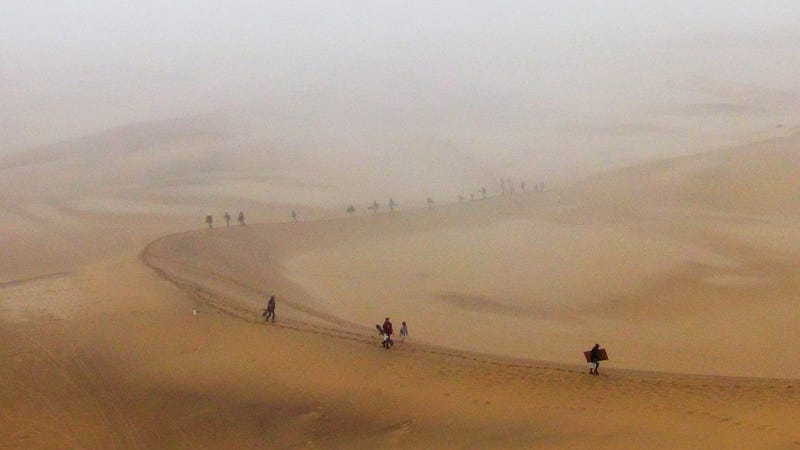
While many hated the weather, I got to embrace the fog because it meant walking up a sand dune several times a day was much easier (I worked as a sandboarding instructor).
As long as the fog was out, it was much cooler.
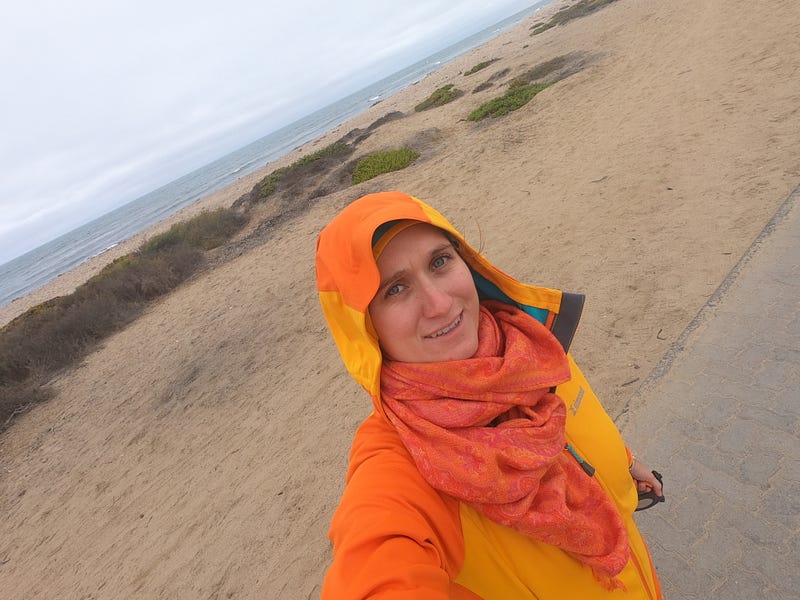
Beach walks in the fog
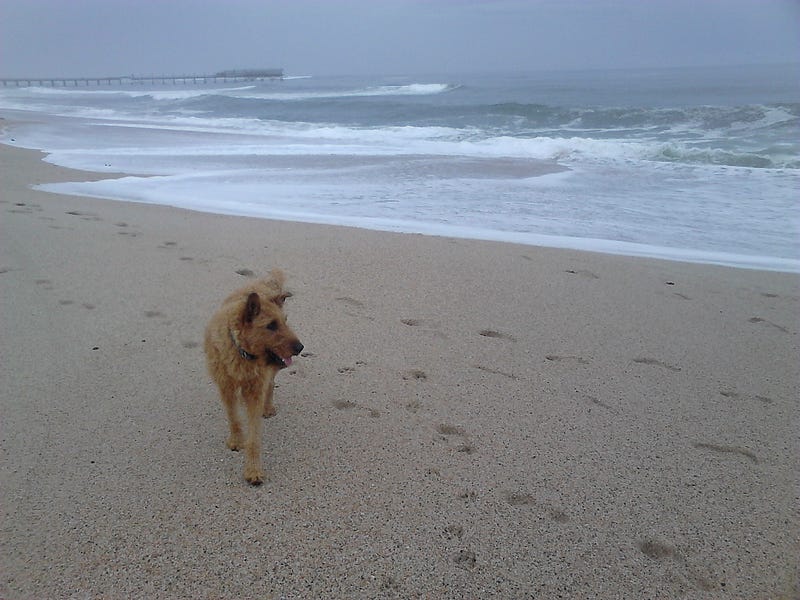
Well, and if I wasn’t working, I took the dog for a long walk along the beach. I lived at the property of my boss and she had an Irish Terrier who loved me when I was still scared of dogs. He healed me from my fear.
We bonded mainly on misty days. Those were the days not many were out and about. Walking together along the empty beaches, we were both happy. The dog, because of cooler temperatures, and me because I was on the beach.
Hello, how can you not be happy when on the beach? Even if it’s a cold day. So what? I always walked barefoot from home and surely would feel the freezing cold ocean with my toes at least.
Yes, I made many memories walking on the beach. In the fog.
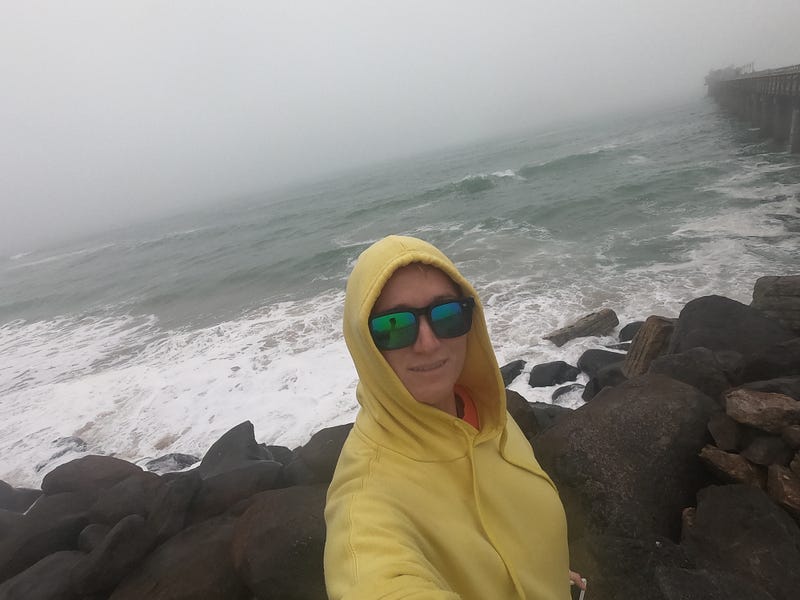
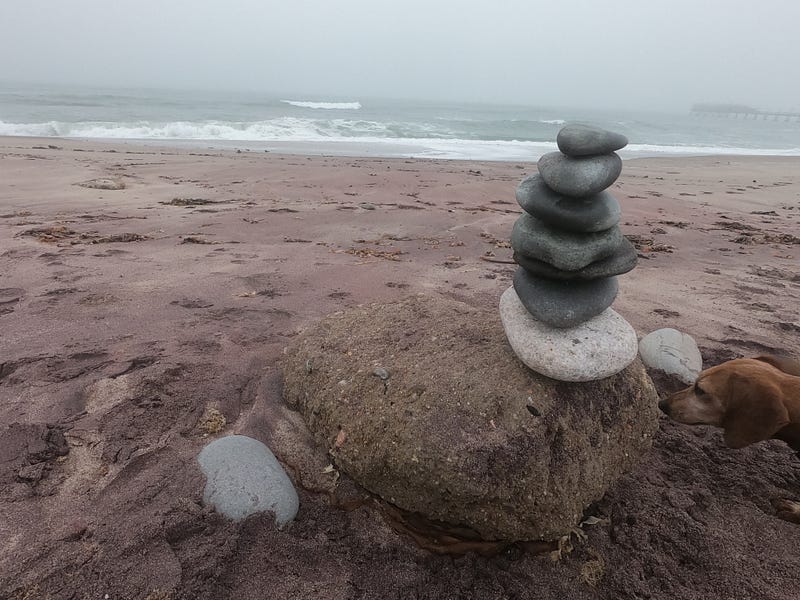
But often my walks on the beach wouldn’t be all gray in gray. At least not the time I left the house. The sun would shine and blue skies all around.
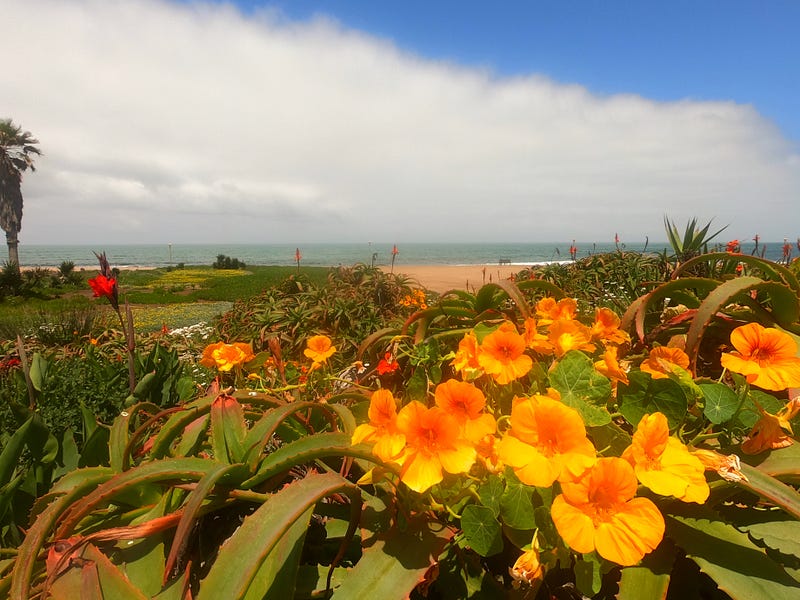
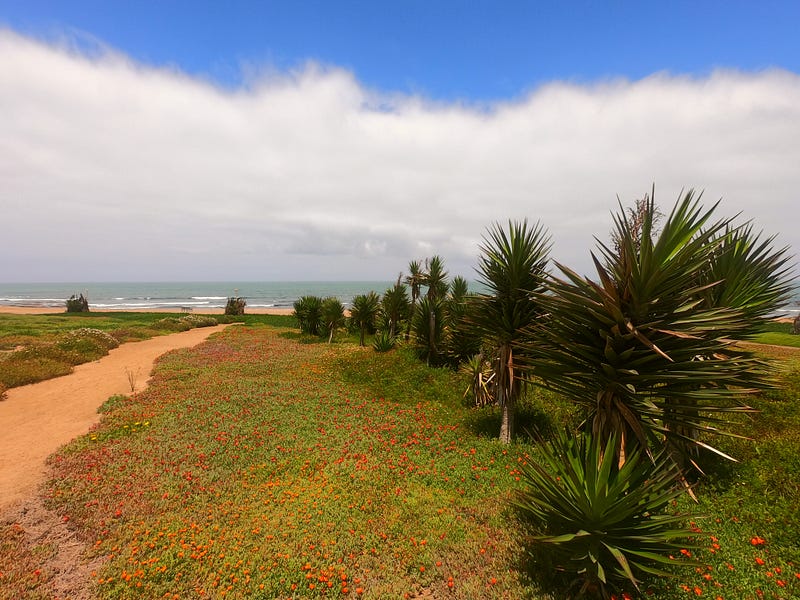
But as soon as I would see that mist bank hanging over the ocean, I’d know what comes next. The fog can roll it really quick. And within minutes the entire coast, including the city of Swakopmund, would be covered in a thick layer of fog.
Or it would happen the other way around. I’d leave the house, covered in a jacket and long pants because the fog was hanging over town and within minutes the sun burned through the fog and all of a sudden I had to take all (or almost all of) my layers off.
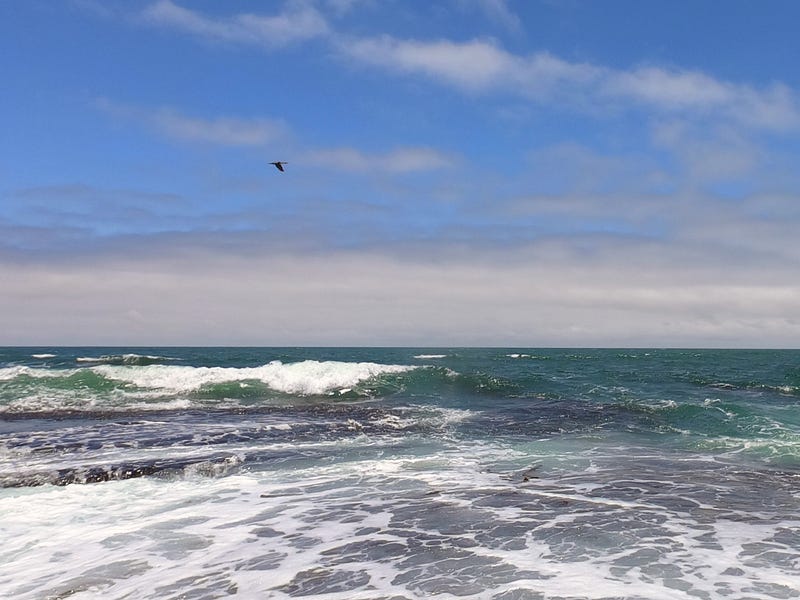
I did learn very quickly that fog couldn’t be trusted. First of all, despite hiding the sun, fog doesn’t block the UV light. In contrary to the clouds where most sunlight gets blocked, the fog doesn’t.
Which means you’ll get sunburned. Badly. Especially on those days where the fog hangs over town all day long. Nobody would put sunscreen on. Except for the locals. They’ve learned their lesson. And so did I.
Dune walks in the fog
Well, and when my buddy and I got tired of beach walks, which rarely happened because who gets tired of walking on the beach, but however, to change up things we’d go to the dunes and walk around.
In the fog.
Because it’s Swakopmund. There’s always fog. And sand.

Bike trips in the fog
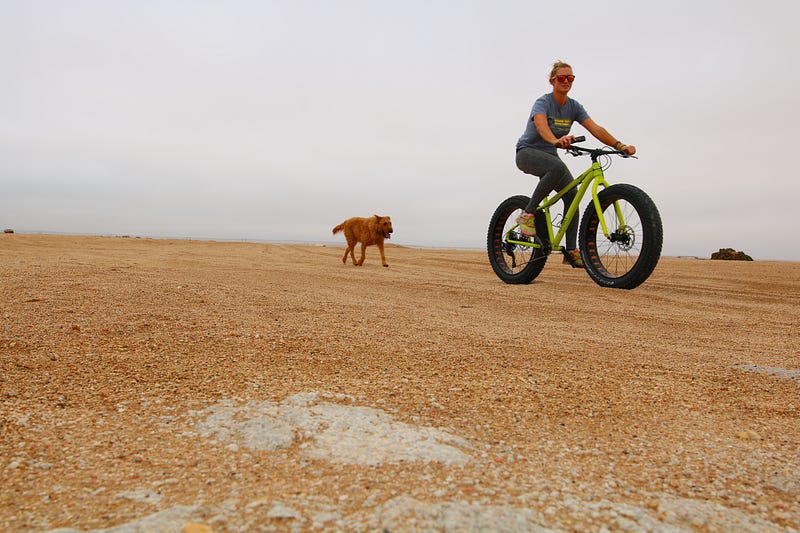
And if I didn’t feel like walking, I’d take the bike out. In the fog. Because when the sun is out it can get hot very quickly.
I would drive into the dunes, or along the beach.
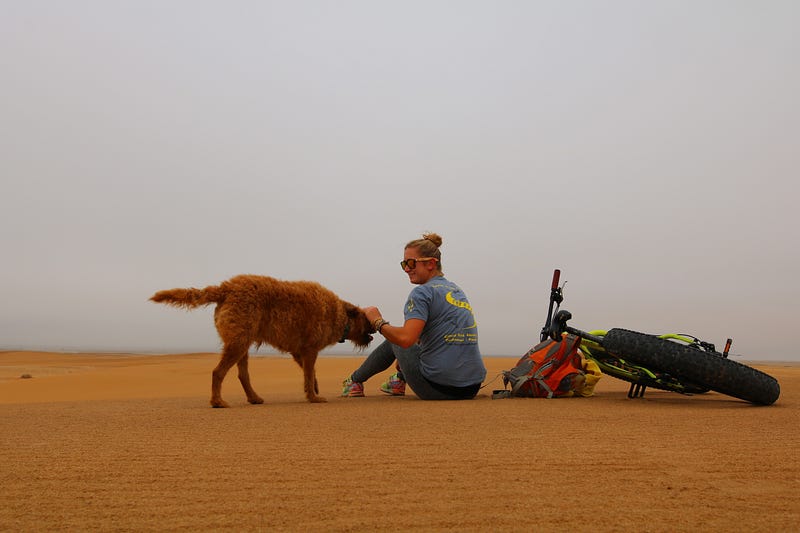
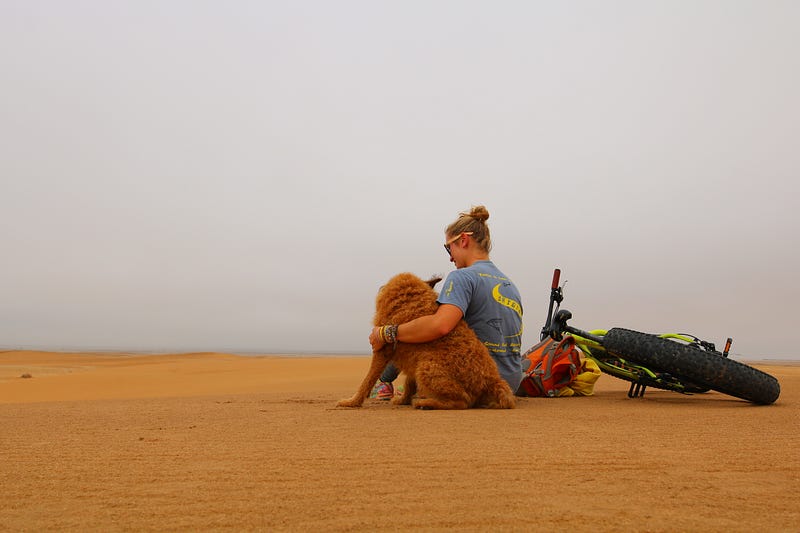
My husband also loves going on bike rides, so we’ve explored a bit of the town and surroundings by bike. On foggy days.
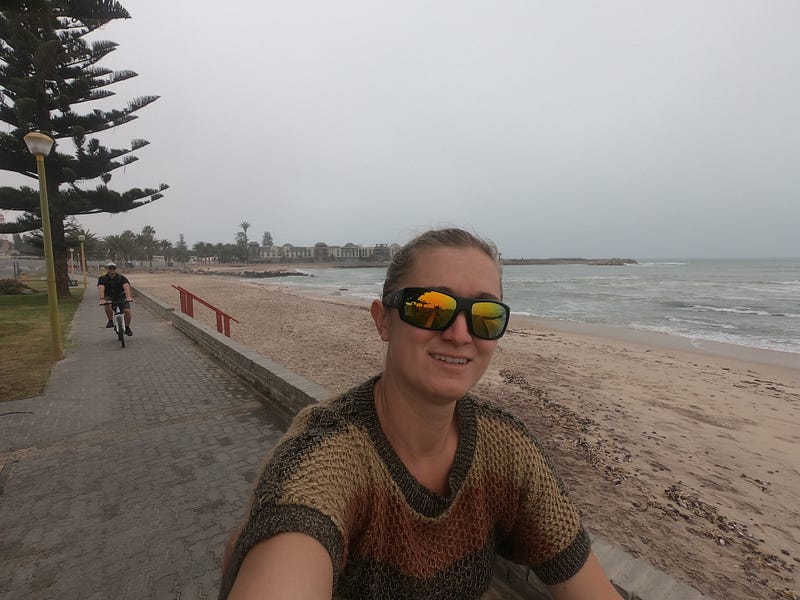
It might seem like there’s never the sun out in Swakopmund. But that is not true. It’s just most days of the year the mornings start foggy and the evening ended in thick fog too.
In winter, the fog is thicker and stays longer. In summer, the sky clears earlier.
And on a handful of days, you can even witness a sunrise on the coast.
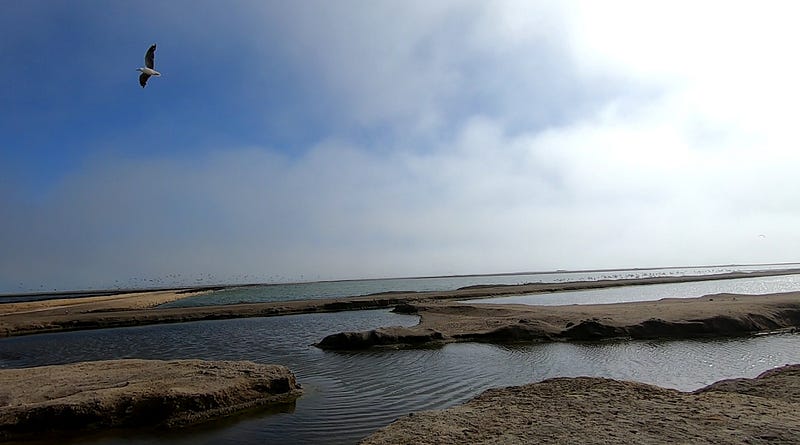
Exploring the Atlantic Ocean — in the fog
While temperatures remain pretty consistent all year round, the fog decides if it will get a warm day or not.
The Atlantic Ocean is surely a cold ocean, but that doesn’t stop us from going out on the water. With the paddleboard and kayak, we head out at sea to do a morning session of paddling.
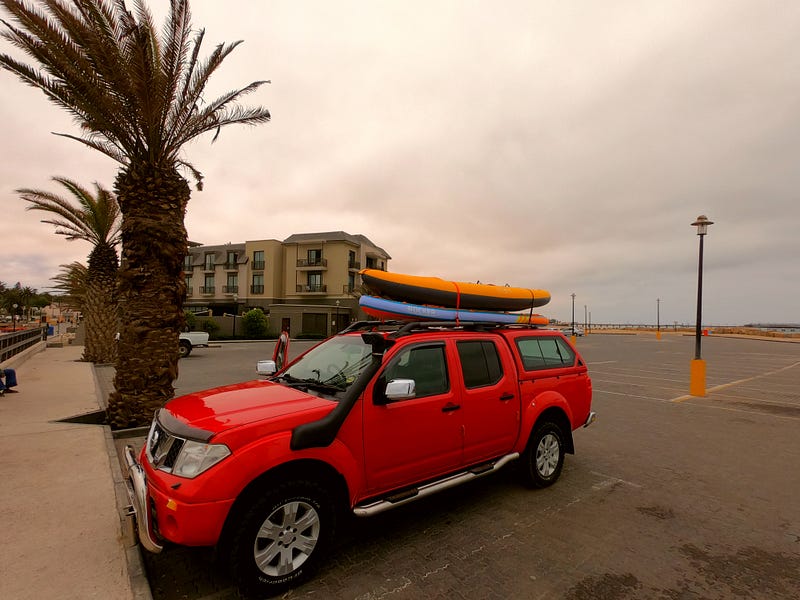
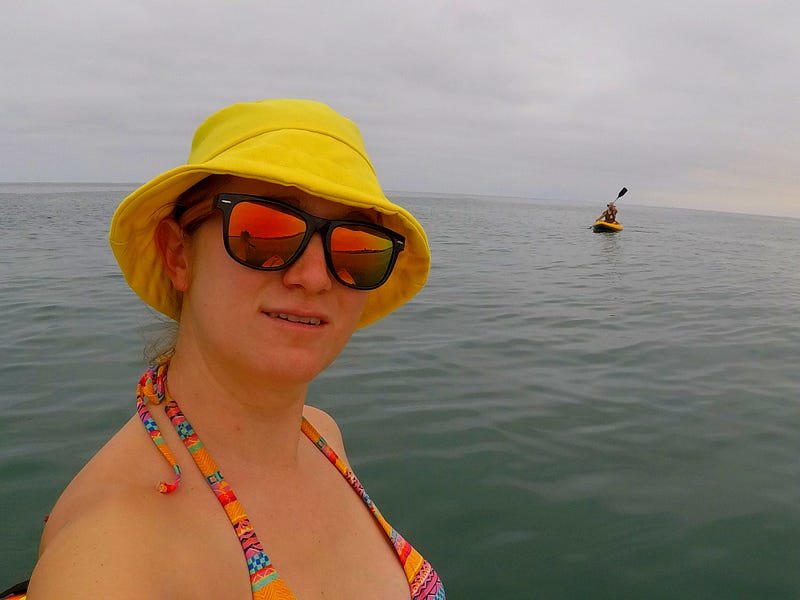
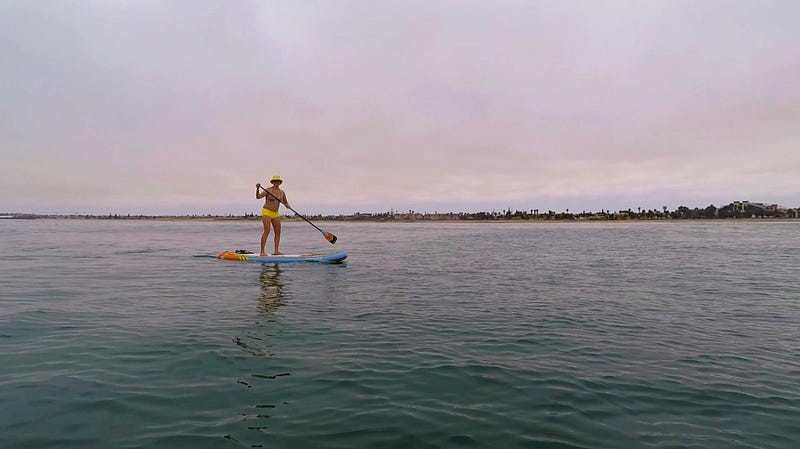
Spending time on the beach — in the fog
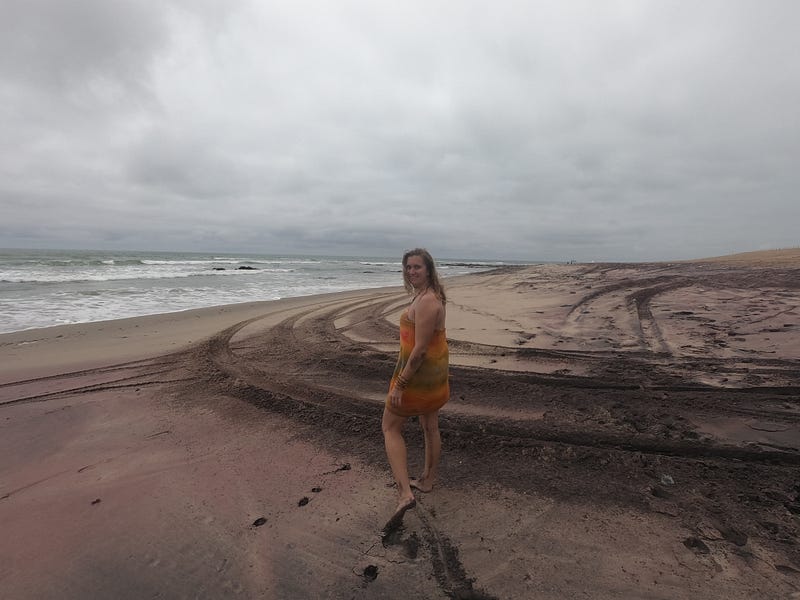
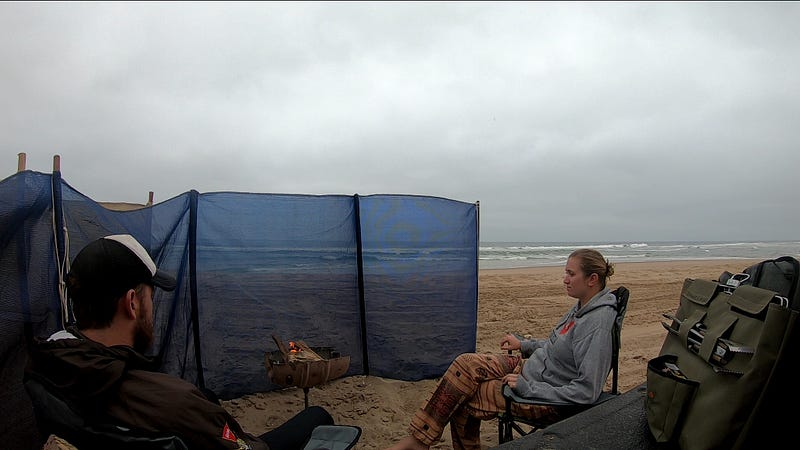
Living right on the ocean, one must enjoy the location. We’d often go for an afternoon down to the beach. Set up the wind net and start the braai (Afrikaans for barbeque).
Often we would head out in sunny weather. But we all know, it won’t stay like that. So, always pack jackets and warm clothes because the temperatures will drop as soon as the wind picks up and the fog rolls in. On the coast.
Sunsets in the fog
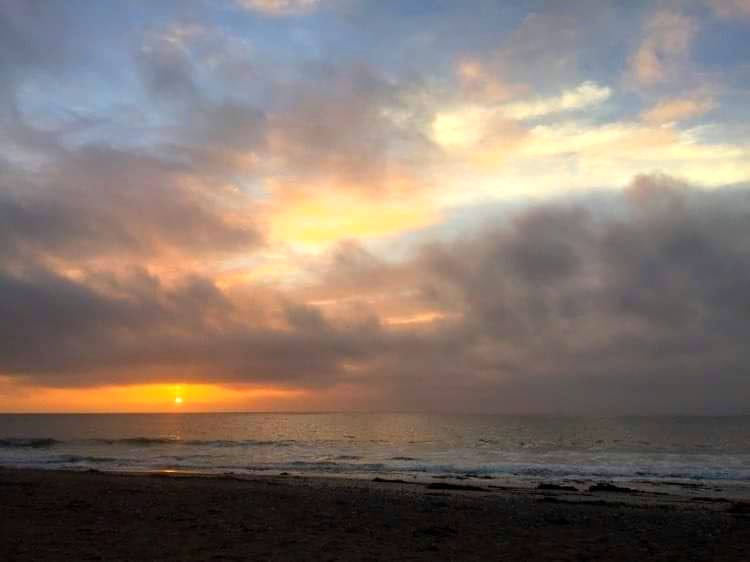
Sunsets aren’t very common but they do occur. And when the sky is clear throughout the afternoon, make sure to head down to the beach. Don’t miss this unique moment of the sun setting into the ocean.
Or the sun setting in the fog rolling back in.
Watching stars in the fog
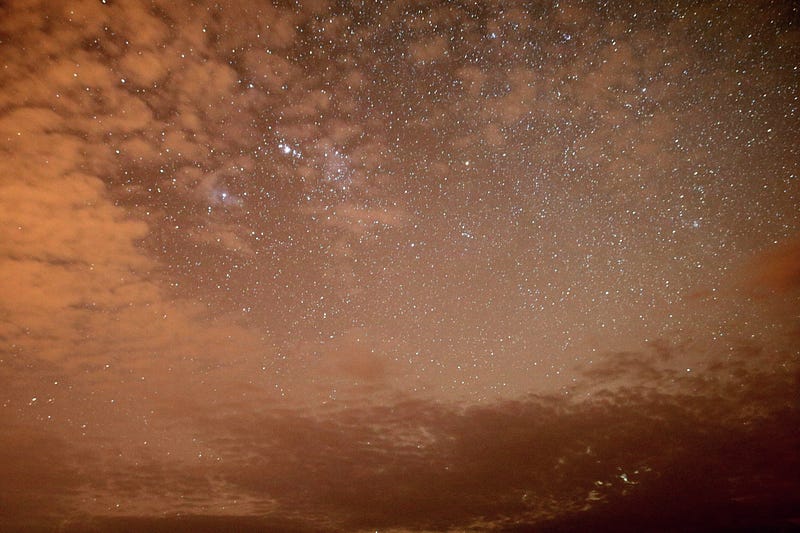
I might not have captured the milky way but once on the beach of Swakopmund. The nights are usually covered in the fog all throughout. But if you just drive a few kilometers inland, you might get lucky and experience a clear night.
The picture below was taken in a moment where the sky looked scattered. You might assume these cushion-like cotton balls are clouds, but they are not. It’s high fog moving in. A few minutes later, the sky was closed up. But I still got the chance to take this picture of the moment in between.
So much about fog and what foggy days at the coastline of Namibia look like. I hope you enjoyed my collection of photographs. This post was inspired by SNAPSHOTS' latest challenge to the topic of foggy captures.
Unfortunately, I went a little overboard with the length of this piece and it was soon clear I wouldn’t be staying within the limit of word count and total images. I had to look for a new home for this piece and decided on Flint & Steel. The publication is home to many writing prompt challenges and responses.
Thank you Ellie Jacobson for publishing.
Read more of my previous writing prompt responses:
Join my email list here if you would like to read more travel essays or sign up for the Medium membership to receive unlimited access to my and other writer’s stories out here (I will receive a commission fee in return).


