
When Your Child Wants To Climb A Tree — Join The Must-Do Experience!
Research shows it improves memory
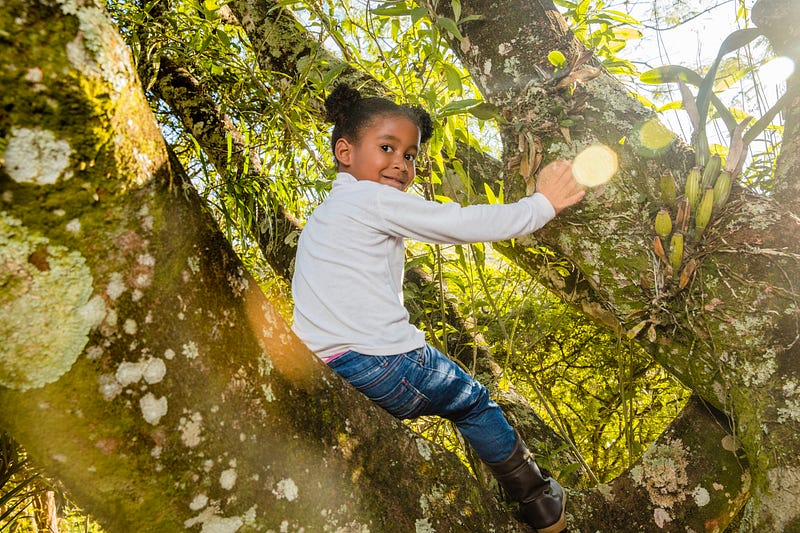
You should let your children try things out and not let your fear hold them back from doing things. For instance climbing trees.
Specifically climbing trees is ridiculously good for our brains. Who would have thought? A study by the Department of Psychology at the University of North Florida showed a 50 percent boost in working memory. Dr. Ross Alloway, researcher from the University of North Florida, states that the research ‘has wide-ranging implications for everyone from kids to adults.’
Working memory is a crucial mental skill
Working memory is a basic mental skill. It’s like a temporary sticky note and important for learning everything — from sports to school to doing everyday tasks. Children with specific cognition difficulties, such as ADHD (Christopher Robin wrote a wonderful article about his love for his daughter, who has ADHD, I love you with all I am), have trouble with this function. It’s the ability to keep a certain amount of information ‘in our mind’ without losing track of what we’re doing. So we can turn around and use it in some way.
Rise and fall over a lifespan
Children, as well as adults, need this ability to perform well — in the classroom as well as in the boardroom. According to Scientific American performance on assessment tests improve steadily — throughout infancy, childhood, and teenage years. Working memory capacity reaches a peak in young adulthood and then declines. Unfortunately, it’s one of the cognitive skills most sensitive to aging.
Why climbing trees boosts your working memory
While we’re climbing up a tree, with each step our brain has to continually update its model of the immediate surroundings, making our brain work much harder. By involving ourselves in activities that are unpredictable and require us to consciously adapt our movements. We can exercise our bodies as well as our brains.
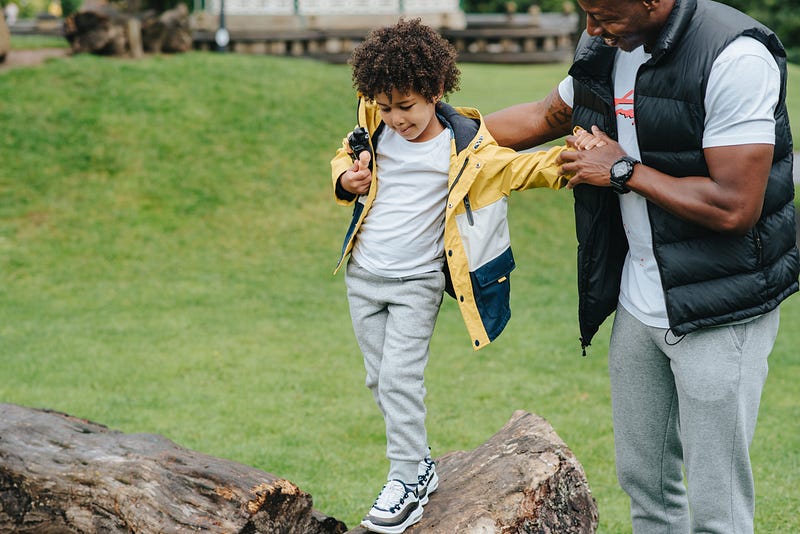
Actually, it’s not only climbing trees. It also works for other dynamic activities that make us think. For example, balancing on a beam. Running barefoot. Carrying awkward weights. Navigating around, under or over obstacles.
Thus we can boost our working memory to perform better in sports or in the classroom, as well as in the boardroom.
Take a break and try climbing a tree
Improvements can be made in just a couple of hours of these physical exercises. Therefore, I suggest, if you want to experience working memory benefits just take a break and try climbing a tree! It will help your brain in order to keep your things ‘in mind’ over the short term.
My final thoughts

- Working memory plays a central role in our mental life.
- Next time your children want to climb a tree or balance on a beam. Not only should you not stop them, but seriously considering joining them.
- Find a forest 🌲🌲and a tree or balance beam and go for it!
I’m writing this article from our cosy and airy tree house🌲🏡🌲. Do you want to join me? Let’s connect Kristina God
Best,
Kristina
Let’s get relational tags:
Carlos Garbiras inspired me to write this piece of content and submit it in the pub because of his article about ‘Strumming my uke for redemption’.
An interesting article on tree sitting, hugging and bathing I recommend is ‘Tree Hugging: It’s Not Just About Saving Those Trees’ by Courtney Burry
Vince Coliam Squeeze the Avocado Bonnie Johnson Michael Burg, MD K. Barrett Krishna V Chaudhary Graceygee Rejoice Denhere Holly J See Matt Ray Anne Bonfert Kerstin Krause Frank Larkin David Rudder Terry Mansfield Ryan DeJonghe


