
When They Say They Have a Black Friend Ask Them Follow-Up Questions
Their deflections needs to stop
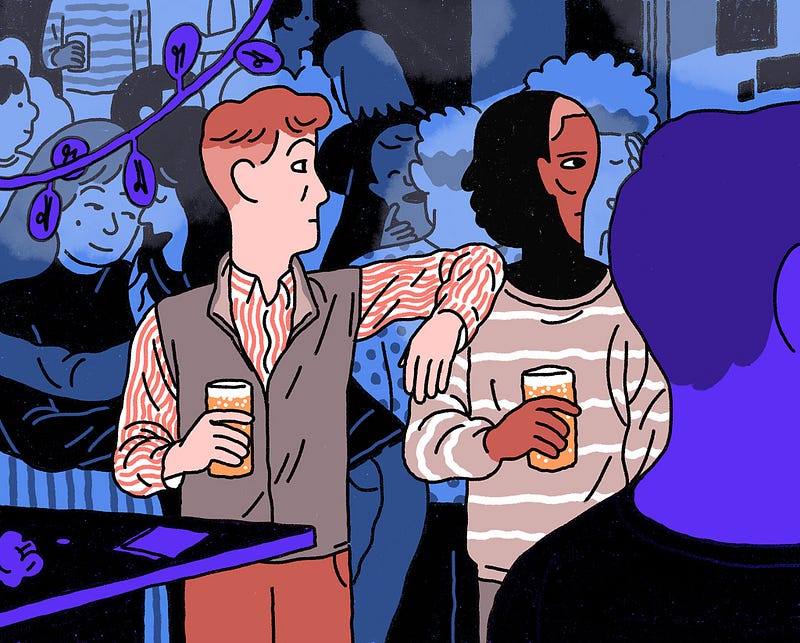
I know many Americans wonder why Ebony and Ivory cannot live in perfect harmony, as Stevie Wonder and Paul McCartney’s song poses to the listeners. Maybe they are tired of hearing about race and want to pretend that we are already friends and allies. The truth is that we can live in unity but not now and no time soon. We must do the serious work of creating a system where Black and white people acquire equal rights and justice. On that day, these inter-racial friendships will be all the rave. However, we cannot skip steps to get where we want to go. America and many other countries still treat Black people as subhuman. If this makes you angry, you are on the right track.
Too many white people say, “I have a Black friend” or “I have many Black friends,” as proof of why they are not racist. This remark is condescending and misses the mark. If they make the Black friend claim, chances are they are not doing any anti-racist work; they are deflecting.
Whenever prominent people become mired in a racial controversy, they’re likely to declare that “some of their best friends are black.” In reality, most whites don’t have black friends. They may have black coworkers or black acquaintances, but research on cross-race friendships has found that genuine interracial friendships are uncommon (Nittle, 2018)
True friendship comes when people consider your thoughts, feelings, and emotions. When a white person is friends with a Black person, it is crucial to ascertain their motivation and depth. There is a big difference between an acquaintance and a friend.
Ask Them
The next time someone tells you that they have a Black friend, ask them if they talk about racism with their friend and check other white people’s privilege one-on-one instead of only doing it in front of their Black friend.
Ask them if they support legislation to protect the human rights of Black people in America and abroad. Ask them if they ever described Black men as thugs. Ask them if they ever called a Black woman a welfare queen. Ask them if they support addressing the racial-wealth gap.
Ask them if they ever touched their friend’s hair without consent. Ask them if their kids have Black friends. Ask them if their mother and father were Klan members or opposed MLK Jr or the Civil Rights Act. Ask them if they overlook their racism and still hold them, dear, to their hearts. Ask them if their parents owned a business that Black people could not enter.
Ask them if their family owned slaves. Ask them if they support H.R. 40 for reparations for the descendants of enslaved Africans. Ask them if they support defunding the police who disproportionately stop, abuse, rape, and kill Black people.
Ask them if they support public schools so that every child gets equal opportunities. Ask them if they support Black leadership in their company, community, church, and school. Ask them if they spend time with Black people in their communities and not just suburban neighborhoods.
Ask them if they ever went to a block party where they were the only white person without feeling scared and clutching their pearls. Ask them if they are willing to die as abolitionists did to make this country live up the Constitution’s principles. Ask them if there are good people on both sides.
Ask them if they ever called the police on a Black person for playing music or walk in a mostly white neighborhood. Ask them if they understand what the “Karen” ideology is and if they know a “Ken” or “Karen.” Ask them if they confronted their bigotry in meaningful ways.
Ask them if they can look at a police officer in the face and say “Black Lives Matter.” Ask them if they can say “Black Lives Matter” at their Thanksgiving table. Ask them if they read Black authors, watch films created by Black directors, and eat at Black restaurants.
Ask them if they support Black businesses. Ask them if they say, “Once you go Black you never go back.” Ask them if they every bragged about having sex with a Black person like a conquest.
Ask them if they see the origins of America as inherently racist. Ask them if they felt anger when Colin Kaepernick took a knee. Ask them if Trump is racist. Ask them if the Proud Boys are fine people. Ask them if Kyle Rittenhouse’s actions are justifiable. Ask them if George Zimmerman is genuinely innocent.
Ask them which story or experience changed them from being a passive white person to an active accomplice. Ask them if their friends have Black friends. Ask them if they are trying to change the hearts and minds of racist white people. Ask them if they will still support Black people after the fad dies down. Ask them if they can understand their Black friend. Ask them if their friend feels the same way.
While a few white people can answer yes to all of these, most cannot. Saying you are friends with a Black person means nothing if you don’t stand with them against oppression in any and every form.
Many Black Americans have European in their blood through rape. I can tell you that having Black children does not mean you are not racist. It just isn’t good enough, and I, as a Black woman, am now canceling your false friendship that never really existed.
Don’t try to have sex with us unless you are willing to die for us. Don’t learn our rap lyrics if you call us thugs when you see us on the news. Don’t say your drinking buddy or colleague is your friend if they cannot talk to you about the discrimination they experience in their workplace.
After slavery, the Klan put on hoods to protect their identity. Racists never wanted transparency in their hatred for Black people. They never owned it or considered themselves racist. Stop looking for them to admit to their bigotry. They thrive in our society in plain sight. The hoods are gone, but the gaslighting is ever-present.
To my Black sisters and brothers, do not believe them if their only response is, “I have a Black friend.” To the few real white allies, step up and become accomplices. Commit for the rest of your life to always call out racism when you see it. Do not make excuses, and do not apologize. Just do better.
Racism Starts Early
The misperception that children don’t see race is pervasive, but it’s simply not true. Researchers have found that even preschool-aged children notice racial differences between groups. (Nittle, 2018)
If you are a white parent, stop assuming your kid is not racist. Talk to them about race, about Black people. Ask them how they feel. Show them pictures of black people. Address their fears instead of trying to shame them and pretend it does not exist. Little white preschoolers already have implicit bias. The T.V. shows they watch, the birthday parties they attend, the private and charter schools they attend all contribute to white supremacy. They will never learn to view Black people as human if you guardrail them from Blackness.
Many white people are uncomfortable talking about race or defensive against accusations of racism, according to academics. They’re often just not equipped to do it, said Debby Irving, a white racial justice writer. Instead of listening and offering support, they tend to make the conversations about themselves, said Ms. Irving, the author of “Waking Up White, and Finding Myself in the Story of Race.” America’s racial reckoning is exposing how fragile this union truly is (Eligon, 2019)
None of us are perfect, and when you call someone out, in a respectful way, they get an opportunity to redeem themselves. Unfortunately, when many white people get called out for expressing racist ideas, they deflect, saying, “I have a black friend, so I can’t be racist.”
As we advance
Listen to Black people and people of color. If we say you are racist, it is not to disrespect or demean you. Racism is an ideology. Not all white people are overtly racist, and not all Black people fight to undo white supremacists’ impact. The beautiful thing about this life is we get to decide who we become. Stop clenching your pearls and listen. Fight to make America just and stop saying you have Black friends. Most white people usually just think they do. Black people are kind and do not always tell you like it is, so take it from me, your local Black-writer-advocate: don’t deflect.
Consider why the Black person is calling you out and address the issue. Your proximity to Blackness means absolutely nothing.
When white people have to say they have a Black friend, friends, children, or spouse, ask them what they are doing to change the racist system. Friends do not ignore the plight of other friends, and we need to stop giving white people a pass to say they are on our side. What are you doing to show that?
Articles Curated in Race, Equality, Beauty, Women
References:
Eligon, J. (2019, February 16). The ‘Some of My Best Friends Are Black’ Defense. Retrieved September 17, 2020, from https://www.nytimes.com/2019/02/16/sunday-review/ralph-northam-blackface-friends.html
Nittle, N. (2018). Why Most Americans Don’t Have Friends From Another Racial Group. Retrieved September 17, 2020, from https://www.thoughtco.com/why-interracial-friendships-are-rare-2834760