
ETHICS AND AI
When AI Porn Becomes Criminal as a Weapon
The ethics of using a powerful tool to create believable images

What kind of a sick pervert would post a naked photo of Lizzie Lizard Brain with tassels where her breasts would be?
Answer: An obnoxious. impulsive kid with access to a computer.
Or, someone with decades of experience developing technology and software systems whose job often involves anticipating misuse to make a point.
This discussion deals primarily with unauthorized, distributed pornographic images and kids. The effort needed to take a person’s image and manipulate it into a video is minimal. It’s fast, easy, and not prohibitively expensive.
A disturbing script can be created using ChatGPT or another AI tool.
Developing new technology
There are undeniable benefits in using AI. Not everyone classified as “technophobic” is afraid of change or technology. Those who speak out are often people who have developed new technology and didn’t adequately anticipate how it might be abused or failed to plug a security hole.
The feeling a designer gets when things go wrong is a little like being a neglectful or bad parent who raises a serial killer and doesn’t bother to intercede with medication and therapy when it would have helped.
Take it from the lady who ran a big project for a large tech firm focused on personnel records including education, family details, compensation and performance reviews, financial information including direct deposits and payroll, and medical history for 35,000 international employees. If the data isn’t secure, a breach can have a profound effect on people’s lives.
Competitors within the company, and outside have an interest in knowing about salary structures, hiring practices, and bonus programs. Knowing who the key players are leading technological breakthroughs is valuable to recruiters and competitors. Identifying weaknesses that can be exploited through blackmail, extortion, or other manipulation is valuable.
And, kidnapping. See my travel tips for criminals, consultants, and call girls at the end.
The tech company’s projects were relatively easy and unsophisticated. There were much more dangerous projects. My first offer was to study nuclear blast survival scenarios. Others involved biomedical devices, pharmaceutical testing, and regulatory compliance. Most projects involved access to other systems with sensitive information. Non-disclosure agreements restrict mentioning most.
Responsible development and implementation
The companies that develop new technology often implement compartmentalized, need-to-know practices to safeguard against one person, or a small group having access to the design details, product plans and implementation, marketing and sales strategies, and distribution oversight. Multiple products hitting different competitive markets in foreign countries are carefully planned and executed with analysts focused on company financial and user risk, ethics, profit, and at least a dozen other variables.
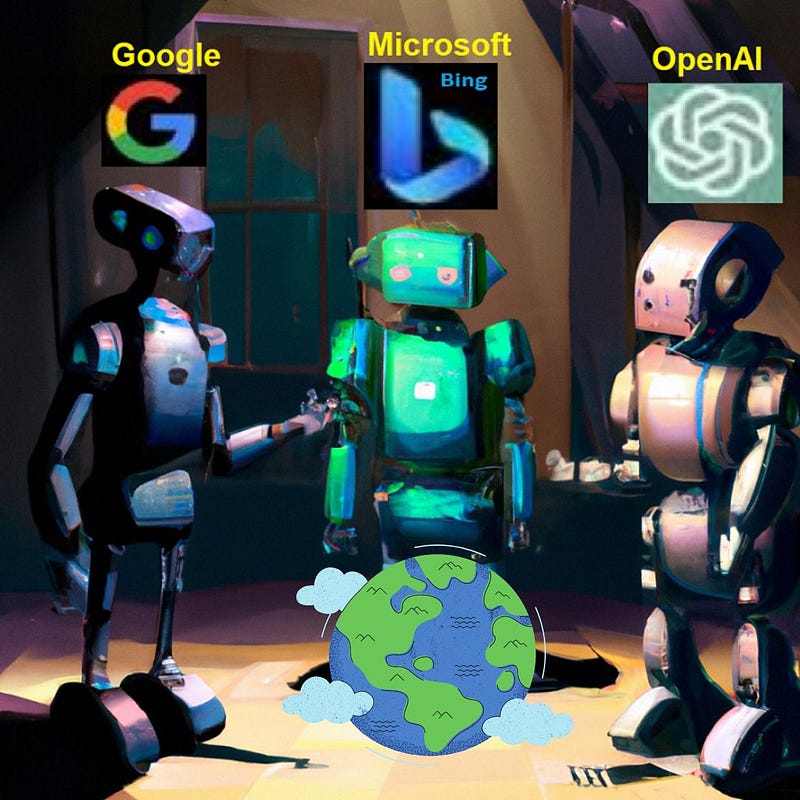
The race to develop and implement AI since OpenAI released ChatGPT in late 2022 more closely resembles a programmer working without an analyst or oversight who simply releases shareware for beta testing.
Unless qualified oversight and planning are implemented, the effects could cause damage in almost every industry, geopolitical region, and workforce.
ChatGPT and AI-generated text
When ChatGPT was first released the text generator seemed clunky. Many writers said, “It’s boring and can’t impact me.” Most users started by prompting AI tools to “Write a story about a boy who falls off a pony.”
The results were pretty boring.
I published ChatGPT Steals William Shakespeare & Emily Dickinson in January 2023 to demonstrate the following abilities:
- Emulate another writer with your idea
- Steal another writer’s idea and rewrite it in another writer’s style (Shakespeare reimagining Dickinson)
- Create a story by a dead or famous writer about a subject they wouldn’t know (Bob Dylan writing about hypersonic weaponry)
I hoped to further the discussion of ethics and AI when I wrote 12 Ways to Identify AI-generated Text in Student Work for parents and teachers a couple of months later.
People committed to circumventing AI detection loved it. This piece still gets a disturbing amount of traffic each month. I hope this is at least partially to benefit students who need to develop critical thinking skills.
AI-detection tools like CopyLeaks, GPTZero, and Originality AI’s Winston are pretty good at identifying AI-generated text, even after it’s been manipulated with a rephraser.
It’s easy for me to expound on problem areas of AI in the wrong hands, but others can fill that niche. I’ll just say this:
I could have been a successful cybercriminal for a while. But like other criminal activity, knowledge of the trends and emerging technology to identify bad actors and acts are shared by dedicated, paid groups of people more clever than myself who focus on specifics such as network traffic endpoints, IP masking tricks, and unsecured access. There are too many variables in cybercrime and AI processing to successfully get away with exploiting vulnerabilities without getting caught.
Targeting kids with still image porn
We can all agree an adolescent still getting comfortable with their sexuality shouldn’t have to deal with AI-generated porn images distributed to their junior high school classmates, social media, and family.
Some people think the abundance of data used and recycled by AI will simply create such a flood that such images will be buried and lost.
AI face, voice, and emotion recognition have been used in security for years. They can also be synthesized and recycled.
Here’s what a victim of image manipulation might ask —
Parent or victim: Without context and tags, won’t all posted images eventually be buried and get lost?
Answer: No. AI is good at identifying time and place, age, and activities. It can be used to apply missing classifications.
Parent or victim: What if we sue to have them removed by court order?
Answer: You can do that and they’ll be removed. But web crawlers store the data in vast repositories used for AI training. Think of it as a recycling center for plastic. The labels may be scrubbed, but in the case of data, the information never goes away.
Tips for people who abuse AI
Some states and countries have laws and practices in place for guarding privacy, and you may be able to block certain cookies and use fake profiles. However, technology is quickly evolving with pixelation, prisms, beacons, and other tools that violate the spirit of these laws. When you choose to use a computer or online browsers and websites, data is collected about your activity without your knowledge.
The most important things to remember are,
- There’s no such thing as anonymity online.
- Everything you do with data can be traced.
- Images, emojis, texts, clicks, and keystrokes are data.
- Like posted images, messages, and other content, the record of your actions will not go away and can negatively impact future opportunities.
- If you harm someone, you (and your parents) can be held liable.
If you’re clever enough to create harmful engaging content you may have a future in preventing harm or turning your talents into a lucrative career. Conversely, you could face large fines, therapy, and other punishments.
Our laws and social conditioning are generally based on fairness. So, if you insult someone, you can expect them to get away with insulting you. If your insult or emotional assault is significant enough that it causes unexpected catastrophic results, your punishment will be more severe.
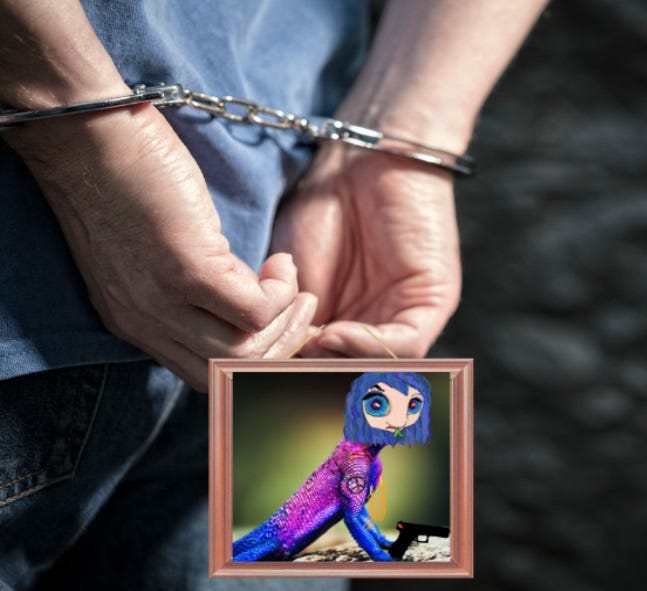
You can play with my (Lizzie Lizard Brain’s) image and I’ll simply hiss and torment your dreams. There’s a legion of other reputable hackers who could be inspired to do worse.
The emotional and psychological consequences of damaging another’s reputation or self-image can be profound.
Try to imagine if you were the target. The embarrassment and regret you might feel over giving in to an impulsive act now could be damaging when you’re caught. It sucks trying to explain a joke to your grandmother, boss, or someone you want to impress if the punchline was someone else.
Anyone can manipulate images and words. It takes class, determination, and intelligence to act with integrity.
Considerations for targets of AI or other online abuse
This is an emerging trend that will impact many, usually without the target’s awareness. When you’re young it’s hard to believe assaults on your self-image and reputation won’t last forever. How obviously sensitive you are to the attention will dictate how long and to what degree others will focus on this event.
Remember you’ve dealt with other difficult events and feelings in the past and grew stronger. It’s fine to feel awful and angry in the moment — just don’t let it define you. With every challenge, we have a choice to make: face it and believe in our ability to transcend the crappy moment, or get stuck in negative feelings that hold us back.
Sometimes we need help not staying stuck. Keeping hurt bottled up is like hitting yourself and hoping the person who hurt you will suffer. Talk to your friends, trusted advisors, and others who can help process and solve the problem.
I wrote this because a 14-year-old who was targeted worked with her mom to establish a website to help other victims with strategies and technical tools to combat this behavior. This girl is leading the charge, and I applaud her. I’m not linking to it because I know the sensationalism can become overwhelming and don’t want to bombard her with more attention. A Google search will uncover multiple similar cases.
Starting the conversation many others will also have to engage in can be a powerful first step. Taking control of the narrative takes back your power and diminishes the bad behavior.
Advice for teens and others involved with digital exploitation
Manipulating images of a classmate can be considered bullying and online or digital exploitation. The legal age of consent may vary among states, but the stigma, expense, and damage to the maker’s reputation can carry forward and impact future education and employment opportunities.
An adult creating such content would be labeled a pedophile.
The manufacture, possession, and distribution of child pornography is illegal. If a teen uses a computer in the home, the parents may be charged.
Not long ago, a neighbor in California told me to watch out for the “sex offender living on the corner.” The male was 17 and had been involved with a 15-year-old girl. The couple defied the girl’s parents wishes and he was prosecuted. His label as a registered sex offender with the state will follow him for the rest of his life. His education, ability to work with kids, and job opportunities may be impacted. I never became acquainted with either family, but the damage to this young man’s reputation was obvious.
Given the advanced technology available, parents, teachers, and peers need to maintain a skeptical view of questionable images and videos depicting behavior that could damage reputations.
Resources for parents, teens, and educators
These resources focus on digital exploitation, bullying, online safety, and dealing with the psychological impact of cyberbullying and exploitation —
- Cyber Civil Rights Initiative (CCRI): Specializing in the support of victims of nonconsensual pornography, CCRI is a valuable resource for dealing with the fallout of digital exploitation. They offer legal resources and emotional support, which are crucial in cases of image manipulation and potential deepfake scenarios.
- Thorn is dedicated to the protection of children from sexual exploitation online, a focus that aligns closely with the issues of manipulated images and deepfake technology. Their approach to technology-driven solutions can be instrumental in addressing emerging technology threats.
- NetSmartz: Developed by the National Center for Missing & Exploited Children, NetSmartz offers resources that are particularly relevant for educating adolescents about the risks of online exploitation. Their interactive tools can help young people understand and navigate the complexities of the digital world safely.
- ConnectSafely provides a wide range of guides and articles on online safety and security, including dealing with digital abuse. Their resources are practical and accessible, making them suitable for both teens and their parents.
- StopBullying.gov: This site, while focused on bullying, also provides useful information that can be applied to digital exploitation. It offers insights into laws, policies, and prevention strategies that can be helpful in understanding and combating online abuse.
- Family Online Safety Institute offers resources for maintaining online safety, which can be directly applicable in cases of image manipulation and potential deepfake abuses. They provide guides for creating family online safety plans, relevant in preventing and responding to these issues.
These resources provide comprehensive information and support for addressing digital exploitation, particularly in the context of manipulated images and the potential emergence of deepfake technology. They offer a blend of legal support, educational material, safety guidelines, and psychological support, which can be crucial in combating these challenges.
Conclusion
AI offers many benefits if used properly. I fact-checked portions of this narrative using ChatGPT 4.0 and ran into “content advisory — potential violation” warnings when the keywords sex, pornography, or explicit material were used. I also tried to get guidance on wording for a typical American 14-year-old and abandoned the notion after feeling the language more closely resembled that of a 9-year-old. Pretty ironic considering this technology facilitates the manufacture and spread of such content.
Teens are often more sophisticated technology users than their parents and teachers. In my experience, they often demonstrate empathy and pragmatism if given the chance to contribute ideas and make policy decisions. I raised kids and was pleasantly surprised by this every time.
Artificial Intelligence is and will play a large role in young people’s lives. Parents, teachers, and communities need to become familiar with the tools their kids use and ensure responsible use. When problems occur, procedures need to be in place so anger and confusion don’t rule discourse.
Thanks for reading. I’ll return to snarlcastic satire when I’m not pissed on behalf of people targeted by losers.
Some humor —
Short two minutes of, dark, and twisty —
Five minutes of twisty satire —
I’m planning a publication/money laundering/identity theft enterprise —


