
Food Matters
What’s The Point in a Croissant?
And how to eat one, properly

Look at the picture above and ask yourself the question: How do I eat something as delicate as that? Can I even touch it? Do I need tongs? Can I simply bite it? Slice it? Butter it? Fill it with jam? Nutella? Or do you dip it in your coffee or hot chocolate first?
You’re probably wondering why does it matter? What’s wrong with you? Are you suffering from a form of food fetish? It’s just a lump of dough cooked in an oven. Get it down you!
But it does matter?
I live in France in a town with eight boulangeries within spitting distance of my apartment, and I’ve tried every croissant they have to offer many times over. Each morning I get up, walk to one, buy a croissant and leave without getting into too much conversation about the weather.
It’s my morning ritual, but when I get home, I always have the same dilemma. How do I eat this?
It’s not like a piece of toast. Toast is easy. You toast the bread, butter it, and then apply a layer of jam, marmalade or honey. Ever tried to butter a croissant? It’s a mess!
I’ve tried all sorts of ways: slicing it in half first and toasting it. Cutting the crescent into hunks and doing it that way. Buttering each end. Or doing the same but with jam or honey. Or simply eating it plain.
What I’ve never done is dip it in my coffee.
I do not want flakes of pastry floating in my drink. After quitting smoking and drinking, coffee is one of the few pleasures left. I do not want it ruined. The croissant and a cup of coffee go perfectly well together as it is. They do not need to be mixed together beforehand. I’ve had plenty of arguments with my French friends over this, and I won’t be moved.
“Would you dip a shrimp in a glass of wine?”

Most people tell me I don’t need butter or jam either. The croissant is designed to be eaten as one without condiments. In a way, it’s the ultimate street food. Problem is, the croissant is incredibly boring.
“Oh, what am I having today for breakfast — another plain croissant! Oh, great!”
I sometimes have pain au chocolat. But I find these too sweet. I can eat a pile of croissants with jam and butter, but feel sick after one pain au chocolat.
So I persevere with the croissant, and yet each morning when I see it on my plate, it feels like I’m staring at a foreign object. Something that’s fallen from the sky — from space! — and landed in my apartment. What do I do with this?!
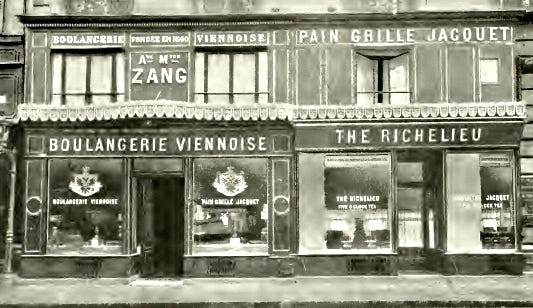
I don’t know why I keep eating them. They are not even French. They are Austrian, made popular in Paris in the 1830s when August Zang, an Austrian entrepreneur, founded the Boulangerie Viennoise in Rue de Richelieu. Selling Viennese pastries like the Kipferl which was quickly adapted by French bakers to become the Croissant.
I could buy a loaf of bread, but like I’ve said, I know how to eat a loaf of bread — there’s no real mystery. And what’s life, if there’s no mystery, even if it’s just a croissant?
Thanks for reading. For more food, travel and humour, check out


