
Modern Times
What Happened To All the Phone Boxes
— And do they still work?

It’s a damp Sunday evening in November, and I’m standing in line outside a phone box. In front of me are three or four other people wrapped up in jumpers and jackets waiting to use the phone.
In 1991, as a student in Nottingham (UK), trying to make a call was almost impossible. At any time of day, there were always people waiting to phone home, phone friends, order a taxi, order drugs, order a takeaway, or simply chat to a girlfriend.
I don’t know if it was due to the huge number of students in the city, or the fact that the city didn’t have enough phone booths. But there was always a queue, and it wasn’t uncommon for things to get nasty when someone gabbed on the phone for hours.
People would often rap on the side of the booth, or simply disconnect them. Then give them a short lesson on common courtesy, and how cold it was waiting outside a phone box in mid-winter.
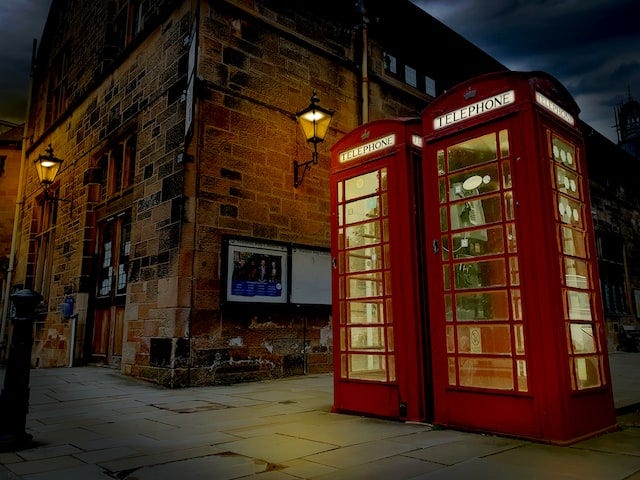
This weekly wait is one of my abiding memories of my student days. But how many are still left?
In 1991, there were about 100,000 phone boxes in the UK. Today there are 21,000 still in operation. Eight thousand of these are the iconic red boxes like the ones above.
This is higher than I expected, as I assumed no one used them anymore. But they do. Especially in areas with poor phone coverage, or in remote areas by the sea or in the mountains.
The UK government passed a law in 2021 to protect 5000 phone boxes in these locations. Kind of makes sense, doesn’t it? You break down in freezing cold weather in the hills, there’s no phone signal, and the only phone box has been converted into a library.
What do you do? Read your way through a selection of Agatha Christie novels while you wait for someone to find your frozen corpse?
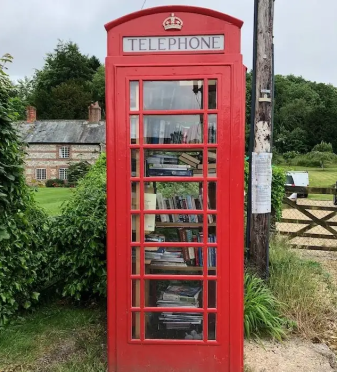
Many of the iconic red phone boxes have been adopted by local communities and turned into book depositories, art galleries, defibrillators, and ironically, charging points for mobile phones.
You might expect me at this point — seeing as I’m prone to teary nostalgia — to start waxing lyrical about the old phone boxes and how I miss them.
Not at all.
Trudging to the phone box on a Sunday night to wait in the rain to phone my parents wasn’t fun. Especially when I was no doubt recovering from a heavy weekend.
Sometimes I had to wait for hours as some teary student droned on to his mother about how he wanted to come home. I wanted to take the phone from him and speak to his parents.
‘For God’s sake, COME AND GET HIM!! It’s freezing out here.’
I haven’t used a phone box for years, and I don’t miss them in the slightest. The mouth and earpieces were always sticky, and the floors were littered with rubbish, chips, beer and piss (or worse). Plus it was a convenient spot to get robbed or knifed in.
I remember the day when our house finally cobbled enough money together to get a landline installed. It was bliss. I still had to wait my turn, but at least I didn’t have to risk getting pneumonia or being stabbed simply to say ‘Hi’ to my parents.
Mobile phones have pushed the ease of communication too far the other way, meaning we are contactable at all times. But I don’t miss the phone booth.
They are nice to look at, and keeping them as libraries or for emergencies is a great idea. Because as I mentioned above, you never know when you might need one.
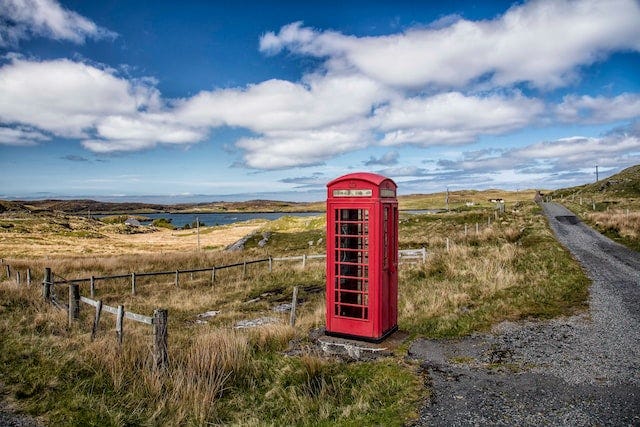
What’s the state of phone booths where you live? Do you have them? When was the last time you used them?
Thanks for reading, for more communication, check out:


