
What Would Gandhi Do?
Are the protests over yet and other important questions of the day?
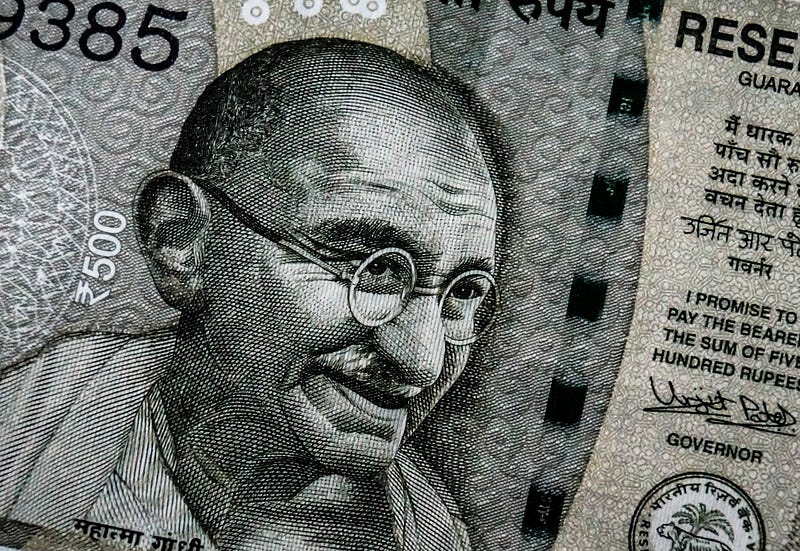
I get it. You’re tired of the murder and mayhem. Who wouldn’t be? Oh, excuse me if you’re an outside agitator. The headlines lately must just be your cup of tea.
Speaking of which, let me change the subject. Not to tea, though that’s a side road I took to get to Gandhi. If you’re not of a certain generation, as they used to refer to old people, you might not know that he’s the guy who used to make tea for his wife every morning as a show of respect.

And by the way, guys, some of you could take a lesson on good marriage attitude, tea or no tea, just saying. But back to my point.
Which isn’t tea at all, but salt.
Can you imagine living without salt? Unless you have high blood pressure or diabetes, no way.
That’s what the Brits said when they monopolized the salt industry back in the day, back in their colonial days, that is, when they ruled with an iron hand over India and slapped a fat tax on salt.
Can you imagine taxing a person for using salt?
That’s what Gandhi said.
Only he wasn’t just musing about it while enjoying his tea. No, he was all up in the Brits business about it. Or maybe they were still called the Raj. Colonialists to the rest of the world, and not in a good way.
Gandhi honed his political views and non-violent activism during a prolonged stay in South Africa, arriving as a shy legal clerk, and after two decades of physical cruelty and public humiliation at the hands of that country’s racism, he returned a seasoned community activist. We know what they are like, hey Obama? Working with the poor and downtrodden, the underpaid and unheralded laborers who polished the Jewel in the Crown.

That’s how England referred to India and its subjects, and not in a good way, either. The gem that was India kept Britain’s coffers overflowing with riches, and its might kept the subjects right where it wanted them, under their spit-shined boot.
Gandhi, though, wasn’t having it. Not for a New Delhi minute. And so he devised a plan to get back at the Crown and hit them where they lived. Their salt, or rather their salt tax. He planned a march to the sea so people could harvest their own salt and poke a stick in the eye of the King’s tax collectors.
Did the Brits get the vapors and clutch their pearls at the thought of losing to a skinny guy in a diaper, a popular epithet for Gandhi?
Seriously, they said, or some upper-class equivalent. You think you’re going to scare us with a few ragtag marchers?
Of course, the soldiers took the marchers seriously enough to beat them to a bloody pulp. But Gandhi and his followers had a secret weapon. Non-violent civil disobedience.
The soldiers saw it as a free day to pound marchers just because. Because, well, they wouldn’t fight back.
Yeah, I can just see the red coats dusting off their epaulets, thinking they had that fight in the bag. But you know, don’t bring a knife to a gunfight and all that.
Gandhi said, who’re you calling a skinny guy in a diaper?
Like the protesters in Milwaukee, New York City, Seattle, and Los Angeles angry over the death of George Floyd, it wasn’t just one man brutalized by the system that got Gandhi moving. It was the accumulation over years and decades and centuries that made people say, “Enough.”
A salt tax? Sure, that was a bitter pill for India to swallow. But so were all the other injustices, brutalities, and indignities inflicted on them by the British. And when hundreds and thousands of marginalized people say enough, get your lazy self out of the way or they’ll salt your beeswax six ways to Sunday.
Just ask the folks in Minneapolis.
Gandhi’s army never raised a finger to the ruling soldiers. He had taught his followers the power of non-violent dissent and taught them well.
It would be a nice ending to report that Britain lifted the salt tax in response to that one march. David slaying Goliath with a single pellet from a slingshot is a motivating story, but life doesn’t work that way. India had been fighting the British and their abuses for over two hundred years. When Gandhi set out for the Arabian Sea in 1930, the lifting of the tax and eventual independence for India was still on the far horizon. Gandhi’s march merely opened a crack in the wall.
Throughout his battles, Gandhi showed the world the power of non-violent resistance. But he also had another trick up his sleeve — or would have if he’d worn them. Something one of our own female leaders knows well.
England’s soldiers cracked heads on those peaceful marches, much like the goons of today. Still, he persisted. In the end, his patience won out, and he and other Indian freedom-fighters kicked England and the horses it rode in on out of India for good.
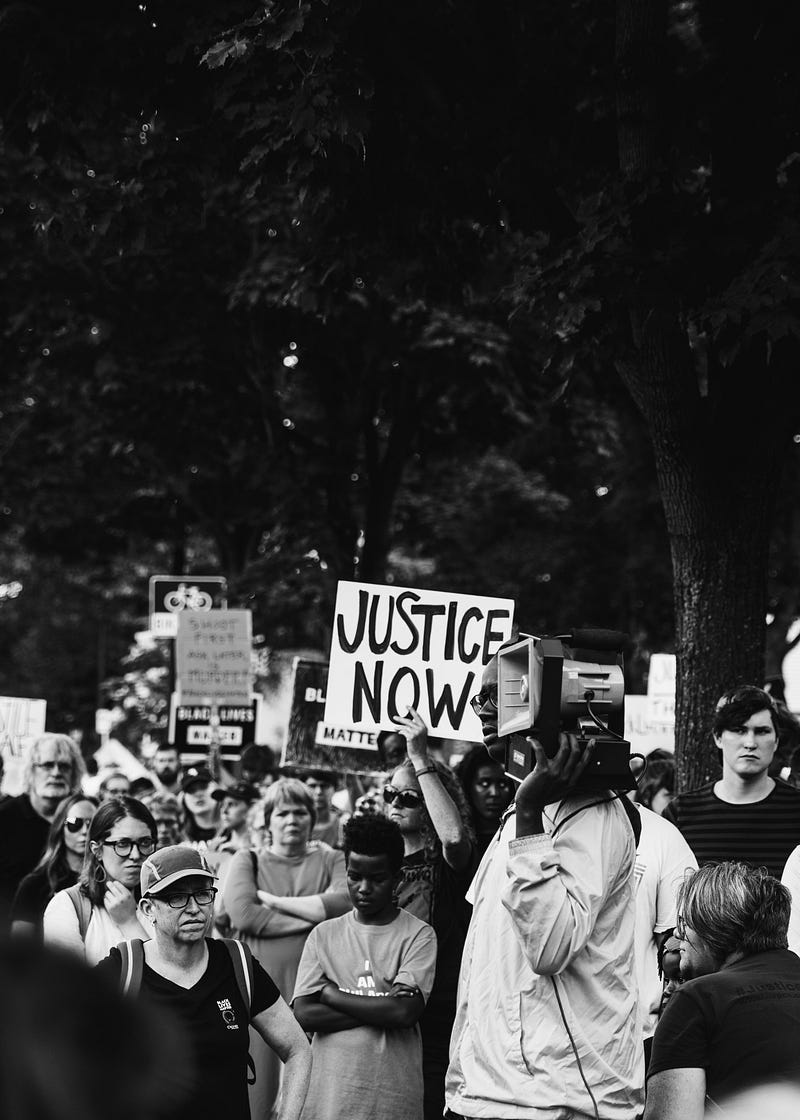
Watching all the non-violent protesters responding to George Floyd’s death, I’m not the first to recall the arc of peaceful protest started by Gandhi, from India’s salt marches of the 1930s to MLKs inspired calls for nonviolence as he fought for civil rights in the ‘50’s and ‘60s to the demonstrations that have spread virus-like worldwide today.
But after watching the unrest in this country for sixty of my eighty years, I have a few questions.
How do we non-violently bust the heads of the outside agitators ruining our peaceful protests?
Gandhi knew about police brutality. He had that one in his hip pocket. I’m just wondering what he would say about the outside agitators showing up at our demonstrations these days, the folks posing as good people doing bad things. Sure, his people suffered from a brutal response to their demands for civil rights. But Gandhi didn’t have to contend with social media and its ability to spread lies, to coordinate an army of disruptors with their own agenda in city after city with the click of an app or a text. They’ve crawled back into the woodwork the past few days, but like cockroaches behind the refrigerator, they haven’t disappeared.
What about promises made but not kept?
Do I need to count the number of times people have risen up in this country and demanded change? Forgive me for my cynical math, but just as many times as the powers that be made promises to quell the disturbance and then broke them as soon as they had peace in their streets.
What about the Here We Go Again malaise?
I’ve only been watching the news for half a century and change. But I have to say, I’ve been here before. From Watts to Rodney King, to the 21st-century litany of police killings of black citizens, Americans have taken to the streets to respond and demand justice.
For about two weeks.
I’m not saying the sense of injustice has a half-life, but the will to do something about it seems to wane after a while.
So I watch my country blow up again over one more horrific killing, and I think, here we go again. I can almost see baked into the cake the protest fatigue as folks move on to the next cause, the next outbreak of the virus, the next happy spike in the stock market.
So, I’m thinking, What Would Gandhi do?
I can’t say I channel anyone, but there are more lessons to learn from Gandhi’s fight than just turning the other cheek when a thug’s heavy fist is raining down pain.
If the Mahatma were to appear today, he might have a word for us: patience. Don’t give up. Don’t forget. Don’t go shopping now that your state is opening up.
I’m writing this after George Floyd’s funeral; we’re two weeks past the start of the uprisings, and the streets are ominously quiet where I live. I’m afraid our battery is running down on our sense of outrage, or our ability to keep showing up on the streets. After all, we have lives to live. Am I right?
But I’d like to think Gandhi is up there in the cosmos someplace saying, no, you’ve got them on the ropes. Keep at it. Keep kicking ass. Keep going for as long as it takes. That’s how we did it back in the day. I’m also afraid some people are saying who are you, a broken-down old white lady telling us how to fight our fight?
And then this morning, I read a piece about one of our home-grown heroes who was on the front line with MLK. John Lewis. I’ll forgive you if you want to bow your head at the name. You should, for all he’s done for our country. But there he was, while battling his own fight with cancer, he’s standing on the sign that put it to Donald Trump. The huge Black Lives Matter sign in front of the White House. Congressman Lewis still showing us how it’s done.
Congressman Lewis is out there telling us it’s everybody’s fight, yours and mine. No matter where we live, no matter what corner of the world we call home, if injustice has a foothold in our back yard, then we have a duty to keep at it until we’ve rooted it out.
How long will it take? That’s the wrong question. If you missed John Lewis, this is what Gandhi would say: What do you have to do that’s more important than making this world a better place for every person in it?
I’m an editor and writer on Medium with Top Writer status. I’m also an editor for the publication, Rogues Gallery. I’ve published 55 titles on Amazon and edit for private clients. If you’d like to hire me as your editor for fiction, non-fiction, or business writing, please contact me here. If you’d like to read more of my work on Medium, click here to sign up for my newsletter. Thank you for reading.