
Breathing Into The Pandemic
How one woman’s yoga practice has lessons for us all.
“How are you doing?”
What was once a throwaway question, a mark of courtesy and good manners, is now a time bomb. Dare we ask our friends how they are, knowing they’ve lost their jobs, or their 401K accounts have tanked, or they’re holed up in a cramped apartment with three kids and a difficult spouse? Or maybe they’re grieving a relative dying in a rest home on the other side of the country.
So, perhaps you’ll just share your latest fave Netflix binge, especially if it’s a day when you’re also hanging on by a thread. We know how everyone’s doing. We don’t even have to ask. As well as they can. Some days good; some days in a hole so deep they don’t know how they’ll ever crawl out.

A recent headline said that though the virus targets those 60 and up, the elderly may cope with the isolation of the pandemic better than younger people.
For lessons on how to cope with the current crisis, yes, I would have certainly directed journalists to my octogenarian friends. They write books, run their medical practices, and tend their gardens with one hand while steering their families through this nightmare with the other.
But I would also have said check out Jennifer Jones Schroeder as an example of how to rock a pandemic.
It had been too long since we’d had a heart to heart when I texted her to ask how she was coping with the pandemic.
I’d been nudged by her husband, my good friend and co-author, Stanford cardiologist, John Schroeder. I mentioned I needed inspiration for a Medium article. I was thinking the health care crisis at his hospital. Old news, he said. Write about teleyoga. He meant Jennifer’s classes.
Talk about old news! Everybody and their out-of-work uncle are live streaming yoga and every other distraction these days.
I was about to say thanks but no thanks until he sent me a photo of Jennifer setting up her computer for her next class.
My eyes popped open. I thought, are you kidding me?
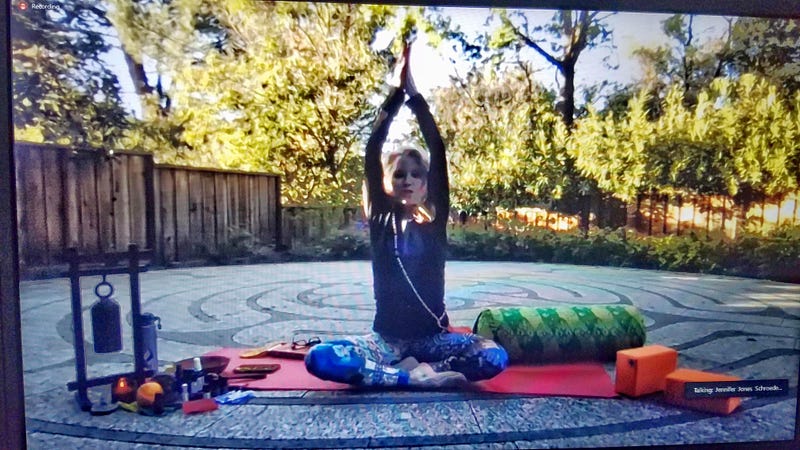
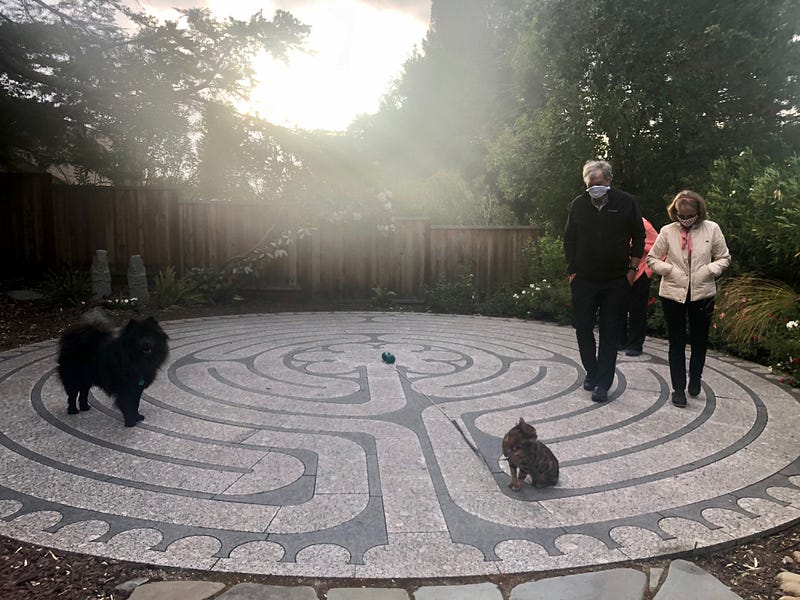
Who has a frickin’ full-sized labyrinth in their back yard? There’s your privilege at work. Way to rock social distancing, right? This whole isolation thing might be a black hole for her husband watching the medical profession tank because healthy people think they can’t go to ERs for health care.
But Jenni?
Southern girl from Mississippi, beauty pageant winner, successful business owner before she married prominent Stanford cardiologist, world traveler to exotic destinations.
No worries about asking Jennifer how she’s doing. Her toast lands jelly side up, am I right?
Except, maybe not.
Let’s go back to her beginnings. As soon as Jennifer opens her mouth, the y’alls start dripping off her tongue like dew falling off a magnolia on a Mississippi morning.
So, you might think you know Jennifer, that she just stepped out of Steel Magnolias, as one of the privileged daughters holding up southern pride.
I made that mistake when John first introduced me to her as his future bride so many years ago. She was eager to help test recipes for our Stanford heart-healthy cookbook. But she dashed any dreams I had of learning the secret to feather-light biscuits or buttermilk fried chicken when she said she’d wash dishes because she made reservations, not cornbread!
So much for the Southern housewifeing thing.
She may have held the title of Mississippi Miss Hospitality, setting up stereotypes of a lifetime of crowns, roses, and doors magically opening for extroverted blondes. But her story is one of a square peg born into a round hole. For this seeker-in-training, the beauty queen circuit lacked substance. Jennifer ditched that life to follow the traditional path of college, marriage, and career, with a heaping serving of old-time religion. What else would you expect of a southern woman of her generation?
Until the day she came home to discover her husband had taken his own life. Nothing had prepared her for that horror, or the aftermath, when she lost her business and financial security.
How do you come back from those devastating blows? You wouldn’t be faulted for going sideways, into depression, bitterness, or cynicism. I didn’t know Jennifer then. Maybe she slipped into those dark moods on occasion. Yet she managed to claw her way out of that darkness.
Why am I interested in telling Jennifer’s story? Because those early steps to rebuild her life prepared her for the upheaval and uncertainty that’s hit our planet today. Seven billion-plus of us are trying to navigate the worst pandemic we’ve ever known, and we need all the help we can get.
We all have a story to tell, about catching the disease, avoiding it, denying it exists, having our lives destroyed by it, and trying to find a way to cope with this moment in time.
If you’re feeling you’re going down for the third time, you could do worse than learn from Jennifer’s struggles and ultimate triumphs. She’s an ordinary person like you and like me, but when life threw her a lemon, she didn’t just make lemonade, she made good ole southern sweet tea.
I wanted to know how she did it, how she sounded so upbeat when I asked how she was coping. Here’s what she told me.
Several years after her late husband’s suicide, living in Atlanta, a friend connected her with John Schroeder. Jennifer had learned to trust her inner knowing by then, and the sound of his voice when he introduced himself on the phone told her to pay attention to this connection.
She and John eventually married, became parents to their daughter, Hope. When she moved to California, she’d found a home. With John, of course, but here is where she discovered the breadcrumbs that led her to her spiritual home.
A self-described “Jesus girl,” Jennifer was raised with strong southern religious traditions. After a profound awakening in the shower at age fifteen, she committed her life to a spiritual path. But as she puts it, “The church kept throwing water on my fire.”
There are two kinds of seekers in this world. Those who hop from guru to guru, from a platform to a philosophy to a discipline in an attempt to find a spiritual grounding.
Jennifer epitomizes the person who experiences an “aha” moment and then digs deep to make it their path in life.
When she settled into the Bay Area, she devoted herself to her marriage, her art and design and her jewelry business. Most importantly, she needed to find wholeness after the trauma of her first marriage.
After the experience she had a teenager, Jennifer remained attached to the teachings of Jesus, but in the Bay Area, she also found the same message in teachers that exposed her to eastern religions, the traditions of Native Americans, the writings of Carl Jung, and the work of Joseph Campbell.
The message was always about integration, uniting the dark and the light, becoming one. For someone raised with the scars of segregation, which she viscerally rejected even as a young girl, this was a long way from home. But in these teachings, she found a frame for her life that made sense to her.
She learned to integrate the darkness of the ending of her marriage, the traditions of her southern heritage that did not meld with her inner truth until she found her own peace.
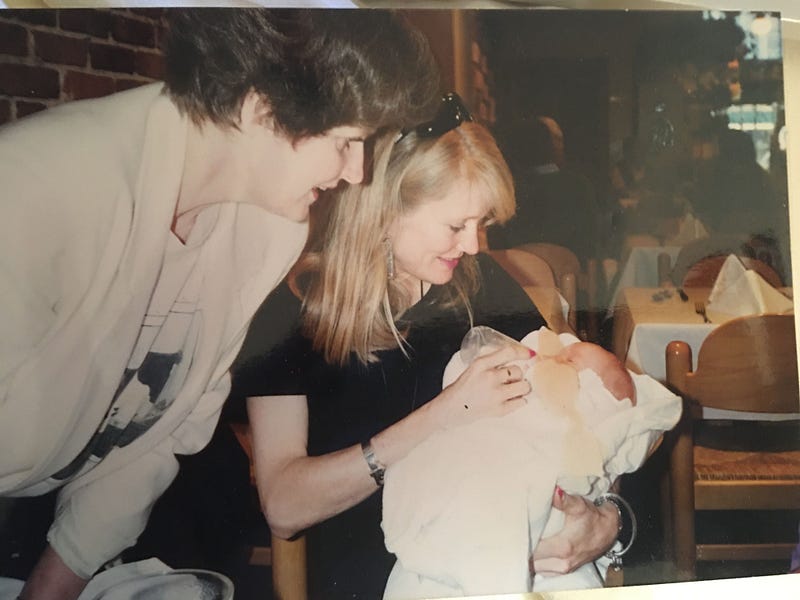
When Hope arrived, motherhood took center stage. Over the years, the Schroeders traveled extensively, often as a family, but Jennifer spent serious time on the island of Bali before Eat, Pray, Love became a thing. She visited important religious sites and spiritual centers in her deepening search for meaning and understanding the unifying themes in human cultures.
She hit another wall when Hope entered high school. In giving her daughter more freedom to find her own way in the world, Jennifer confronted a painful hole within herself.
A chance yoga class opened the next chapter of her life. A lesson on the breath, a basic tenet of yoga, offered release from the pain of losing that early bond with Hope. As she learned to breathe into the moment, to breathe into the loss, she found a new relationship with herself.
Yoga was another link in her spiritual path. For her, “Yoga yokes the body to the mind.” As her her own yoga practice deepened, she began training with her teacher at YogaSource and eventually completed her 500 hours to become a certified yoga teacher. She teaches restorative yoga and incorporates her labyrinth in her practice and teachings.
Yoga is not a fitness workout for Jennifer, but a way of being. She teaches her students to take the practice on the mat, of being with the breath in the moment out into the world. She urges them to use their practice to cope with whatever comes at them.
This is what she offers her students. A moment to breathe, to connect with self, to be with this unique experience that connects us all, whether it is fear, panic, sadness, or hope, the light and dark of it, and allow it to open into the next moment.
The day that we spoke on the phone, I caught Jennifer beginning her two-hour walk in the Stanford hills. I asked her about the labyrinth, an unusual attraction for a private home.
It was a do-over for their garden demolished by the drought, she told me, an eco-friendly addition that she has incorporated into her yoga glasses, where her students can walk the labyrinth. It is the perfect corollary for yoga. Labyrinth has one way in and one way out, like the breath. Costing about the same as a swimming pool, it has the same energy as water, she said, and like so much of what moves Jennifer, it has foundations in all cultures.
She and John often sit there with a glass of wine in the evening to enjoy the peace that emanates from the maze.
Perhaps when I started telling Jennifer’s story, you might have thought beauty queens and spiritual teachers didn’t belong in the same sentence.
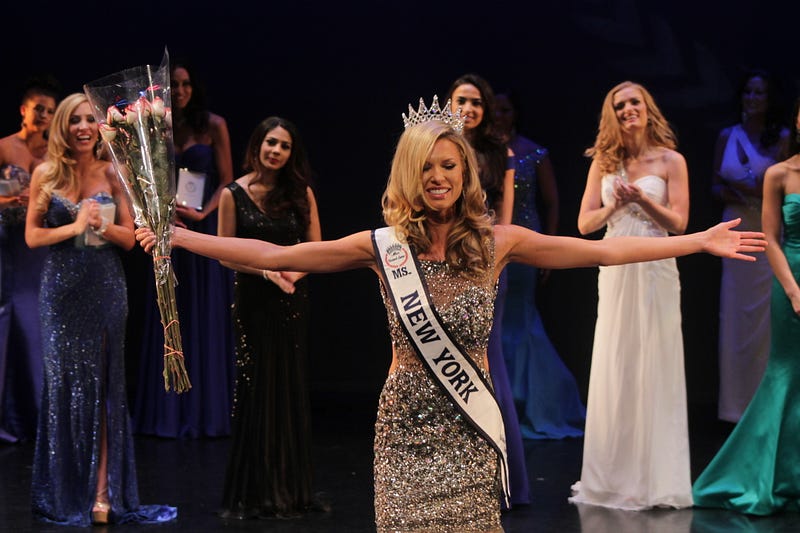
But that would teach you not to put people in boxes. Especially, firecrackers who set out to follow their hearts like Jennifer. I’m not sure a box has been built to hold this effervescent iconoclast.
Jennifer has a relatable story, as far as the pain in her early years, the struggles of motherhood. Yet in the setting of a Stanford lifestyle, the ease of social distancing on hikes the bucolic Bay Area landscape, I had to ask an obvious question: With so many people suffering job loss, financial insecurity, worries about loved ones becoming ill and even dying, what can you say to people who don’t have the luxury of their own labyrinth to walk off stress, miles of hillside to connect with nature every day, and financial resources to get you through uncertain times.
With so many people suffering job loss, financial insecurity, worries about loved ones becoming ill and even dying, what can you say to people who don’t have the luxury of their own labyrinth to walk off stress, miles of hillside to connect with nature every day, and financial resources to get you through uncertain times.
She thought hard for a moment but then had the answer. It came from her yoga practice.
“Stay in the moment. Just breathe. Find the value in the difficulty.”
Words that come from her life. When people are losing everything, she tells them to embrace the sadness rather than avoiding it or pushing it away. She believes that allows us to move on to the next moment and whatever it contains, which will be different from the moment before.
You might say, yeah, easy for her to say. Look at all she has. But remember where Jennifer has come from, the hard lessons she’s needed to learn. The horror life has thrown at her.
Her experience can offer a valuable lesson for us all. She can speak of peace and oneness in the midst of a maelstrom because she has already put her feet to the fire. She’s faced the worst life has to offer and refused to give in to despair and negativity.
You want a hard lesson? Let life strip you naked and refuse to blame anyone for your suffering.
Try that on for size and call it privilege. Because that’s where Jennifer has been and where she is now.
“How can you feel at peace with what is happening in the world?” I asked her.
“It’s a lesson about integrating light and darkness. Accepting it.” Jennifer says she’s learning a new way of living that comes from her daily practice.
She believes the virus is a tool, and the earth is protecting itself. What does she mean by that? She believes the universe is unfolding as it should.
These are big concepts to swallow when you are in the grip of a pandemic that is upending everybody’s world. And that’s the point of Jennifer’s story.
Jennifer didn’t start practicing yoga on the day of the lockdown. She didn’t begin meditating at the first sign of the virus. Jennifer began looking for meaning in life at age fifteen, when a moment exploded in her being, and she knew she had to follow a path, or find meaning, or listen to Jesus. Whatever that was, she had to follow wherever it led her.
She could have brushed it off, like shampoo in her eye.
But she listened to her self, her higher self. And through the light and dark places in her life, from a husband to abandoned her to suicide, to one who embraces her inner beauty, from a life of struggle and despair to embracing healing teachings and practices for over thirty years, Jennifer has prepared herself for whatever the universe sends her.
Jennifer will tell you that there is no certainty in life. Beauty queens aren’t given the key to eternal happiness. A marriage torn apart by death and financial ruin does not condemn you to a life of bleakness and despair.
From the trials that she has overcome, she knows this awful time will pass. “One thing I say a lot is that if it’s always Now, I can look back over my life and see that it has always worked out. One can therefore project moving forward that it will continue to work out.”
She gave me a favorite quote of hers from medieval 14th century mystic Julian of Norwich. “All is well, and all is well. And all manner of things will be well.”
She said in her classes, “I encourage students to step outside the striving, and observe the incessant thinking and worrying and connect with the space behind the waterfall. This is the spaciousness we endeavor to connect with in meditative practices of yoga. Once we notice the spinning of thinking, we step out of it again. Over and over. It’s a practice.”
So, yes, maybe another crisis is on the heels of this one. Nevertheless, start where you are and breathe. Just breathe. Do it again and again.
As Jennifer says, what we do now funds our future reality, one breath at a time. So how do we project a future? Match the frequency through your intentions and practice now.
I’m an editor and writer on Medium with Top Writer status. I’m also an editor for the publication, Rogues Gallery. I’ve published 55 titles on Amazon and edit for private clients. If you’d like to hire me as your editor for fiction, non-fiction, or business writing, please contact me here. If you’d like to read more of my work on Medium, click here to sign up for my newsletter. I’ll make sure you don’t miss a word. Thank you for reading.


