
How I Found My Weight Loss “Sweet Spot”
Find what works for YOU with this simple method.

I’ve been on my weight loss and fitness journey for a while. Until 2022, however, I didn’t feel like I was making a lot of traction. I finally got myself unblocked by doing something I never thought I’d do.
Yes, dear reader: I actually started counting calories. Here’s what I learned.
Trigger Warning: Discussions of weight and diet tracking. This article is based solely on my personal experience. If you struggle with an eating disorder, please consult a medical professional.
Stuck in a Rut
As I’ve discussed before, my fitness journey has been full of ups and downs. My main obstacle to health has been alcohol abuse. Fortunately, that’s something that (Goddess willing) I appear to have well in hand. (As of this writing, I’m 269 days sober.)
Even after cutting alcohol, however, I couldn’t stop overeating — particularly at night. I eventually figured out this was because my stomach was chronically upset. The causes? Whey protein powder and lactose.
Once I cut both out of my diet, my desire to binge eat in the evenings practically disappeared. However, I still wasn’t losing much weight. I seemed to be stuck around 210lbs. I wanted to make some real progress towards getting closer to 180lbs. before shifting to a focus on putting on muscle.
After watching some fitness YouTubers I liked (particularly Jeff Nippard and Will Tennyson), I started to realize some things. To lose weight, I needed to create a calorie deficit. Yet I had no concept of:
- How much I was actually eating. I was an “intuitive eater”. On good days, that meant “eat until I feel full”. On my rougher days, it was more like “eat until I feel sick.”
- How many calories I was burning daily. I’ve been fairly active the past few months. I lift weights three times a week and bike around 5–6 hours weekly. Plus, I often get in excess of 15,000 steps. According to my Apple Watch, I sometimes burn as much as 4,000 calories daily. Sadly, such estimates may be wildly inaccurate.
My Goal in Using a Tracking App
So, as an experiment, I decided to try a tracking application.
My primary goal was to find my “sweet spot” for weight loss. I wanted to create enough of a calorie deficit to lose weight while still powering my intense workout routines.
One reason I was always wary about counting calories was that it’s a fast way to become obsessed with food. When I’ve tried it in the past, I’ve become obsessed with cutting as many calories as possible. The result? I end up chronically hungry, lethargic, and moody as hell.
Medical professionals, fitness experts, and nutritionists mostly agree that the “sweet spot” for weight loss is around a 300 to 500 calorie/day deficit. Given that one pound of weight is equal to 3500 calories, this comes out to around 0.6 to 1.0 pound lost per week. Anything greater than that brings you closer to a crash diet and is likely unsustainable. Will Tennyson‘s video record of cutting 1,000 calories/week helps drive home just how miserable — and potentially dangerous — this can be.
The App I Used
So I decided to track my calories and weight loss for several weeks to find this personal “sweet spot”. Regular readers know that I’m highly suspicious of apps like Noom that drive users into crash diets. I wanted an app that both provided healthy recommendations while giving me the flexibility to make adjustments as needed.
So I used the app MacroFactor instead. Why MacroFactor? Honestly, I chose it because it was recommended by Jeff Nippard and I trust Jeff. Jeff emphasizes a science-based approach to fitness, weight loss, and muscle gain. If Jeff endorses Macrofactor, I figured there has to be some there there.
After you input your data and set your weight goals, MacroFactor gives you a calorie and macronutrient budget. The program is pretty detailed. For example, if you specify that you want to lose weight but also preserve muscle, your recommendations will include enough protein to help meet that goal. The app also supports low-carb and paleo lifestyles.
I entered my goals — fat loss while preserving lean muscle mass — and registered myself as highly active since I exercise well over six hours/week.
On the down side, MacroFactor’s initial suggestions were…how do I put this?…whack. The app said I was burning 3,800 calories daily and should be eating around 3,300 calories/day to lose weight. I tried this for a couple of weeks. As you’d expect, I didn’t lose a ton of weight. (It was kind of fun while it lasted, though!)
However, on the plus side, Macrofactor dynamically resizes its recommendations week after week. If you input your weight (or sync your weight with Apple Health), it’ll notice if you’re missing your average weekly weight loss goal and lower your calorie intake appropriately. Additionally, MacroFactor doesn’t babysit your caloric intake. You’re free to adjust it upward or downward on a daily basis as you see fit. (The app also asks you to set a “floor” so that you don’t cut calories to a dangerous extreme. Kudos to the developers for that.)
In general, I found MacroFactor extremely easy to use. It has a huge database of foods and you can easily look up commercial products with a built-in barcode scanner. It’s also very easy to create your own custom recipes and figure out the caloric and macronutrient content of your favorite meals.
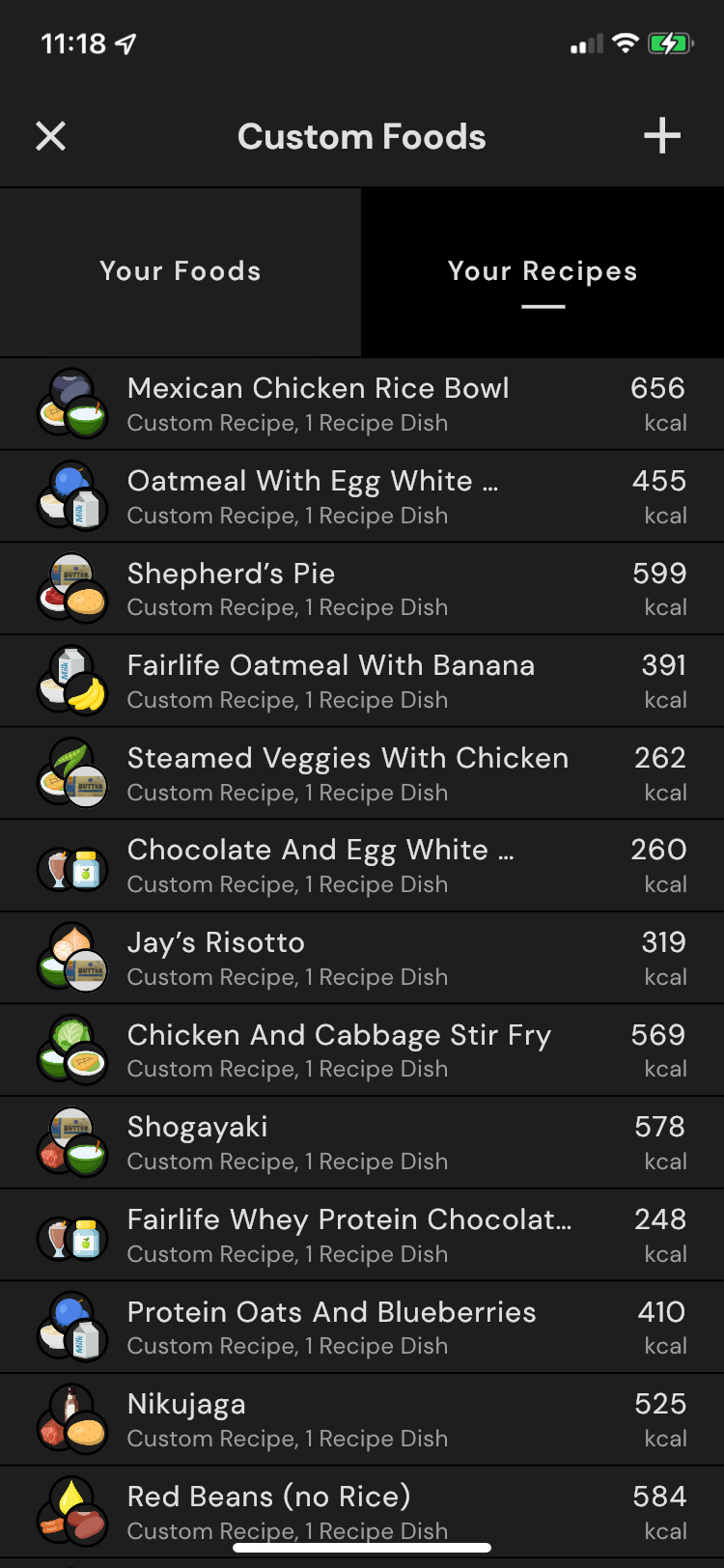
After a few weeks of experimentation, I ended up settling on a daily calorie intake around 2,400 to 2,500 calories. This allowed me to hit my protein goal of around 170 to 180g/day. It was also my “energy floor” — i.e., the least amount of calories I could eat while not feeling like I was starved and constantly craving food.
What I Learned
It took around two weeks to find my sweet spot. During that time, I went from a scale weight of between 210 to 212lbs. down to around 205lbs. In other words, a modest and sustainable 5lbs. fat loss.
MacroFactor uses a metric called “true weight”, which is an averaged weight that attempts to minimize daily weight fluctuations from factors such as water weight gain or periodic indulgences. By the true weight measure, I’m losing around 1.2lbs. to 1.4lbs. a week. In other words, I’m closer to the recommended maximum of around 1.5lbs./week for healthy, sustainable weight loss.
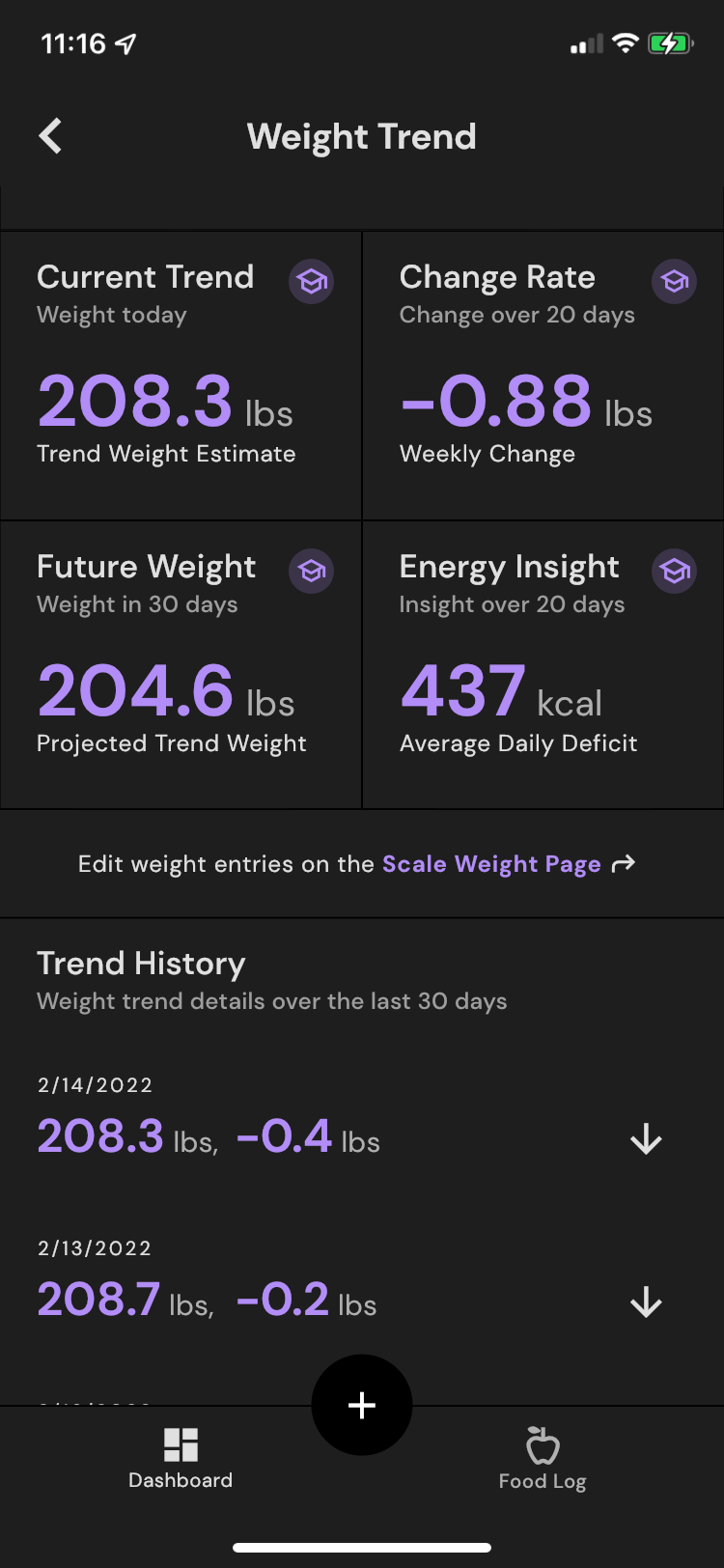
As I keep using MacroFactor, it keeps ratcheting down my daily recommended calories as it receives and analyzes actual data on my performance. As of today, the program’s recommended I eat between 2,753 and 2,891 calories daily. Based on what I’ve seen, I could likely eat closer to 2,700 calories/day and lose a little less weight — probably between 0.5 and 1.0lbs./week on average. Instead, I’m banking these calories towards the occasional indulgence, such as going to restaurants or family celebrations.
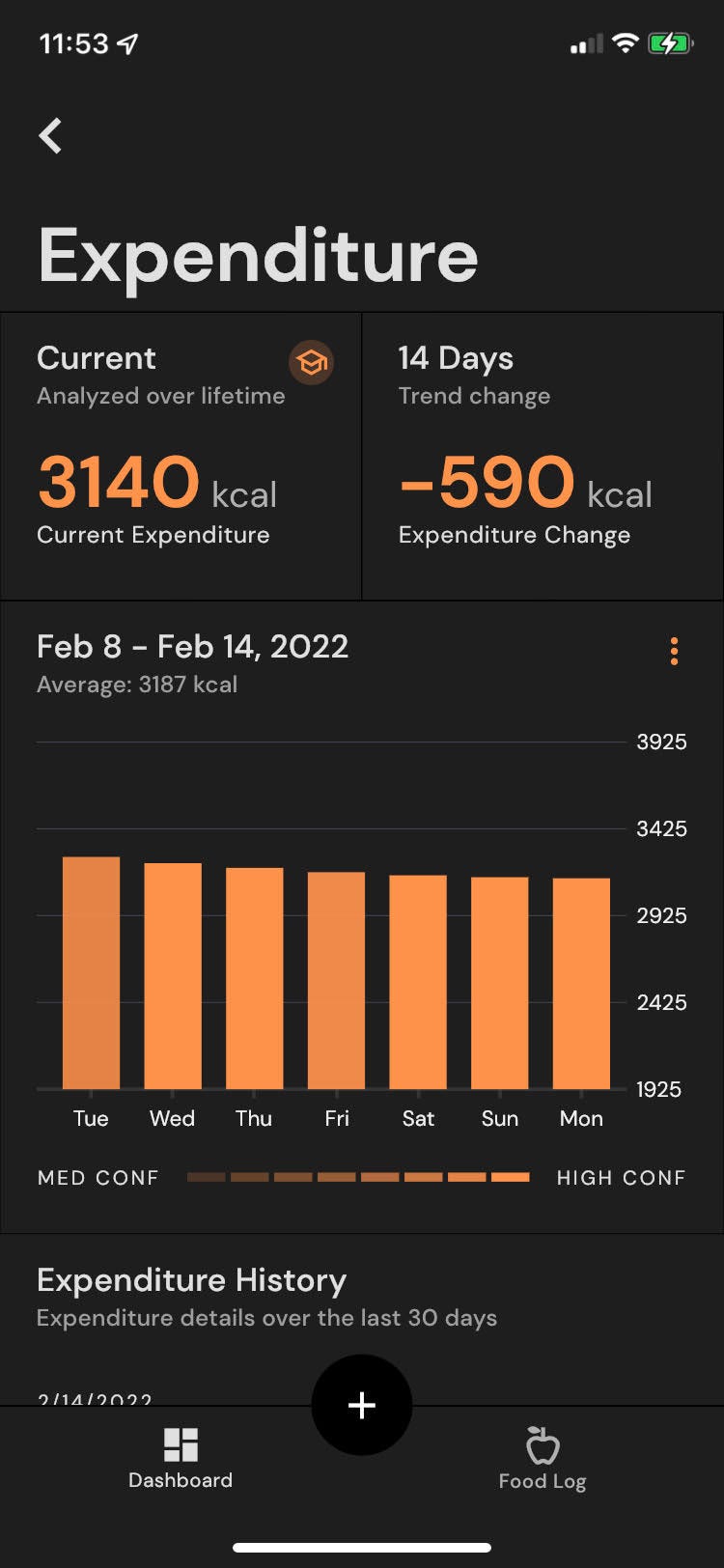
MacroFactor also uses your data to calculate what it believes is your true energy burn. After starting at a ridiculous 3,800+ calories, the app’s now estimating I burn around 3,140 calories/day. That seems a lot more accurate than the sky-high stats my Apple Watch keeps reporting. Since it’s based on my actual weight loss data and daily nutrition, I have a lot more confidence in these numbers.
Conclusion
Tracking calories works best when you use it, not to penny-pinch calories and drive yourself to a starvation diet, but to pinpoint how much fuel your body needs to thrive.
I was worried that tracking calories would make me obsessed with eating. On the contrary, I’ve found that it’s enabled me to establish healthy eating habits that I can sustain for the rest of my life. I learned that tracking works best when you use it, not to penny-pinch calories and drive yourself to a starvation diet, but to pinpoint how much fuel your body needs to thrive.
That said, you shouldn’t just “leave it to the app”. Listen to what your body’s telling you as you track your nutrition. If you’re constantly hangry, you should eat more. If you’re feeling bloated, hack off a couple hundred calories. As you make changes, use the data the app captures to monitor how they affect your body.
I expect I’ll keep tracking calories for the next year, particularly as I transition from losing fat to building muscle. It empowers me to fine-tune my nutrition based, not on intuition, but on data — my data. And it encourages me to build habits that I can sustain, not just for a few months, but for the remainder of my life.


