
How Whey Protein Killed My Stomach
And what I drink now instead.

As of today, I’m 122 days sober. One of the things that’s helped anchor me and stay on the straight and narrow is my fitness regimen. I’ve been hitting the gym for intensive weightlifting sessions four times a week and riding my bicycle on my off-days.
It’s been a generally positive journey. I’m down about 20 pounds since I stopped drinking. Plus, I’ve added some nice bulk to my bones.
But it hasn’t been all smooth sailing. The largest challenge was figuring out an answer to a perplexing mystery:
Why am I farting all the time?!
Whey’s Stinky War on My Stomach
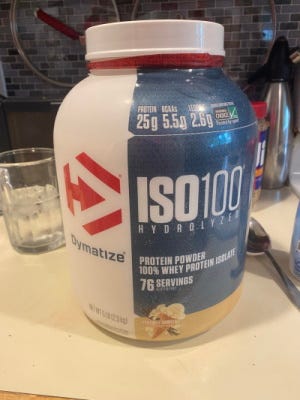
If you’re aiming to build muscle, one of the first pieces of advice you’ll receive is to drink whey protein shakes. Whey has a proven track record in promoting muscle growth in bodybuilders and athletes. Since many serious bodybuilders recommend ingesting anywhere from 1g to 1.6g of protein per pound of lean body mass, whey shakes can be a quick and easy way to jack up your protein intake.
But there’s a dark side to whey that few fitness professionals bother to mention.
First, you may have an intolerance to whey if you’re lactose intolerant. This seems natural, as whey protein is derived from milk. Fortunately for lactose sufferers, high-quality protein such as whey protein isolate often contains a minimum amount of lactose. This means some lactose-intolerant people might be able to stomach it.
Sadly, even if you can stomach the lactose in whey protein isolate, you may still have trouble digesting whey or even have an allergic reaction to whey itself.
This was the situation I found myself in. And it wasn’t pretty. After my second or third shake of the day, I’d find my stomach burbling and gurgling to the point it caused me pain.
Also — and here’s where we get TMI, my friends — the flatulence this phenomenon produced was awful. It was so bad you likely wouldn’t want to be in my same ZIP code at day’s end. I truly pity the people who lived with me during this trying time.
Parting Wheys
Note: This section contains Amazon affiliate links; I earn a commission if you make a purchase through one of these links.
I’m ashamed to admit it but I just sort of “gutted it out” with whey protein for months. I thought my stomach issues might just be related to eating additional calories on my weightlifting days.
Eventually, I got fed up with always feeling bloated and dry-tooting into the toilet every night. On a hunch, I looked to see if whey protein could be the culprit. I was surprised when I found out how common a problem this actually was — whole Subreddits and bodybuilding forums discussed the noxious farts and stomach-wrecking pains that whey was giving them.
So I parted ways with whey. And wouldn’t you know it — on my first day sans whey protein shakes, my stomach issues disappeared completely.
Once I knew that whey was the substance giving me gaseous grief, I sent out to find an alternative. Fortunately, while whey protein powder is convenient, there’s nothing written in stone that says you have to use it.
First, there are numerous alternative protein powder sources.
My go-to has become casein. Casein is also milk-derived but is a slower-digesting protein that, for whatever reason, doesn’t wage the same violence against my intestines as whey does.
I’ve become an avid fan of Optimum Nutrition’s 100% Micellar Casein Protein and have subbed it in for whey protein as a meal supplement 3x/day. “Micellar” refers to the particles left behind when removing calcium phosphate from casein. Micellar casein is the most popular form of casein, as it’s a slow-digesting protein that leaves you feeling full and gives your hungry muscles a steady supply of protein even several hours. Even whey protein devotees often use casein at night, as mounting evidence indicates that it helps build back muscle better overnight. It also seems to assist with muscle recovery.
Casein protein powder can be used mostly just like you use whey protein powder. Since micellar casein produces a fairly thick shake, I make sure to use plenty of liquid — anywhere from 12 to 16 fluid ounces. I use it to make drinks in the blender together with soy milk, mixed berries, and tart cherry juice, or in a hand shaker with Fairlife milk and a little PBfit peanut butter powder.
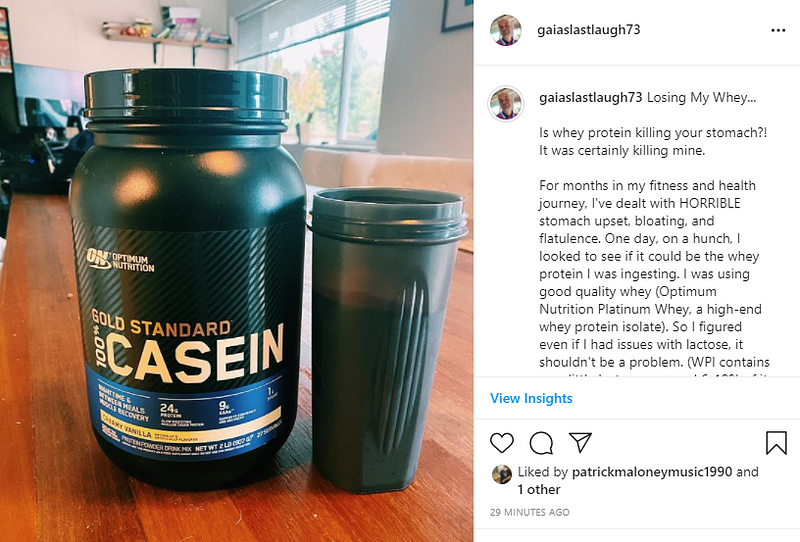
If you’re lactose-intolerant, your mileage may vary with casein; however, I’ve seen a lot of folks with mild lactose intolerance say they have no issue with it.
If you need to avoid milk products for other reasons (e.g., you’re vegan), you can try a plant-derived protein powder such as Vega Sport. You can also try a soy-based protein such as Bob’s Red Mill Gluten Free Soy Protein Powder. (And no, soy protein won’t lower your testosterone levels, as some dudebros would have you believe.)
Of course, you can also forego protein shakes altogether. Chicken breast, greek yogurt, and eggs are just three ways of getting an abundance of high-quality protein in your diet in solid-food form.
The important thing is not only that you get the muscle-building protein you need, but that you enjoy what you eat. If your nutrition regimen feels like a chore — or worse, it makes you sick — I guarantee you’ll eventually end up dropping it like a bad habit.


