
What does it mean to be a woman in Iran?
Feminists and Iranian Women
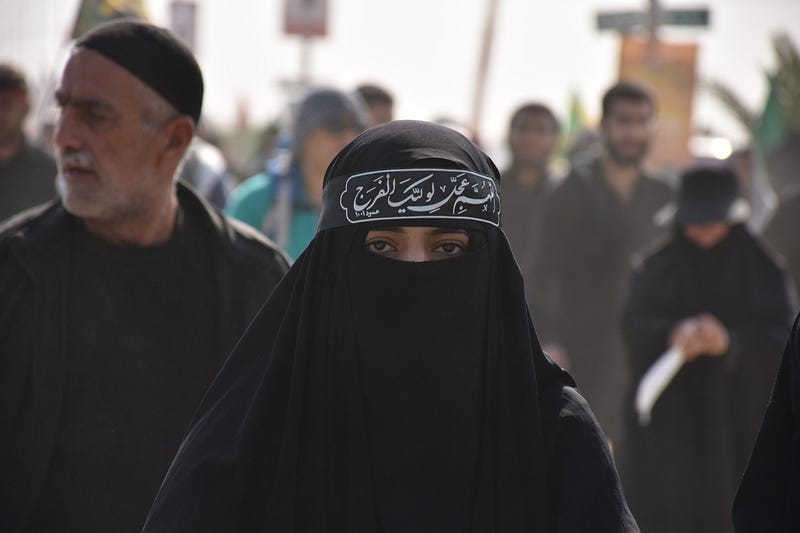
What does it mean to be a woman in Iran? I’m not talking about being complex, goddess, bad, offensive, or a star. First, complex means complicated, and this story contains a host of problems women face in an Islamic country like Iran. Hence, feminist history should not try to dominate the sharp wings of the movement. Women don’t have to be impeccable to deserve equal rights. Or we can’t celebrate them by dispossessing politics. Iranian Feminist Movement might be on the positive side of history, and “we just have to wait for the world to catch up.” So, what does it really mean to be a woman in Iran? A bad fate.
In Iran, everything can appear contradictory. Increased globalization has intensified “global” perspectives. Dynamism is acknowledged due to the impact of millions of forced or voluntary exiles and emigrations. This massive exodus changed views of human rights and democracy. We know that Iranian women in parliament are among the lowest in the world. But at the same time they show impressive educational attainment, surpassing men in higher education. So why this bias and inequality? Why are they on the streets to protest against the Islamist regime? Because when Iran got to a new political form of government in 1979 women were the first targets of repression. The power regime almost erased them from society for decades and imposed Civil Laws like 15 years in prison for “hijab” and fines for “bad hijab”. (woman’s hair showing) Also, Iran has some unimaginable discriminatory codes like women cannot travel abroad or obtain a passport without the permission of their male, divorced ones cannot obtain custody of children, no singing or dancing, not allowed to attend some sports activities. People are complex, and making progress is tricky too. But the situation for women in Iran deteriorates day after day. Today, despite all of the abuses some continue to resist and keep the revolutionary spirit awake.
Iran is a deeply misogynistic state where clerical power can do as it pleases. This regime believes that the state should continue the persecution of feminists because they could bring Western influences to Iranian Society. Women should be only mothers and wives nothing else. They have almost no rights. Ahmad Vahidi an important commander has said recently: “If the Islamic Revolution is going to be harmed, it will be by women.” So in the eyes of the regime women are considered the biggest threat and they believe them the cause of rising divorce cases not having time to perform their ancestral duties as a result of increased female education at universities. To restrain this, other laws are on the verge to be imposed: one with restrictions on working hours and one lowering the age of marriage for girls.
Women’s history in Iran should not be a search for heroines. Should not be struggling to live. Therefore, women activists in Iran aspiring for equal rights have often found every time in a defensive position. They tried to convince the ruling elites that not only do powerful female images have authentic roots in Iranian ancient Sharia history but the quest for equal rights is not incompatible with progressive understandings of Islamic tradition. What does it mean to be a woman today in Iran is a hard question? Yes. A woman here is suffering from discrimination and inequality and literally, her life is regarded as half as valuable as that of a man. (is practically considered subhuman) Vulnerable to violence and harassment, like was the 14-year-old Romina Ashrafi, who was beheaded by her father because he believed that she had a boyfriend, or when over 40 girls and women in Zahedan were raped and no investigation was done after. And we get today at protests over the death of #MahsaAmini for not wearing the hijab. Nothing offers any hope because laws continue to devalue the lives of Iranian women. All choices are regulated by male authorities. To change it those who profess freedom and rights should be ready to struggle, to demand, to roar. Their views won’t make women like us. It will cause them pain. It will be difficult. It will feel like a big climb. When we (women) are victims, it is hard for anyone to believe us. In Iran is even harder because fighting for equal rights burst disbelief. Their motherhood is championed as a journey of endless self-sacrifice. If they raise voices, they are ‘shrill’. Their ambition is suspicious. Anger is portrayed as unnatural, horrifying, and disfiguring: who needs to listen to the ‘subhuman’ or the angry unreasonable women? The feminist movement felt on this issue like it was more fractured, open to some kinds of marginalized voices but hopelessly lacking in focus. Are we really as human beings moving forward if are still places on Earth that see women as not valuable? What sacrifices are worth making for the good of all? What do women need to do to be treated as full citizens in such countries?
No other woman has to lose her life over a damn veil!
This work here is entirely reader supported so If you enjoyed reading it please consider sharing it and SIGN up here to get all my future articles directly to your inbox. Also if you feel like you can throw some money into the tip jar will gladly be accepted. Thank you for the support!


