
NO MONEY FOR TOOTHPASTE
What Cormac McCarthy’s Success Teaches You About Publishing
An acclaimed novelist’s career shows that luck and struggle affect writers at every level

You’d need a seismograph to chart all the earthquakes that have struck book publishing since the launch of Amazon in 1995.
The rise in online piracy. The consolidation of U.S. publishing houses into the Big Five. The shock waves caused by the sudden boom in AI use.
These and other upheavals have shaken the industry to its core. And because the changes have been as broad as they are deep, their effects on individual authors can be hard to see. A lot of them may fly under the radar unless you’re an editor, a literary agent, or a journalist who’s covered the industry for years, as I have.
But sometimes you stumble on a detail that throws the changes into relief, the way a small red circle digitally superimposed on part of a painting can show what made it unique.
That happened recently when I was scrolling through the catalog at my library, saw a listing for Vanity Fair’s Writers on Writers (Penguin, 2016), and took the book home. It was collection of profiles of authors first published in the magazine under the much-missed editor Graydon Carter.
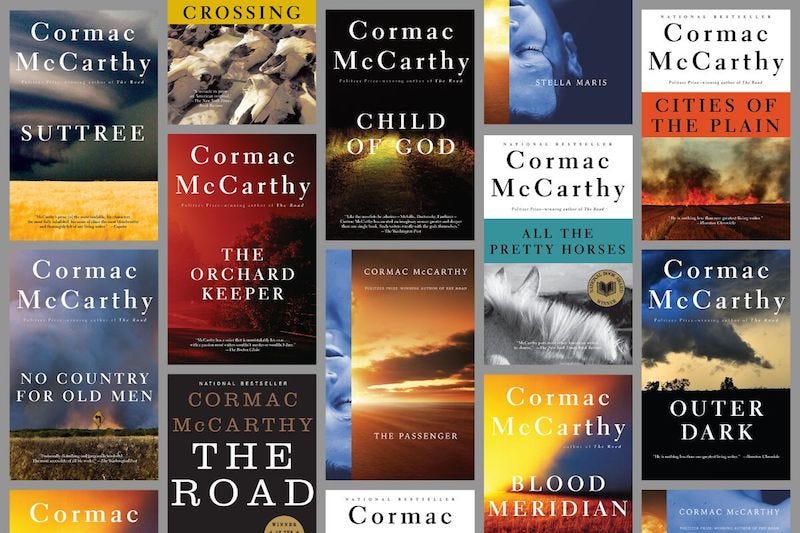
One of the most memorable stories in the book involved the late Cormac McCarthy, now widely seen as one of the great writers of the late 20th century. The journalist Richard B. Woodward mentioned that McCarthy had submitted his first novel, The Orchard Keeper, unbidden to the celebrated Albert Erskine, editor of William Faulkner and Ralph Ellison, who published it in 1965.
With few exceptions, unagented acceptances like his have gone the way of paper-manuscript submissions. But that wasn’t the most striking fact in the Vanity Fair profile of McCarthy, the author of acclaimed Western gothic and other novels. It was this:
Erskine liked McCarthy’s work enough to edit his first five novels, but none sold more than 3,000 copies. Translation: They were all money-losers for Random House.
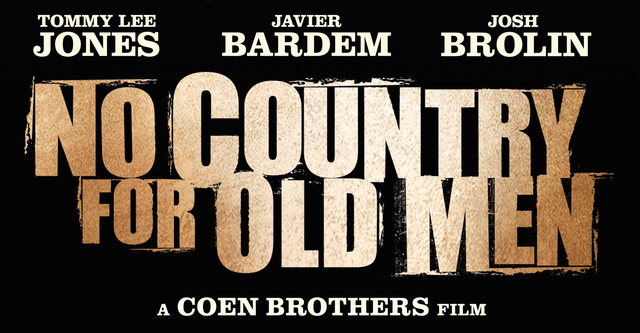
The firm nonetheless stuck with him. More than two decades later, it saw its faith rewarded when McCarthy’s bestselling All the Pretty Horses won a National Book Award and the movie version of his No Country for Old Men won the Oscar for Best Picture.
It used to be common for publishing houses to carry a writer for a couple of books that failed to “earn out,” or earn back the money paid up front to the author.
That approach was a variation on the marketing strategy known as loss leader pricing. It involves selling products at below either cost or profitability — typically, in order to attract new customers or sell more to existing ones. At publishing firms, authors’ early books often were, in effect, loss leaders for the company.
Most books still don’t earn back their advances. But it would be extraordinary today for a major firm to carry a writer for five novels that earned nothing, as seems to have happened with McCarthy.
American publishers tend to take an up-or-out view: They expect authors to begin earning their keep with the first or possibly second book. If they don’t, they must take their next manuscripts elsewhere.
Contemporary writers — instead of being carried by publishers — have to support themselves in other ways. Many teach as adjuncts at universities or apply for cash grants from literary foundations. There are far more adjunct positions and cash grants than when McCarthy was starting out in the 1960s, though he received some grants.
Which might make you wonder: Haven’t things effectively evened out? Aren’t teaching positions and cash grants making up the difference between what publishers might once have paid authors and what they have to live on today?
Those logical questions don’t take into account the realities that underlie the approach of contemporary publishers.
One is that it’s created a literary caste system. Grant-makers tend to reward credentials, such as book awards and teaching positions, so writers who win prizes and hold teaching positions also have an edge on grants.

But grants don’t come with the support of an editor, who can make or break an author’s career. And literary grants tend to be one-shot deals.
They help for a year or two, not for decades, as did McCarthy’s advances from Random House. The most coveted exceptions are the so-called MacArthur genius grants, fellowships that pay recipients $800,000 each over five years. They go annually to between 20 and 30 writers, artists, musicians, activists, and others, especially academics.
Adjunct or part-time teaching positions typically pay poorly and involve a heavy workload, though full-time stipends for MFA students ease more of the burden.
More than half of all adjuncts earned less than $3,500 per course, according to a 2020 study by the American Federation of Teachers. That work usually involves lesson planning, classroom instruction, one-to-one meetings with students, and any required faculty meetings.
I earned about $4,500 when I taught writing at a high-prestige university in New York City. And it had to cover not just my work but the cost of commuting in from New Jersey, where I lived. Writers often must take two or three adjunct positions to survive, which leaves little time for writing.
What are the lessons of all this for authors? What can they learn from the experiences of McCarthy and others who came up under a different literary system?
- First, success in publishing can elude even the most gifted authors, like McCarthy, often mentioned as a candidate for a Nobel Prize, for decades. Random House may have kept losing money on him, but that doesn’t mean McCarthy was rolling in it. In his Vanity Fair profile of the author, Woodward writes that McCarthy barely stayed afloat in his 30s and 40s while living in hovels in New Orleans and elsewhere.
- Second, literary success isn’t a strict meritocracy. It’s always involved some luck. McCarthy sent out his first novel when publishers still read manuscripts in their so-called slush piles, a pattern that would begin to change within a decade. He also sent out his manuscript before the retirement of Erskine — who was willing to carry an author for five books and had the clout to persuade Random House to do it — and more than a few others like him.
And it isn’t always true, as the adage has it, that “the harder you work, the luckier you get.”
John Kennedy Toole was born four years after McCarthy and also raised mainly in the South. He couldn’t get A Confederacy of Dunces published in his lifetime despite high interest by Robert Gottlieb, who would end up at Random House, McCarthy’s publisher. O’Toole’s book was published and won a Pulitzer Prize after he died by suicide at the age of 31.
Even if publishing is often unmeritocratic, you may catch a break, or a lot of small ones that lead to a big one. For all his early poverty, McCarthy seems never to have lost heart, Woodward said in Vanity Fair.
Once the journalist spoke to McCarthy about the months the novelist had spent without electricity in Tennessee.
“Something would always turn up,” McCarthy said. “I had no money, I mean none. I had run out of toothpaste and I was wondering what to do when I went to the mailbox and there was a free sample.”
@janiceharayda is an award-winning critic and journalist in the Deep South. She has been a writer and editor for Glamour magazine, the book critic for Ohio’s largest newspaper, and a vice president of the National Book Critics Circle. Her work has appeared in many major media.
You might like some of my other stories about books and the media:
If you’d like to read all of my stories without hitting a paywall, please join Medium with my referral link: