A LEADERSHIP ROADMAP FOR STARTUPS
What Are the 7 Deadly Sins of Leadership
4 Mistakes Leaders Keep Making, Behaviour Traps and The 7 Deadly Sins

It seems that CEO’s, Entrepreneurs, Startups and established organisation continue to make mistakes.
Robert Schaffer worked with business leaders for over 50 years. During this time he identified 4 Behavior Traps.
Traps that thwart organisational change.
Traps that are deeply rooted in the managerial psyche and as such are difficult to recognise as they’re a mechanism to protect the ego, avoid anxiety to prevent discomfort.
So, having spent his career advising companies on organizational and cultural change, he observed that his clients repeatedly fall victim to 4 traps.
So what are they?
Behaviour Trap 1 — Fail To Set Expectations
This trap occurs when senior management announces major directional changes or new goals without spelling out the specifics. Such as not providing a detailed plan to achieve these goals.
Schaffer advised that any such plan should specify who is accountable along with clear deadlines. The statement below is an example of this trap:
“We are going to reduce the use of cash by 40% next year.”
Setting expectations to evoke maximum performance in others was observed to be a management flaw 30 years ago in the article Schaffer published in the Harvard Business Review: “Demand better results — and get them.” (Hbr.org)
In the intervening period, Schaffer observed that “little has changed” from working with CEOs during his career. He said that managers commit several transgressions (see the “7 Deadly Sins” below) when making demands of their resources. (HBR, 1991)
The main cause of failure can be anxiety because a clear and concise direction requires thought, planning and a Roadmap, which is more difficult than issuing general orders. Common with Toxic Leadership.
Setting defined targets introduces the possibility failure, which in turn puts pressure on personal relationships thus introducing the potential for non-compliance from team members — Resistance, a byproduct of change.
Behaviour Trap 2 — Excusing Followers From The Pursuit of Goals
Schaffer also noted that when managers allow employees to focus too narrowly on their Business units, responsibility for company-wide performance is delegated upwards.
Also, Managers can be preoccupied with their own unit performance.
A singular focus results in an upward delegation of responsibility to already overloaded senior management, who often do not push back.
This is understandable as Managers must invest in their own work and their direct reports as they are rewarded for the performance of their unit.
So senior leadership must recognise this flaw by not accepting the “way things are”, particularly if it forces them to actively coordinate projects that subordinates can manage independently.
An example of this trap was observed in a telecoms original equipment manufacturer (OEM). In this case, competitive advantage was eroded due to slow new product development (NPD).
In this instance, the head of product development worked with each unit to improve the pace of development, but each unit was not directed to work in a cross-departmental fashion and the manager became the only person responsible. While each unit reported performance gains, this compartmental or vertical structure isolated thinking with respect to the bigger picture meant that the result didn’t add up to a major improvement.
The solution to this trap is to assign an owner, a champion. An individual that is responsible for the results that require input from peers.

Behaviour Trap 3 — Colluding With Staff Experts And Consultants
Schaffer observed that this occurs when executives permit experts to deliver solutions without someone assuming responsibility for outcomes.
Remember Management Consultants don’t own the long-term impact, the ultimate outcome, the Business does.
The complexity and amount of work carried out by in house experts or external consultants have significantly increased in the last fifty years. This is a flawed methodology, whereby a product or project is delivered and implemented but no responsibility is taken for the outcome beyond the completion date.
“In the early 1980s AT&T asked McKinsey to estimate how many cellular phones would be in use in the world at the turn of the century. The consultancy noted all the problems with the new devices — the handsets were absurdly heavy, the batteries kept running out, the coverage was patchy and the cost per minute was exorbitant — and concluded that the total market would be about 900,000 (by 2000). At the time this persuaded AT&T to pull out of the market.” (The Economist)
Schaffer questions why clients are compliant with this structure. He suggests that many should agree on a result-based fee structure or hold resource experts responsible for outcomes, long term.
To do this the initial scope and project engagement must be defined, on a granular level. If not agreed thoroughly using such measures consultants frequently recommend solutions that are impractical or ignore change limitations, as McKinsey did.
Schaffer also observed that clients allow this behaviour because placing measurable goals on a project may introduce reputational loss with respect to external consultants.
The fallout of failure, however, is owned by the company and its people — long term of course — after expert consultants have moved on.
Another example of this trap was witnessed in an aluminium plant where a consultant was hired to improve automation with a view to improving throughput.
This involved considerable investment in new hardware and software but in the end, it did not introduce the anticipated improvements.
It simply increased costs.
So instead of addressing this result, the consultant suggested that the company was not using these new systems correctly, advising even more improvements.
The solution is to agree on a results-based fee structure and hold resource experts responsible for longer-term outcomes — deferred payment or longitudinal milestone payments as noted above.
Behaviour Trap 4 — Waiting While Associates Prepare, Prepare And Prepare Some more
Endless preparation gives the illusion of progress but ultimately gets in the way — Motion is not action.
Schaffer observed that when a senior manager attempts to introduce needed improvements, the first response can be: “Yes, but first we have to…..”
Modern management culture assumes that the first step towards improving performance is preceded by the introduction of new programs to facilitate the required objectives/goals, in order to realise gains.
In contrast, Leaders infrequently seek to introduce such programs, rather prefer to use existing systems and resources. Their ego means that they believe they’re performing at their best with the available resources.
This trap was noticed at the same Aluminum plant discussed above, where 20% of orders were shipped late. This caused delays for the customer, who required on-time delivery.
The solution proposed — A consultant was hired to investigate the option to install an order tracking system, which presented a 7-month workload, significant capital investment and unknown bedding in period to measure the impact.
Due to the fact that this seemed like the only alternative solution it was strongly considered by senior management — more on this below
Overcoming The 4 Traps
Behaviour traps can sabotage efficient organisations as they’re often difficult to detect given that they reinforce one another in ways that senior management cannot always see.
Behaviour traps can lead to significant losses in productivity, negating gains from the outset.
Here are 5 ways to overcome these traps:
Step 1 — Awareness
This can be introduced via simple observation. This involves identifying events where any of the four traps were observed and measuring the outcome and steps taken.
Step 2 — Experiment
Solutions can be implemented through experimentation with different methods or by trying out new ways of setting performance demands.
Transformative efforts through executive-led experiments can rapidly introduce tangible results, as failure is welcomed.
Schaffer used a mining plant to demonstrate this.
He observed quality issues arose due to its failure to set proper expectations. In this instance the CEO stopped talking about “solving the quality problem” and asked operating managers to identify areas where they could achieve quick results:
- Management identifies the five most promising projects.
- Each manager appointed an individual responsible for achieving the quality target in 100 days with the assistance of a cross-functional team.
- Teams were asked to state in advance the precise gains and prepare a road map on how they planned to achieve these gains.
- Clear, measurable goals were better defined, holding the team responsible for their implementation and encouraged to work outside boundaries of their original functions (Cross-function).
The Result: All five projects were successful and rolled out company-wide. The managers felt that this new philosophy was transformative and embraced the power of communicating expectations to those accountable, team members and managers.
Step 3 — Accelerating Innovation
Cross-functional teams with an appointed team lead (owner or champion) can accelerate innovation. Once a detailed program plan is in place and tracked accordingly.
To illustrate this, Schaffer used the same telecoms company whose product development was slow because subordinates were excused from the pursuit of overall goals.
- The product development manager established a cross-functional team to meet a revised deadline.
- He then made one person responsible for the on-time delivery of the product.
- He eliminated the island culture within the company, bringing together multiple teams — together the teams created a plan as opposed to each discipline creating their own plans independently.
- He introduced regular tracking and cross-functional meetings to improve the ability to manage and meet deadlines.
Here the lesson learnt was that best practice for product development was the creation of a one-person, cross-functional team lead, responsible for the final delivery.
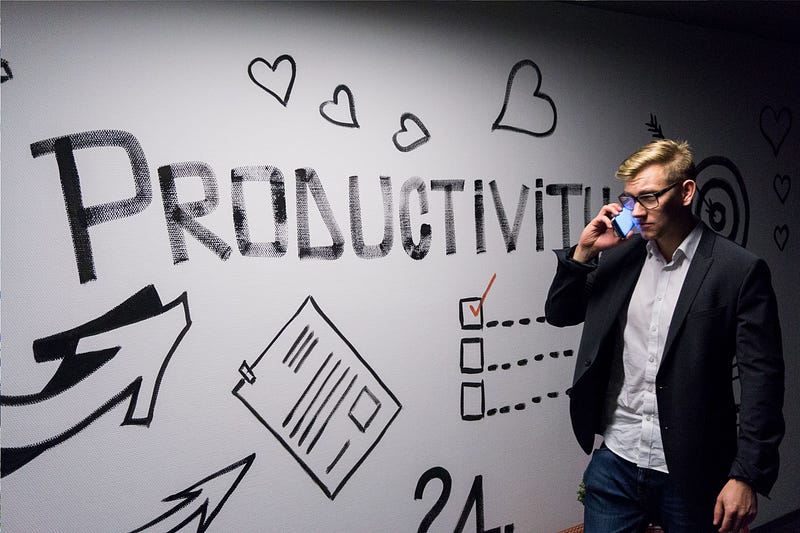
Step 4 — Ramping Up Productivity
Improving productivity without the introduction of any new systems, equipment or staff can be achieved by putting together a cross-functional team of employees and supervisors with a clear remit. This introduces a philosophy of ‘manage for improvement’ rather than buying into an improvement objective instruction.
Once again Schaffer used the Aluminum company that was considering the introduction of an order tracking-system, as an example of waiting while associates prepare a trap.
In this example, the company parked the consultant’s recommendation and created a cross-functional team of employees and supervisors to organise experiments to increase productivity and throughput.
This was to be done with no additional human or capital equipment. The goal was to introduce better results with what the business already possessed.
This opened the eyes of Management to the possibilities of improvement as opposed to buying to improve. The philosophy was adopted and expanded with one goal in mind — 100% on-time delivery target the following month.
To realise this, the entire company was involved and teams were more engaged, suggesting improvements across the board to achieve the 100% target.
While 100% was missed, the sequential improvements adopted meant that the company delivered high-90% delivery and continues to have a high percentage shipping performance today.
Step 5 — Multiplying Success
Breakthrough experiments create dynamism through focus, failure and success. If these experiments are carefully selected, well designed and communicated, they have a very high success rate. Once this occurs, their fruits multiply rapidly.
Schaffer details two examples here, a bank and a sales division. Both explain that when a cross-functional team is set up to introduce a benefit that is successful, it should then be harnessed and rolled out across the company.
The 7 Deadly Sins
So what are the 7 deadly sins:
№1: Backing away from expectations so that a goal really becomes a wish that people can choose to ignore.
№2: Engaging in charades, which conveys that the goal is just an exercise that you have to do for appearances’ sake, but you know it’s not really going to happen.
№3: Accepting seesaw trades so that if your people take on one goal, they’ll get relief on another.
№4: Setting vague or distant goals by putting the time frame far out into the future.
№5: Not establishing consequences, so it’s impossible to differentiate between those who successfully achieve goals and those who do not.
№6: Setting too many goals, which allows subordinates to pick and choose the goals they either want or find easiest to meet, but not necessarily the ones that are most important.
№7: Allowing deflection to preparations and studies, which delays the moment of commitment to a real goal.
Source: aasa.org
Final Thoughts
Schaffer, an experienced Business Advisor with extensive professional and academic experience, thought differently.
In his 1991 article, he tackled leadership and management practice from a negative point of view, similar to Kellerman’s “leader’s warts and all” article (HBR, 2004 ).
This approach analysed leadership qualities and practice from an alternative standpoint, a negative perspective, to understand “what not to do”.
The statement that these 4 behaviour traits exist to “maintain ego”, avoid anxiety (stress) and prevent discomfort is very interesting and pertinent as these are natural human traits often witnessed in the workplace.
“When you force yourself through periods of discomfort, you will unlock your true potential. Your personal growth depends on getting comfortable with discomfort!” — George J. Ziogas
So, to summarise and critique the 4 behaviour traps:
- Failing to set proper instructions — The article doesn’t discuss scenarios of leadership traits that fuel this. It does, however, mention the fact that some leaders may be bad communicators or too busy to apply “System Two Thinking” (Kahneman, 2011).
- Excusing subordinates from the pursuit of overall goals — To eliminate a silo philosophy or departmental mistrust and blame requires a cross-functional solution.
- Colluding with experts and consultants — There is no mention payment in the development cycle (if payment is post-implementation, at testing or at handover). The point is that payment should be dependant on longer-term objectives — “The Infinite Game” (Sinek, 2019).
- Waiting to prepare, prepare and prepare more — Probably the easiest trap to fall into, as everyone has a wish list of to do’s. There is no mention of prioritisation or resourcing issues. That said, experimentation indicates bootstrapping an MVP before this method became popular.
These solutions are capital expenditure neutral, so for that reason, flaws should be addressed head-on. Leaders need to ensure that they combat the four behaviours to realise productivity gains, consistently.
Lastly, I thought it would be useful to share a bullet-point synopsis of the main points, as follows:
- Give clear, concise instructions and targets
- Communicate often, vertically and horizontally
- Always appoint a Champion
- Avoid silos
- Encourage the creation of cross-functional teams
- Leverage employee knowledge
- What you have may be enough to start
- Always be proactive
- Experiment for growth
- Embrace and manage failure
- Capture Feedback
- Keep improving
“Character is a strange blending of flinty strength and pliable warmth.” — Robert H. Schaffer
References
- Harvard Business Review. (2020). Leadership — Warts and All. [online] Available at: https://hbr.org/2004/01/leadership-warts-and-all [Accessed 16 Jan. 2020].
- Harvard Business Review. (2020). Demand Better Results — And Get Them. [online] Available at: https://hbr.org/1991/03/demand-better-results-and-get-them [Accessed 16 Jan. 2020].
- The Economist. (2020). Cutting the cord. [online] Available at: https://www.economist.com/special-report/1999/10/07/cutting-the-cord [Accessed 16 Jan. 2020].