

We Need To Stop Framing Our Problems This Way
Our words have an impact on what we commit to.
Every network marketing pitch has some form of this particular strategy. It’s a part of the speech that is meant to break down some of the most common fears that people have when it comes to starting something new. With network marketing being something people can relate to (from the good and bad experiences), this part is crucial in convincing people to sign up and that the company is more legit.
You’re meant to feel more excited about the venture rather than realize you’re being blindsided.
The self-improvement industry has a similar technique to this in the form of a motivational poster. I’ve seen it time and again and network marketers also use it from time to time.
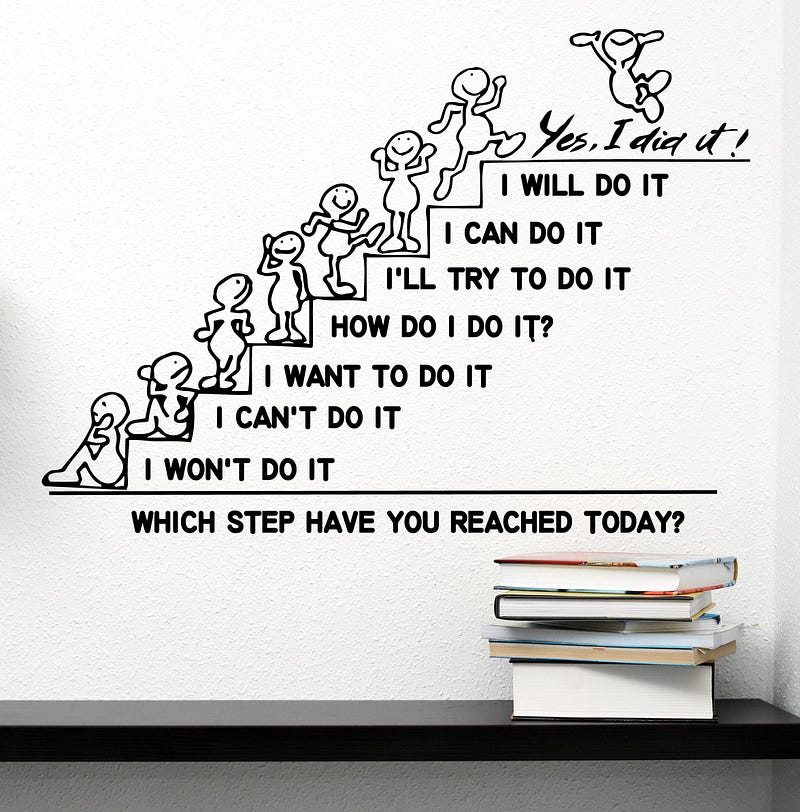
The sentiment is nice, but as many of us can attest to, motivation to complete or do something isn’t as straightforward as taking step after step and a slight tweak of your thinking. There are risks that the advice doesn’t work or doesn’t fully address the issue. Our emotions can also cause problems too. Even our egos can prevent us from achieving things.
It’s created this situation where we’re stuck in this loop and it all ends with something we do when we recognize we’re in a loop. When it comes to an overarching goal, we tend to tell ourselves this one thing.
This one thing that those motivational steps don’t mention.
I really should (or must) be doing this.
The Problem With Should Or Must
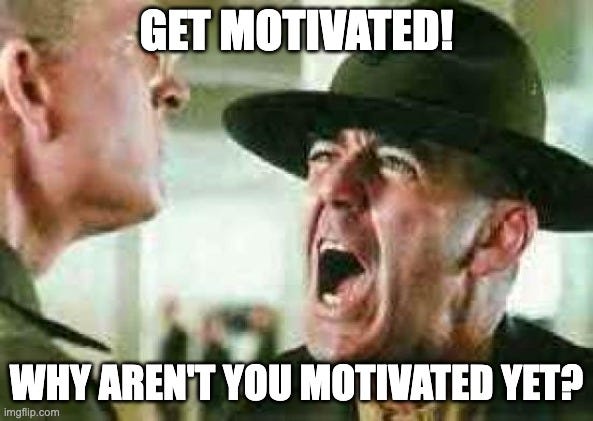
We all find various sources of motivation, but one particular source I find that can be tricky to deal with is the “pull you up by your bootstraps” strategy. It’s the kind of harsh reality of tough talks that you see in motivational sports films. It’s those jacked-up bros screaming at the end with the epic music reaching its climax.
It gets your heart racing and you feel like you can get out there and win, dominate, and claim total victory.
On paper, this concept is amazing. It’s using a tough situation or predicament and putting yourself in a mentally tougher spot. One that can trigger your fight or flight response in the hopes of getting the fight side. It’s a surge of energy that brings a sense of satisfaction when you achieve the thing you set out to do.
A gentle reminder or gateway to that kind of energy is through how we communicate with ourselves. Specifically using the words should or must.
But the problem is already in those details. Our fight or flight response. On one side, you hope to trigger the fighting side. But what happens if the flight response gets triggered?
The issue with bootstrap strategies is that getting blindsided can squash any momentum you’ve built or have been trying to build. And when you’re in a fight or flight mentality, logic and reason tend to get thrown out the window. You develop a focus on the target and the specific obstacles that you’re faced up against.
If at first, you don’t succeed, try again but more brutally than before.
It’s on par with hustle bro logic which follows the same pattern of it making sense at first but in practice doesn’t work all that well. I’ve only found it works in some situations and even then the results might not be that fantastic.
Instead, it’s far more effective in keeping you from changing despite knowing full well this is an issue. It makes you realize that the only reason that kind of harsh motivational pep talks works in films is that the plot demands it.
Our Mind Likes Gentler Words
In my experience, getting “used to” harsher words is not something we can easily recondition ourselves to do. For sure we tolerate it, hence why we consider saying should or must as a legitimate source of motivation.
But the reality is that it’s not a source of motivation and has never been. It’s much tougher and when it’s direct to us or we reinforce it in our minds, we tend to clamp up.
It isn’t because we’re super sensitive or anything, but rather our mind sees those words for what they truly are even as we try to convince them otherwise.
A waste of our time and not all that effective in getting the results we actually want.
The reasoning comes down to the fact of wording.
Going back to those staircases, we see that as more inspiring and uplifting as the person slowly but surely convinces themselves to do what needs to get done. The motivational words near the end are much gentler.
And naturally, there are many others out there that those steps don’t address.
I want.
I decided.
I’ve chosen.
What those kinds of words have over the concepts of should and must is that these words give us more control over ourselves. Instead of being forced to do something, we’re giving ourselves more control when we say these other words instead.
Sure they’re gentler on ourselves mentally, but these provide genuine power and a reminder that we’re in control and can do great things. We shouldn’t need to feel pressured or forced into doing something. Even if that thing is what we want to achieve in the first place and we know is good for us.
As someone who has been trying to lose weight and gain a healthier body, I can attest to the idea of using these gentler words. Part of the reason I’ve stopped going to the gym is time after time I keep telling myself “I really should be making time for this.”
The fact I have barely stepped foot in the gym at all this year makes me feel worse. Like I’m a failure. It denies the feelings I have which I know full well and remind myself of them when I go for walks.
My true feelings about exercising are that I enjoy it and want to do more of it.
Whether it’s motivating yourself or others, it’s important to consider what is the best technique that will inspire people to make a change. Time and time again I see that the harsh and brutal methods don’t often pan out. However, those are far more appealing in certain contexts and I can see why those methods are better than the alternative.
In a world where we value grit and general toughness, it doesn’t make sense for people to think about using calmer and gentler words. Especially when these hardcore motivational words are direct, tougher, and fit into the general frame of mind of what we think is motivation.
That narrative has to change, but I doubt that’ll happen any time soon. In the meantime, it’s important for ourselves to keep in mind that there are much better sources of motivation than telling ourselves we should or must do something.
Instead, it’s better for us to give ourselves full control over our lives.
Enjoyed the article? Please consider offering your support!
👉 Subscribe to my email list here and receive emails whenever I publish on Medium!


