
We Need the Option to Opt-Out From Like Buttons Everywhere
They’re spoiling the joy of creation
When we started writing, we did it for ourselves. We enjoyed the process. We liked playing with words and ideas. We danced with them; we made them twist and shine.
Then we started publishing online for many reasons. Each of us has a different one.
- We thought it would be great if someone enjoyed this sentence we wrote as much as we did or would laugh at this joke as loud as we did.
- It’s because we had something to say. There are topics where we felt it was important to share our views. Few might read it, but if at least one person did and changed their mind because of it, we would be satisfied.
- We used writing as therapy. We discovered we could fight topics, emotions, and feelings frightening us by putting them out there. If they’re published online for all to see, then we don’t fear them anymore. We push them outside so that they stop eating us from the inside.
Then came the like buttons
The management mantra says:
“What gets measured gets managed.”
When I read this quote, I’m always picturing a manager going around the office with a measuring tape and managing employees by measuring them.
As always, this tweetable version above has some truth in it, but it isn’t the complete picture. Here’s the full version:
“What gets measured gets managed — even when it’s pointless to measure and manage it, and even if it harms the purpose of the organization to do so.”
That’s how the like buttons on any social media work. They change our behaviors. Yes, they can be motivating and encouraging. But more often than not, they’re harming the purpose.
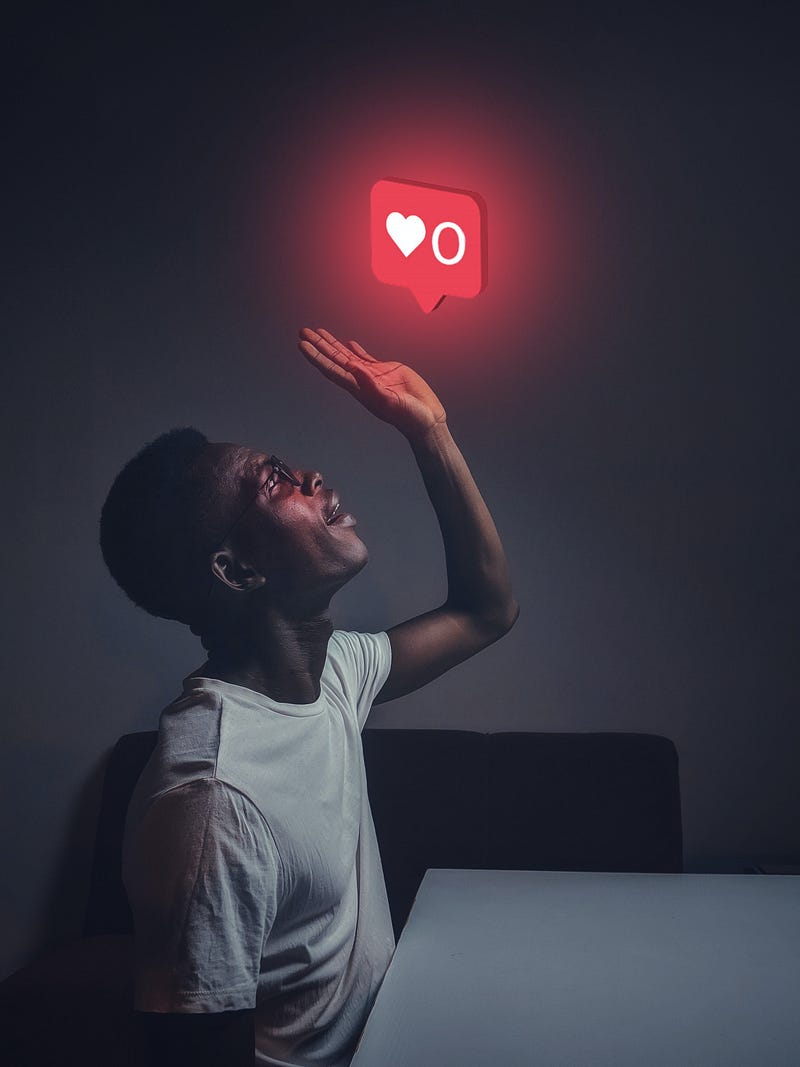
We get addicted to the likes.
Under their influence, we stop producing content for the joy or the release it gives us, and we start tweaking ourselves to please others.
We should have a choice
I’ve got enough stats and feedback on my writings as it is.
Comments are an example; rejection or acceptance notes from publications another. I don’t need the like button; I want to get rid of it.
Even platforms like Facebook or Instagram offer this possibility.
It’s now possible to hide like counts there. It’s an opt-in mechanism; the default option is still to see the number of likes. But it’s a giant step forward.
One that should be followed by all types of platforms hosting creations from their users.
Did you like that?
In this article, I used writing online as an example. I could have replaced it with any act of creation that we share with the public.
I’m certainly not saying that we should all remain obscure and unpopular. I’m saying that we already have enough sources of feedback, for example, in the form of comments and the number of views.
We don’t need to add a like button to make this data so ubiquitous that it comes at the cost of our authenticity and — worse— spoils the joy of creation.
“People want dignity and a sense of self-worth, and a sense of creating and doing something important. That’s who we are.”
Smillew is a writer, a tweeter, and a creative journey. He also enjoys yoga and meditation. Some she does well, some not so well, but they still tries them all.


