
From 0 to 150 Steps: How Staircase Meditation Has Been Good for Me
If you can do it for your body, you can do it for your mind.
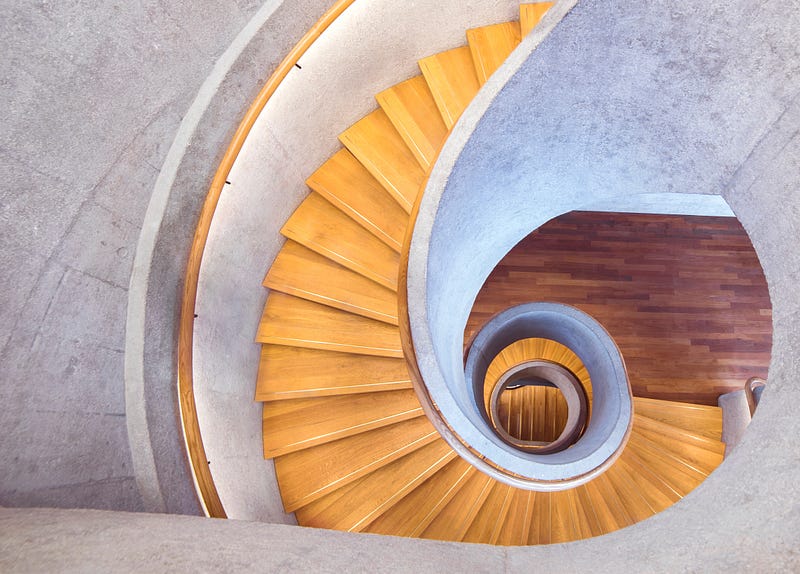
Staircase meditation is one of the few things I’m thankful for coming out of the pandemic lockdown.
I know it sounds strange.
During each lockdown, I would sit all day in front of my computer with limited prospects of ever exercising. Who knew a government would go as far as closing forests?
Looking on the bright side, being stuck forced us to be creative and change our routines. Some ran marathons on their balcony; I changed my meditation practice.
In the first weeks of March 2020, I knew I needed meditation more than ever, but classical practice, sitting with my eyes closed (guided or not) quickly became unbearable. I craved movement, direly.
That’s how staircase meditation started for me.
Read the following and give it a try. I can’t guarantee you’ll find everything I did, but I can promise it will be different from any meditation you’ve tried so far. Should that not be the case, know that I would give you back your reading time if I could!
Stair-Climbing Is a Great Physical Exercise
Using the staircase as a training ground isn’t new for runners and cross-fitters. Short bursts of intense stair-climbing have proven benefits in cardiorespiratory fitness.
As long as you’re living in a building, it’s easy to do. And no need to go outside! I live on the seventh floor, and it’s already enough to feel my heart work and beat faster if I climb them rapidly.
Going fast isn’t compatible with meditation practice. But even at a slower pace, I experienced health benefits from climbing up the stairs. On average, I go down and up the stairs three times per day, around 20 floors.
On top of that, I do a full-staircase workout once per week. It includes walking, running, and hopping on one foot up the stairs; pretty intense stuff.
To Make It a Meditation, Go Slow and Close Your Eyes (But Be Careful!)
Walking meditation is part of Jon Kabat Zinn’s “Mindfulness-Based Stress Reduction” program. It recommends going slow with small steps.
I found that doing it in a staircase with eyes closed gives another dimension to the practice, making it more interesting for me, and therefore easier to find the motivation.
Climbing up the stairs is easy. It doesn’t require your mind to be focused. You’ve been doing it thousands of times; your body knows this by heart and can be on autopilot. But if you close your eyes, you suddenly need to pay attention.
It’s like with our breath. We usually breathe automatically, without thinking a tad about it, until we notice; then we need to focus on the act to perform it. For example, the previous sentence most likely made you conscious of your breathing for a few seconds.
(Slowly) climbing up with eyes closed isn’t hard, but it’s not easy either. It’s manageable.
It means your brain needs to focus, but it doesn’t have to tense like when you’re in a difficult situation.
To feel the difference, take the example of running up or down the stairs. Running on the stairs is difficult (even with your eyes opened); you need to pay extra attention to where your feet are landing; your mind needs to be focused and tensed, not focused and relaxed like during meditation.
In the beginning, for maximum safety, hold the handrail or follow the wall with one hand. With time, you’ll get used to your staircase and won’t need the guidance as much. Safety is why I usually don’t climb down the stairs with my eyes closed; it’s much more difficult. For me, so difficult that I’m focused and tensed instead of relaxed.
Staircase Meditation Is a Sequence of Small Steps
It’s a reminder of the time needed to reach our goals.
When I’m at the bottom, I have 150 steps to go; it sounds like a lot. I climb up, one step at a time, and a few minutes later, I’ve achieved my goal. I’m back on the seventh floor.
I didn’t jump 60 feet up at once, and I didn’t climb the stairs four steps at a time. I went slowly but surely, step by step.
Tim Denning speaks of micro-doses of courage. James Clear (author of Atomic Habits) writes, “Small habits can actually deliver incredible progress very quickly.” Climbing up the stairs step by step is a reminder of these truths.
Small incremental changes can lead you to a better version of yourself. In my case, to the seventh floor of my building.
Doing it with your eyes closed is an additional reminder that all it takes to start changing yourself for the better is a leap of faith, a step in the dark.
There Are Plenty of Surprises in Staircase Meditation
According to research, the human brain loves surprises. I certainly enjoy the ones I get from climbing up the stairs.
I’m not talking about bumping into your neighbors in the middle of the exercise. That never happened to me. Nobody uses the stairs here. Maybe it will change if they read this article!
Even though I’ve been practicing for months, I’m still surprised by the richness of tactile sensations. Vision is our dominant sense; this means it can almost silence others. Closing our eyes makes us open to experiencing these additional data sources. Climbing up the stairs is putting your sense of touch at the front. You feel the ground with your feet and the wall or handrail with your guiding hand.
The other surprise appears irregularly, definitely not each time, but it’s my favorite one. It’s when I don’t count the steps and forget I already reached the next landing. My foot goes unnecessarily high, as if climbing another step, and I’m always surprised, almost scared by this unexpected quasi-loss of balance. It’s not dangerous at all from my experience, especially if you’re holding the handrail, but it’s quite thrilling.
The Takeaway: “Climb Away”
Whether you do it for your body, for your mind, or both, staircase meditation will take you on a journey. Here are the steps to follow (up).
- Start small, one step at a time.
- Hold the handrail if you’re scared at the beginning.
- Focus on your feet, embrace the tactile sensation.
- Enjoy the surprise of climbing phantom steps.
- Savor your accomplishment upon reaching the top.
Here’s wishing you to be a better version of yourself, one step at a time.
“Dear [Reader], can you hear the wind blow? And did you know… your stairway lies on the whispering wind?”
—Led Zeppelin


