
Want Better Teachers? The Key is Personality, not a Degree
Let’s screen teachers like we do soldiers
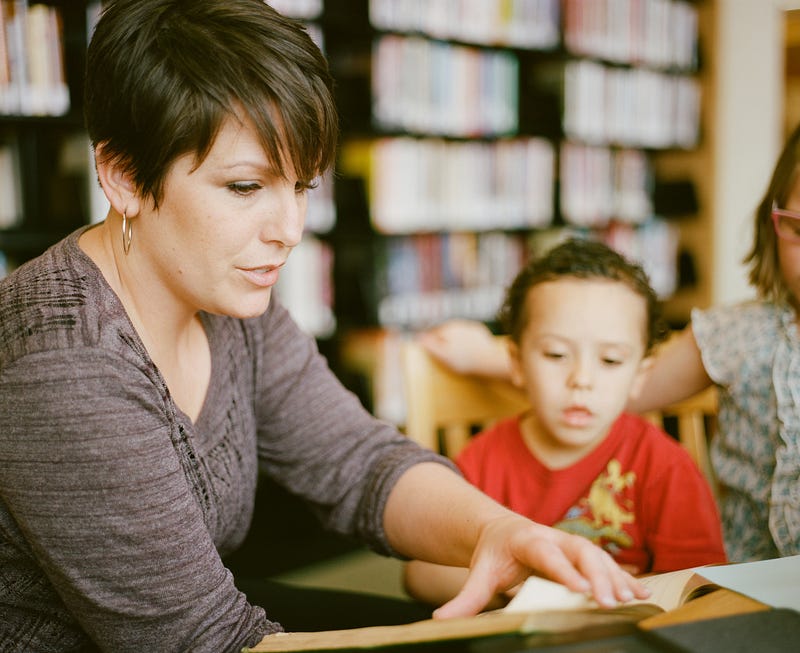
I was a high school teacher for five years, not in a row because I would’ve committed hari-kari in the cafeteria.
I really wanted to be a teacher, but I have the wrong personality.
Andre the Giant had a better chance of being a jockey than I did of becoming a great high school teacher.
On paper, I should’ve been wildly successful but in reality I plummeted like a lead balloon and hit the grimy halls of Mountain View High School with a sickening splat.
Only one-third of my cohort of teachers stayed with it for more than three years. One of them barely finished our program, but once out of the starting gate, he took off like a thoroughbred.
In short, I saw the best minds of my generation shredded by Professional Development Meetings and pointless arguments with kids about their cell phones.
I saw smart, helpful, kind people quit after year one.
I think those minds could’ve been saved a lot of pain and suffering with a few online tests. As we enter the post-COVID wasteland of modern America, we could screen teachers.
It’s all about personality, or what they used to call “temperament.”
We could train teachers in two years, not four, if the profession recruited people who are dominant, extroverted, conscientious, non-neurotic, and not too sensitive.
Future teachers could be screened via three simple personality tests:
— Highly Sensitive Person (HSP) test
HSPs are not cut out for conventional teaching
I’m not saying all people who are “highly sensitive” make bad teachers. Some, for example those in contained classrooms teaching a small group of ED (emotionally disabled) kids might fare well.
My best year of teaching was my first. I taught English, special education. I had about 13 kids in each class (one only had six kids!) and did IEPs. Sure, it was first-year hell in many ways, but no one cared what I did.
I was able to use my HSP skills of creativity to produce original curriculum, and I didn’t have the stress of being monitored by admin.
This article outlines three easily accessible tests that can help anyone answer the question:
Will I succeed at teaching?
The Big Five Personality Traits measure how open-minded, neurotic, conscientious, extraverted, and agreeable you are.
The Dominance vs. Submission measure rates how submissive or aggressive you are. These traits help explain how you handle being “in charge” as well as how you interact with authority, among other things.
The HSP Test is based on the groundbreaking and fascinating work of Dr. Elaine Aron. It’s important to understand that being highly sensitive is not the same as being introverted. For example, I am slightly introverted but my HSP tendencies make me easily overwhelmed by noise and social interaction. I suck at loud cocktail parties, for example.
What makes teachers excel: The Big Five
I contend that the Big Five traits can help predict a good teacher, because it helps to be extraverted, enjoying the company of other humans.
In a school, you are surrounded by people all day long.
I am not extroverted, and when I went home I avoided others so I could recover.
As a teacher, being extremely conscientious — that is, a rule-follower who crosses every T and dots every I — is helpful because hoop-jumping is a major requirement in most schools. Conscientious people excel in all professions, however.
Being open-minded is neither here nor there, in my opinion. Maybe it helps when you are tossed into a completely novel situation, like teaching special ed kids in an inner city school. I survived that, and I know some people couldn’t.
These days, a lot of teaching is following a pre-set curriculum or set of state standards, and being open-minded doesn’t help.
If you are too agreeable, like me, you can be gullible at times. Yet if you are not agreeable enough, you’ll be in constant conflict with kids, admins, and parents. This trait needs a balance, although I would content being less agreeable is an advantage.
As a teacher, you have to be wiling to fight for your territory, and being a pushover is a problem.
When it comes to neuroticism, it’s best to be calm or less neurotic. I am fairly neurotic, although less so lately — ever since I gave up trying to do a job I was not cut out for.
Dominance is different than aggression
My husband is dominant and non-aggressive. I am the opposite: aggressive but non-dominant. What’s the difference?
Dominant people are good at being in charge, calmly. Others tend to defer to their authority. Aggressive people, on the other hand, must have something of a “fit” to get anyone to comply.
In fact, aggressive people like me don’t usually make good leaders. Often, they aren’t great as followers, either!
This doesn’t mean aggressive people are aggressive all the time, but under stress, it’s a go-to strategy.
Want to alienate kids? Use sarcasm or get occasionally aggressive.
Or — as my former student Leon put it:
“Miss, you trippin!”
My husband taught for seven years in a row, and probably would’ve been promoted to admin, but he saw no future in it. I, on the other hand, would periodically have melt downs that did nothing for my career prospects.
HSPs have a purpose
Research demonstrates the HSP trait extends to other mammals, such as dogs. Being “highly sensitive” is a useful talent for group survival. If one member of the tribe senses danger earlier, everyone is safer.
Think of yourself as a “canary in a coalmine.”
While it’s great for the group, it can make the HSPs life difficult.
I think HSPs can do well in schools, if the culture is right. I did better in smaller schools with smaller classes. The flux and churn of large schools in which I supervised 180 kids a day was pure hell.
Final words on personality
We believe we can change, but we come into this world with certain traits. It would be helpful to know what those are earlier, rather than later.
We are all adaptable, and we can improve our attitudes — but if we are overwhelmed by our environment it’s impossible to succeed.
The only information I had going into teaching was I had a high IQ. I would later learn my verbal and spatial IQs are off the charts, but when it comes to social skills and strategizing I’m below average.
This also helped explain my C average in high school, which perplexed my parents who believed I should’ve been a straight-A student.
— I’m terrible at strategy (I hate Risk and Chess!)
— I’ve had to learn to be conscientious
— I’m easily overwhemled by noise and visual stimuli
— I have a weak speaking voice
What do any of those things have to do with teaching? A lot more than the ability to complete college classes in Education! Except for my poor strategic ability, it would’ve been good to know I can only handle average levels of noise and movement, and yelling is exhausting.
I’m no psychologist, but there has to be a better way to pick, train, and prepare teachers.
We screen for military service, don’t we?
If we hired people well-suited for this punishing profession, maybe two-thirds of my cohort of fellow teachers wouldn’t have dropped out in year one or two.
Want an email heads-up for new articles? Click Me.
Want to join Medium? Click Me.
Jean Campbell recently started her first Substack newsletter to laser focus on getting her book, City of Lies: A Street Hustler’s Omaha Journey published.


