Walt Disney’s 100th Anniversary
Asad Ayaz is The Walt Disney Company’s first-ever Chief Brand Officer. According to his profile on the official Walt Disney website, the responsibility of the Chief Brand Officer is to manage the global presence of the Disney brand, across the company’s entire ecosystem of touchpoints and consumer experiences, including:
- creating holistic brand marketing campaigns leveraging and synthesizing the company’s full suite of content and consumer experiences,
- activating the brand internally and externally, guiding the company’s digital and social strategy and presence,
- setting corporate synergy and franchise priorities,
- leading global consumer research and analytics for Disney’s brands and franchises with a primary focus on delivering more personalized and dynamic consumer experiences.
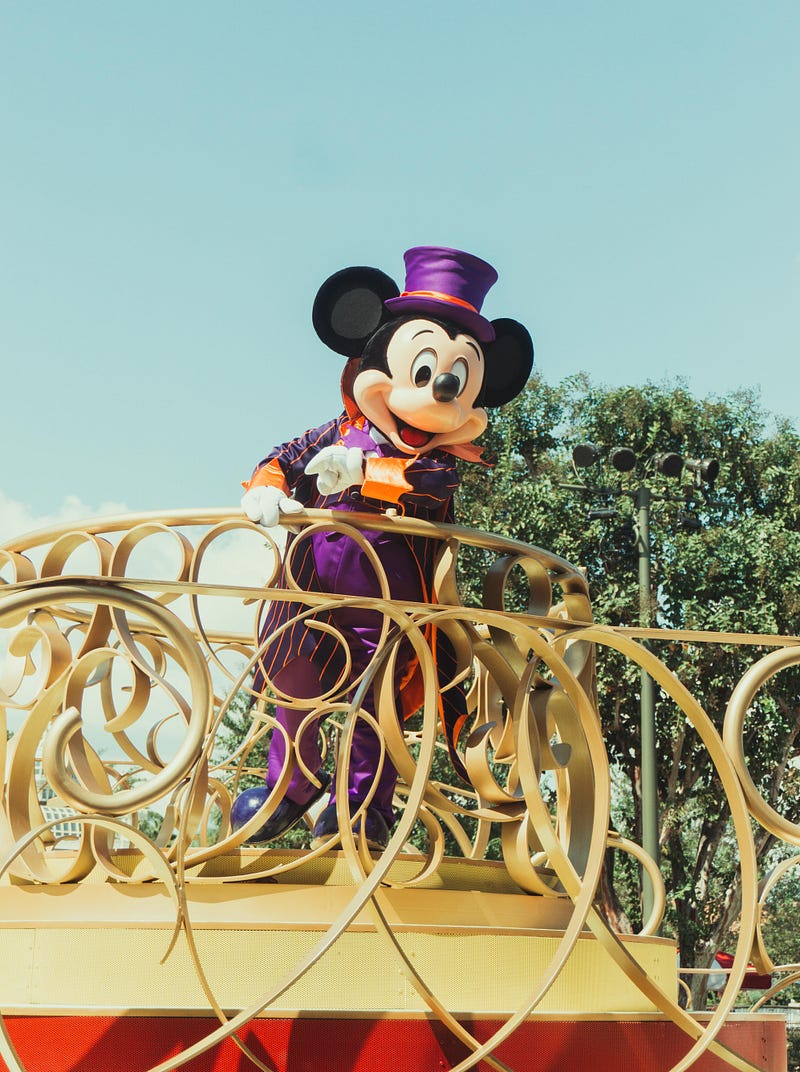
The reason this new executive position should be getting people’s attention is because it comes at a crucial juncture of the Walt Disney Company’s legacy: the Disney100 campaign.
This campaign celebrates the company’s 100th year anniversary as an entertainment and media giant around the globe, for which Asad Ayaz will be responsible for overseeing its success. His success has already been mentioned in numerous ways, just look at the 2023 Super Bowl commercial celebrating Disney’s 100 years.
At the end of the commercial it says: “you helped made this dream come true”. And that couldn’t be overstated in regards to what Asad has achieved for the company in the role as President of Marketing.
Don’t just take my word for it. The Hollywood Reporter deemed him to be “Hollywood’s Top 25 Marketing Masterminds of 2019” for the marketing campaigns of Frozen 2, which dismantled pre-sale records. But also the remakes of the famous Disney animation classics turned into live-action films like Jungle Book, Beauty and the Beast, etc.
What’s more, Fast Company called Asad a “jedi-level marketer” while giving him the title of “Most Creative People in Business 2022” for the success of Disney’ original series and films that were mostly distributed through the new streaming platform, Disney+. According to their findings, thanks to the Disney+ platform and other marketing campaigns for Star Wars and the Marvel Universe, his efforts led to $2.2 billion in box office sales and 64 million new Disney+ subscribers.
There’s been some controversy over Bob Iger’s return to CEO of The Walt Disney Company in November 2022. He replaced Bob Chapek who had been leading the company as CEO since Feburary 2020. Nevertheless, Iger was eager to promote Asad in his new role and position as Chief Brand Officer and President of Marketing at The Walt Disney Company.
CNBC noted that the new responsibility “will require the Disney vet to create a singular vision of the company for marketing campaigns.” While Iger did not shy away from how important his leadership skills were during the company’s 100th anniversary. He told CNBC:
“His taking on this role is particularly noteworthy and consequential as we commemorate our historic 100th anniversary, and I am confident that his strategic, operational, and creative prowess, along with his profound passion for Disney, will make him an outstanding steward of our stories, characters, brands, and franchises.”
Before we take off into Disney’s 100th Anniversary and what this means for Iger’s and Asad’s executive leadership. Let’s take a look back at what Chapek was doing during his time as CEO. One word: Metaverse.
On 15 Feburary 2022 Chapek officially appointed an executive at Disney to lead the company’s metaverse strategy, Mike White. Chapek specifically said that White would be in charge of the “next generation of storytelling.” As a new concept, for the entertainment industry the metaverse is known or virtual reality (VR) devices mixing with e-commerce and online businesses. In an interview with CNBC, Chapek elaborated on his ideals for the company’s metaverse strategy by telling reporters: “We’re in this for the long-term, this is a long-term game, not really a quater-to-quarter type of proposition. And I think the long-term health of Disney content really drives the day.”
He wasn’t the only one working toward a metaverse strategy for the company. Bob Iger had already been working on a strategy as one of the boardmembers of a metaverse startup called Genies.
According to Voicebot.ai, Genies is a startup producing non-fungible tokens (NFTs) that illuminate characters from popular celebrities and people, of which Iger’s “involvement is likely tied to Genies’ success in scoring deals with major entertainment firms to create celebrity avatars.”
However, Chapek was the one to appoint a metaverse head of the company, which is likely to not have been influenced by Iger at the time. Chapek even took this moment to illustrate how profound the metaverse would become for Disney’s 100th anniversary:
“For nearly 100 years, our company has defined and re-defined entertainment by leveraging technology to bring stories to life in deeper, more impactful ways. Today, we have an opportunity to connect those universes and create an entirely new paradigm for how audiences experience and engage with our stories. This is the so-called metaverse, which I believe is the next great storytelling frontier and the perfect place to pursue our strategic pillars of Storytelling Excellence, Innovation, and Audience Focus.”
From the quote above, one can draw some conclusions about how important the metaverse strategy was becoming to Disney’s growth in the entertainment and media business under the leadership of Bob Chapek. While Iger was the one sitting on the board watching the results from other startups and leaders in the metaverse space.
That’s why I believe that Iger’s appointing of Ayaz Asad to Chief Branding Officer was also meant to overshadow, or downplay, the role of the company’s metaverse strategy under Bob Chapek.
Whether we are going to talk about Disney’s future marketing campagins or metaverse strategy, one thing is clear about the storytelling entertainment of the future — the integration of Artificial Intelligence (AI) and AI applications for understanding consumer behaviors with data and analytics.
For instance, Harvard students of the Technology and Operations Management department wrote about “A Whole New World” of Machine Learning at Disney. Their research claims that Disney has been adopting AI applications since at least 2017 to analyze audience behavior and consumer preferences. Take machine learning (ML) as an example. The report states that, in order for Disney to remain as one the top entertainment companies around the globe, the adoption of ML techniques is not just beneficial; it is essential. Especially for Disney’s animation films, as this space starts to heat up with competitors producing their own popular animation films.
The Harvard students’ team points out that Disney created the StudioLAB, by partnering with HP Enterprises, Cisco and Accenture Interactive, to understand more about the technological features in storytelling. In this case, the critical applications of using AI for future storytelling ventures could be a game-changer for the entire entertainment industry. To know more about what Disney is going with AI, read Artificial Intelligence at Disney by Emerj.
That brings us to the inevitable discussion of ChatGPT and its place in the world of storytelling and entertainment. There’s no need to debate about this one, Seinfeld already proved its value in the utmost controversial way.
In an article prepared for digital marketers, ANA wrote about ChatGPT’s Effects on Search and Usefulness for Marketers. They said that with ChatGPT technology a marketing comapany gather data, research, use the dialogue to plan campaigns and meetings, headlines, key words, copy, and images, among other useful features from the AI application.
The above explains why Iger’s appointing a new Chief Branding Officer is a pivotal point in the company’s marketing campaign during the 100th anniverary of The Walt Disney Company. Clearly, ChatGPT has taken over; the Metaverse will have to wait for its time to shine again. This doesen’t mean that a metaverse strategy would not complement the company’s uses of generative AI, such as ChatGPT, to produce more content for a wider audience of viewers in the future. Paul G. Oliver wrote about how AI and metaverse will both shape society and entertainment for decades to come.
Taking a mutual inspiration from a Medium story and March Madness 2023, I decided to write an AI risk assessment by applying an analogy from a basketball game scenario. This basketball game scenario serves as an analogy to explain AI risk assessments. It also serves as an explanation to how much impact AI is having on society’s standards for entertainment and time. Time becomes irrelevant, as all motion of the games comes to a hard stop during the play review. What will this mean for competition in the race for AI in the future? Read more about AI with Future Concepts: Artificial Intelligence (AI).

Please follow the publication Areas & Producers to read more content about the future of core areas and critical producers of the global economy.
To know more about the purpose of the publication, read ESG Stories & Global Mining Projects explaining the shifts/scenarios for geopolitical trends and future industrial policies.
Or take a look at The Weekend Brief (TWB) newsletter series.