avatarVibrant Jellyfilsh

Free AI web copilot to create summaries, insights and extended knowledge, download it at here

4552

Abstract

<p id="5176">Clearly, critical thinking skills are essential for success in the workplace. In today’s rapidly changing job market, employers are looking for workers who can adapt to new technologies and solve complex problems. By promoting critical thinking skills, education can help prepare individuals for the demands of the modern workplace.</p><p id="84b1">In “WALL-E,” we see the consequences of a lack of critical thinking skills. The humans are completely dependent on technology, and they have lost touch with their own emotions and the natural world around them.</p><p id="e778">“WALL-E” is a powerful reminder of the importance of critical thinking skills in a world that is increasingly dependent on technology. By promoting education that emphasizes critical thinking, we can develop the skills we need to navigate a complex and rapidly changing world, and avoid the pitfalls of intellectual and emotional stunting.</p><figure id="88b5"><img src="https://cdn-images-1.readmedium.com/v2/resize:fit:800/1*xndzKAT0cJ8A3ok_UJS4Vw.jpeg"><figcaption>Photo by Erik Mclean: <a href="https://www.pexels.com/photo/a-robot-on-wet-concrete-floor-5895399/">https://www.pexels.com/photo/a-robot-on-wet-concrete-floor-5895399/</a></figcaption></figure><h1 id="ea1c">The impact of technology on social relationships</h1><p id="1945">“WALL-E” is a poignant reflection on the potential consequences of our increasing reliance on technology, particularly in regards to social relationships.</p><p id="24dc">In the film, humans have replaced meaningful human relationships with interactions through screens and technology. They have lost the ability to connect with others on a personal level, leading to emotional isolation. This theme is particularly relevant in today’s world, where social media and digital communication have become ubiquitous.</p><p id="cfc1">Numerous studies have shown the impact of technology on social relationships in the real world. A study in 2017 found that the more time young adults spent on social media the more socially isolated they felt [4]. Although while the link was clear the researchers stated that they were not sure if social media led to isolation or isolation led to social media and more research was needed.</p><p id="e309">In “WALL-E,” the humans have become so dependent on technology that they have lost touch with the natural world and with each other. The film serves as a reminder of the importance of human connections and the potential dangers of replacing those connections with technology.</p><p id="2b94">While technology can certainly enhance our lives in many ways, it’s important to maintain a balance and ensure that we continue to prioritize human relationships even if that sometimes requires technology to accomplish, keeping in mind that it’s the relationship happening and not the medium of that is useful.</p><p id="8640">In conclusion, “WALL-E” offers a compelling commentary on the potential dangers of our growing reliance on technology and the importance of maintaining a balance between our use of technology and our connections to the natural world and each other. The film highlights the need for education and critical thinking to help us navigate a world increasingly dominated by technology, and encourages us to consider the importance of human relationships in our lives. As we continue to move towards a future in which robots and technology play an ever-increasing role, the lessons of “WALL-E” remain as relevant as ever.</p><figure id="15d0"><img src="https://cdn-images-1.readmedium.com/v2/resize:fit:800/1*mvN1EqeMeX3NI8M1x66-KA.png"><figcaption></figcaption></figure><p id="9cc9">Sorces:</p><p id="55e0">[<a href="https://hms.harvard.edu/news/screen-time-brain">1] https://hms.harvard.edu/news/screen-time-brain</a></p><p id="d1ae">[2] <a href="https://www.ncbi.nlm.nih.gov/pmc/articles/PMC8465704/#:~:text=Increased%20technological%20usage%20during%20the,sleep%20irritability%2C%20and%20cognitive%20impairment.">Psychological and Emotional Effects of Digital Technology on Children in COVID-19 Pandemic</a></p><p id="1f34">[3] <a href="https://www.sciencedirect.com/science/article/abs/pii/S1871187116300384">Predicting real-world outcomes: Critical thinking ability is a better predictor of life decisions than intelligence</a></p><p id="b478">[4] <a href="https://www.sciencedirect.com/science/article/abs/pii/S0749379717300168">Social Media Use and Perceived Social Isolation Among Young Adults in the U.S.</a></p><p id="4899"><a href="https://chat.openai.com/">This

Options

Article was a Human AI Collaboration</a></p><figure id="da92"><img src="https://cdn-images-1.readmedium.com/v2/resize:fit:800/0*WrSvF7XGMj0bTFKy.png"><figcaption></figcaption></figure><p id="7bc5">If you enjoyed this article and would like to support me while becoming a medium member and being able to read unlimited medium, Please consider becoming a member via my affiliated link:</p><div id="4417" class="link-block"> <a href="https://medium.com/@valuable_mindaro_jellyfish_659/membership"> <div> <div> <h2>Join Medium with my referral link - Vibrant Jellyfilsh</h2> <div><h3>Read every story from Vibrant Jellyfilsh (and thousands of other writers on Medium). Your membership fee directly…</h3></div> <div><p>medium.com</p></div> </div> <div> <div style="background-image: url(https://miro.readmedium.com/v2/resize:fit:320/0*uFqGngQtTJeyP-uD)"></div> </div> </div> </a> </div><figure id="0e08"><img src="https://cdn-images-1.readmedium.com/v2/resize:fit:800/1*mvN1EqeMeX3NI8M1x66-KA.png"><figcaption></figcaption></figure><div id="8e9f" class="link-block"> <a href="https://readmedium.com/the-making-of-our-minds-through-fiction-433b101de7c9"> <div> <div> <h2>The Making Of Our Minds Through Fiction</h2> <div><h3>When we read fiction we can see inside the mind of another in a way that we can not in the real world. This helps us…</h3></div> <div><p>medium.com</p></div> </div> <div> <div style="background-image: url(https://miro.readmedium.com/v2/resize:fit:320/1*ZguvtkpnKVFxqcky4kZp-g.jpeg)"></div> </div> </div> </a> </div><div id="62f3" class="link-block"> <a href="https://readmedium.com/the-pros-of-self-deprecating-humor-ed2a2e563e12"> <div> <div> <h2>The Pro’s Of Self-Deprecating Humor</h2> <div><h3>Self-deprecating humor is a type of humor where an individual makes fun of themselves or their own shortcomings. It can…</h3></div> <div><p>medium.com</p></div> </div> <div> <div style="background-image: url(https://miro.readmedium.com/v2/resize:fit:320/1*CEa_RWXJHP1mEpmDjb0DTA.jpeg)"></div> </div> </div> </a> </div><div id="2d3f" class="link-block"> <a href="https://readmedium.com/why-do-i-care-more-about-fictional-characters-than-real-life-people-35a9e9065b70"> <div> <div> <h2>Why Do I Care More About Fictional Characters Than Real Life People?</h2> <div><h3>Humans have a natural tendency to connect with others, even if those others are fictional characters in books, movies…</h3></div> <div><p>medium.com</p></div> </div> <div> <div style="background-image: url(https://miro.readmedium.com/v2/resize:fit:320/1*f4_Vnb8t_3reu4RDzZTkAA.jpeg)"></div> </div> </div> </a> </div><div id="3228" class="link-block"> <a href="https://readmedium.com/how-to-love-yourself-68a99b76c590"> <div> <div> <h2>How To Love Yourself</h2> <div><h3>Love yourself and you’ll always be loved!</h3></div> <div><p>medium.com</p></div> </div> <div> <div style="background-image: url(https://miro.readmedium.com/v2/resize:fit:320/1*VbtLcq96gTHAznsGtmHL7g.jpeg)"></div> </div> </div> </a> </div><div id="d682" class="link-block"> <a href="https://readmedium.com/imaginative-play-and-role-play-is-helps-develop-empathy-5249ee7aac68"> <div> <div> <h2>Imaginative Play and Role Play Helps Develop Empathy</h2> <div><h3>We must not deny our preschoolers the gift of play, else we risk seriously damaging society</h3></div> <div><p>medium.com</p></div> </div> <div> <div style="background-image: url(https://miro.readmedium.com/v2/resize:fit:320/1*TuCT_VimEDDBhvV6__CPFA.jpeg)"></div> </div> </div> </a> </div></article></body>

Wall-E and the Future of Human Interaction In A Robot World

Examining the role of technology in society and how it can influence human behavior.
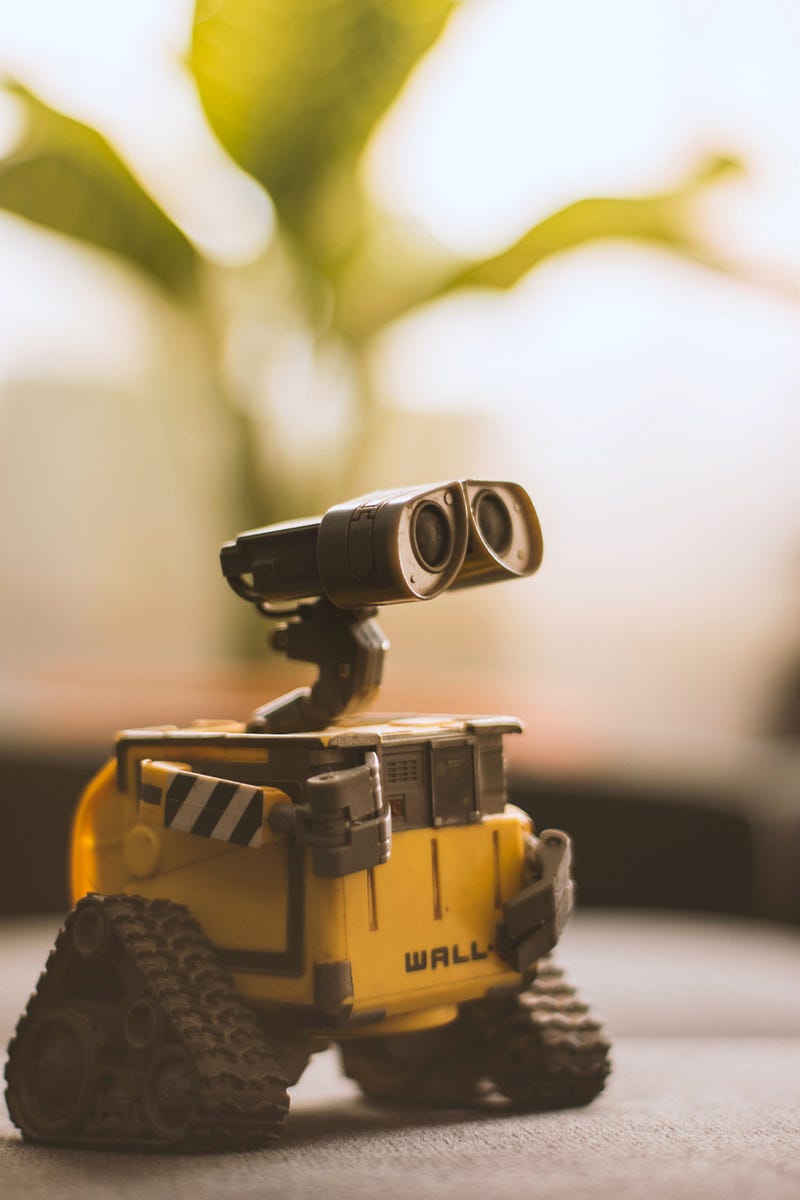
Photo by Lenin Estrada: https://www.pexels.com/photo/wall-e-toy-on-beige-pad-2103864/

The 2008 animated film “WALL-E” tells a thought-provoking story about the potential consequences of humanity’s increasing dependence on technology. Through the film’s portrayal of a future in which humans have lost touch with their emotions, physical health, and ability to form meaningful relationships, it raises important questions about the role of technology in our lives and the impact it can have on our well-being. In particular, the film offers valuable insights into the future of human interaction in a world increasingly dominated by robots and technology.

The impact of technology on physical and emotional health

“WALL-E” is a great example of a movie that explores the impact of technology on physical and emotional health. In the film, we see a future where humans have become so reliant on technology that they are physically incapable of taking care of themselves, and they have also lost touch with their own emotions.

The humans in “WALL-E” are depicted as overweight and immobile, with everything they need being brought to them by robots. They don’t have to walk, cook their own food, or even interact with other people in person. As a result, they have lost the ability to take care of themselves.

This theme is particularly relevant in today’s world, where technology has become increasingly integrated into our lives. We rely on our smartphones, laptops, and other devices to communicate, work, and entertain ourselves. While technology can be incredibly useful, it can also have negative effects on our health.

For example, studies have shown that spending too much time on screens can lead to a range of physical health problems, such as eye strain, neck pain, and poor sleep [1] . Additionally, technology use has been linked to mental health issues such as depression and anxiety [2]

Of course, it’s important to remember that technology itself is not inherently bad. It’s how we use it that determines its impact on our health and well-being In fact that last study found positive impacts of technology too.

The key is to find a balance between our use of technology and our physical and emotional needs and to use technology to our advantage rather than disadvantage. For example by using it to stay connected with friends and relatives, while limiting doom scrolling and always being ‘on call’ for work.

Overall, “WALL-E” is a powerful reminder of the importance of taking care of ourselves, even in a world that’s increasingly dominated by technology. By being aware of the potential negative effects of technology on our health, we can take steps to use it in a way that enhances our lives rather than detracting from them.

The role of education in promoting critical thinking

“WALL-E” is a thought-provoking film that highlights the importance of critical thinking in a world that is increasingly reliant on technology. The humans in the film are portrayed as being intellectually and emotionally stunted, in part because they have never had to think critically or question the world around them.

This theme is particularly relevant in today’s world, where information is easily accessible and technology is integrated into almost every aspect of our lives. It’s important for us to develop the skills we need to navigate this complex and rapidly changing world.

Education can play a key role in promoting critical thinking skills. By teaching us how to analyze information, evaluate sources, and think independently, education can help us make informed decisions and navigate a world that is often confusing and overwhelming.

There is scientific evidence to support the importance of critical thinking skills. Research has shown that individuals who possess strong critical thinking skills are more likely to have better real world life outcomes than people with high intelligence.[3]

Clearly, critical thinking skills are essential for success in the workplace. In today’s rapidly changing job market, employers are looking for workers who can adapt to new technologies and solve complex problems. By promoting critical thinking skills, education can help prepare individuals for the demands of the modern workplace.

In “WALL-E,” we see the consequences of a lack of critical thinking skills. The humans are completely dependent on technology, and they have lost touch with their own emotions and the natural world around them.

“WALL-E” is a powerful reminder of the importance of critical thinking skills in a world that is increasingly dependent on technology. By promoting education that emphasizes critical thinking, we can develop the skills we need to navigate a complex and rapidly changing world, and avoid the pitfalls of intellectual and emotional stunting.
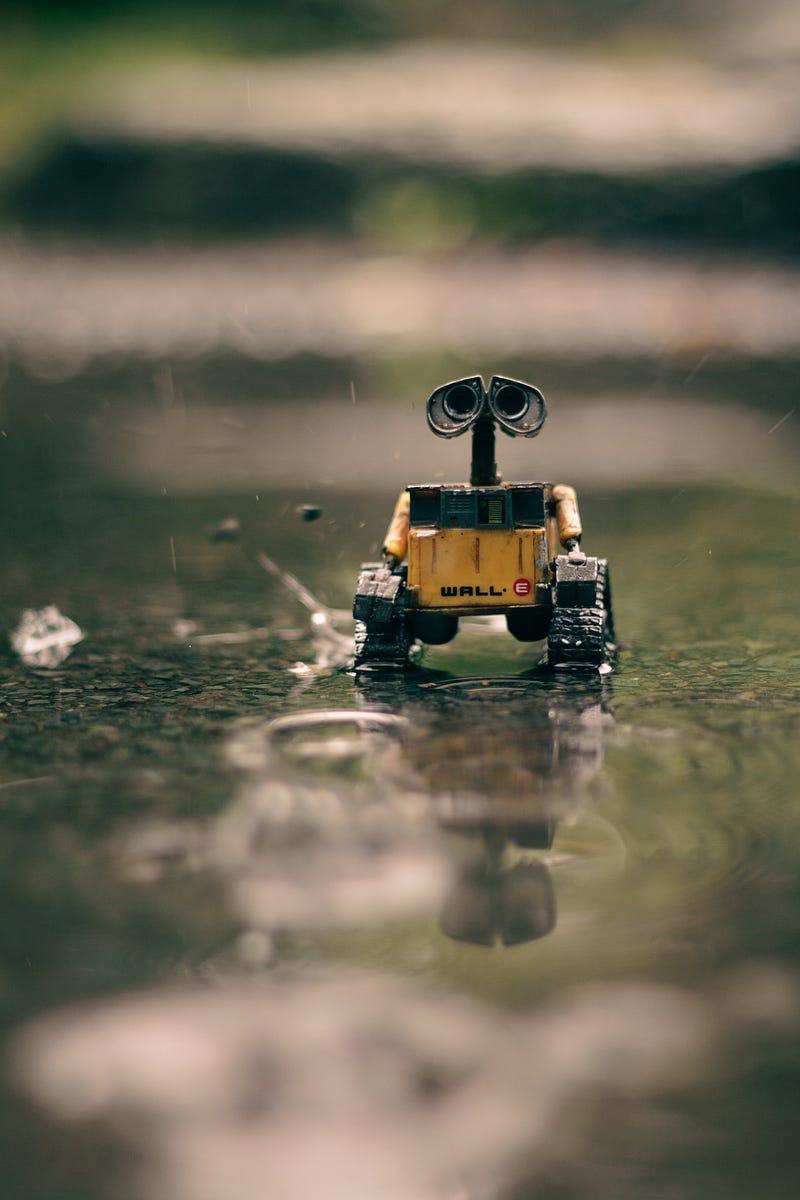
Photo by Erik Mclean: https://www.pexels.com/photo/a-robot-on-wet-concrete-floor-5895399/

The impact of technology on social relationships

“WALL-E” is a poignant reflection on the potential consequences of our increasing reliance on technology, particularly in regards to social relationships.

In the film, humans have replaced meaningful human relationships with interactions through screens and technology. They have lost the ability to connect with others on a personal level, leading to emotional isolation. This theme is particularly relevant in today’s world, where social media and digital communication have become ubiquitous.

Numerous studies have shown the impact of technology on social relationships in the real world. A study in 2017 found that the more time young adults spent on social media the more socially isolated they felt [4]. Although while the link was clear the researchers stated that they were not sure if social media led to isolation or isolation led to social media and more research was needed.

In “WALL-E,” the humans have become so dependent on technology that they have lost touch with the natural world and with each other. The film serves as a reminder of the importance of human connections and the potential dangers of replacing those connections with technology.

While technology can certainly enhance our lives in many ways, it’s important to maintain a balance and ensure that we continue to prioritize human relationships even if that sometimes requires technology to accomplish, keeping in mind that it’s the relationship happening and not the medium of that is useful.

In conclusion, “WALL-E” offers a compelling commentary on the potential dangers of our growing reliance on technology and the importance of maintaining a balance between our use of technology and our connections to the natural world and each other. The film highlights the need for education and critical thinking to help us navigate a world increasingly dominated by technology, and encourages us to consider the importance of human relationships in our lives. As we continue to move towards a future in which robots and technology play an ever-increasing role, the lessons of “WALL-E” remain as relevant as ever.

Sorces:

[1] https://hms.harvard.edu/news/screen-time-brain

[2] Psychological and Emotional Effects of Digital Technology on Children in COVID-19 Pandemic

[3] Predicting real-world outcomes: Critical thinking ability is a better predictor of life decisions than intelligence

[4] Social Media Use and Perceived Social Isolation Among Young Adults in the U.S.

This Article was a Human AI Collaboration

If you enjoyed this article and would like to support me while becoming a medium member and being able to read unlimited medium, Please consider becoming a member via my affiliated link:

Movies
AI
Technology
Social
Human Behavior
Recommended from ReadMedium