avatarSarah Marie

Free AI web copilot to create summaries, insights and extended knowledge, download it at here

2651

Abstract

a talk with your boss or your partner/ friend.</p><p id="56c7">I was reminded of this fact recently while working on a paint-by-number. Even the manufacturer will often advise not to try wiping away an errant swipe of a brush with a cloth, paper towel, etc. as it will not erase the paint and sometimes even cause more issues such as smearing.</p><p id="720c">Instead, the best option is to paint over it.</p><p id="b8ac">And in line with embracing your art, consider transforming that errant brushstroke into something else if possible. As Bob Ross says, there are no mistakes, just happy little accidents. You simply go with it, painting over it if necessary, and incorporate it into your painting as expressed in the brilliant Bob Ross video below, a whole episode devoted to those happy little accidents!</p> <figure id="fe65"> <div> <div> <img class="ratio" src="http://placehold.it/16x9"> <iframe class="" src="https://cdn.embedly.com/widgets/media.html?src=https%3A%2F%2Fwww.youtube.com%2Fembed%2FFw6odlNp7_8%3Fstart%3D710%26feature%3Doembed%26start%3D710&amp;display_name=YouTube&amp;url=https%3A%2F%2Fwww.youtube.com%2Fwatch%3Fv%3DFw6odlNp7_8&amp;image=https%3A%2F%2Fi.ytimg.com%2Fvi%2FFw6odlNp7_8%2Fhqdefault.jpg&amp;key=a19fcc184b9711e1b4764040d3dc5c07&amp;type=text%2Fhtml&amp;schema=youtube" allowfullscreen="" frameborder="0" height="480" width="640"> </div> </div> </figure></iframe></div></div></figure><p id="09b1">Even when he scrapes off the paint a bit, it doesn’t erase the paint. It just muddles everything so that he can readjust everything. He’s not doing it to erase anything. It simply makes it easier to adapt and pivot a bit.</p><blockquote id="d621"><p>“I’m not kidding when I tell you we don’t make mistakes. We just have happy accidents. Anything that you do, you can learn to use, and that’s when you truly, truly experience the joy of painting.” -Bob Ross at about 2:08 in the video above</p></blockquote><p id="eb18">Instead of getting hung up on the brush not doing exactly what you were hoping, your hand shaking, or whatever, focus on moving on with the painting and making it work. For instance, in my mistake from the feature image, I could just make it another branch of the tree as I did below.</p><figure id="7ffd"><img src="https://cdn-images-1.readmedium.com/v2/resize:fit:800/1*01cMDvnzx7X60tvdvdO9OQ.jpeg"><figcaption>Photo by the author of the tree branch she painted over her errant brush stroke in the bottom center of the paint-by-number. It’s not perfect yet and she will continue tweaking it as she

Options

continues with her painting. Practicing this skill of adapting mistakes as they happen will help her as she continues her art journey.</figcaption></figure><p id="f327">It’s not perfect and I will keep working on it as I continue the painting, but that is my “happy little accident” and my branch. My attempts at adapting my mistakes will get better over time and this will be crucial as I start doing more of my own original artwork.</p><p id="74a8">Skills can’t grow if we immediately chuck every project in the trash at every imperfection. We’ll just get more and more depressed with our progress.</p><p id="1cce">Embracing the happy little accidents and pivoting will help us to continue to grow in the skill in a positive relationship over time.</p><p id="46da">This also works as a metaphor for managing a mistake in real life. As stated earlier, it’s often impossible to truly erase a mistake. So, instead of stressing about doing the impossible, focus on how to acknowledge it and make it work if possible. You may not be able to completely change a mistake into “the perfect solution”, but work on approaching the mistake from a different angle to solve it as opposed to simply trying to backtrack and erase it, which is impossible.</p><p id="37d7">I’ve written before about <a href="https://readmedium.com/the-ideal-crisis-management-guide-addf8dfe29f6">crisis management</a> for businesses and how to recover from a mistake. Even with the big ones, it’s important to stay out in front and use it as an opportunity to grow and show that growth to your audience, customers, boss, etc.</p><p id="6ae4">Erasing a mistake completely isn’t achievable. Focus on adapting, pivoting, and coming up with unique solutions to overcome the mistake. In your art, your new skill, your work, your life.</p><p id="bbce">So next time you make a “mistake” in your art, take a moment to breathe and look at how to work with it instead of just erasing it. It may be as simple as painting over it. It may become a new feature in your work. And use this new skill to transfer over to other “mistakes” in your life as well.</p><p id="33e0">Follow me to keep up with this series and my other pieces. If you are not already a Medium member and enjoyed this, consider using my affiliate links to <a href="https://sarah-marie.medium.com/membership">join as a member</a> or <a href="https://sarah-marie.medium.com/subscribe">subscribe for email</a> updates when I publish. Using these links support my work by having a portion of your fee go directly to me while also providing access to and supporting thousands of other writers on this platform.</p></article></body>

What I Wish I Had Learned About Art Series

Wait! Hold Off on the Eraser!

Sometimes erasing a “mistake” isn’t the best answer
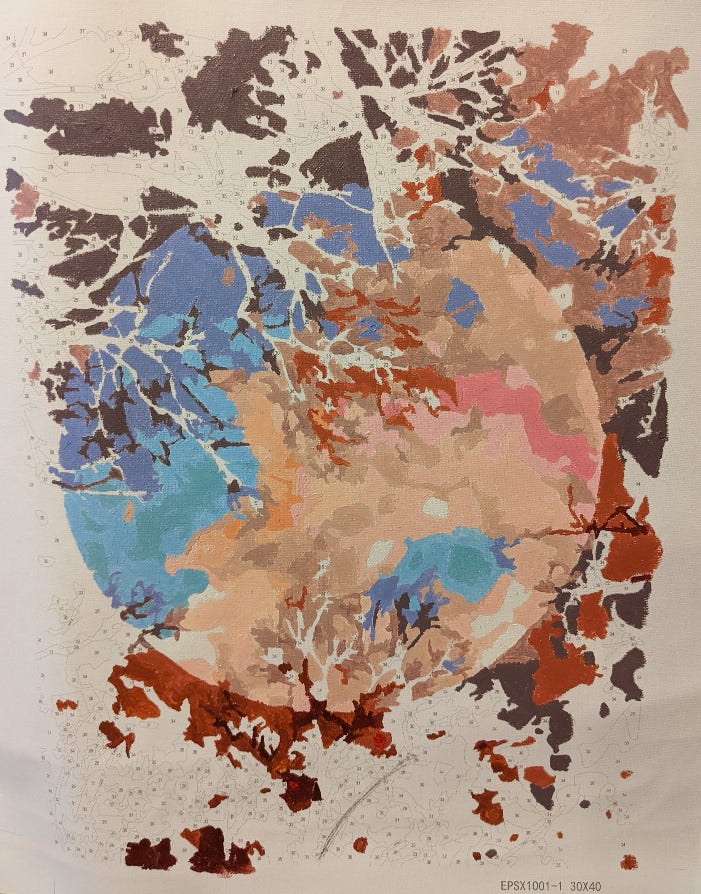
Photo by the author of an errant brush stroke in the bottom center of her paint-by-number. Mistakes will happen, but growth in a new skill is all about how we manage them and cultivate a more positive relationship with them.

Welcome back to my fifth installment in the What I Wish I Had Learned About Art series. So far, we’ve discussed giving your art time to grow, accepting and embracing your art where it is to sustain growth, the fact that it truly is okay to color outside the lines, and the importance of the story behind the art.

We’ve talked a lot about “mistakes” so far. It’s often our biggest fear when learning a new skill and they can send us down a spiral of negative self-talk if we let them, possibly leading us to drop the new skill. So much about growing your art (or any skill) is having a more positive relationship with “mistakes.”

So, when those inevitable “mistakes” happen, how do we deal with them?

What do we do when something doesn’t go as planned?

Whether it’s art or in another area of life, we often reach for an “eraser” of some sort. We want to erase all traces of the mistake so that we can move on and not admit our failure (no matter the size) to others.

But here’s the thing. It’s often impossible to truly completely erase a mistake.

In art, even a good eraser may not completely take away our pencil drawing or it may visibly mar the paper/ canvas it was on in some way such as a smudge, a degradation, or even a tear if we’re not careful.

In real life, a mistake at work or other areas of our life often can’t be completely erased in a metaphorical sense either. Some remnant of it remains whether it’s people seeing a less than ideal social media post, a typo in an email, forgetting to do something for someone, or much larger errors of judgment. It will stick around in some way even if it’s just having a talk with your boss or your partner/ friend.

I was reminded of this fact recently while working on a paint-by-number. Even the manufacturer will often advise not to try wiping away an errant swipe of a brush with a cloth, paper towel, etc. as it will not erase the paint and sometimes even cause more issues such as smearing.

Instead, the best option is to paint over it.

And in line with embracing your art, consider transforming that errant brushstroke into something else if possible. As Bob Ross says, there are no mistakes, just happy little accidents. You simply go with it, painting over it if necessary, and incorporate it into your painting as expressed in the brilliant Bob Ross video below, a whole episode devoted to those happy little accidents!

Even when he scrapes off the paint a bit, it doesn’t erase the paint. It just muddles everything so that he can readjust everything. He’s not doing it to erase anything. It simply makes it easier to adapt and pivot a bit.

“I’m not kidding when I tell you we don’t make mistakes. We just have happy accidents. Anything that you do, you can learn to use, and that’s when you truly, truly experience the joy of painting.” -Bob Ross at about 2:08 in the video above

Instead of getting hung up on the brush not doing exactly what you were hoping, your hand shaking, or whatever, focus on moving on with the painting and making it work. For instance, in my mistake from the feature image, I could just make it another branch of the tree as I did below.
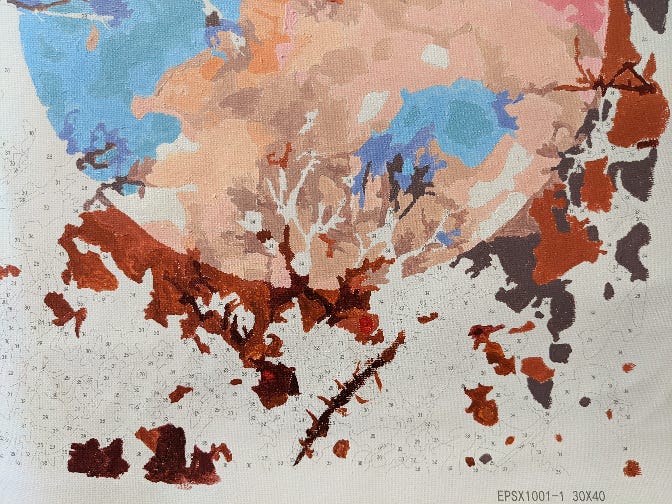
Photo by the author of the tree branch she painted over her errant brush stroke in the bottom center of the paint-by-number. It’s not perfect yet and she will continue tweaking it as she continues with her painting. Practicing this skill of adapting mistakes as they happen will help her as she continues her art journey.

It’s not perfect and I will keep working on it as I continue the painting, but that is my “happy little accident” and my branch. My attempts at adapting my mistakes will get better over time and this will be crucial as I start doing more of my own original artwork.

Skills can’t grow if we immediately chuck every project in the trash at every imperfection. We’ll just get more and more depressed with our progress.

Embracing the happy little accidents and pivoting will help us to continue to grow in the skill in a positive relationship over time.

This also works as a metaphor for managing a mistake in real life. As stated earlier, it’s often impossible to truly erase a mistake. So, instead of stressing about doing the impossible, focus on how to acknowledge it and make it work if possible. You may not be able to completely change a mistake into “the perfect solution”, but work on approaching the mistake from a different angle to solve it as opposed to simply trying to backtrack and erase it, which is impossible.

I’ve written before about crisis management for businesses and how to recover from a mistake. Even with the big ones, it’s important to stay out in front and use it as an opportunity to grow and show that growth to your audience, customers, boss, etc.

Erasing a mistake completely isn’t achievable. Focus on adapting, pivoting, and coming up with unique solutions to overcome the mistake. In your art, your new skill, your work, your life.

So next time you make a “mistake” in your art, take a moment to breathe and look at how to work with it instead of just erasing it. It may be as simple as painting over it. It may become a new feature in your work. And use this new skill to transfer over to other “mistakes” in your life as well.

Follow me to keep up with this series and my other pieces. If you are not already a Medium member and enjoyed this, consider using my affiliate links to join as a member or subscribe for email updates when I publish. Using these links support my work by having a portion of your fee go directly to me while also providing access to and supporting thousands of other writers on this platform.

Art
Art Education
Mistakes
Problem Solving
Pivoting
Recommended from ReadMedium