
What I Wish I Had Learned About Art Series
It Is Okay To Color Outside the Lines
Cliche, but often not truly taught or internalized
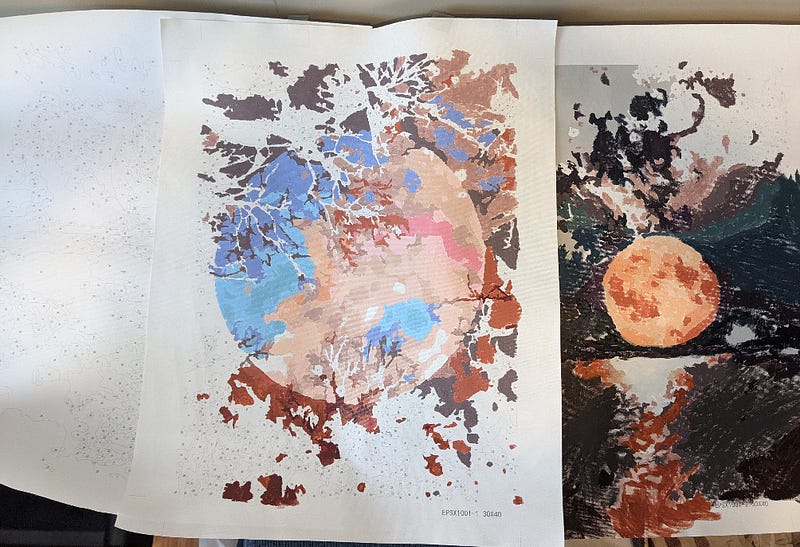
Welcome back to our third installment of the What I Wish I Had Learned About Art Series. We’ve discussed giving your art time to grow as well as accepting and embracing where your art is now to help you sustain growth. Today, we’ll be discussing a common cliche, that many of us, especially those of us deemed “unartistic”, haven’t actually internalized.
We’ve all heard the phrase that it’s okay to color outside the lines, think outside the box, etc. and yet many of us still struggle with this basic concept. Again, as we’ve talked about before, this was a learned trait, not intrinsic.
When we were young, we just scribbled what we wanted, seeing exactly what we wanted in those scribbles that all the adults smiled and nodded at even though they couldn’t see it. If you did get a coloring sheet versus just a blank sheet of paper, you were again allowed to simply color as you wished without any upset adults, at least for a time.
But, at a certain age, we start getting chided for coloring outside the lines.
“Oh honey, try to stay within the lines okay?”
“I can’t see the picture unless you stay within the lines.”
“Is that a dog? I can’t tell because you didn’t stay in the lines.”
At this age, they are also trying to teach us fine motor control and hand-eye coordination. I understand that.
However, there are other activities that they can use to teach us these skills.
Teaching us to color within the lines teaches us to accept limits. To accept what someone else has decided a dog, cat, scene looks like as opposed to letting us decide.
It teaches us that we will get in trouble if we don’t follow the laid-out picture perfectly.
And this is only reinforced in the kids that are determined to be “unartistic”. A child that shows promise in art is encouraged to leave the coloring sheets behind and free-draw because they can draw well enough.
The children who don’t fit into the school’s system of art education are quickly left behind, both in terms of exercises and eventually to getting any art education at all as they are encouraged to take other classes that will qualify for their art credit.
They are taught that they can’t keep up, they can’t create art, they aren’t artistic and therefore they shouldn’t even try. They don’t deserve the chance.
And so, even as adults, we are convinced that if we have a coloring book, paint-by-number, or other guided art practice, we HAVE to follow it exactly to have any hope of having an outside observer see what they are supposed to see.
We obsess over making sure that we color or paint exactly in those teeny tiny spaces with no overlap onto the next.
One mistake and no one will be able to know what I was trying to create. It doesn’t matter if I don’t particularly love this color here or if I think the cloud should be shaped a little differently. I’m not “artistic” and therefore I need to follow the instructions and guidelines that were set out for me to a T with no mistakes.
We take what is supposed to be a calming experience open to anyone and turn it into a stressful nightmare of hoping against hope that we can follow the instructions and have a decent picture at the end that anyone can look at and understand, even if literally no one will ever be looking at your coloring book, paint-by-number, etc.
But there are a couple of very important things to remember.
- Nature itself isn’t composed of perfectly straight lines and stark contrasts of one color to the next. Nature blends from one color into the next, into the next, and so on. Each flower is slightly different and changes throughout its lifetime. Even if you are using a bird spotting guide, the bird you are looking at probably won’t look exactly like the picture in the book in every way. Because there are variations. It’s okay for your picture to not be “perfect” compared to the guide, to cross over a little.
- Especially the bigger you get, the more detail, shading, variation, etc. is needed to show the picture. You’re not just coloring that cat, dog, etc. perfectly black/ brown/ orange/ white, pushed all the way to the nub with no speck of the page left for every single little part of it. There will be shades, spots of other colors, fur sticking out in imperfect ways. The paint-by-numbers, coloring books, and other guided practices will have more spaces to allow for more of that variation and detail. But again, if you slightly bleed into the next, it’s fine, it’s even natural. Someone will still be able to tell what you were creating. Check out the zoomed-in photo below to get a sense of the detail that can be laid out in front of you.
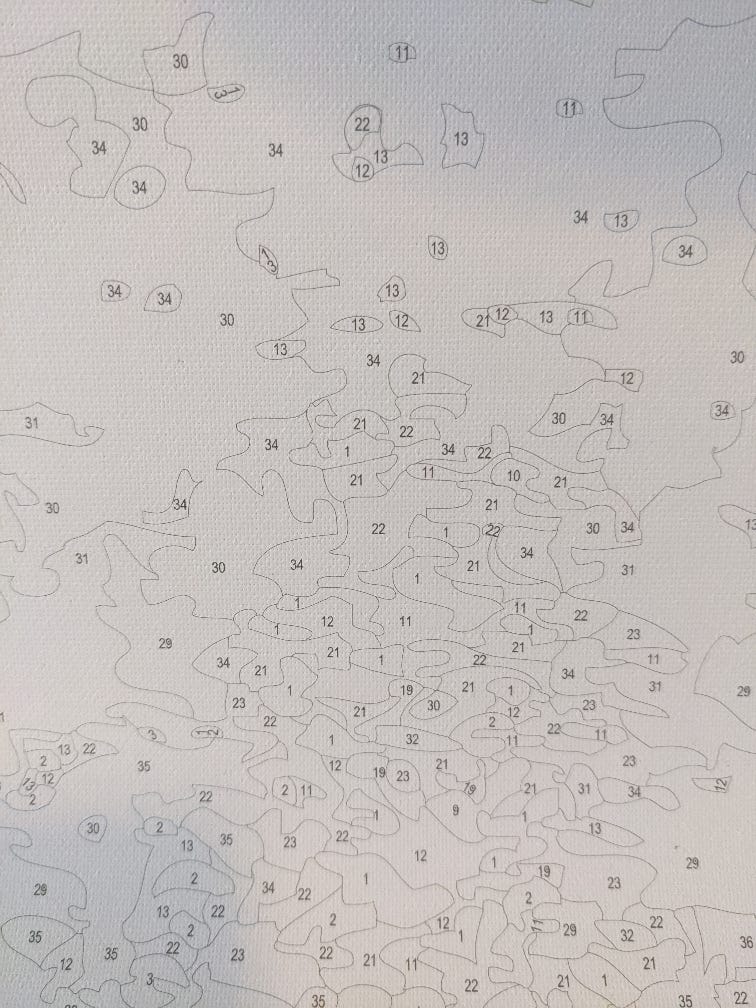
3. It’s probably not going to look exactly like the model anyways. Especially if you’re buying a paint-by-number or a similar guided art project that tells you what colors go where. The picture on the box, website, insert, etc. of the final product will probably look slightly different than yours even if you did it “perfectly.” Colors are weird. We all see colors differently and pictures process colors differently than our own eyes will. It’s why taking a picture of a beautiful vista probably won’t look exactly the same as what you saw with your eyes even with a great camera and editing. In addition, there are so many other factors. How many layers of paint did you use? Were the paints dry and did you need to add some water to the paint to moisten it but also dilute it slightly in the process? What is your lighting like? It’s not going to look exactly like the picture anyway so take some of that pressure off yourself.
4. Even if you are following a guided art practice, don’t you want it to be yours at the end of the day? Just because the person who created the coloring book, paint-by-number, or other guided art project wanted that exact shade of color in that exact spot, doesn’t mean you have to have it if you don’t want it. Instead of having the exact same art as literally anyone else who bought this project, you can make it your own in little and big ways, wherever you are comfortable and at any stage in the process. If you bleed over into the next spot, consider if you want to leave it as is, wait until later to “fix” it, or completely finish and then make final edits at the end. Artists choose how they want to show their subject to the world and they also figure out what their style is over time. There are infinite ways to convey an object, idea, scene, etc. because it depends on what you are trying to say (more on this in a later article).
All in all, at the end of the art session(s), it will come together to create your art. And it will all be okay. Below is a previous paint-by-number of the moon above a coastline during sunset, making many of the clouds and the water below orange and red. I certainly did not stay within lines on every single shape and it still works. You can still see the scene.
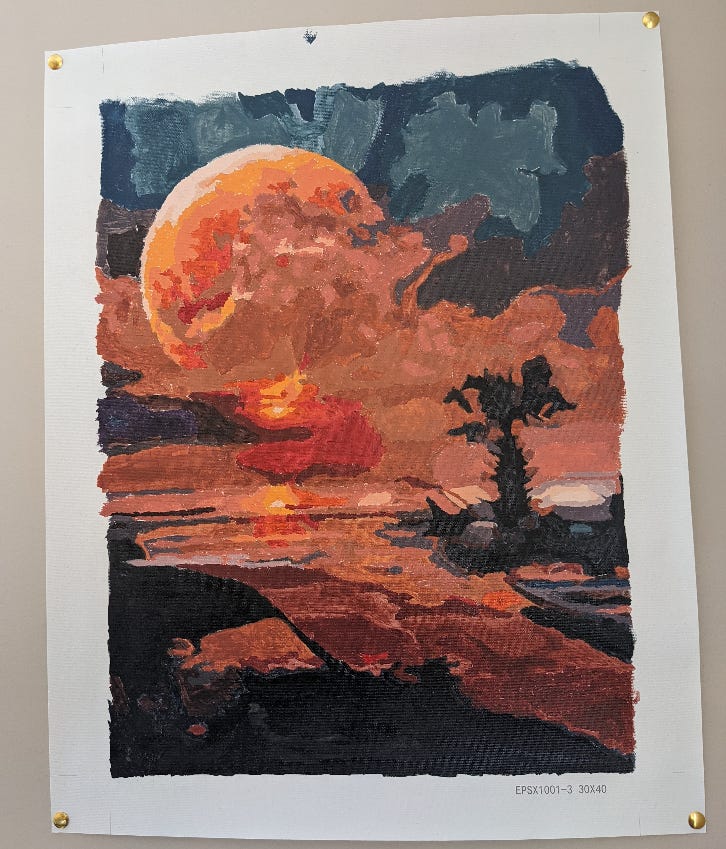
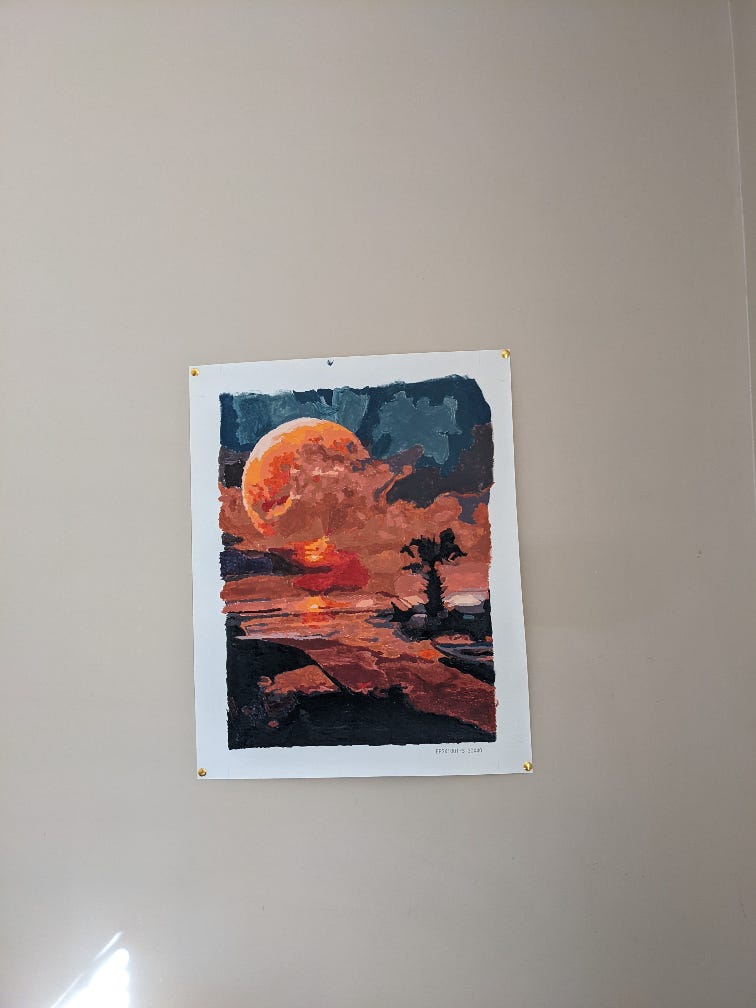
And it looks even better after taking a few steps back (another great tip when making art) as everything blends together a bit more.
So, please, please, as one previously anxious “unartistic” human being to another, just create that art piece instead of worrying about coloring inside the lines perfectly.
It may take some time to let go, but you will find more creative freedom and expression as well as more stress-reducing benefits from the practice. This lesson can also carry to other areas of life, helping you to “think outside the box”, to use another cliche, and find your solution to an issue, not just what others would do.
What do you think? Why have you been staying in the lines? Why have you struggled to stay within the lines? How have you broken free of it?
I hope this most recent installment in the What I Wish I Had Been Taught About Art series helps you break out that art set you’ve been wanting to try and truly let you create it as you wish, even if you are following the guidelines (for now).
Follow me to keep up with this series and my other pieces. If you are not already a Medium member and enjoyed this, consider using my affiliate links to join as a member or subscribe for email updates when I publish. Using these links support my work by having a portion of your fee go directly to me while also providing access to and supporting thousands of other writers on this platform.


