
Vitamin B12 Deficiency Rises, Concerning Me As It Was My Big Problem
Severe vitamin B12 (cobalamin) deficiency may cause anemia, depression, paranoia, delusions, memory loss, and neurodegenerative diseases, but it is preventable and reversible.
Vitamin B12 deficiency is seen as a silent epidemic.
This story covers the profound impact of inadequate B12 levels on physical and mental health, uncovering its prevalence among various demographics. I include nuanced symptoms, risk factors, preventative measures, and treatment methods. I invite you to navigate through the complexities of B12 deficiency, shedding light on the importance of awareness and proactive healthcare strategies. My goal is to elevate your understanding and empower you with vital knowledge to optimize your health outcomes. Non-members can read this story for free via my friend link.

Following the literature on vitamin B12 deficiency for a long time, I was stirred by its widespread prevalence and its profound implications. The consequences of severe deficiency extend far beyond mere fatigue. They encompass numerous ailments, including anemia, depression, paranoia, memory loss, neurodegenerative diseases, and more. Therefore, I decided to write this important story to raise awareness among my readers.
Vitamin B12 deficiency is seen as “a silent epidemic,” as explained in this article. Deficiency has become a widespread issue in some countries like India, mainly following a vegetarian diet and with an aging population.
Based on my experience and reviews, vitamin B12 deficiency is preventable and reversible before progressing to a neurological condition. It shouldn't be an epidemic if we can prevent and reverse it. With healthy lifestyle choices and professional support, we can effectively overcome it and prevent incurable diseases like ALS and dementia.
The widespread prevalence of Vitamin B12 deficiency became a significant concern for me, as it posed a considerable challenge in my earlier life. This vital nutrient holds a special place in my health journey as I grappled with its deficiency during my early forays into plant-based diets, experiencing firsthand the debilitating effects, particularly from anemia.
It wasn’t until a hematologist intervened and emphasized the importance of supplementation that I grasped the gravity of the situation and took action to reverse it before it escalated into a neurological condition like my late father experienced.
Witnessing close family members and friends battle the myriad manifestations of deficiency, from mental health struggles to severe neurological issues, stressed the urgency of raising awareness about this indispensable vitamin and its profound impact on our physical and mental well-being.
Like vitamin D and magnesium, vitamin B12 was another critical supplement in my health journey. However, I no longer need supplementation as my diet provides the optimal amount of vitamin B12 detected in my regular blood tests. Apart from diet, I also lowered my stress to improve my digestion and absorption of vitamins and minerals.
While my dietary adjustments have rendered supplementation unnecessary, I remain vigilant, drawing from years of research and personal experience to advocate for the critical role of vitamin B12 in maintaining optimal health for my readers.
Drawing from a wealth of scientific literature amassed over 40 years and compiled into a 500-page research manuscript, as much of which may not be accessible to the public, my goal is to distill practical insights and personal experiences in this piece. Through it, I aim to illuminate risk factors, common deficiency symptoms, prevention methods, and standard treatment protocols, making this critical information more accessible and understandable to all.
Why Vitamin B12 Deficiency Matters
This paper states, "Although cobalamin (vitamin B12) deficiency was described over a century ago, it is still difficult to establish the correct diagnosis and prescribe the proper treatment.”
The paper points out that symptoms related to vitamin B12 deficiency may be diverse and vary from neurological to psychiatric. In clinical practice, many cases of vitamin B12 deficiency are overlooked or sometimes even misdiagnosed.
This Harvard Medical School blog asserts that Vitamin B12 deficiency can be sneaky and harmful. The blog post quoting The New England Journal of Medicine points out that “a severe vitamin B12 deficiency can lead to deep depression, paranoia and delusions, memory loss, incontinence, loss of taste and smell, and more”.
Vitamin B12 is essential as our body cannot make it.
Therefore, we need to get it from food or supplements. This vitamin is critical for our nervous system, DNA, and red blood cells. Without vitamin B12, the body cannot create red blood cells, impairing oxygen delivery.
From my review of the medical literature, observations, and personal experience, the critical risk factor is not consuming food with vitamin B12.
This vitamin is mainly in animal products such as red meat, poultry, eggs, and dairy. Some plant sources, such as fortified grains, might have it in negligible amounts.
As this NIH book mentions, “Intrinsic factor is a glycoprotein produced by parietal cells in the stomach and necessary for the absorption of vitamin B12 in the terminal ileum. Once absorbed, vitamin B12 is used as a cofactor for enzymes involved in synthesizing deoxyribonucleic acid (DNA), fatty acids, and myelin.”
The book states, "Vitamin B12 deficiency can lead to hematologic and neurological symptoms. Vitamin B12 is stored in excess in the liver, decreasing the likelihood of deficiency. However, in cases where vitamin B12 cannot be absorbed, such as dietary insufficiency, malabsorption, or lack of intrinsic factor, hepatic stores are depleted, and deficiency ensues.”
This issue requires evaluating and managing vitamin B12 deficiency and highlights the role of the interprofessional team in improving care for affected patients. The NIH book documented that “Vitamin B12 deficiency can lead to hematologic and neurological symptoms.”
As documented in the literature, plants don’t need vitamin B12. Contrary to some beliefs and misperceptions, fungi cannot create this vitamin. Only bacteria and microbes can.
Therefore, when I was not consuming animal products a few decades ago, I experienced severe deficiency, which was evident in my red blood counts found by a hematologist.
In addition, people using heartburn medication such as anti-acid tablets might be risky as vitamin B12 requires stomach acid to absorb. Using anti-acid medication was another big mistake when suffering from digestive issues such as a leaky gut.
I used to take anti-acid pills after each meal frequently. Unfortunately, as mentioned in my previous articles, they also caused me other problems. With advice from a holistic doctor, using digestive enzymes and adding a little apple cider vinegar to my drink during meal times temporarily resolved my stomach discomfort.
Another risk group for vitamin B12 deficiency is those who have surgery for weight loss and are experiencing conditions such as Crohn’s disease and Celiac. As we get older, our stomach produces less acid. Therefore, aging people might also be in the risk group.
Raising awareness about the symptoms, risk factors, and consequences of B12 deficiency through public health campaigns can help promote early recognition and encourage proactive measures to prevent deficiency-related complications.
Here’s Why and How to Fix Vitamin B12 Deficiency.
Vitamin B12 deficiency might show non-specific symptoms, including fatigue, weakness, numbness, tingling sensations, and cognitive difficulties related to other conditions. Therefore, they can be mistaken for other conditions or attributed to aging, leading to underdiagnosis and delayed treatment.
The most common deficiency symptom for me was fatigue, which was detected in my anemic situation by a hematologist. My family doctor did not get my vitamin B12 in regular yearly tests. When I asked her, she said it was not part of routine checkups, even though she knew I was vegan.
But when I was notified of extreme fatigue, another family doctor ordered blood tests. Besides, since fatigue is a general health condition indicating many health situations, doctors sometimes may neglect this critical test. It was the situation in my case; therefore, I highlight this point for a proactive approach and taking personal responsibility for our well-being.
Apart from fatigue and weakness, in the literature, there are other symptoms such as numbness, unusual sensations, inflamed tongue, depressive feelings, yellow skin, paresthesia, memory loss, reasoning difficulty, lack of focus and attention, headache, lack of balance, having mobility difficulties, muscle cramps, vision disturbances, and even erectile dysfunction in men.
Some patients don’t notice symptoms immediately as they develop gradually. The critical problem is the deficiency issue might be confused due to other related conditions. For example, my family doctor did not suspect my deficiency until I asserted it adamantly. I fixed my vitamin B12 deficiency with my customized diet.
In my case, the immediate solution was a vitamin B12 injection ordered by the hematologist. Within a few weeks, symptoms disappeared. However, for the long-term solution, my dietician recommended consuming animal products.
The wise dietician pointed out that if I could not eat meat, eggs, organ meats, and dairy, she wanted me to use sublingual vitamin B12 tablets in the methyl format (co-methylcobalamin). Supplementing in 1.2 mg helped me initially.
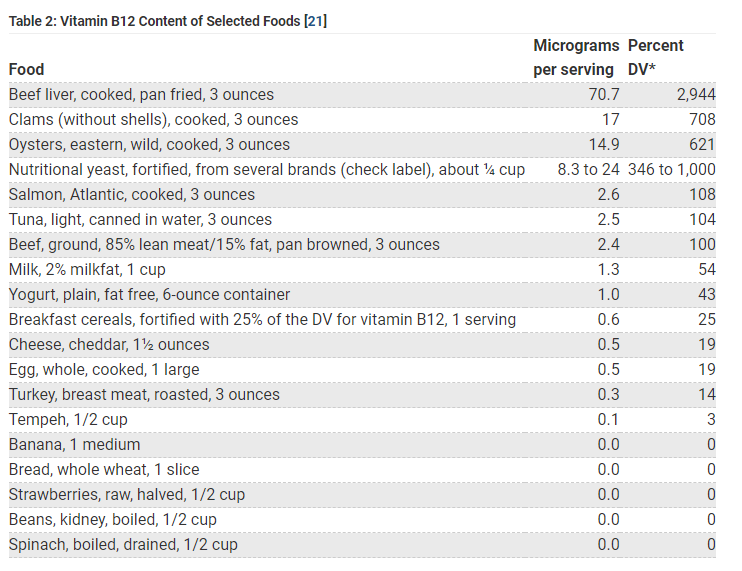
However, as mentioned in my previous health articles, I decided to eat a balanced and nutritious whole-food diet for health reasons. In later years, egg yolks and beef liver optimized my B12 levels. NIH provided a list of foods, including B12. It shows why I eat beef liver a few times, around 50 grams in each serving.
From my review of the medical literature, the most common treatment for severe cases of vitamin B12 deficiency is injection.
As documented in a paper in the New England Journal of Medicine, “parenteral or high-dose oral vitamin B12 is an effective therapy.”
Parenteral refers to administering substances into the body through a route other than the digestive tract. This can include methods like injections, infusions, or implants. Parenteral administration bypasses the digestive system and delivers medications or nutrients directly into the bloodstream or tissues.
For people vulnerable to Vitamin B12 deficiency, such as older adults, strict vegetarians/vegans, and those with malabsorption concerns, supplementation is necessary with close monitoring.
As we age, our ability to absorb B12 from food diminishes. Older adults often experience decreased stomach acid production, which is essential for releasing B12 from food. This can lead to poor absorption of the vitamin, contributing to deficiency among the elderly population.
Certain gastrointestinal conditions, like Crohn’s disease, Celiac disease, and atrophic gastritis, can impair our body’s ability to absorb B12. These disorders affect the digestive tract, inhibiting the absorption of nutrients, including B12, leading to deficiencies even in people with sufficient dietary intake.
Long-term use of certain medications, such as proton pump inhibitors (PPIs) used to treat acid reflux and metformin, commonly prescribed for diabetes, can interfere with our body’s absorption of vitamin B12. PPIs reduce stomach acid production, which is necessary for releasing B12 from food, while metformin may affect B12 absorption in the intestines.
Therefore, screening people at risk of vitamin B12 deficiency, such as older adults, individuals with gastrointestinal disorders, or those on long-term medications affecting B12 absorption, is necessary. Timely testing can facilitate early detection and appropriate intervention by healthcare providers. We need a collective and collaborative effort to prevent this silent epidemic.
Here is the advice from this paper: “ Screening may be warranted in patients with one or more risk factors, such as gastric or small intestine resections, inflammatory bowel disease, use of metformin for more than four months, use of proton pump inhibitors or histamine H2 blockers for more than 12 months, vegans or strict vegetarians, and adults older than 75 years.”
How much vitamin B12 do you need daily?
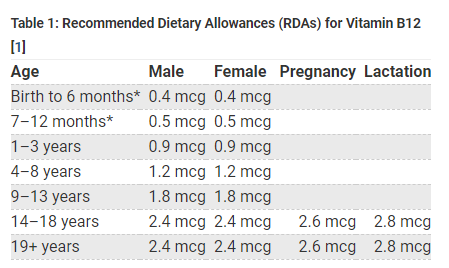
Unlike other vitamins, we don’t need too much of it. The RDA for adults is only 2.4 mcg, as documented by NIH.
How is deficiency measured?
NIH informs that “Vitamin B12 status is typically assessed by measurements of serum or plasma vitamin B12 levels. The cutoff between normal vitamin B12 levels and deficiency varies by method and laboratory, but most laboratories define subnormal serum or plasma values as those lower than 200 or 250 pg/mL (148 or 185 pmol/L).”
Conclusions and Takeaways
The paramount importance of vitamin B12 in promoting optimal health and fitness cannot be overstated. Given the body’s inability to synthesize this crucial nutrient, we must rely on external sources, whether through dietary intake or supplementation.
The consequences of vitamin B12 deficiency loom significant, with far-reaching implications that necessitate our unwavering attention and vigilance.
I am optimistic and confident about the treatment and reversibility of the deficiency as hundreds of people in my circles reversed it in the last 40 years. However, when it progresses to neurological damage, unfortunately, it becomes too late to reverse, as was the case with my late father, whose deficiency was discovered after his 60s. He succumbed to a neurological and autoimmune disorder called ALS. Therefore, I emphasize this critical point as a duty of care.
As documented by NIH, “according to an analysis of NHANES data from 2015 to 2016, people of low socioeconomic status, women, and non-Hispanic Blacks are most likely to have low vitamin B12 intakes. In the US and the UK, 6% of adults younger than 60 years have vitamin B12 deficiency; the rate is closer to 20% in those older than 60. Serum B12 levels tend to drop during pregnancy, sometimes to subnormal levels. They usually return to normal after delivery.”
As symptoms may manifest gradually, proactive measures, including regular medical screenings and consultation with healthcare professionals, are imperative for timely detection and intervention.
It is incumbent upon us to advocate for our well-being by heeding the guidance of medical specialists, recognizing that blood tests alone may not suffice for diagnosis and treatment planning.
Should dietary inadequacies persist, supplementation under the guidance of qualified professionals becomes a prudent course of action, albeit one that warrants caution to prevent the risk of overdose.
We must remain cognizant of the delicate balance between sufficiency and excess, acknowledging the potential adverse effects of excessive vitamin supplementation. Too little or too much of any nutrient can harm the body.
As informed by research in esteemed publications like JAMA, the judicious use of vitamin supplements (not going to extremes) emerges as a cornerstone of our wellness journey, highlighting the need for informed decision-making guided by the expertise of healthcare professionals.
As we strive for good health, let’s proceed cautiously, aware of the subtle nuances that shape our diet and wellness routines.
Thank you for reading my perspectives. I wish you a healthy and happy life.
To inform my new readers, I wrote numerous articles that might inform and inspire you. My topics include brain and cognitive function, significant health conditions, longevity, nutrition/food, valuable nutrients, ketogenic lifestyle, self-healing, weight management, writing/reading, and humor.
I publish my health and wellness stories on EUPHORIA. My posts do not include professional or health advice. I only document my reviews, observations, experiences, and perspectives to provide information and create awareness. 100+ Insightful Life Lessons from My Circles for the Last 50+ Years
If you are a writer, you are welcome to join my publications by sending a request via this link. I support 26K+ writers who contribute to my publications on this platform. I also have another profile to write and curate tech stories.
Importance and Value of Medium Friendship for Writers and Readers


