
Victim Blaming is too Common in Domestic Violence
Sure, it’s easier to blame the victim than it is to do something.
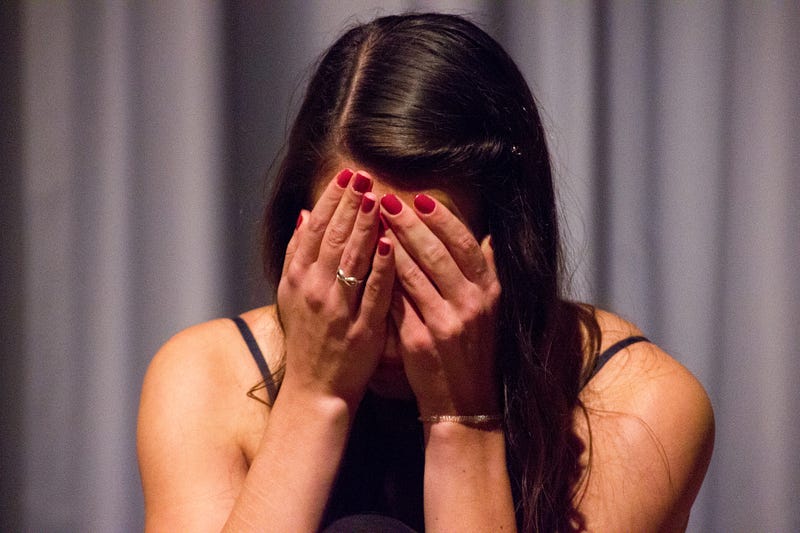
When you are in a domestic violence situation, it can be extremely hard getting help to get out.
Yet people are so quick to blame the victims for not leaving sooner. Let’s look at why that is.
Trigger warning: descriptions of domestic violence.
I read a story today that brought the poignancy of this to mind all over again, about a woman who was refused help by a domestic violence shelter because she wasn’t “abused enough.”
I have to tell you, any abuse is too much.
When I tried to leave my ex-husband the first time, I asked my mom for help.
As I called her to come get me, asking her to bring my brother-in-law so he could help us, I sat cowering in a closet, whispering into the phone as my daughter slept.
A short time later, my mom came to get me. She didn’t bring my BIL, she brought a baseball bat.
I took my daughter and left.
As soon as we were in the car, my ex started blowing up my phone asking where we were going. I told him I was going to my mom’s.
Apparently, he couldn’t remember hitting me over and over again and giving me two black eyes. He was too drunk to remember. So he said. I started crying hysterically and hung up the phone. He called back. Rinse and repeat.
I was having a panic attack, although I didn’t know it at the time. I asked my mom to take me to the hospital, I felt crazy.
My ex kept calling and calling, threatening me if I called the police.
At the hospital, I refused to file a police report. I asked them to take me into inpatient psych care, and they refused. They gave me one Xanax and sent me home.
That night, I stayed with my mom. The next day, after he begged and begged, she took me back to my ex.
She didn’t argue. She just put me in the car.
I wish my mom would have actually helped me. She could have.
This is what victims consistently go through. They reach out for help and get nothing in return.
Another time, I showed a couple of my coworkers cuts on the back of my head from where my ex hit my head against the wall. Nothing.
National Domestic Violence Statistics
According to Safe Horizon,
- 1 in 4 women and 1 in 7 men will experience severe physical violence by an intimate partner in their lifetime. (CDC, 2017)
- 1 in 10 women in the United States will be raped by an intimate partner in her lifetime. (CDC, 2010)
- Approximately 16.9% of women and 8.0% of men will experience sexual violence other than rape by an intimate partner at some point in their lifetime. (CDC, 2010)
- Data on sexual violence against men may be underreported.
- An estimated 9.7% of women and 2.3% of men have been stalked by an intimate partner during their lifetime. (CDC, 2017)
- Nearly half of all women and men in the United States will experience psychological aggression by an intimate partner in their lifetime. (CDC, 2017)
- Over half of female and male victims of rape, physical violence, and/or stalking by an intimate partner experienced some form of intimate partner violence for the first time before 25 years of age. (CDC, 2010)
Deciding to Leave
It is also important to remember that the most dangerous time for domestic violence victims is when they decide to leave. It can cause the partner to lash out violently to regain control.
This is why it is important to have a safety plan prior to leaving, if possible.
If you are looking to leave an abusive relationship now, you can call the domestic violence hotline in your country for assistance, and they will give you advice on what to do.
National Domestic Violence Hotline (US) — 800.799.SAFE (7233)
I would advise doing this from a safe location (such as work) or when your partner is not home.
Personally, I left my partner 8 times before the last time. I was so afraid of him that when he threatened me, I would get to the point I was just so broken, I ended up going back. Then I tried to commit suicide. I hated myself SO much by that point.
I wasn’t financially tied to him. I was just afraid, and I had no support system.
Just like when my dad hit me as a kid, my mom told me, “If you didn’t make him mad, he wouldn’t hit you.”
Thanks mom.
Thanks for a big fat nothing. You could have helped me. Only you didn’t want to.
It is easier to blame and shame victims instead of helping them. So next time you hear about a woman who didn’t immediately leave her abuser, I hope this sheds a little bit of light on why.
She didn’t leave because she probably had no where to go. She probably didn’t have a support system. Her friends may have even told her to make up with him.
Instead of blaming victims, let’s try to support them instead.
For information about healing for the trauma from domestic violence, give this a read.
❤ Nicole
Be well until next time my friends. If you are new to my writing, find out more about me in my profile!
Did you like this article? Follow me for more! I am also on social media.
Facebook | Instagram | Twitter | YouTube
You can also become a Medium member with my link for only $5 per month.
I am the author of “Trauma Survivor’s Guide to Coping With Panic Attacks” and “Happy. Healthy. Rich. The smart mom’s guide to living your best life” on Amazon.
If you are low income and want a copy of my Trauma Survivor’s Guide to Coping With Panic Attacks, email me and I will send you a FREE PDF copy.
The world is in tragedy right now. Check out these links on how to help the Ukraine. List from NPR.
If you are experiencing thoughts of suicide or self-harm, we encourage you to contact the National Suicide Prevention Lifeline at 1–800–273-TALK(8255). This lifeline is free and confidential. It is open 24 hours a day and provides support, information, and local resources to anyone in suicidal crisis or emotional distress and those around them. Call for more information or visit www.suicidepreventionhotline.org.


