
For The Love of The Moon
The moon cycles and how they help us grow
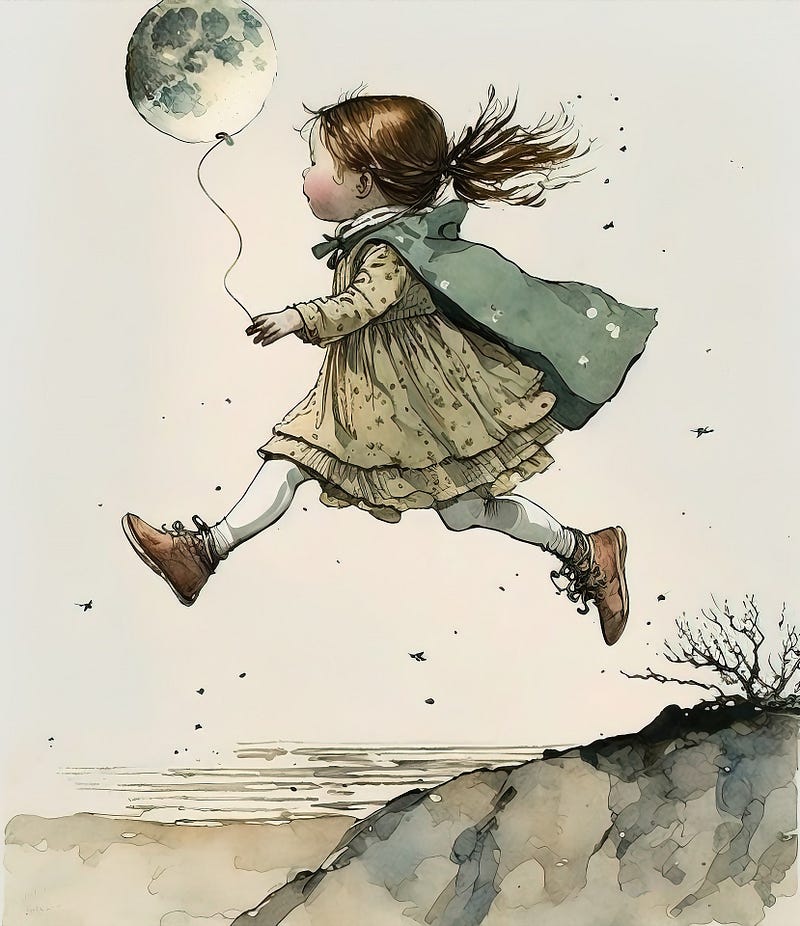
There has never been a time when I have not been in love with the moon. I love the moon in all its phases. When I was a child, I felt like I was from the moon. I would sit and stare at it for hours and yearned to go there. I know that sounds crazy, but that’s how I felt.
The magic and beauty of the moon are beyond words to my inner child. There is nothing like seeing the bright full moon piercing the darkness and bringing light to the world as it appears in all its splendor in the night sky.
I just love the moon. The sun is cool too but I can never look at it to truly observe it. The fact that I can gaze at the moon, observing its marks and phases as time pass by without being burned by its light is so cool to me. But I know I’m not the only one with a special affinity for the moon.
The moon has long captured the human imagination, inspiring mythologies and legends across cultures around the world. But beyond its mystical allure, the moon also plays a crucial role in the natural world. With its ever-changing phases and gravitational pull, the moon can impact everything from the tides to plant growth to the behavior of animals. Understanding the moon’s cycles and rhythms can provide insights into the world around us and even help us connect more deeply with nature.
The Science of The Moon
Though the moon does not shine with its own light and reflects light coming from the Sun, it is the easiest celestial object to find in the night sky. As the closest astronomical body to us, the Moon has a powerful influence on mankind. One way is through its gravitational pull, which impacts tides and even potentially causes changes in weather patterns.
Both the Sun and the Moon produce our ocean tides, but the Moon plays a greater role because it is closer to Earth. The Moon exerts a stronger gravitational pull that causes the changing tides in our oceans and seas.
Seafaring people have always known there is a connection between the ocean tides and the moon, but no one could offer a satisfactory theory to explain the two high tides per day. Newton produced the explanation: Ocean tides are caused by differences in the gravitational pull between the moon and earth on opposite sides of Earth.
The gravitational force between the moon and Earth is stronger on the side of Earth nearer to the moon, and it is weaker on the side of the Earth that is farther from the moon. This is simply because the gravitational force is weaker with increased distance — Conceptual Physics Twelfth Edition.
This gravitational pull is at its strongest during the new moon and full moon, so here we experience the highest and lowest tides. When the Sun, Earth, and Moon are aligned, the tides due to the Sun and Moon coincide. Then we have higher than average high tides and lower than average low tides. These are called spring tides (spring tides have nothing to do with spring). Spring tides occur at the time of a new or full Moon.
Because humans are made up of 70% water, it is assumed that the moon would impact us similarly — causing our emotions to go up and down with the tides.
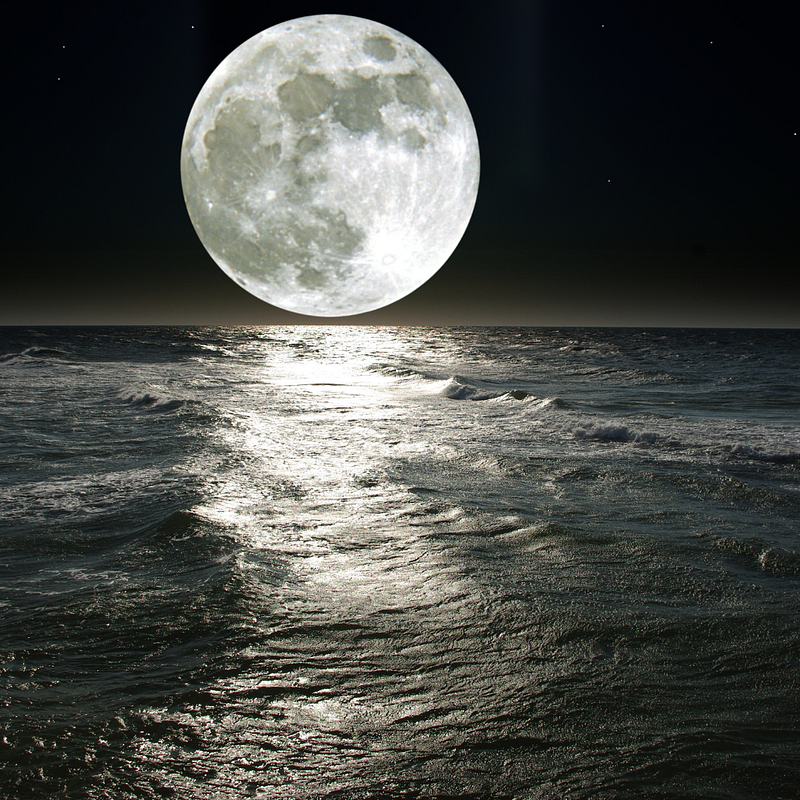
The Significance of Lunar Cycles
The lunar cycle is the representation of the moon’s journey around the Earth. The Moon’s cycle is 29.5 days. The lunar cycle is the different appearances of the moon as seen from Earth as different amounts of the lunar disk are illuminated by the Sun.
The Moon has no light of its own; all the light that we perceive is merely a reflection of the Sun’s light.
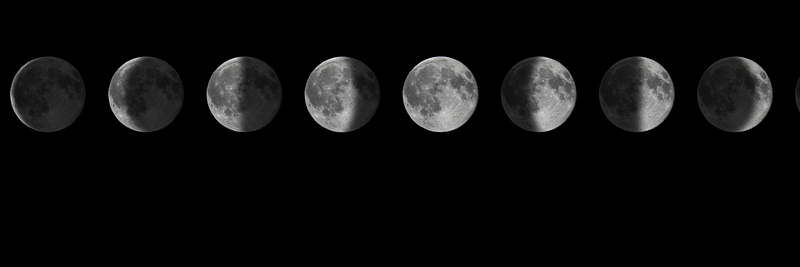
The Moon displays eight phases: new, waxing crescent, first quarter, waxing gibbous, full, waning gibbous, last quarter, and waning crescent, and then back to the new moon phase.
Each phase of the Moon has a different meaning and rhythm to the body. The rhythm of the moon’s phases has guided humanity for millennia — for instance, calendar months are roughly equal to the time it takes to go from one full moon to the next. Moon phases show us how the Moon affects the ebb and flow of our entire existence.
1. New Moon
This is the phase of the lunar cycle when the moon is not visible in the night sky. The lunar cycle will begin and end with a New Moon. The new moon appears as a dark moon. During the new moon, none of the moon’s reflective surface is visible to us. It occurs when the Moon is between the Sun and Earth and the non-illuminated part of the moon that is in the shadow faces Earth.
The new or dark moon phase signifies new beginnings and changes. Seeds are planted during the new moon, and initiation rites are carried out. It has traditionally been honored as a time for starting new projects. It is a time to begin a new project or pick up projects you’ve been putting off. It is a time to set off on some new journey.
It has always been the perfect and most potent time to set new intentions. It is also a time to transform areas in your life that no longer serve you.
Because of the low light at this time, we often find ourselves with much less energy. This often leads to us feeling more tired and withdrawn. During this time, we are more prone to retreat and opt for more alone and quiet time. It’s a great time to rest up and recharge. Follow your intuitive urges to go within and spend time alone.
2. Waxing Crescent Moon
Waxing is to grow bigger and crescent means less than half of the moon is illuminated. A waxing crescent means the moon’s illumination is growing. This phase begins after the New Moon and occurs when a small sliver of the moon becomes visible in the sky.
This is a time to push current projects forward. This moon phase reminds you of the intentions you set during the new moon as you watch them grow night by night.
3. First Quarter Moon
During the first quarter, exactly half of the moon is visible in the sky. Half of the moon is illuminated and the other half is shadowed. This is the time when half the moon appears dark and where the other half, the right side is lit up.
This particular moon cycle signifies decision-making. You will find that you are more prone to encounter more frustration and obstacles at this time. It is a time to take an honest inventory of where you are in this stage of intention setting and manifesting. How do your intentions align with your vision for the future? How do your actions and decisions align with the intentions you set during the new moon?
4. Waxing Gibbous Moon
‘Waxing’ means the moon’s illumination is growing and ‘gibbous’ means more than half of the moon is illuminated.
This moon phase signifies refinement. This is a time to ground in on intentions that were set during the new moon. It is a time to continue taking mindful steps that align with your intention.
It is time to stick to your goals and not lose hope, as they could manifest with the full moon. It is also the time to work harder to water the seeds that were planted during the new moon and prepare for harvest.
5. Full Moon
The full moon occurs when the Moon is on the opposite side of Earth from the Sun, and thus the side of the Moon that is illuminated faces Earth. It occurs when Earth is between the Sun and Moon and the entire illuminated side of the Moon is visible. The Sun illuminates the entire moon. At this time, the moon is fully visible as a huge ball of powerful, shining light.
Electromagnetic energy increases on the day of the Full Moon. Tides are higher and emotions are heightened. Some use this as an explanation as to why there are more accidents, earthquakes, volcanic activity, and the like during this time.
The Full Moon is usually a time when there is a surge of energy and creativity. You may find that you have much more energy during the full moon. The full moon is a period of intense emotional energy. This is a time when your emotions are supercharged and so you will likely feel much more easily agitated and triggered.
People say it’s the time when everyone goes crazy. The word Lunatic is derived from the term lunar and it means someone whose mental state is affected by the moon. Your sleep cycle will also likely be affected due to the full moon, which will only make you even more prone to agitation. Being aware of the potential to be more easily agitated or the chance for potential conflict is important. That way, you can avoid people, places, and things that may trigger you.
The full moon is a great time to put extra energy into reaping a harvest of the seeds you planted during the new moon. It is a time to reap and enjoy the fruits of your labor.
After the Full Moon, the cycle begins to reverse as the moon gets smaller.
6. Waning Gibbous Moon
‘Waning’ is when the moon starts to get smaller. ‘Gibbous’ means more than half of the moon is illuminated. Waning gibbous refers to the decrease in the Moon’s illumination. In this phase, the illuminated side of the moon begins to shrink.
This moon phase signifies gratitude. As you reflect on all the harvest that you’ve reaped, this lunar cycle is the time to focus on gratitude.
During this phase, it’s a good idea to wrap up old projects. It is a time after harvest and the best time to start gathering a harvest and preparing the land for a new thing. It may be time to close out some things you’ve been holding onto for too long and bring closure to the pressing issue within and around you.
7. Third/Last Quarter Moon
During the last quarter moon, half the moon is visible again, but it is the opposite half from the First Quarter. Exactly half of the Moon is illuminated and the other half is shadowed.
After the extreme full moon period, things are beginning to calm down. This moon phase signifies forgiveness towards yourself and others for the way you or others acted during the full new phase. You’ll likely feel the urge to release the anger, frustration, and resentment you saw surface at the height of the full moon.
This moon phase is also a great opportunity to again reflect on the intention you set during the last new moon, and also revisit the inventory you took on your actions and decisions.
8. Waning Crescent Moon
As the final phase before the New Moon returns, this occurs when only a small sliver of the illuminated side of the moon is visible in the sky.
This particular moon cycle signifies surrender. This is the moon phase of surrendering to the here and now and embracing life for what it is. It also signifies a time of letting go. It is a good time to let go of stress or worries, and simply enjoy being alive by relaxing, taking a deep breath, and just being.
This is the perfect time to purge and cleanse your space, which deeply affects your inner world. It is a time to physically, emotionally, or energetically clear and discard unwanted things from your life.
This is also a great time to do a cord-cutting ceremony where you release ties to things that might be holding you back. This includes old relationships, old ways of acting, interacting, beliefs, and ideas.
Other Effects of The Moon
The moon has been known to influence certain biological processes in humans and animals, such as triggering reproductive cycles, causing changes in sleep patterns, and even affecting mood and behavior.
Some people believe that since the lunar cycle is about 29.5 days, which is close to the length of an average menstrual cycle of 28 days, the moon may have some influence on the timing of ovulation and menstruation. The moon’s effect on menstrual cycles is still a topic of debate and research.
Additionally, the moon has played a significant role in human culture and mythology throughout history, inspiring art, storytelling, and scientific exploration.
Benefits of Being Attuned to The Cycles
Following the lunar cycles has been going on for eons. Ancient cultures lived in accord with the movements of all the celestial bodies.
Being attuned to the lunar cycle can have several benefits, both practical and spiritual.
- The Moon is significant within the practice of farming because it was used to measure time and seasons and to determine when the best opportunity was for planting and harvesting crops.
- The timing of full moons can indicate seasonal changes. For example, the Harvest Moon, which is the full moon closest to the autumnal equinox, has traditionally been used to mark the start of the fall harvest season. Similarly, the Pink Moon, which is the full moon in April, marks the start of spring in the Northern Hemisphere.
- The position of the full moon in the night sky can also give us an indication of the time of year. In the winter, the full moon tends to be higher in the sky, while in the summer it tends to be lower. By observing the phases of the moon, you are connecting with the natural world and the cycles of the universe.
- The lunar cycles also help you understand your emotions. The moon is often associated with emotions, and some people believe that its phases can have an impact on our moods and mental states. By tracking the lunar cycle, you may be able to better understand and regulate your own emotions.
- The lunar cycle also guides intention setting. Some people use the moon’s phases as a guide for setting intentions and manifesting their goals. For example, the New Moon is often a time for setting new intentions, while the Full Moon is a time for releasing what no longer serves us.
- Many spiritual traditions incorporate lunar cycles into their rituals and ceremonies. Practicing these rituals can help you feel connected to a larger spiritual community, and create a sense of meaning and purpose in your life.
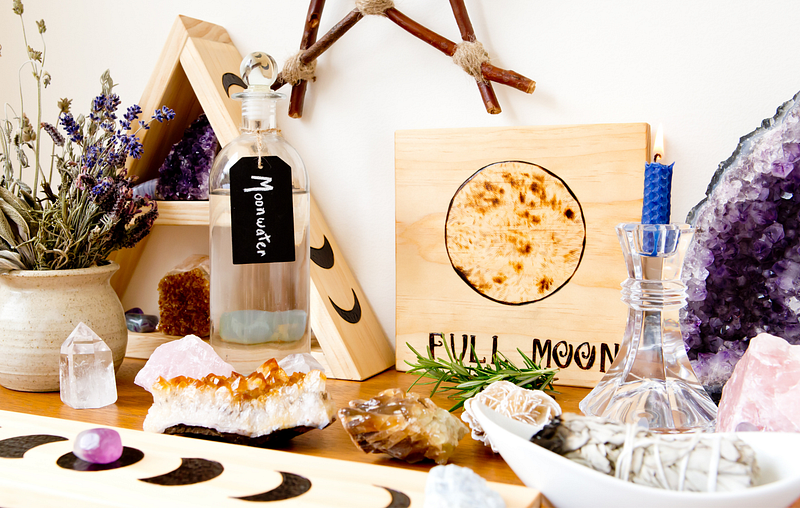
Rituals and Ceremonies
There are many rituals and ceremonies that can be done during the lunar cycles. Here are a few examples:
- New Moon: This is a good time to set intentions for the coming lunar cycle. Write down your goals and desires, light a candle, and focus on manifesting what you want to achieve.
- Full Moon: The Full Moon is a time of heightened energy and power. Many people choose to celebrate it by performing rituals of releasing and cleansing. You can spend some time meditating, burning herbs or incense, or taking a bath to let go of any negative energy or emotions from the recent past.
- Waxing Moon: This is a good time for growth and expansion, so it’s a great opportunity to start new projects or courses of study. You can also use this time to focus on self-care and self-nurturing.
- Waning Moon: This is a time for letting go, releasing, and detoxifying. The energy at this time is less and helps us to release and let go of things from our past.
- Blue Moon: A blue moon is when there is a second Full Moon during a single calendar month, which happens about once every 2–3 years. This is a potent time for manifestation and bringing about change.
These are just a few examples of the many things you can do during the lunar cycles. The most important thing is to find what resonates with you personally and to connect with the energies of the moon in a way that feels authentic and meaningful to you.
Once you are attuned to the Moon and its cycles, you can activate its innate powers for personal growth and development.
Final Thoughts
The lunar cycle has been a part of human history and culture for millennia, fascinating many of us with its changing phases and mysterious beauty. Even as a grown woman, I still stop in my tracks and adore the moon whenever I see it. Whether it’s a crisp crescent moon or a bouncy full moon, it calls me to stop and bask in its glory.
My love for the moon is one thing I know is never going to change. Being attuned to the moon and its cycles deepens my understanding and appreciation of the natural world, as well as my own inner rhythms and cycles.
Whether you look to the moon for spiritual guidance, scientific knowledge, or simply as a source of inspiration, the lunar cycle continues to inspire and intrigue us, and will likely do so for generations to come.