
Understanding Why Crypto Exists
Dissecting Journeys of ‘Wen Lambo’ Investors to Web3 Advocates
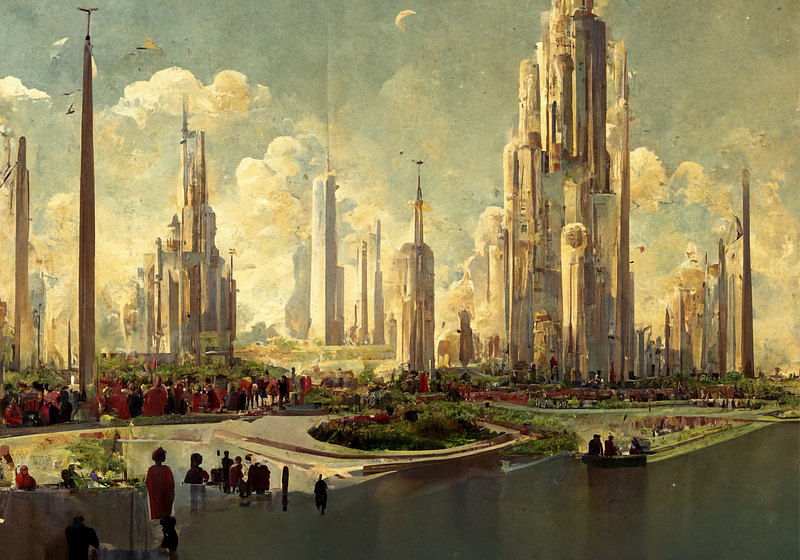
Many investors are lured into cryptocurrency by the promise of riches.
Dabblers who staying long enough to experience the full gamut of the industry — from Bitcoin and altcoins to decentralised finance (DeFi) and non-fungible tokens (NFTs) — often undergo a journey of incredible discovery and emerge on the other end to appreciate how:
- Bitcoin transcends humans to separate money from politics;
- Smart contracts eliminate middlemen and the dangers of centralisation;
- DeFi is a new open and permissionless financial system for the world;
- Web3 and NFTs provide verifiable decentralised ownership.
This is a well-trodden path of how many profit-focused crypto investors grow into enlightened higher-level crypto advocates.
In the wake of FTX’s spectacular collapse, we need advocates more than ever.
Advocates working in politics, like Congressman Tom Emmers, who saw the recent calamities that befell our industry for what they were — a failure of centralisation.
Failures that the decentralised part of the crypto industry was precisely designed to prevent.
Advocates in business and entrepreneurship, like libertarian Erik Voorhees, who understood the profound impact of an open immutable financial system for the world:
The ability to separate money from politics.
Advocates in entertainment, like cultural icon and rapper Snoop Dogg, who for a long time has understood the potential of Web3 and NFTs to transform the fortunes of artists and creators:
The power to regain true freedom and ownership of your work.
In this article, I want to align with you a fundamental understanding of what crypto is really about and why we the world needs to advocate for it.
New to Medium?
Join here and gain unlimited access to the best crypto & investing articles on the internet.
Birth of Bitcoin
In the wake of the GFC, Satoshi Nakamoto unveiled the Bitcoin blockchain to the world on Jan 3, 2009.
Bitcoin was a revolution in both money and technology.
From a monetary perspective, the Bitcoin distributed ledger — simply known as blockchain — emerged as an alternative decentralised financial system that separated money from state, allowing finance to transcend humans and their political machinations.
This addressed a range of deep-rooted problems in traditional finance (TradFi) caused by a lack of transparency and the centralisation of power by individuals, institutions and even governments — problems that have caused widespread grief, including worldwide financial crises.
Bitcoin returned economic power to individuals by reducing the need for middlemen and protecting the small guys against the dangers of centralised power.
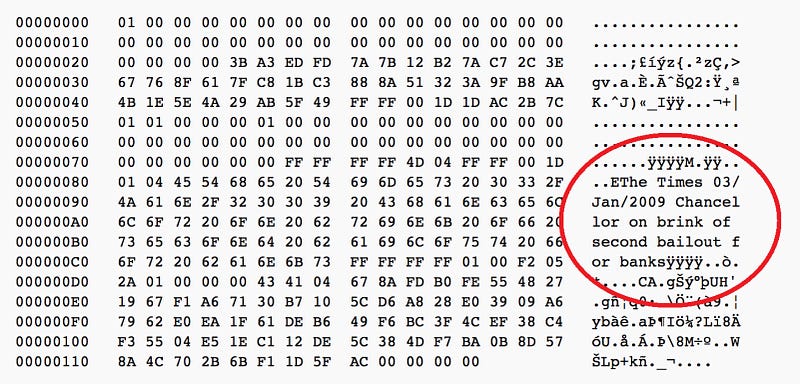
From a technological perspective, Bitcoin solved an enormously difficult problem of how to get a decentralised network of computers spread across the world to agree — and do so in a way that prevented the infamous double spend problem.
Nakamoto conquered this through a breakthrough consensus algorithm called proof-of-work and the longest chain rule, whereby computers — called miners — competed for the right to write the next block of transactions to the blockchain by dedicating ‘work’ to solve difficult mathematical puzzles.
As miners spent money on hardware and electricity to ‘win’ that next block reward, they were incentivised to behave and protect the system.
In short, Bitcoin solved the technical challenge of how to federate the entire ownership and operations of a financial system onto the ordinary participants it served.
Milestone in History
Bitcoin was a historical milestone — but for the most part people didn’t care because it wasn’t the easiest thing to get your head around.
And for most people, it still isn’t.
You see, prior to the Bitcoin blockchain, humankind had never known something that was simultaneously:
- digital
- scarce
- decentralised.
Commodities like gold were scarce and decentralised — to an extent. Fiat currencies were digital, but certainly not scarce!
Being a digital asset, Bitcoin enabled ordinary folks like you and I — and entire countries — to send money across borders without the need for centralised intermediaries like banks.
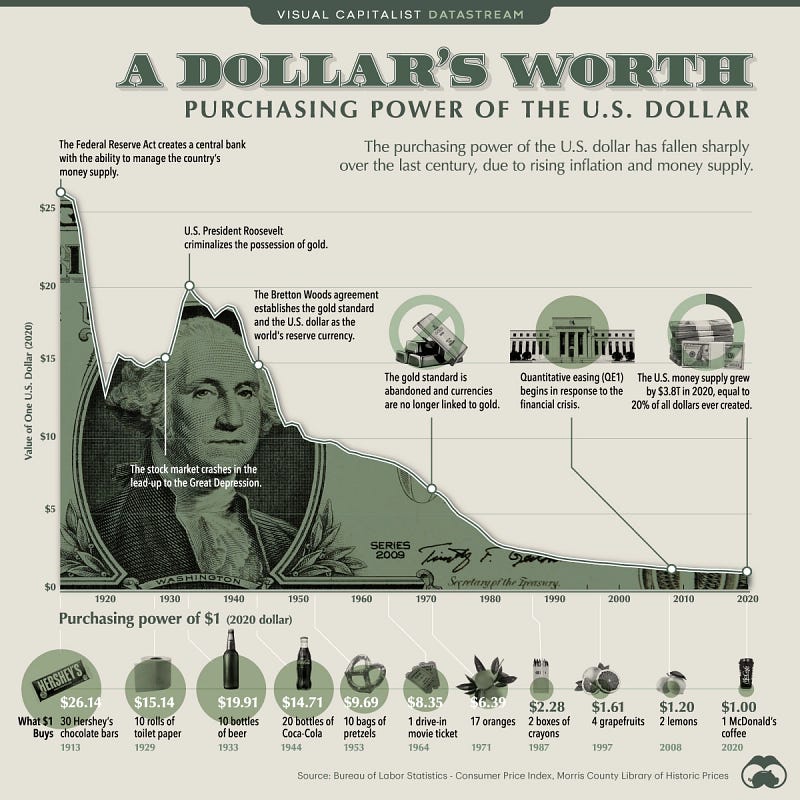
Being scarce like gold, Bitcoin preserved the value of your money — unlike ordinary fiat currencies whose value may be inflated away at a whim by central banks. Brrrrr…watch that money printer go!
“The root problem with conventional currency is all the trust that’s required to make it work. The central bank must be trusted not to debase the currency, but the history of fiat currencies is full of breaches of that trust.”
— Satoshi Nakamoto
Finally, Bitcoin is a public decentralised network. With 13,000+ miners around the globe adding blocks (containing transactions) onto the Bitcoin blockchain, the network is robust against a single point of failure (SPOF) as it is not owned or operated by any individual or organisation.
No Gatekeepers and No Middlemen
Let’s dive deeper into the consequences of what it means to have a public decentralised network. It’s world-changing stuff.
In blockchain terminology, public means the same thing as:
- permissionless
- trustless.
Permissionless means anybody can join the network.
There are no gatekeepers.
In TradFi, I can create a bank account, use a credit card and send you money only because the government and a host of financial intermediaries permit me to do so.
My name ticks a bunch of boxes in some database somewhere.
It is a permissed system, where gatekeepers like my bank or the SWIFT system can shut me out at any time for any reason.
For instance, the vast majority of Iranians, North Koreans and Russians, through no fault of their own, are barred from financially communicating with Americans by simply being citizens of a country on OFAC’s list of Sanctioned Countries.
Many believe this to be an immoral instance of regulatory overreach — the gatekeeping of millions of individuals that most suffer from having their economic power robbed.

Under the Bitcoin network, there are no gatekeepers because it’s an open decentralised network that resists censorship.
Bitcoin is open to anyone and everyone at any time. You and I simply need an internet connection and a Web3 wallet to join in on the party.
No gatekeepers, no permission necessary.
Trustless means everyone on the network can reach agreement (consensus) without the need to trust third parties or an overarching authority.
This means no middlemen.
I don’t need a bank to facilitate sending you some money just because you happened to be born in Iran, North Korea or Russia. My transaction to you is a peer-to-peer affair that doesn’t require a centralised authority to run.
It gets better.
The power of these ideas were amplified six years after the launch of Bitcoin by an invention called smart contracts, which lead to the rise of a decentralised global financial system (DeFi) where all sorts of virtual goods and services can be exchanged without the need for middlemen.
Become your own bank.
Enjoying this story? Get an email when I post similar articles.
Smart Contracts, Web3 & NFTs
In 2015, a new blockchain called Ethereum launched with a new world-changing technology — smart contracts.
Smart contracts enabled general purpose computing on blockchains, giving Ethereum a reputation as a decentralised ‘world computer’.
(This stands in contrast to centralised cloud networks like Amazon Web Services.)
Smart contracts are immutable, meaning they can’t be changed once deployed. This makes them almost impossible to tamper with, enabling complex and efficient peer-to-peer transactions without the need for centralised authorities and middlemen (like a bank or government) to approve them, nor the need for parties to trust each other (as code acted as a fair and trustworthy authority).

This technology opened up the benefits of Bitcoin’s decentralisation revolution onto a new world of use cases.
What do these situations have in common?
- Banks paying no interest on savings account;
- Artists and creatives not being paid;
- Facebook disregarding privacy concerns.
They aren’t fair due to exploitation perpetrated by some central authority.
All of these situations involve a middleman — banks, agents, corporates — hoarding for themselves the value that their clients generate.
Banks wouldn’t earn interest if they couldn’t loan out my money. Agents and managers wouldn’t earn a dime without talented artists and creators. Facebook wouldn’t have any data to sell if I didn’t post anything.
These traditional institutions amass billions in profit by siphoning value from their constituents’ work. Yet it doesn’t gets distributed out to the very people who make their riches possible.
Don’t like it? Complain and I might get banned, censored, or even have my assets seized.
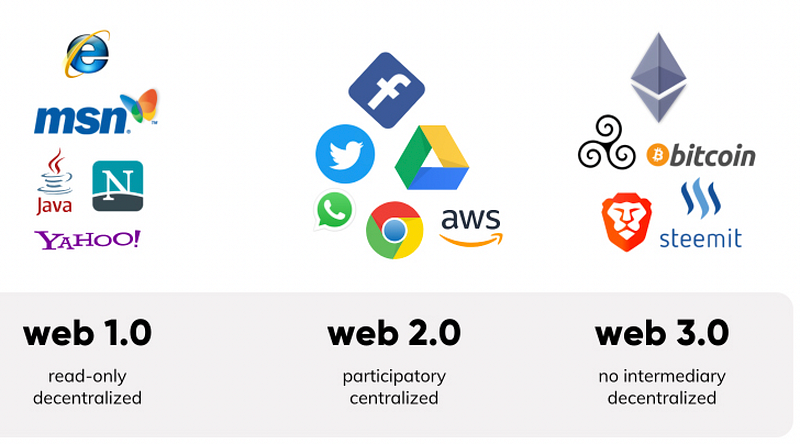
Enter Web3, the next-generation internet that’s built using:
- blockchain — to enable a decentralised infrastructure of the web;
- NFTs — to enable the ownership of data, assets and identity;
- smart contracts — to automate away middlemen in transactions.
The Web 2.0 era (2004— now) is characterised by the domination of big tech companies that amassed a large amount of power and wealth by centralising control and monetising the treasure trove of data they collected on their users.
In contrast, Web 3.0 sees the internet make a return back to its decentralised roots of the 90’s—powered by blockchain technology, NFTs and smart contracts.
You’ll engage with decentralised applications (dApp) running on the blockchain, utilising assets both fungible (e.g. BTC, ETH, SOL, MATIC, stablecoins etc.) and non-fungible (NFTs) stored in your Web3 wallet (e.g. MetaMask, Phantom).
Your interactions with dApps don’t require centralised entities or middlemen as they’re performed by smart contracts that execute code on the blockchain.
For example, the swapping of USDC on ETH on the Ethereum blockchain can be done on a decentralised exchange (DEX) like Uniswap at any time, swapping your USDC stablecoin for ETH provided by another Web3 user.
No custodians like banks are involved at any time.
Web3 is profound in the way it transforms our relationships with traditional power structures:
1. TradFi and banks are no longer necessary.
We can exercise custody over own financial affairs in DeFi by swapping cryptocurrencies and stablecoins peer-to-peer in a global, borderless, decentralised financial system.
You and I can wire billions of dollars to each other anywhere in the world for a few dollars. No SWIFT needed, no government ID needed, no banks needed.
We become our own banks.
Moreover, we can leverage DeFi platforms to earn a yield by lending out our crypto, or borrow capital with a few clicks of a button— all coordinated by efficient smart contracts that keep fees and profits among ourselves and out of the hands of fat cat financial institutions.
In other words, we can borrow and lend, just like with banks.
Finally, we can buy, own and store scarce assets like bitcoin that’s resilient against government tomfoolery, whose value can’t be inflated away at a whim through money printing.
In the real world, the closest thing to this is buying scarce commodities like gold. Although scarce, these assets aren’t digital (which makes them annoying to store and move around), and they’re not really decentralised (governments can order your assets to be frozen).
2. Creatives are no longer unfairly exploited.
Artists, content creators, musicians and other creative professionals are more fairly remunerated as royalties are baked into smart contracts that faithfully execute for every stream, read or view of our hard work.
As part of the creator economy boom, we’ll have more freedom to monetise our creative output, including the opportunity to sell our work as original NFTs on decentralised marketplaces.
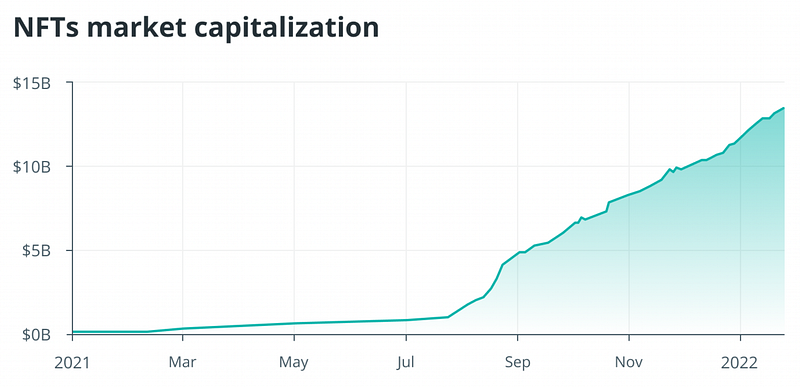
We’re no longer tied to their profiteering agents, advertises and corporates because they’ve been automated away by smart contracts and nimble Web3 protocols that directly connect us with our fans.
3. Social media users are in full control of their data and identity.
In a Web3 version of Facebook, we might be paid a dividend from the ad revenue generated from our posts. You and I may even be able to package our data as NFTs and sell them in a decentralised marketplace.
Our Web3 identity can be embrued through soul-bound NFTs, which we can port between different Web3 social media platforms at a whim if we so wish.
The bottom line is the enormous power that big technology companies amassed over the past decades— enabling them to profit dearly from our data and patronage — is finally being returned to us, the users.
As Web3 strategist Julie Plavnik reminds us:
The main catalyst for this mentality shift was crypto. It infected us with the ideas of disintermediation, independence from third-party service providers, 100% data ownership and self-sovereignty. Crypto has generated a new way of thinking and caused us to look at ordinary things through entirely different lenses.
— Julie Plavnik
I’ve written a dedicated article on some of my favourite crypto, NFT & Web3 use cases being built out right now.
Final Words
The technology to decentralise rule enforcement never existed until the arrival of blockchain technology.
First, came Bitcoin.
In the wake of the GFC — a catastrophe crafted by a cocktail of money, politics and human greed — Satoshi Nakamoto unveiled a new open, borderless and inclusive financial system that put transparency and decentralisation at the fore.
Later, we saw the arrival of more ‘modern’ blockchains like Ethereum and Solana — smart contract powerhouses upon which vibrant DeFi, Web3 and NFT ecosystems are being built.
Erik Voorhees calls DeFi the ‘shining city on the hill’ — the new frontier of finance where everything good and beautiful about crypto has been a step in this direction — an open, borderless, immutable economic foundation for the world.
In late October 2022 — appreciating what was at stake, Voorhees made an impassioned plea to Sam Bankman-Fried on the Bankless show to leverage his influence in Washington to protect DeFi:
“Those in this industry have created a new financial foundation for the whole world. This is a huge responsibility.
The entire purpose of this financial foundation is that all of humanity can use an open immutable financial layer.
We are separating money from politics. We’re separating money from the state.
In the same way that the church was separated from the state which everyone now hails as one of the great things that humanity did, we now do the same with money.
Money is as important to people now as religion. We interact with money every day. And just as mathematics or language are immutable and open to the entire human race, so should the exchange and management of money.”
— Erik Voorhees
Ironically, a week after this infamous debate, FTX blew up in what became a colossal failure in centralisation.
Bankman-Fried is facing up to 110 years in jail after losing up to $9 billion in customer funds.
Meanwhile, the blockchain scene continues to innovate at breakneck pace. The world is moving to Web3 fast, from:
- centralised servers to decentralised blockchains;
- Amazon Web Services (AWS) to InterPlanetary File System (IPFS);
- Limited Liability Companies (LLC) controlled by humans to Decentralised Autonomous Organisations (DAO) controlled by smart contracts;
- Google Chrome to Brave;
- your bank to Metamask;
- Facebook to Steemit;
- Eve Online to Star Atlas.
Cryptocurrencies play a fundamental role in this rapidly growing decentralised future. They lubricate the blockchains, dApps and smart contracts that power this next-generation internet.
Get on the train. It’ll be a fast, scenic ride, and there are plenty of seats left.
I hope this article inspires you to advocate for crypto and blockchain not as a mere vehicle for investment and speculation, but as integral tech for our children and as an ideal worth protecting.
Follow me on Twitter & YouTube for regular analyses and guides.
My Crypto Articles
Unlock unlimited access to Medium by joining here.
- When Will the Bear Market End? Macro 101 for Crypto Investors
- A Review of the Cryptocurrency Market in 2022
- Web3 Gaming — What do Crypto, NFTs & Metaverse offer?
- FTX’s Collapse & Solana’s Long-term Impact
- Polygon & Solana — 6 Killer Crypto/NFT Use Cases
- A Brief History of NFT Marketplaces
- Compound Interest is the 7th Wonder of the World
- How to Generate Passive Income with Crypto
- Crypto Passive Income on BNB Chain
- Move & Earn Crypto — 6 Month Review of STEPN
- PancakeSwap’s High APY Pools — What’s the Catch?
- Cardano, Avalanche, Solana Staking Guides (2022)
- Cardano, Avalanche, Solana Price Predictions (Bull Market)
- How to Make Crypto Price Predictions
- Top 3 Price Prediction Mistakes
- Crypto VISA Cards — Cashbacks for Every Purchase?
- How to Build Wealth like Smart Money
- Is Crypto.com’s Earn Program Worth It?
- Understanding Terra’s Anchor Protocol
- How to Participate in Initial DEX Offerings
- Memecoin Speculation — Is It Worth It?
- Why SHIB Can Never Reach $1 (or even close)
- Want to Retire Early? Buy Bitcoin
- Democrats vs Republicans — Which Party Better for Markets?


