avatarJanice Harayda

Free AI web copilot to create summaries, insights and extended knowledge, download it at here

5753

Abstract

s of sick or injured patients.</p><p id="d392">A grim statistic suggests their pressures. In just over a year and a half, Ukraine’s military deaths have <a href="https://www.nytimes.com/2023/08/18/us/politics/ukraine-russia-war-casualties.html">exceeded</a> the American body count for nearly two decades in Vietnam (about 58,000).</p><p id="3e72">Why is the toll so high?</p><p id="58ac">Heavy use of lethal weapons by both sides is one factor. The <i>New York</i> <i>Times</i> <a href="https://www.nytimes.com/2023/08/18/us/politics/ukraine-russia-war-casualties.html">said</a> last month:</p><blockquote id="b240"><p>“Thousands of rounds of artillery are fired every week, tanks batter buildings, land mines are everywhere and drones hover overhead picking off troops below. When close combat does occur, it resembles the battles of World War I: brutal and often taking place in trenches.”</p></blockquote><figure id="4d8b"><img src="https://cdn-images-1.readmedium.com/v2/resize:fit:800/1*F4m-Izufj_nul-5fqn_mlA.jpeg"><figcaption>Anti-tank land mines / <a href="https://commons.wikimedia.org/wiki/File:Minen.jpg">Wikimedia Commons</a> <a href="https://commons.wikimedia.org/wiki/Category:CC-BY-SA-4.0">CC</a></figcaption></figure><p id="dc46">Ukraine has become <a href="https://www.washingtonpost.com/world/2023/08/15/mine-injuries-ukraine-doctors-counteroffensive-russia/">the most heavily mined country</a> in the world as Russians have mined areas from which they are retreating. Land mines can inflict injuries more devastating than the best-trained trauma surgeons may have seen.</p><p id="ffda">All of this is occurring as the war is making it harder for all Ukrainians, military or not, to get the medicines and other treatment they need, the International Rescue Committee <a href="https://www.rescue.org/article/meet-doctor-saving-lives-ukraine">has found</a>:</p><blockquote id="ace5"><p>“Across Ukraine, the cost of medicines is soaring while pharmacies struggle to access essentials — a consequence of the collapse of the transportation and supply systems.”</p></blockquote><p id="8e40">But Ukraine’s first-aid crisis involves more than damage to infrastructure or disruptions in supply-chains. It also results from a lack of rapid medical care on front lines and <a href="https://www.nytimes.com/2023/08/18/us/politics/ukraine-russia-war-casualties.html">the growing difficulty</a> of evacuating the wounded amid drone strikes, heavy shelling, and attacks on ambulances.</p><figure id="a308"><img src="https://cdn-images-1.readmedium.com/v2/resize:fit:800/1*iEtqfqJ8Mz-FifQeNsOF5w.jpeg"><figcaption>Doctors Without Borders / Médecins Sans Frontières (MSF) in Ukraine / <a href="https://www.doctorswithoutborders.org/latest/crisis-update-how-msf-helping-ukraine">Doctors Without Borders</a></figcaption></figure><p id="a76b">Ukraine has set up temporary medical posts near front lines where doctors try to stabilize the wounded and evacuate them rapidly.</p><p id="3f46">But front-line providers often have been overwhelmed by how many people need treatment and the difficulties of first removing them from terrain full of land mines and then keeping them alive in until they reach hospitals, often hours away. A medic at one post told the <i>New York Times</i> that the numbers have been <a href="https://www.nytimes.com/2023/08/02/world/europe/ukraine-war-casualties-wounded.html">“colossal.”</a></p><p id="d447">“To compound the problem, medics in Ukraine are also expected to fight,” <a href="https://www.spectator.co.uk/article/ukraines-real-killing-fields-an-investigation-into-the-wars-first-aid-crisis/">says</a> the Ukrainian journalist Svitlana Morenets, a staff writer for the <i>Spectator</i> who has been reporting from the front lines.</p><p id="2048">A senior combat medic with Ukraine’s Territorial Defense Force told her they can’t refuse to shoot: “Everyone shoots. Only after the fighting is carried out, then you provide the first aid.”</p><p id="2957">In such situations, groups like Doctors Without Borders can’t replace the combat medics. The Russian Federation has <a href="https://www.reuters.com/world/europe/medical-charity-msf-appeals-russia-access-occupied-ukraine-2023-04-13/#:~:text=concerned%20the%20areas%20of%20Ukraine,granted%20access%20to%20these%20areas.">refused</a> to give it access to areas it controls, and the medical group has been helping civilians near the front lines or those who’ve had to flee, not treating soldiers in combat.</p><p id="fa34">A further barrier to first-aid is a cumbersome medical bureaucracy inherited from the old Soviet system and not fully adapted to the new realities. Too much pointless red tape makes it harder for front-line doctors, nurses, and medics to get the supplies they need to treat patients.</p><figure id="177b"><img src="https://cdn-images-1.readmedium.com/v2/resize:fit:800/1*Jhzz7qp-uzJ0onSt_5_iBQ.jpeg"><figcaption>Nurse in a hospital in Kharkiv, Ukraine, after the Russian invasion / <a href="https://www.who.int/europe/news-room/feature-stories/item/the-most-important-is-to-stay-human---the-story-of-a-ukrainian-nurse-from-kharkiv-caring-for-patients-amid-the-war">World Health Organization</a></figcaption></figure><p id="cdbe">There are also allegations of corruption. A military procurement scandal led Zelenskyy to replace his defense minister in late August. An earlier scandal caused him to fire the head of procurement for the country’s Medical Forces Command, <a href="https://www.spectator.co.uk/article/ukraines-real-killing-fields-an-investigation-into-the-wars-first-aid-crisis/">who had been accused</a> of trying to pass off inferior Chinese medical kits as meeting a NATO standard.</p><p id="66bd">All of it has resulted in life

Options

-threatening shortages of basic medical supplies on the front lines and beyond. “Urgently needed” items have included splints, defibrillators, mobile X-ray units, ultrasound scanners, and ambulances, along with drugs like antibiotics and painkillers, the World Health Organization <a href="https://www.who.int/emergencies/situations/ukraine-emergency/medical-supply-donations">has said</a>.</p><p id="64d8">“Tourniquets are perhaps the most-needed first aid tool, particularly when the evacuation process is prolonged,” Morenets <a href="https://www.spectator.co.uk/article/ukraines-real-killing-fields-an-investigation-into-the-wars-first-aid-crisis/">wrote</a> after spending time with front-line medics near Dnipro. “But if tourniquets are badly made, they can be lethal.”</p><p id="11cd">Morenets has heard complaints about cheap “Chinese-made tourniquets that either gradually lose pressure or come apart, leading to renewed bleeding with fatal consequences.”</p><p id="0304">One reason why that matters so much: the severity of injuries caused by land mines and other weapons. A Danish doctor <a href="https://ukrainedenmark.org/en/tourniquets-2/">told</a> the relief group Ukraine-Denmark Humanitarians:</p><blockquote id="f9a7"><p>“One tourniquet is often not enough. Our patients have injuries to several extremities, requiring several tourniquets to stop hemorrhaging.”</p></blockquote><figure id="3842"><img src="https://cdn-images-1.readmedium.com/v2/resize:fit:800/1*9nlICq5d9ofw_7ulqoSgyQ.jpeg"><figcaption>A Leleka backpack for combat trauma / Leleka Foundation</figcaption></figure><p id="d5a7">The need is so great that some organizations have set up dedicated web pages or appeals for <a href="https://ukrainedenmark.org/en/tourniquets-2/">tourniquets for Ukraine</a>. Other volunteer or relief organizations are trying to meet a wider range of shortages of equipment, supplies, or medical workers.</p><p id="7309">One widely praised groups is the <a href="https://en.wikipedia.org/wiki/Hospitallers_Medical_Battalion">Hospitallers</a>, a Ukrainian volunteer medical battalion that has been giving first aid to and evacuating wounded Ukrainian solders since 2014. Another is the Leleka Foundation, a <a href="https://www.guidestar.org/profile/47-2377309">501 © (3) medical charity</a> that provides emergency first-aid kits and other essentials to Ukrainian forces, including medical backpacks stocked with items needed to treat combat trauma.</p><p id="506c">An encouraging sign is that in December, at an international donor conference, Zelenskyy asked for funding for medical supplies as well as weapons, “with the top priorities being restoring access to care and replenishing emergency medical supplies in recently recaptured territories,” the <i>Washington Post</i> <a href="https://www.washingtonpost.com/politics/2022/12/15/russian-attacks-have-struck-ukrainian-health-care-facilities-providers-715-times/">reported</a>. His appeal may help to explain an uptick in articles about the first-aid crisis in Ukraine.</p><p id="8dfd">And yet, eight months after Zelenskyy made his appeal, Ukraine still needs vastly more medical aid. Morenets, the Ukrainian journalist, wrote last month of <a href="https://www.reuters.com/world/europe/medical-charity-msf-appeals-russia-access-occupied-ukraine-2023-04-13/#:~:text=concerned%20the%20areas%20of%20Ukraine,granted%20access%20to%20these%20areas.">a conversation</a> she had with a U.S. Navy veteran who had joined the Hospitallers and was working on a front line near Dnipro. He said the organization had fewer volunteers now than last year:</p><p id="be2f"><i>“We had 50. Now there are fewer than 10 foreign paramedics.”</i></p><p id="e39e">It isn’t clear how much difference Zelenskyy’s appeal will make, and whether others will follow it.</p><p id="be62">What’s clear is that, as the injuries and deaths rise, the U.S. and world need to talk about more than when and how the war might end, and what ammunition might help. They also need to talk about those who are fighting it, right now, with weapons other than guns, drones, and F-16s.</p><p id="bc40"><a href="undefined"><i>Janice Harayda</i></a><i> is an award-winning critic and journalist whose work has appeared in many major print and online media.</i></p><p id="3f55"><i>You might like some of my other stories about Ukraine:</i></p><div id="e139" class="link-block"> <a href="https://readmedium.com/ukraines-heroism-through-the-eyes-of-its-most-popular-poet-bfcce76716c0"> <div> <div> <h2>Ukraine’s Heroism Through The Eyes Of Its Most Popular Poet</h2> <div><h3>An activist writer tells why he began taking bulletproof vests to the front in his new book, ‘Sky Above Kharkiv’</h3></div> <div><p>medium.com</p></div> </div> <div> <div style="background-image: url(https://miro.readmedium.com/v2/resize:fit:320/1*tsehXBFSyGDEQCv-vDoTCQ.jpeg)"></div> </div> </div> </a> </div><div id="81fa" class="link-block"> <a href="https://readmedium.com/the-heroism-of-olena-zelenska-b84c906aa76a"> <div> <div> <h2>The Heroism of Olena Zelenska</h2> <div><h3>Ukraine’s first lady deserves praise — not criticism — for speaking to Vogue. Here’s why people should put away their…</h3></div> <div><p>medium.com</p></div> </div> <div> <div style="background-image: url(https://miro.readmedium.com/v2/resize:fit:320/1*_VOvEWUfXH5GfYTHcBqxjA.jpeg)"></div> </div> </div> </a> </div></article></body>

UNDER FIRE AND UNSUNG

Ukraine’s Urgent First-Aid Crisis

Its doctors and nurses are heroes, and we should be talking about them, not just tanks and missiles
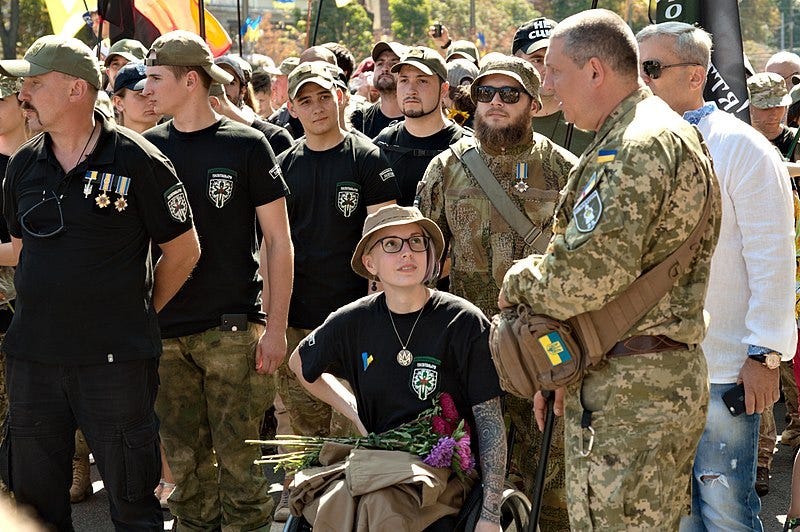
Doctors of Ukraine’s Hospitallers Medical Battalion / ReAl, CC BY -SA 4.0 Wikimedia Commons

Of the many things you might admire about Ukraine’s president, one stands out. It’s his ability to stay focused in speeches and interviews on his country’s most urgent need: weapons.

Volodymyr Zelenskky’s message hasn’t wavered since Russia invaded his country in February 2022. Over and over, he’s told Ukraine’s allies: Give us the tools, and we will finish the job.

His wife, Olena Zelenska, has delivered the same message, a striking contrast with the stance of American first ladies who try to soften their husbands’ images with chatty family stories.

Several pivotal battles have shown the benefits of their approach. Allies’ weapons helped Ukraine retain control of Kyiv and push Russia out of Kherson and Kharkiv. This month they played a role in the counteroffensive that pierced a defensive line in the southeast.

But the focus on weapons may help to explain why, on world’s stage, Ukraine’s need for guns, drones, and F-16 fighter jets has upstaged something equally urgent: its growing first-aid crisis.
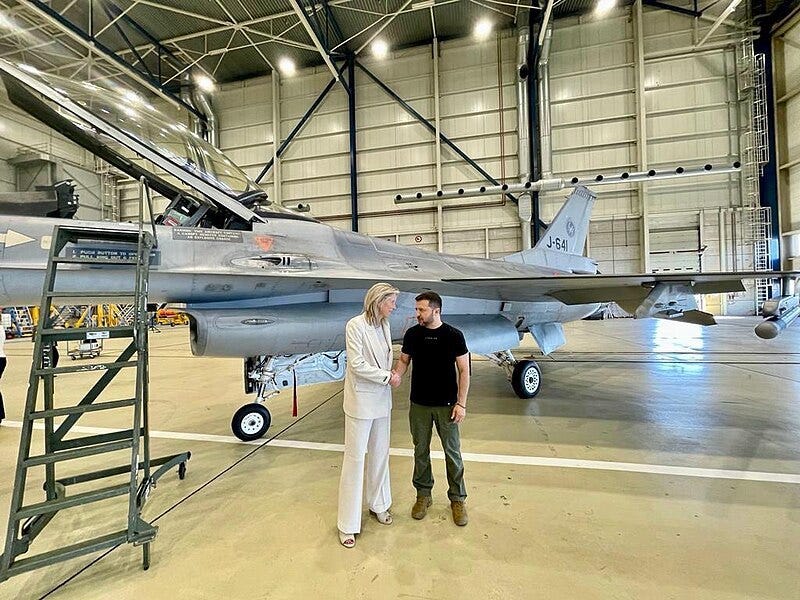
Volodymyr Zelenskyy and one of F-16s the U.S. recently approved for Ukraine / Wikimedia Commons CC0

Soldiers and civilians are dying or suffering life-changing injuries because they can’t get the medical care they need or get it fast enough.

Doctors, nurses, and medics are burnt out after coping with dire shortages of life-saving supplies, equipment, and vehicles to transport wounded from battlefields to hospitals. A New York Times headline summed up their plight in four words: “Under Fire and Understaffed.”

Front-line nurses in Ukraine have felt an immense pressure described by a World Health Organization representative during a meeting of the International Council of Nurses Congress in July. The nurses, she said, are “brave” but “burnt out.” The chief executive of the ICN said:

“We’ve witnessed the incredible courage and bravery.

“But we’ve also seen the abject failure to properly support our nurses.”

The crisis exists partly because Russian soldiers have targeted health care facilities and their workers. The best-known attack came just after the invasion began, when the Russian air force bombed a maternity and children’s hospital in Mariupol in eastern Ukraine.
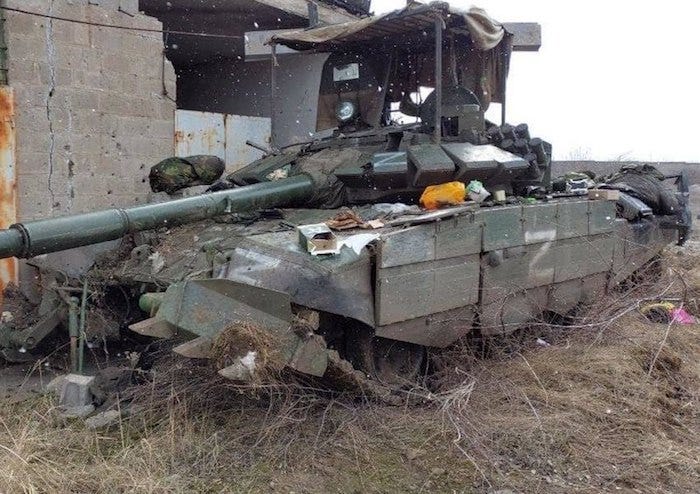
A Russian tank Ukrainians destroyed in Mariupol / Mvs.gov.ua via Wikimedia Commons CC

It was a forerunner of unrelenting assaults on the country’s medical system. These have included attacking ambulances, the United Nations has found. On August 1, Russian artillery fire killed a doctor and injured five staff members at a hospital in the Kherson region, run by Ukraine’s Ministry of Heath with support from Doctors Without Borders. An operating theater at the same hospital took a direct hit a few days later.

More than 1,000 attacks have hit health care facilities or workers, “the highest number WHO has ever recorded in any humanitarian emergency,” the international agency says. Amid the assaults, doctors and nurses are having to treat ever-growing numbers of sick or injured patients.

A grim statistic suggests their pressures. In just over a year and a half, Ukraine’s military deaths have exceeded the American body count for nearly two decades in Vietnam (about 58,000).

Why is the toll so high?

Heavy use of lethal weapons by both sides is one factor. The New York Times said last month:

“Thousands of rounds of artillery are fired every week, tanks batter buildings, land mines are everywhere and drones hover overhead picking off troops below. When close combat does occur, it resembles the battles of World War I: brutal and often taking place in trenches.”
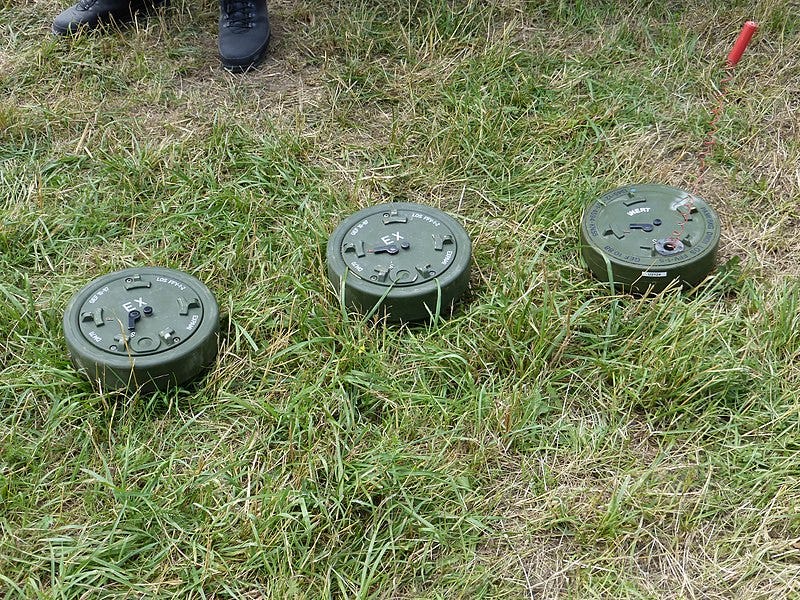
Anti-tank land mines / Wikimedia Commons CC

Ukraine has become the most heavily mined country in the world as Russians have mined areas from which they are retreating. Land mines can inflict injuries more devastating than the best-trained trauma surgeons may have seen.

All of this is occurring as the war is making it harder for all Ukrainians, military or not, to get the medicines and other treatment they need, the International Rescue Committee has found:

“Across Ukraine, the cost of medicines is soaring while pharmacies struggle to access essentials — a consequence of the collapse of the transportation and supply systems.”

But Ukraine’s first-aid crisis involves more than damage to infrastructure or disruptions in supply-chains. It also results from a lack of rapid medical care on front lines and the growing difficulty of evacuating the wounded amid drone strikes, heavy shelling, and attacks on ambulances.
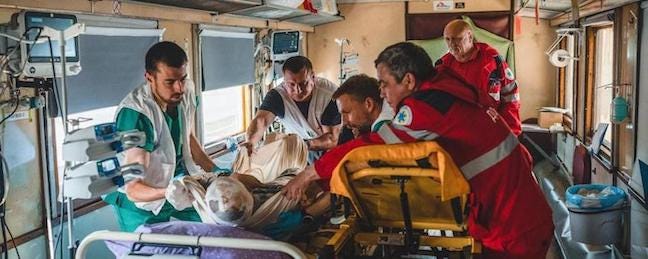
Doctors Without Borders / Médecins Sans Frontières (MSF) in Ukraine / Doctors Without Borders

Ukraine has set up temporary medical posts near front lines where doctors try to stabilize the wounded and evacuate them rapidly.

But front-line providers often have been overwhelmed by how many people need treatment and the difficulties of first removing them from terrain full of land mines and then keeping them alive in until they reach hospitals, often hours away. A medic at one post told the New York Times that the numbers have been “colossal.”

“To compound the problem, medics in Ukraine are also expected to fight,” says the Ukrainian journalist Svitlana Morenets, a staff writer for the Spectator who has been reporting from the front lines.

A senior combat medic with Ukraine’s Territorial Defense Force told her they can’t refuse to shoot: “Everyone shoots. Only after the fighting is carried out, then you provide the first aid.”

In such situations, groups like Doctors Without Borders can’t replace the combat medics. The Russian Federation has refused to give it access to areas it controls, and the medical group has been helping civilians near the front lines or those who’ve had to flee, not treating soldiers in combat.

A further barrier to first-aid is a cumbersome medical bureaucracy inherited from the old Soviet system and not fully adapted to the new realities. Too much pointless red tape makes it harder for front-line doctors, nurses, and medics to get the supplies they need to treat patients.
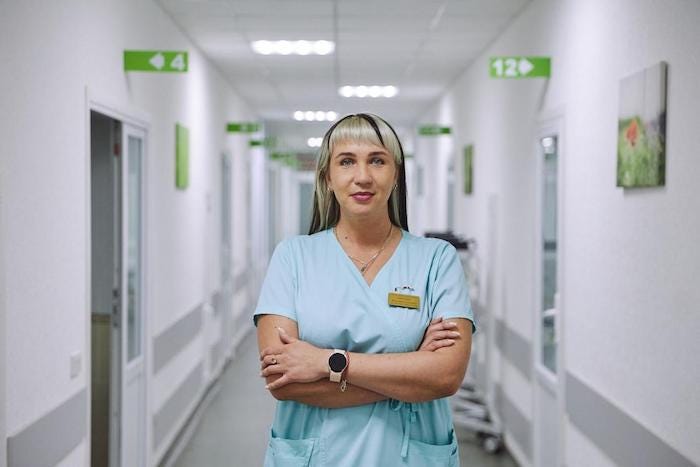
Nurse in a hospital in Kharkiv, Ukraine, after the Russian invasion / World Health Organization

There are also allegations of corruption. A military procurement scandal led Zelenskyy to replace his defense minister in late August. An earlier scandal caused him to fire the head of procurement for the country’s Medical Forces Command, who had been accused of trying to pass off inferior Chinese medical kits as meeting a NATO standard.

All of it has resulted in life-threatening shortages of basic medical supplies on the front lines and beyond. “Urgently needed” items have included splints, defibrillators, mobile X-ray units, ultrasound scanners, and ambulances, along with drugs like antibiotics and painkillers, the World Health Organization has said.

“Tourniquets are perhaps the most-needed first aid tool, particularly when the evacuation process is prolonged,” Morenets wrote after spending time with front-line medics near Dnipro. “But if tourniquets are badly made, they can be lethal.”

Morenets has heard complaints about cheap “Chinese-made tourniquets that either gradually lose pressure or come apart, leading to renewed bleeding with fatal consequences.”

One reason why that matters so much: the severity of injuries caused by land mines and other weapons. A Danish doctor told the relief group Ukraine-Denmark Humanitarians:

“One tourniquet is often not enough. Our patients have injuries to several extremities, requiring several tourniquets to stop hemorrhaging.”
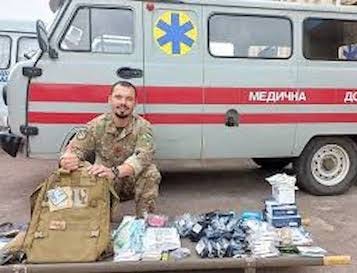
A Leleka backpack for combat trauma / Leleka Foundation

The need is so great that some organizations have set up dedicated web pages or appeals for tourniquets for Ukraine. Other volunteer or relief organizations are trying to meet a wider range of shortages of equipment, supplies, or medical workers.

One widely praised groups is the Hospitallers, a Ukrainian volunteer medical battalion that has been giving first aid to and evacuating wounded Ukrainian solders since 2014. Another is the Leleka Foundation, a 501 © (3) medical charity that provides emergency first-aid kits and other essentials to Ukrainian forces, including medical backpacks stocked with items needed to treat combat trauma.

An encouraging sign is that in December, at an international donor conference, Zelenskyy asked for funding for medical supplies as well as weapons, “with the top priorities being restoring access to care and replenishing emergency medical supplies in recently recaptured territories,” the Washington Post reported. His appeal may help to explain an uptick in articles about the first-aid crisis in Ukraine.

And yet, eight months after Zelenskyy made his appeal, Ukraine still needs vastly more medical aid. Morenets, the Ukrainian journalist, wrote last month of a conversation she had with a U.S. Navy veteran who had joined the Hospitallers and was working on a front line near Dnipro. He said the organization had fewer volunteers now than last year:

“We had 50. Now there are fewer than 10 foreign paramedics.”

It isn’t clear how much difference Zelenskyy’s appeal will make, and whether others will follow it.

What’s clear is that, as the injuries and deaths rise, the U.S. and world need to talk about more than when and how the war might end, and what ammunition might help. They also need to talk about those who are fighting it, right now, with weapons other than guns, drones, and F-16s.

Janice Harayda is an award-winning critic and journalist whose work has appeared in many major print and online media.

You might like some of my other stories about Ukraine:

Ukraine
Politics
Medicine
Military
News
Recommended from ReadMedium