
U.S. Colored Troops Thank You for Your Service
How the United States Colored Troops helped to win the war.
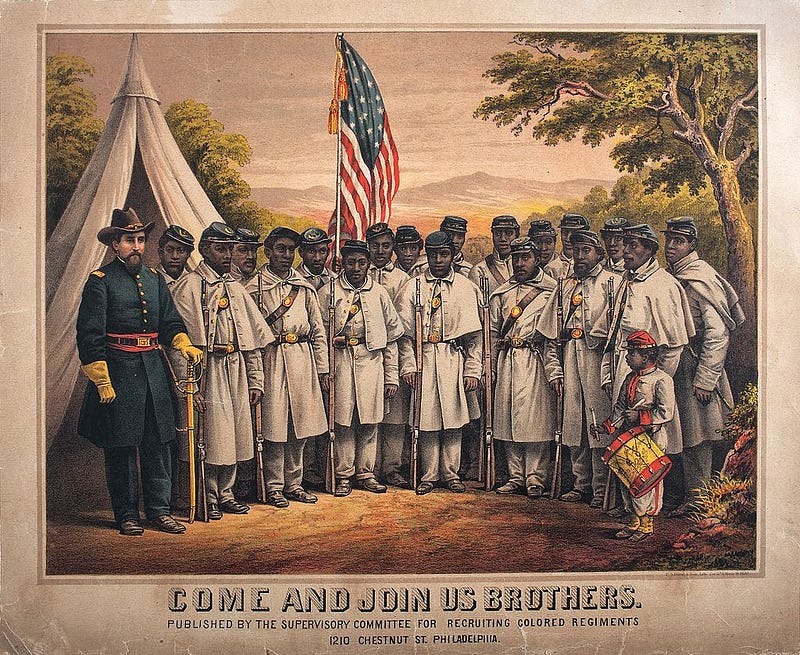
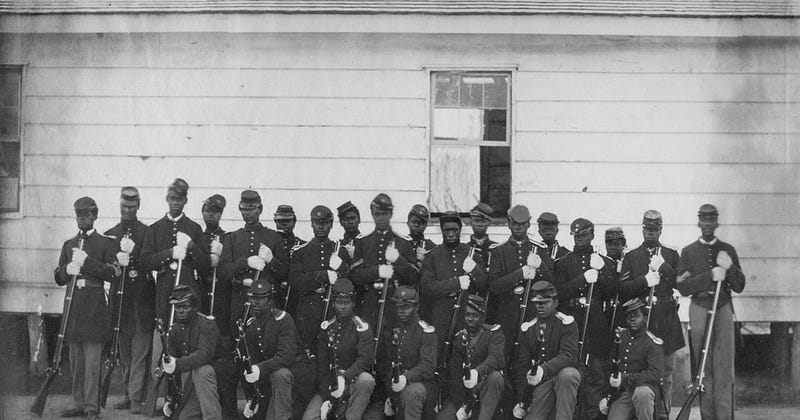
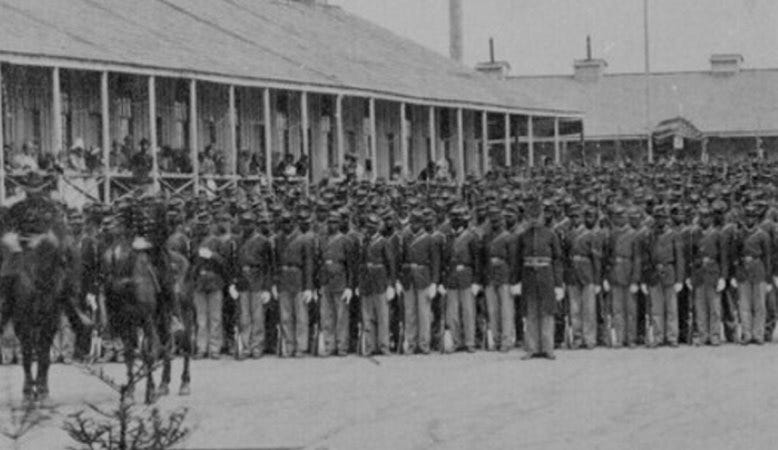
Wakeup America, stop the denial and coverup of America’s true history. The time is now as America is becoming the Country it was meant to be multi-ethnic for all have migrated from somewhere except the Native Americans. It is time to stop the coverup and start to recognize, support, and honor the many who have been denied their rightful place in the history of America who fought courageously so that all can enjoy freedom and America’s Democracy.
Back in the days of my high school, the history books were filled with lots of untruths and denial of the true history of America. All people of color (BIPOC) were involved in the preservation of America being the home of the brave and the land of the free, even in the face of ugly slavery.
Wished I had learned more about the truth of America as a child along with other BIOPC, it would have had a profound positive and motivational effect on growing up for myself and many others.
Sadly and happily learned of the United States Colored Troops via a documentary. This knowledge led me to additional research and was astounded to learn of their contribution to the military, war, and America.
The United States Colored Troops comprised primarily of African-American soldiers who enlisted in the United States Army as they allowed other minority groups to join their units.
There were 175 regiments and 178,000 men, in the army. These numbers of participation are staggering and yet these profound facts have been hidden from the general public. The Colored Troops began May 22, 1863, and disbanded, October 1865 upon their engagement in the American Civil War.
The Colored Troops constituted about one-tenth of the manpower of the Union Army and about 20% of the USCT soldiers died, a rate about 35% higher than that of white Union troops due to the war and diseases. With distinction, they fought and 16 earned the Medal of Honor and numerous others received other honors. They were precursors to the Buffalo Soldiers.
The Militia Act of 1862 empowered the President to use former slaves in the army in menial jobs. Lincoln earlier had opposed recruiting African-American soldiers but allowed the Army to use them as paid workers. Also, Native Americans were a part of the colored regiments of the American Civil War. After the Proclamation of January 1863, recruitment of colored regiments went into full force.
A General Order Number 143 was issued by the United States War Department on May 22, 1863, that facilitated the recruitment of African-American soldiers to fight for the Union Army, via the Bureau of Colored Troops to facilitate the recruitment of African-American soldiers.
Hence these units became known as the United States Colored Troops (USCT), inclusive of Native Americans, Pacific Islanders, and Asian Americans, who equally contributed to the Union Army. Recruitments spanned all states of the union.
The USCT regiments were led by Union officers. The USCT encountered limited rank advancement and less pay than their white counterparts, with their protest and their supporters lobbied and eventually gained equal pay. The Supervisory Committee for Recruiting Colored Regiments in Philadelphia opened the Free Military Academy for Applicants for the Command of Colored troops by the end of 1863.
The USCT opened the door for many to join the military to the present day and this afforded many a transition of having independence in a very special undeniable way. Their courage to fight during the Civil War played a key role in African Americans gaining new rights. Notable members of USCT regiments included Martin Robinson Delany and the sons of abolitionist Frederick Douglass. Another major accomplishment to the USCT legacy, the USCT engineers built Fort Pocahontas, a Union supply depot, in Charles City, Virginia.
Connoting the bravery of USCT, Frederick Douglas wrote:
“Once let the Black man get upon his person the brass letter, U.S., let him get an eagle on his button, and a musket on his shoulder and bullets in his pocket, there is no power on earth that can deny that he has earned the right to citizenship.
In conclusion, much honor, and recognition of the United States Colored Troops are long overdue and their contribution to America needs to be inclusive of history books, films, documentaries, history lessons, etc. To the USCT, we thank you for your service as each of the regiments made America what it is today, an undeniable melting pot for all ethnicities.
For additional reads:


