
A Black History Lesson for America
How Blacks’ contributions have been whitewashed.
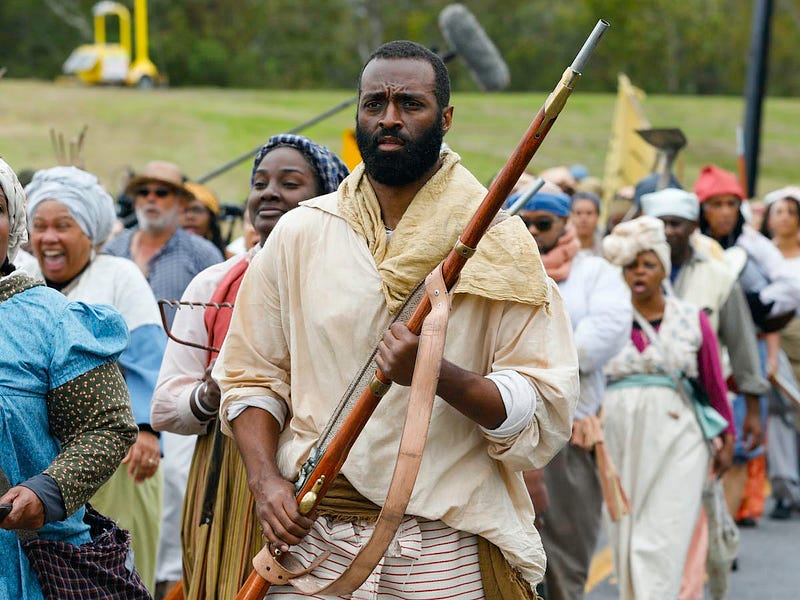
A slave revolt film revisits history often omitted from textbooks.
January 8 1811, Charles Deslondes, one of the slave leaders who lead more than 200 rebels against the plantation owners along the Mississippi River toward New Orleans, aka slave revolt was a real martyr for freedom for all. His action led to his inclusion in the history of America where many were given their freedom in the face of slavery due to his revolting.
Deslondes was a mixed-race man who decided it was time for him to do the job he was born to do. He lead a group of rebels, like himself, to attack a plantation owner in lower Louisiana that became known as the largest uprising of enslaved people in American history.
Obvious with much planning and support, one man became the leader of the largest attack for the freedom of many slaves that required the assistance of the U.S. Army to intervene.
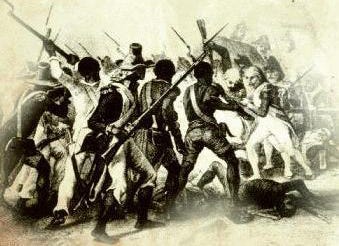
As history goes, even though the attack was massive but it did not happen as planned as Deslondes targeted Manuel Andry, head of the local planters militia based on the assumption that Andry property would render much weaponry for the insurgents to utilize in their pursuit of freedom.
The end result in this invasion was the death of Andry’s son being killed and Manuel Andry escaped harm but there was no big cache of guns anywhere to be found.
Deslondes with his fellow rebels with great determination sought their Plan B as they marched through Louisiana’s German Coast toward New Orleans with a plan to take over the local armory. He was truly a man on a mission.
History has it that as they marched down the streets, drums and chants could be heard throughout the land. Chants of “Freedom or death.” As they marched with such a fervor their numbers grew rapidly as they attacked other sugar plantations and liberated enslaved people. Plan B was orchestrated and gave many others enslaved their freedom.
Now onto Plan C, as they liberated the many enslaved they were able to resist and elude the white militias’ attacks with much courage and determination. The next morning outnumbered and outgunned, they were caught by the Army and local vigilantes in an opened field. The odds were against them but if it had not been for being outnumbered and outgunned, triumph would have continued and sustained.
Next Plan D, as they realized the reality of their mortality, they chose to stand and fight and to use their weapons only when the faces of the white men were in sight and galloping toward them on horseback to attack them, as not to waste their ammunition.
These freedom fighters had determined not to go down without a fight as they sought for their freedom and the freedom of the many others enslaved. If all were equal in battle, they would have proved a match for the white men who sought their demise. Regardless, they won, because many were freed and their living and plight were not in vain.
Deslondes and his men who survived, vowed not to betray each other, remained loyal, and a tightknit group of co-leaders of this revolt and refused to bear witness against each other and their cause, in the face of Deslondes having his arms chopped off, his legs broken and was shot before his body was put on a spit and publicly roasted.
Treating a human being as such bespeaks the mentality of these plantation owners along with the white men vigilantes who treated slaves worst than they would have treated the horses they mounted in battle.
Deslondes and the other rebels deserve much recognition in history books and to have their stories truthfully told by those who recognize the magnitude of their contributions to humanity and America, as they were some of the greatest heroes and she-roes of American liberty.
Currently, there stands only one monument in recognition of the German Coast Uprising residing on the privately-owned Whitney Plantation but has been badly damaged by Hurricane Ida. There are 19 sculpted Blackbusts perched atop metal spindles with Deslondes front and center with a plaque bearing his name above the word “Leader.”
Since Africans were stolen from their lands, brought to America as property and, was used to build the new and modern-day America, their contribution from this starting point should grace history books and cities throughout the land.
Black soldiers fought in the American Revolution; Blacks rebelled for their freedom in New York; and Blacks contribution during the Civil War was instrumental in the victory of the North, thereby Gen. Ulysses S. Grant recognized their contribution by saying that the Negro is a man, a solider, and a hero.
There are so many others that deserve recognition for their contributions to America in the fight against slavery. Benjamin Banneker was a free African-American almanac author, surveyor, landowner and farmer who had knowledge of mathematics and natural history. Born in Baltimore County, Maryland, to a free African-American woman and a former slave, Banneker had little or no formal education and was largely self-taught.
James Forten was an African-American abolitionist and wealthy businessman in Philadelphia, Pennsylvania. Born free in the city, he became a sailmaker after the American Revolutionary War. Following an apprenticeship, he became the foreman and bought the sail loft when his boss retired.
Richard Allen was a minister, educator, writer, and one of America’s most active and influential Black leaders. In 1794, he founded the African Methodist Episcopal Church, the first independent Black denomination in the United States. He opened his first AME church in 1794 in Philadelphia, Pennsylvania. He wrote and other Philadelphians wrote that “our ancestors (not of choice) were the first successful cultivators of the wilds of America” and their descendants were therefore entitled “to participate in the blessings of her luxuriant soil.”
W. E. B. Du Bois aka William Edward Burghardt Du Bois was an American sociologist, scholar, socialist, historian, civil rights activist, Pan-Africanist, author, write,r and editor. He stated that “it was black labor that established the modern world commerce which began first as a commerce in the bodies of the slaves themselves.”
Benjamin Arthur Quarles was an American historian, administrator, educator, and writer, whose scholarship centered on black American social and political history. Major books by Quarles include The Negro in the Civil War, The Negro in the American Revolution, Lincoln and the Negro, and Black Abolitionists. During the 1960s, he stated “if in the eyes of the world today the United States stands for man’s right to be free, certainly no group in this country has sounded this viewpoint more consistently than the Negro.”
Howard Waring French is an American journalist, author, and photographer, as well as professor since 2008 at the Columbia University Graduate School of Journalism. Prior to re-entering academia, he was a longtime foreign correspondent and senior writer with The New York Times and is the author of “ Born in Blackness: Africa, Africans, and the Making of the Modern World, 1471 to the Second World War.”
In conclusion, America needs to wake up, realize the truth of its existence, how it came about, how it was built, who built it, slavery with all its atrocities, how freedom was fought and won, and accept its responsibility for much disharmony. A problem cannot be solved until it is recognized as being a problem and this is half of the solution to the problem.
For additional reads:


