
Dr. Patricia Bath, a Pioneer Ophthalmologist & First African American Doctor, to Receive a Patent
How Dr. Bath became a trailblazer getting a patent for a medical invention for the blind that all begun with a gift from her mother
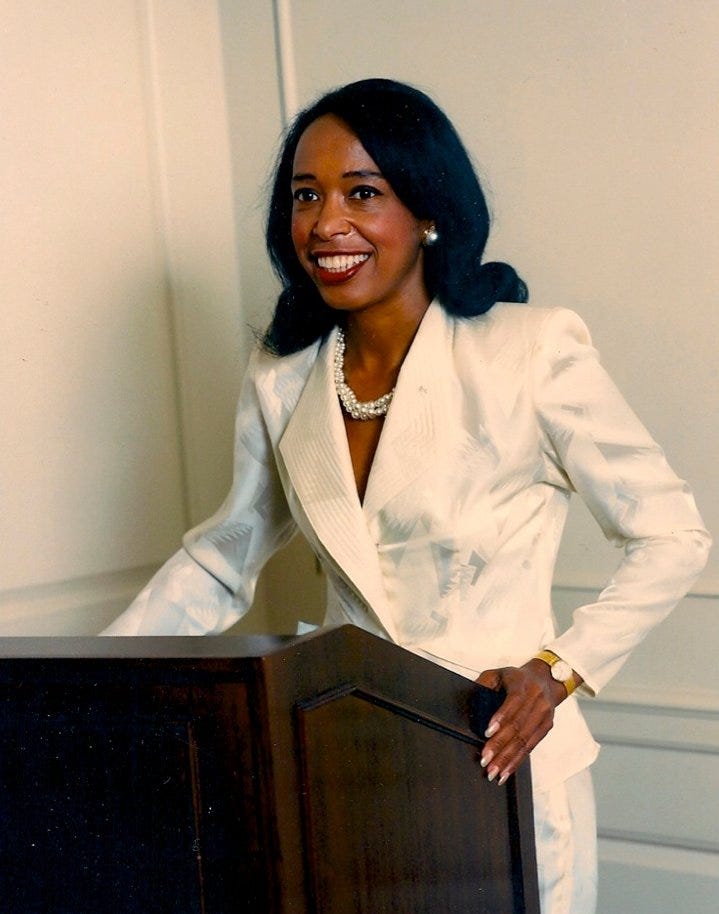
Patricia Era Bath, a native of New York City’s Harlem was born on November 4, 1942, to Rupert Bath, the first Black motorman for the New York City subway system, and Gladys Bath, a housewife and domestic worker whose salary went toward her children’s education.
Her parents were instrumental in her pursuing academic excellence similar to her father who was a former Merchant Marine and an occasional newspaper columnist. Between her parents, she learned to appreciate traveling, exploring new cultures, and her interest in science was sparked by a chemistry set given to her by her mother.
Following her parents’ guidance and support, at age 16, she became one of a few students who were selected to attend a cancer research workshop sponsored by the National Science Foundation. Dr. Robert Bernard, the program head, was so impressed with Bath’s discoveries during the project that he incorporated her findings in a scientific paper he presented at a conference. Her discoveries earned her the Mademoiselle magazine’s Merit Award in 1960.
Two years after graduating high school, she attended Hunter College where she earned a bachelor’s degree and then onto Howard University in pursuit of a medical degree.
Graduating with honors from Howard in 1968, she accepted an internship at Harlem Hospital. The next year, she began pursuing her fellowship in ophthalmology at Columbia University.
Upon discovering through her studies that African Americans were more susceptible than other ethnicities to suffer from blindness than her other patients, twice likely and eight times more likely to develop glaucoma, begun her search for change.
Her need to help African Americans with cataract situations led her to research how to reduce or rectify this phenomenon. Through her research processes, she developed a community ophthalmology system that increased the amount of eye care provided to the less fortunate who could not afford treatment.
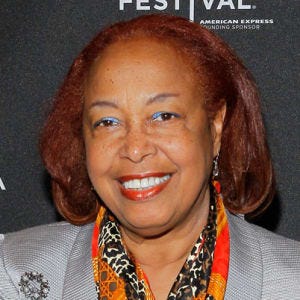
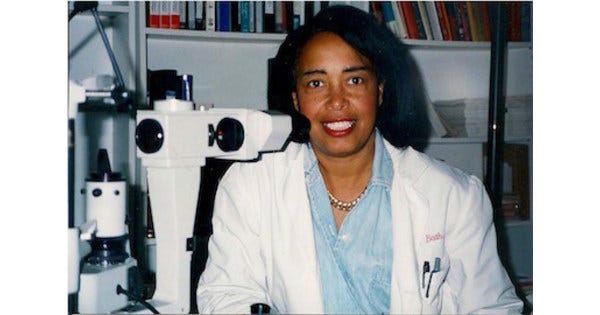
Dr. Patricia Bath, the first African American female to earn a patent for the Laserphaco probe for cataract treatment in 1986 and the first African American female to complete a residency in ophthalmology, 1973.
The following year, she moved to California to work at Charles R. Drew University and the University of California as an assistant professor of surgery. In 1975, she became the first female faculty member in the Department of Ophthalmology at UCLA’s Jules Stein Eye Institute.
Dr. Bath’s history contains lots of being the first in many endeavors and/or accomplishments. Two years after residency, she became the first female faculty member in the Department of Opthalmology at UCLA’s Jules Stein eye Institute.
Being unstoppable, Dr. Bath in 1976 co-founded the American Institute for the Prevention of Blindness and in 1986 came the invention for the Laserphaco probe and was patented in 1988 which garnered her the title of first African American female doctor to obtain a medical patent.
Also, Bath was the co-creator and co-chair of the Ophthalmology Residency Training program at UCLA-Drew, again the first woman to hold a co-chair position
Her patent in 1988, led her to acquire patents in Japan, Canada, and Europe. She believed that blindness was a choice pertaining to cataracts. She proved her assessment by using her Laserphaco Probe, to restore the sight of individuals who had been blind for more than 30 years.
After twenty years, in 1993, Dr. Bath retired and became an honorary member of UCLA Medical Center and during the same year was named a “Howard University Pioneer in Academic Medicine.”
Her life pursuits with her distinguished medical career, invention, and as a strong advocate of telemedicine will forever be contained in medical history books.
In conclusion, Dr. Bath, a pioneer, inventor, and genius in her own right has left a legacy that has changed many lives of the past and will forever change lives moving forward past her death, May 30, 2019, in San Francisco, California. May she rest in peace as she was a trailblazer who will be forever remembered for her contributions to opthmalogy and the many lives that she changed.
For additional reads:


