
True Confessions of a Hearing Loss Denier
It all started with lying about my age, something I’ve only recently stopped doing. It hasn’t been easy overcoming the urge to shave off a few years.
But now I need to come clean about something else.
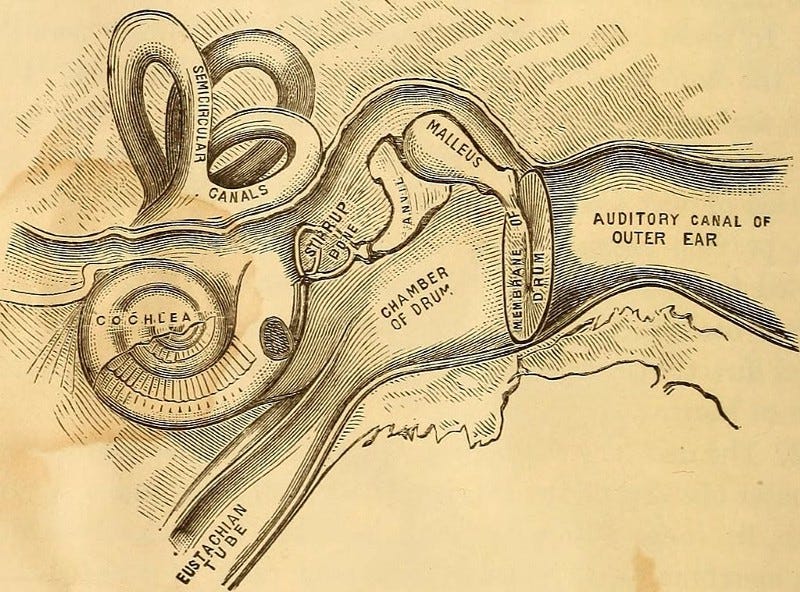
My hearing . . isn’t what it used to be.
An understatement.
The doorbell chimes or my phone rings from another room and I don’t hear it. Face-to-face conversations are fine. Telephone conversations are still ok unless the caller is speaking French. I mistake certain words with sometimes hilarious results. One time my partner asked about cake. I heard ache and started complaining about my back.
I’m finding it difficult to accept. I took four of those online hearing tests until I found one that said I had no hearing loss. Unfortunately, it was wrong.
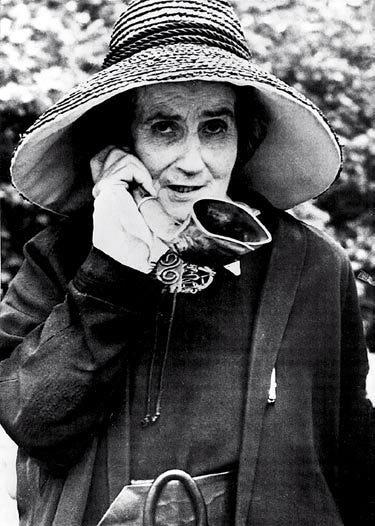
Even to me, this denial seems ridiculous. It’s not as though hearing loss can be disguised for long — although my mother, who died shortly after her 100th birthday and started going deaf in her sixties, certainly tried.
“It’s not me,” she’d insist. It’s the American accents.” Fifty years after leaving her native England, she still stuck to that.
Sometimes when she hadn’t understood something, she’d take her cue from facial expressions and laugh uproariously. Often inappropriately.
There’s an interesting parallel here to learning a foreign language. In a roomful of people all chattering away in French, I understand very little. In the Languedoc region where I live, there’s a very strong local accent — the French equivalent say of Alabama. Some of the older villagers are completely incomprehensible, I don’t even try.
If they laugh, I laugh too. Uproariously, although I hope not inappropriately. If everyone is drinking wine, which is usually the case, it probably wouldn’t matter anyway.
But what concerns me more than not understanding French villagers is the realization that I often don’t fully comprehend what’s being said in English.
“Can you hear me?” my partner will call from another room in the apartment. This annoys me, but then it annoys him when he has to repeat what he’s just said. I tell him he’s mumbling . . . and realise I’m doing exactly what my mother used to do.
First, deny the problem. Then find ways to cope.
Watching an English language film on TV recently, I realized that I was missing large swathes of dialogue. But because I’d caught important keywords and knew the premise, I was able to figure out what was going on.
Similar again to how I get by here in France with my very basic French.
If I’m at the pharmacy, for example, I can be reasonably certain that the assistant is explaining the medication I’m supposed to be taking— daily dosage, taken with food, etc — and not relaying details of her hot date the night before.
It’s not a foolproof system. One time, the assistant kept repeating a word I didn’t understand. Obviously, an important word because she finally called over to the pharmacist who spoke some English.
He frowned, shrugged, shook his head and said, “Whiskey.”
Which of course I understood. Then he wagged his finger at me and we all laughed. I think I wasn’t supposed to drink it, or any other alcohol.
Going deaf and learning French — its’ all about context and recognizing a few keywords
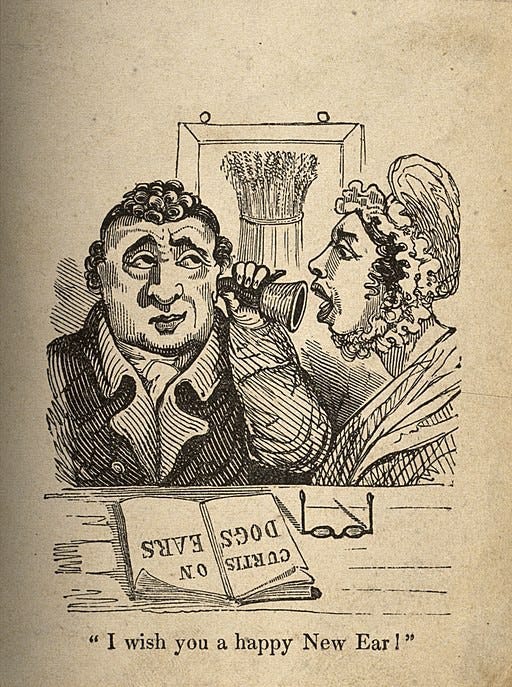
The problem is that while my French might improve over time, my hearing will eventually require some assistance.
I’ve dealt . . . am still dealing with the greying hair and the inevitable lines and wrinkles; I’ve accepted the necessity of bifocals, or whatever they’re called here, I stretch and exercise to stay agile, so why . . . why does the thought of a device in my ear (other than the cost) depress me?
Apparently, I’m not alone. In a hearing loss survey of over 300 seniors, less than half of those with symptoms felt their condition required treatment.
All in denial, just like me.
And my mother. Although we ultimately persuaded her to get hearing aids, convincing her to wear them was another story. I remember taking her to a restaurant where she couldn’t hear a word I said. I started to ask about her hearing aid when I heard the low battery chime coming from the hearing aides in her handbag.
Neither of us laughed.
Even though she acknowledged they made conversation easier, she hated wearing the devices. Background noise, ear discomfort, a list of problems. We’d get them adjusted, buy new and improved versions, nothing was satisfactory.
I often think about how impatient I’d get with her, how I swore that I’d get medical advice the minute I suspected I was losing my hearing.
But here I am deep in denial and not entirely sure why.
Any ideas?
Speak up please, I think it’s your accent.
A few other stories that demonstrate my graceful and realistic approach to the inevitability of old age:
If you’d like to read still more of my stories, plus thousands of other excellent pieces on Medium, why not subscribe?

Part of your subscription will help struggling (and elderly) writers like me and other struggling (and much younger) writers on Medium. Thanks!
Just hit the link: https://janicemacdonald.medium.com/membership